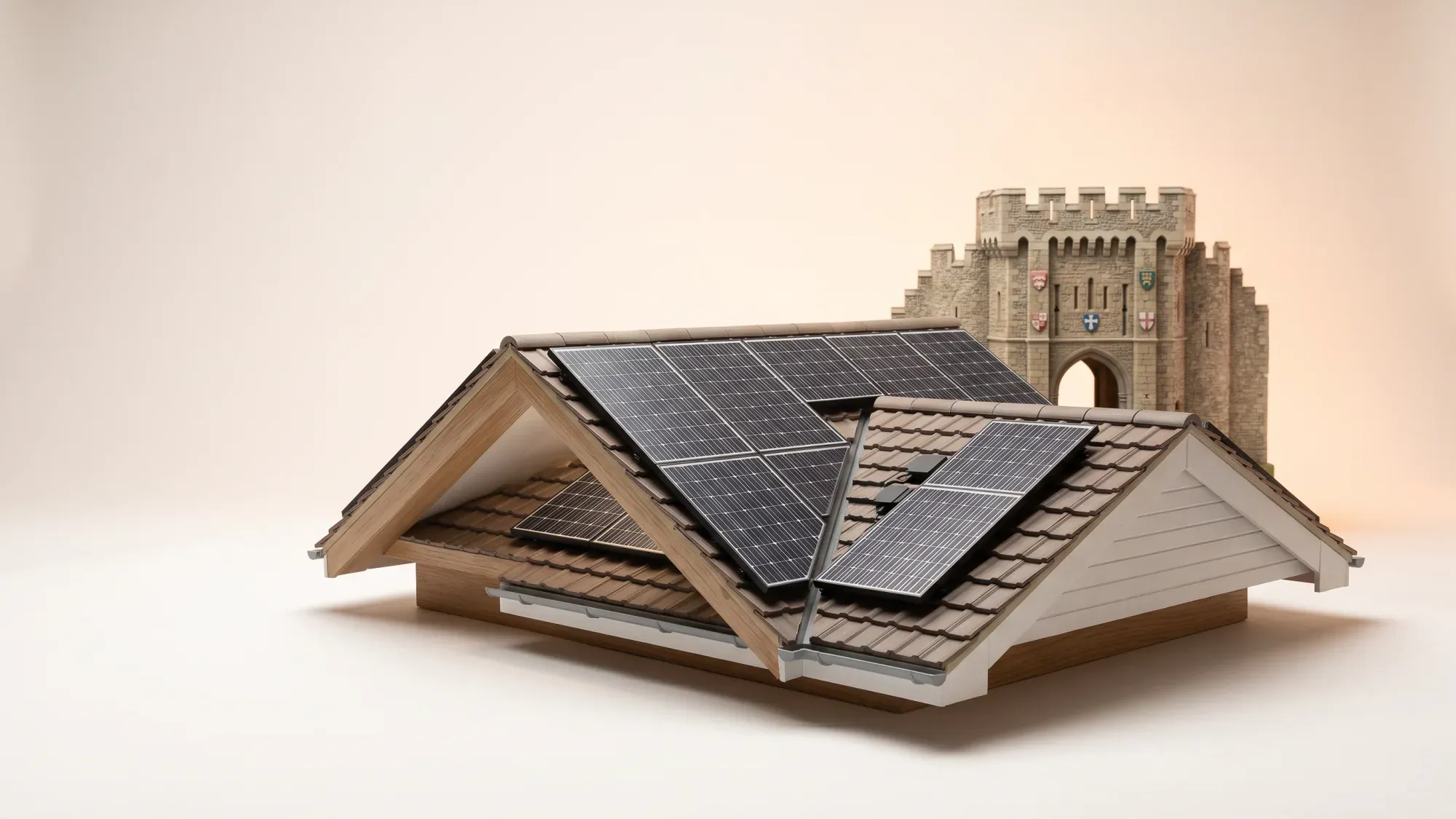
Southampton, nestled on England's south coast, benefits from some of the UK's highest annual sunlight hours, making it an advantageous location for homeowners considering solar energy. Solar panels here can significantly contribute to reducing energy bills and increasing energy independence. This guide will walk Southampton residents through the benefits, costs, installation process, and key considerations for installing solar panels and battery storage, empowering you to make an informed decision for your home.
Southampton's solar advantage: why local conditions matter
Choosing solar power is a strategic move, and Southampton's unique geographical and energy infrastructure characteristics make it particularly well-suited.
Sunlight hours and energy generation potential
Southern England consistently receives some of the highest annual sunlight hours in the UK, and Southampton is no exception. This favourable climate means that solar payback periods in the region are among the best in the country. Even on cloudy days, modern solar panels generate useful electricity from diffuse daylight, ensuring consistent performance throughout the year. If you're wondering how effective solar panels are when the sun isn't shining brightly, you can learn more about whether solar panels work on cloudy days.
Understanding Southampton's energy infrastructure: SSEN and price caps
Southampton falls within the 'Southern England' electricity distribution region, which influences the unit rates and daily standing charges set by Ofgem's price cap. The local Distribution Network Operator (DNO) for Southampton is Scottish and Southern Electricity Networks (SSEN). This is important because any new home EV charger or solar/battery grid connection in Southampton must be notified to SSEN (chargers via the ENA connect-and-notify route; solar or battery systems under G98/G99), a step usually handled by your chosen installer. In the event of a power cut, Southampton residents can dial the free national number 105, which routes directly to their local DNO.
Typical housing stock and solar suitability in Southampton
Southampton's diverse housing stock, from Victorian terraces to modern new-builds, offers various opportunities for solar panel installation. While specific statistics on solar uptake are not available, the general suitability for solar remains high across different property types, particularly given the favourable sunlight conditions. Installers can assess your roof's orientation, pitch, and shading to determine the optimal system design for your home.
Benefits of solar panels for Southampton homeowners
Installing solar panels offers a multitude of advantages beyond just generating clean energy.
Reducing energy bills and increasing energy independence
Generating your own electricity means less reliance on grid power, directly translating to lower energy bills. With a solar energy system, you gain greater control over your household's energy consumption and costs, moving towards true energy independence. This shift puts power back into your hands, aligning with a vision of abundant energy where you have power to play with. Understanding your average monthly electric bill with solar panels can help you see the potential savings.
Environmental impact and carbon footprint reduction
Solar panels produce clean, renewable electricity, significantly reducing your home's carbon footprint. By harnessing the sun's energy, you contribute to a greener future and help combat climate change, lessening demand on fossil fuel-based power generation.
Increasing property Value in Southampton
Homes equipped with solar panels are increasingly attractive to buyers, often commanding higher property values. Energy efficiency is a key consideration for many homeowners, and a professionally installed solar system can be a significant selling point in the Southampton property market.
Solar panel costs and financial incentives in Southampton
Understanding the financial aspects of solar panel installation is crucial for Southampton homeowners.
Average solar panel installation costs
The cost of solar panel installation varies depending on system size, panel type, and installation complexity. While an initial investment is required, the long-term savings on energy bills, combined with available incentives, make solar an increasingly cost-effective choice. For a detailed breakdown, explore solar panel installation cost.
0% VAT relief on solar and battery storage
A significant financial incentive for homeowners in Great Britain is the 0% VAT rate applied to residential solar panel and battery storage installations. This relief is in effect until 31 March 2027, after which the VAT rate is due to rise to 5%. This substantially reduces the upfront cost of going solar, making it more accessible for many households.
What is the 0% VAT relief for solar?
The 0% VAT relief is a government incentive that removes Value Added Tax from the supply and installation of residential solar panels and battery storage systems in Great Britain. This measure, introduced in April 2022 and running until 31 March 2027, aims to reduce the upfront cost for homeowners and encourage the adoption of renewable energy technologies.
The Smart Export Guarantee (SEG) explained
The Smart Export Guarantee (SEG) is a UK-wide scheme that requires larger licensed energy suppliers to pay homeowners for any surplus solar electricity they export back to the National Grid. This means you can earn money for the clean energy your panels generate but your home doesn't immediately use. To qualify for SEG payments, your solar panel system must be installed by an MCS-certified installer.
Choosing the right solar panel installer in Southampton
Selecting a reputable and qualified installer is paramount to a successful solar journey.
The importance of MCS certification
MCS (Microgeneration Certification Scheme) certification is not just a mark of quality; it's a requirement for accessing government incentives like the SEG. An MCS-certified installer ensures your system meets rigorous industry standards for product quality and installation practices, giving you peace of mind and ensuring eligibility for schemes like the SEG.
Questions to ask potential installers
When obtaining quotes, ask about the installer's MCS certification, their experience with similar properties in Southampton, the warranties offered on equipment and workmanship, and their process for handling grid connection applications with SSEN. A transparent installer will provide clear answers and detailed proposals.
Local reviews and case studies
Look for installers with strong local reputations in Southampton. Reviews and case studies from other homeowners in the area can provide valuable insights into an installer's reliability, customer service, and the performance of their installed systems.
The solar panel installation process in Southampton
Installing solar panels involves several key stages, from initial design to final commissioning.
Initial assessment and system design
A qualified installer will conduct a detailed assessment of your property, considering factors like roof size, orientation, shading, and your household's energy consumption. This information is used to design a bespoke solar energy system optimised for your Southampton home, including panel type, inverter, and potential battery storage. For more details on the process, read our guide to solar panel installation.
Planning permission and grid connection (G98/G99)
Most domestic solar panel installations in the UK do not require planning permission, as they fall under permitted development rights. However, your installer will handle the necessary grid connection application with SSEN under the G98/G99 process, ensuring your system is safely and legally connected to the local electricity network.
Installation and commissioning
Once all approvals are in place, the physical installation of your solar panels and associated equipment will begin. This typically involves mounting the panels on your roof, installing the inverter, and connecting the system to your home's electrical supply. After installation, the system is commissioned, tested, and registered, ready to start generating clean electricity.
Maximising your solar investment with battery storage
Integrating battery storage with your solar panels can significantly enhance your energy independence and financial returns.
How solar batteries work
Solar batteries store excess electricity generated by your solar panels during the day, rather than exporting it directly to the grid. This stored energy can then be used during periods of low solar generation, such as evenings or cloudy days, reducing your reliance on grid electricity.
Benefits of integrated solar and battery systems
Combining solar panels with battery storage allows you to maximise your self-consumption of renewable energy. This not only further reduces your energy bills but also provides a buffer against power outages and allows you to take full advantage of variable export tariffs by storing energy when prices are low and exporting when they are high. This gives you greater control over your energy usage and costs.
Choosing the right battery storage solution
The ideal battery storage solution depends on your energy consumption patterns, solar panel system size, and budget. Factors like battery capacity, power output, and warranty are important considerations. An experienced installer can help you select a battery system that integrates seamlessly with your solar panels and meets your household's specific needs.
Ready to take control of your home's energy? Fuse Energy makes switching simple, with clear pricing, real-time usage data, and 24/7 human customer support. We're committed to helping you make the most of your solar investment and achieve true energy independence.
For the avoidance of doubt, this article is provided for informational purposes only and is not intended to constitute legal or financial advice. The author and/or Fuse Energy shall not be responsible for any losses arising out of any reliance on the information contained herein.