Solar electricity grants for your home
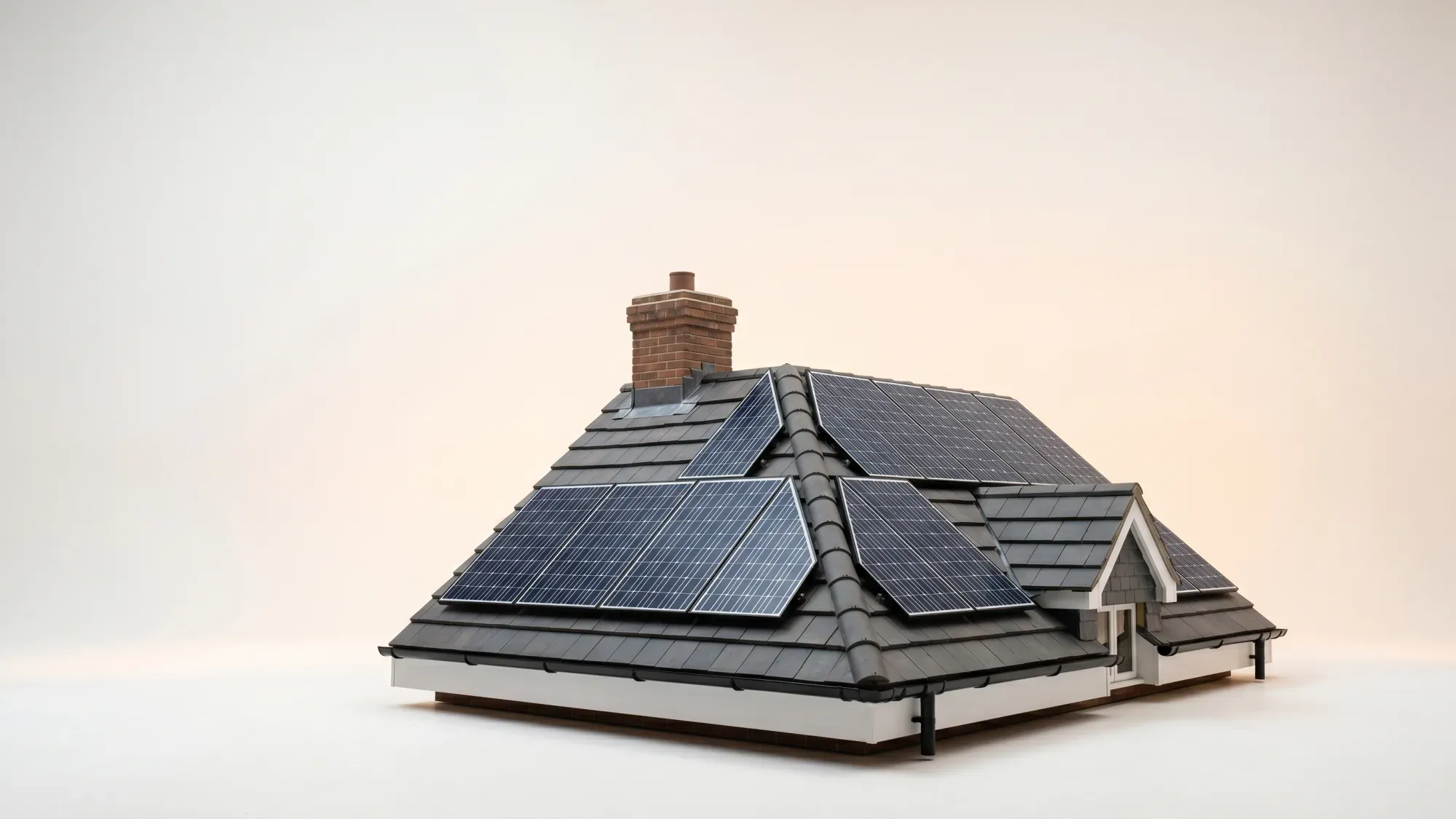
Installing solar panels can significantly reduce your energy bills and increase your home's energy independence. While the initial cost can be a barrier, various solar electricity grants and funding schemes are available to make this investment more accessible. This guide provides clear, current information on what's available, who qualifies, and how to apply.
While Fuse Energy does not install solar panels, we are here to help you manage your energy once they are in place. Discover how easy it is to switch to Fuse Energy and take control of your home's electricity supply.
Thinking about Solar electricity grants for your home? With Fuse Energy, you get clear pricing, real-time usage data, 24/7 human customer support, and a modern energy experience designed around you. Signing up takes just a few minutes, so you can take control of your bills from day one. Click here to switch to Fuse Energy today and start saving.
Enter your address to get a quote and see how much you could save
Understanding solar electricity grants in the UK
Solar electricity grants are designed to support homeowners in adopting renewable energy technologies. These initiatives aim to lower the financial hurdle of installing solar panels, encouraging wider uptake across the country.
Why grants matter for homeowners
The upfront cost of installing solar panels can be substantial, making grants a crucial factor in their adoption. For many, these grants transform solar power from a distant aspiration into a tangible reality, enabling them to benefit from lower energy bills and a reduced carbon footprint. By offsetting a portion of the installation expense, grants allow more households to invest in their energy future.
Common misconceptions about "free" solar
The idea of "free solar panels" often comes with terms and conditions that homeowners need to understand. While some schemes can significantly reduce or even cover the installation cost, they typically target specific groups, such as low-income or vulnerable households, or require certain property conditions. It is important to research the eligibility criteria thoroughly to avoid disappointment. There is not a universal "free solar panel grant" available to every UK homeowner.
Government-backed solar panel schemes and incentives
The UK government supports solar panel adoption through several initiatives, aiming to make renewable energy more accessible and affordable.
The Energy Company Obligation (ECO4) scheme
The Energy Company Obligation (ECO4) scheme is a UK government initiative that requires larger energy suppliers to fund energy-saving improvements, including solar panels, for low-income and vulnerable households. The scheme officially runs until 31 December 2026, though most funding has already been allocated as it approaches completion.
To qualify for ECO4, households typically need to receive certain means-tested benefits, such as Universal Credit or Pension Credit. Properties must also have a low Energy Performance Certificate (EPC) rating, generally D, E, F, or G. Solar photovoltaic (PV) under ECO4 is primarily funded as a heating measure, meaning it is limited to homes with electric heating or a heat pump, not those on mains gas.
Smart Export Guarantee (SEG)
The Smart Export Guarantee (SEG) is a government-backed scheme that requires licensed electricity suppliers to offer tariffs to customers who export excess electricity generated by solar panels back to the grid. Launched on 1 January 2020, the SEG ensures that eligible generators receive payment for the electricity they send to the grid.
To be eligible for SEG, your renewable energy system (such as solar PV) must have a total installed capacity of no more than 5 megawatts (MW) and be certified through the Microgeneration Certification Scheme (MCS) or an equivalent scheme. You also need a smart meter capable of providing half-hourly export readings. While the company paying your SEG export tariff does not have to be your electricity supplier, some suppliers may offer enhanced tariffs to their own customers.
VAT reduction on solar panels
The VAT rate on solar panel installation and associated energy-saving materials in the UK is currently 0%. This temporary relief applies to qualifying installations in eligible residential accommodation and charitable buildings. This zero-rate VAT is scheduled to continue until 31 March 2027, after which it is due to rise to 5% from 1 April 2027. This reduction significantly lowers the upfront cost of solar panel installation for homeowners. It also covers batteries installed with solar, retrofitted later, or installed alone, since 1 February 2024.
Other ways to reduce solar panel costs
Beyond direct government schemes, other avenues can help reduce the cost of installing solar panels.
Local authority and regional initiatives
Some local authorities and regions may offer their own initiatives or support for solar panel installation. These can vary widely depending on your location. For instance, some councils might offer schemes under the ECO4 Flex route, which can provide eligibility for households with a gross annual income below a certain threshold (e.g., around £31,000, though this varies locally). It is advisable to check with your local council for any specific programmes available in your area.
Legislative changes for plug-in solar (SI 2026/848)
A significant legislative change, Statutory Instrument 2026/848 (SI 2026/848), has applied to compliant plug-in solar since 27 August 2026. This new regulation makes it legal for the first time to plug a compliant solar panel system directly into a standard wall socket in the UK. This allows for self-installation of small-scale solar systems, offering a lower-cost entry point into solar energy, particularly for renters and flat-dwellers who may not have access to traditional rooftop solar.
Compliant plug-in solar systems have an 800W alternating current (AC) export limit per device. The panels themselves can have a higher direct current (DC) input capacity, up to 2,000W, as long as the inverter output is capped at 800W AC. This means more generation in lower light conditions typical of the UK. Homeowners or their suppliers must notify the Distribution Network Operator (DNO) under G98 within 28 days of installation. It is important to note that SI 2026/848 covers standalone plug-in solar only and does not apply to plug-in batteries or hybrid solar-battery systems.
Eligibility for solar panel grants
Eligibility for solar panel grants and incentives varies depending on the specific scheme. Understanding the criteria is crucial for a successful application.
General criteria
While each scheme has its own rules, common eligibility factors often include:
- Household income: Many grants, like ECO4, target low-income households or those receiving specific benefits.
- Property type and ownership: Some schemes are for homeowners, while others may extend to private tenants with landlord permission. The property's EPC rating is also a common criterion, with less efficient homes (e.g., EPC D-G) often prioritised.
- Location: Some initiatives are regional or local, so your geographical location can determine eligibility.
Specific scheme requirements
For schemes like ECO4, eligibility is determined by both household and property tests. For example, a household must receive a qualifying means-tested benefit, and the property must have an EPC rating of D, E, F, or G. For the SEG, the solar installation must be MCS certified and have a smart meter capable of half-hourly export readings.
How to apply for solar panel grants
Navigating the application process for solar grants can seem daunting, but breaking it down into steps can make it more manageable.
Step-by-step application process
- Assess your eligibility: Before anything else, check if you meet the criteria for government-backed and local solar schemes.
- Research specific requirements: Each grant will have its own application process and required documentation. Gather details for the schemes you might qualify for.
- Gather necessary documentation: This could include proof of income, benefit statements, property details, and certification for your solar installation (if already installed).
- Apply for relevant grants: Submit your applications to the schemes that best fit your circumstances.
- Consider professional help: Some installers or energy advisors can assist with identifying eligible schemes and navigating the application process.
Tips for a successful application
- Be thorough: Ensure all required information and documentation are provided accurately.
- Understand deadlines: Be aware of any application deadlines, especially for schemes like ECO4, which officially closes at the end of 2026.
- Seek clarification: If you are unsure about any part of the process, do not hesitate to seek advice from the scheme administrators or a trusted energy advisor.
Maximising your solar investment with smart energy management
Once your solar panels are installed, smart energy management becomes key to getting the most out of your investment. Understanding your energy usage is crucial for this, and a smart meter installation can provide the data you need.
Optimising self-consumption
Generating your own electricity is one thing; using it efficiently is another. Optimising self-consumption means using the electricity your panels generate rather than exporting it to the grid. This can be achieved by:
- Timing appliance use: Run high-energy appliances like washing machines or dishwashers during daylight hours when your panels are generating the most electricity.
- Smart home devices: Utilise smart plugs and energy management systems to automate appliance use based on solar generation.
- Considering battery storage: While not covered by SI 2026/848, a home battery can store excess solar energy generated during the day for use in the evening, further increasing self-consumption and reducing reliance on grid electricity.
Choosing the right energy supplier
Selecting an energy supplier that complements your solar setup is crucial. Look for suppliers who offer:
- Competitive SEG tariffs: If you are exporting excess electricity, a good SEG tariff can provide additional income.
- Smart energy management tools: Suppliers with advanced apps and tools can help you monitor your generation and consumption, enabling better optimisation. This can help you understand how the energy price cap affects your overall costs.
Fuse Energy empowers homeowners to make the most of their solar investment. By providing clear information on grants and focusing on optimising energy usage, Fuse helps you gain greater control over your energy.
Managing your energy bills should be clear and easy to understand. Fuse Energy focuses on straightforward pricing, so you can see exactly what you are paying without unnecessary complexity. If you have a smart meter, you can view detailed usage data through the app or website, helping you understand how you can lower your bills. Our 24/7 human support team is always on hand with fast response times whenever you need help. Click here to switch to Fuse Energy today. Find out about our mission by clicking here.
Disclaimer
For the avoidance of doubt, this article is provided for informational purposes only and is not intended to constitute legal or financial advice. The author and/or Fuse Energy shall not be responsible for any losses arising out of any reliance on the information contained herein.