Solar panel efficiency: what to know
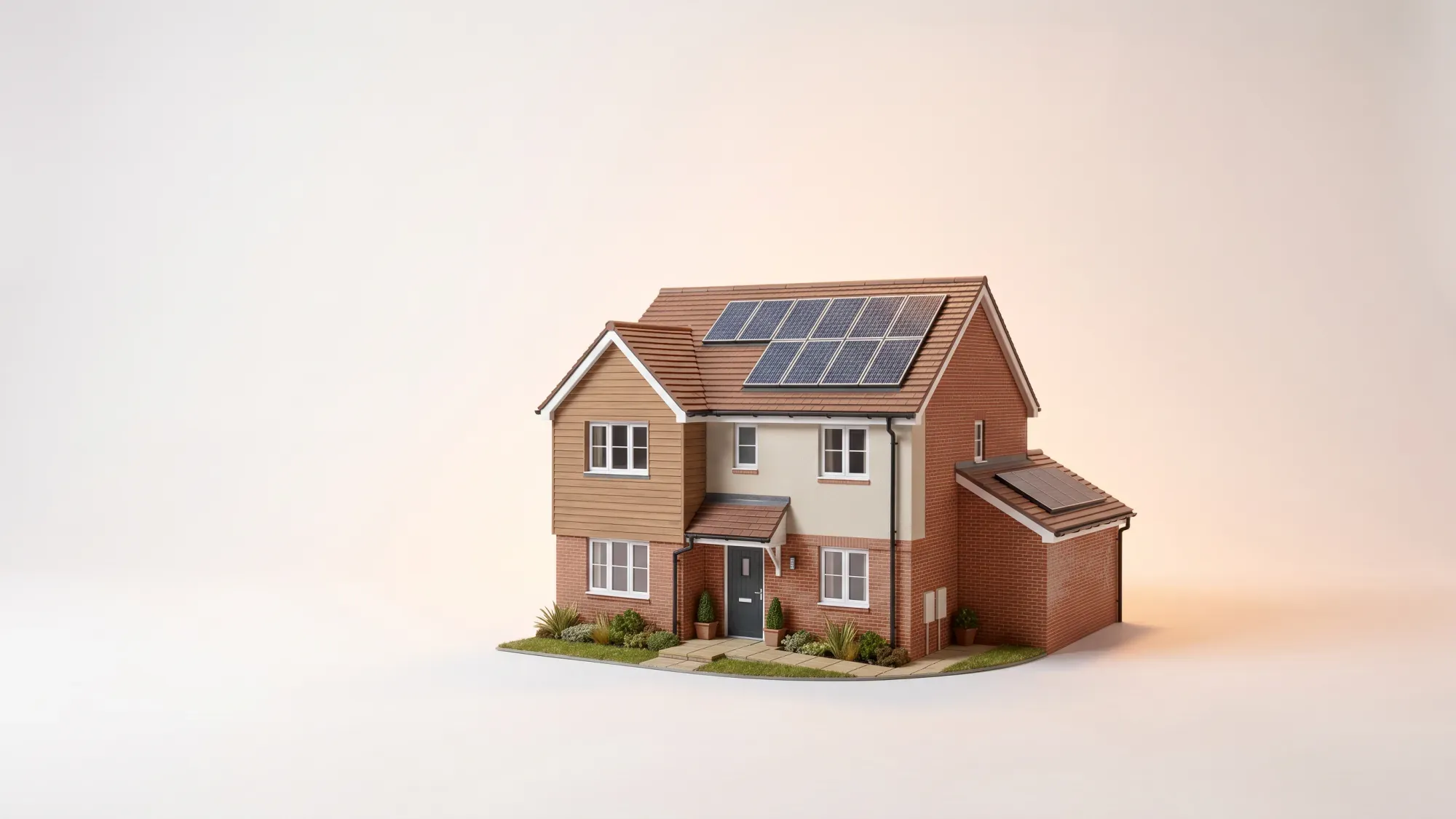
Understanding how solar panels convert sunlight into electricity is key for UK homeowners looking to invest in renewable energy. Solar panel efficiency quantifies the percentage of sunlight a photovoltaic (PV) system transforms into usable electricity, directly impacting how much energy your home can generate. For those in the UK, where sunlight intensity and temperature fluctuate, grasping this concept is crucial to maximising energy output, financial savings, and overall return on investment.
What is solar panel efficiency?
Solar panel efficiency measures how effectively a panel converts the sunlight hitting its surface into usable electricity. Expressed as a percentage, a panel with 20% efficiency, for example, converts 20% of the solar energy it receives into electrical energy, with the remainder lost as heat or reflected.
Defining efficiency for homeowners
For homeowners, efficiency is a direct indicator of a solar panel's performance. Modern residential solar panels typically achieve efficiencies between 15% and 23%, though premium monocrystalline models can reach 23-26% under ideal laboratory conditions. This figure helps determine how much electricity can be generated from a given roof area.
Why efficiency matters for UK homes
In the UK, where roof space can be limited, higher efficiency panels are particularly valuable. They allow for greater electricity generation from a smaller footprint, which is essential for homes with restricted roof area. This means more energy independence and potentially lower electricity bills, contributing to a future where energy is abundant.
Key factors affecting solar panel efficiency in the UK
Several environmental and installation-related factors influence how efficiently solar panels perform in real-world UK conditions.
Sunlight intensity and cloud cover
While solar panels generate electricity from daylight rather than direct sunshine alone, the intensity of sunlight directly impacts output. The UK's often cloudy climate means that panels must perform well even under diffuse light conditions. Modern solar technology is designed to deliver reliable electricity generation across all UK regions, adapting to variable weather.
Temperature and panel performance
Counterintuitively, solar panels perform best at cooler temperatures. Their efficiency decreases by approximately 0.3% to 0.5% for every degree Celsius above 25°C. While panels are rated at 25°C under Standard Test Conditions (STC), their surface temperature on a sunny UK day can easily reach 50°C to 60°C, leading to a slight reduction in output. The UK's generally moderate climate, however, helps maintain panel performance better than in hotter countries.
Panel orientation and tilt angle
The angle and direction a solar panel faces significantly affect how much sunlight it receives throughout the day and year. For optimal performance in the UK, panels typically perform best when facing south, with a tilt angle that maximises exposure to the sun's path.
Shading and obstructions
Even partial shading from chimneys, trees, or neighbouring buildings can drastically reduce a solar panel's output. Modern systems often use optimisers or micro-inverters to mitigate the impact of shading, allowing other unshaded panels in the array to continue producing efficiently.
Measuring and understanding solar panel performance
Understanding the metrics used to measure solar panel performance is crucial for homeowners to make informed decisions.
Peak power (Wp) vs efficiency percentage
Solar panels are often advertised with a peak power rating in Watts-peak (Wp), which indicates their maximum power output under ideal laboratory conditions (STC). Efficiency percentage, on the other hand, measures how much of the sunlight hitting a panel is converted into electricity per square metre. While a higher Wp is good, a higher efficiency percentage means more power from a smaller area, which is important for limited roof space.
Real-world vs standard Test conditions (STC)
Panel efficiency ratings are determined under STC, which involve a panel temperature of 25°C and specific light intensity. However, real-world conditions in the UK rarely match STC. Factors like varying temperatures, cloud cover, and installation specifics mean that actual system output will differ from the laboratory rating. Real-world whole-system efficiency on a UK roof typically lands around 14-18%.
Degradation rates and long-term output
Solar panels naturally degrade over time, meaning their ability to produce electricity slowly decreases. This degradation rate typically ranges from 0.3% to 0.8% per year. This means that after 25 years, panels are generally expected to retain 80% or more of their original output.
What is the typical degradation rate for solar panels?
Solar panels typically degrade at a rate of 0.3% to 0.8% per year, meaning their energy output gradually decreases over time. This ensures that most quality panels will still produce at least 80% of their initial output after 25 years of operation.
Choosing the right solar panels for your home
Selecting the right solar panels involves weighing different technologies, considering future advancements, and balancing cost with efficiency.
Monocrystalline vs polycrystalline panels
Monocrystalline panels are generally the most efficient type available for UK homes, often exceeding 20% efficiency, with premium models reaching 23-26%. They are made from a single crystal of silicon, giving them a uniform dark appearance. Polycrystalline panels, made from multiple silicon crystals, are slightly less efficient, typically ranging from 13-20%, and have a bluer, mottled look. For limited roof space, monocrystalline panels are often preferred due to their higher power density.
Emerging technologies and future efficiency
The solar industry is continuously evolving, with new technologies promising even higher efficiencies. While some emerging technologies like perovskite-silicon tandem cells have achieved over 30% efficiency in lab tests, they are not yet widely available for domestic use. Staying informed about these advancements can help homeowners make future-proof decisions.
Balancing cost and efficiency
Higher efficiency panels often come with a higher upfront cost. Homeowners need to balance this against their available roof space, budget, and desired energy output. While maximising efficiency is important, the most efficient panel isn't always the most cost-effective choice for every property. A thorough assessment of individual needs and long-term savings is crucial.
Maximising your solar panel efficiency
Once installed, there are several ways to ensure your solar PV system operates at its peak performance.
Optimal installation and system design
The quality of system design and installation is paramount. This includes correctly orienting and tilting panels to capture maximum sunlight, and ensuring proper wiring and inverter selection. A well-designed system minimises losses and optimises energy generation for your specific property and local sun path.
Maintenance and cleaning
Solar panels require minimal maintenance, but regular cleaning can prevent efficiency losses due to dirt, dust, and bird droppings. Most panels are self-cleaning to a degree with rainfall, but occasional manual cleaning can be beneficial, especially in areas with high pollution or during prolonged dry spells.
Integrating with battery storage and smart energy management
To truly maximise the benefits of efficient solar panels, integrating them with battery storage and smart energy management systems is highly effective. Battery storage allows you to store excess electricity generated during the day for use in the evenings or during periods of low generation, increasing self-consumption and reducing reliance on grid electricity. Smart energy management systems, often controlled via an app, can help homeowners monitor their energy generation and consumption, allowing for better management and optimisation of energy use. This integration moves homeowners towards greater control over their home's power.
The long-term value of high-efficiency solar
Investing in high-efficiency solar panels offers significant long-term benefits beyond immediate energy savings.
Financial savings and return on investment
High-efficiency panels generate more electricity, leading to greater savings on energy bills. With the average UK home using around 2,500 kWh of electricity per year, generating a significant portion of this from your own roof can lead to substantial financial benefits over the system's lifespan. The Smart Export Guarantee (SEG) further enhances this by providing payments for any excess electricity exported to the grid, provided your MCS-certified installation meets the eligibility criteria.
Contributing to energy abundance
By optimising solar panel efficiency, homeowners contribute to a more decentralised and robust energy system. Generating more of your own energy empowers you with greater control over your home's power, moving towards energy abundance. This aligns with a vision where energy is so plentiful it stops being a constant concern.
Warranties and guarantees
Reputable solar panel manufacturers typically offer performance warranties that guarantee a certain level of output for 25 years or more. These warranties often guarantee that panels will still produce at least 80-85% of their original output after this period, providing long-term peace of mind and protecting your investment.
Disclaimer
For the avoidance of doubt, this article is provided for informational purposes only and is not intended to constitute legal or financial advice. The author and/or Fuse Energy shall not be responsible for any losses arising out of any reliance on the information contained herein.