Solar array efficiency: maximising your home's output
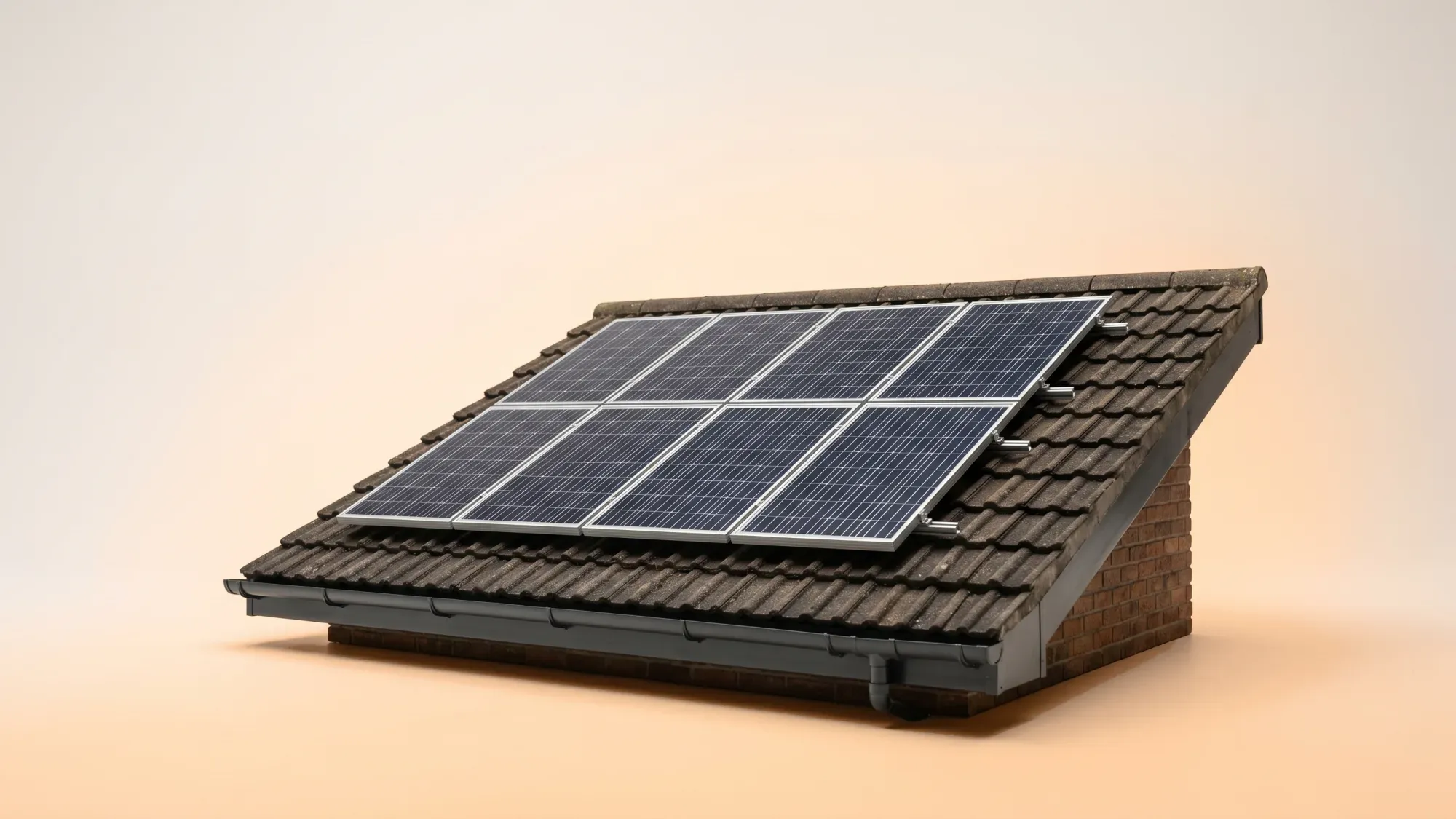
Solar panels offer a path to energy independence and lower bills, but understanding their real-world efficiency is key to maximising your investment. For UK homeowners, this means looking beyond laboratory ratings to how your system performs day-to-day, and what you can do to improve it.
Fuse Energy helps you make the most of your home's solar generation. With clear insights into your energy usage, you can better understand how your solar array contributes to your home's power needs. Click here to switch to Fuse Energy today.
Enter your address to get a quote and see how much you could save
Understanding solar panel efficiency
Solar panel efficiency measures how effectively a panel converts sunlight into usable electricity. It is a crucial metric, but its interpretation requires nuance.
What is rated efficiency?
Rated efficiency is a percentage indicating how much of the sunlight hitting a solar panel is converted into electricity under ideal laboratory conditions, known as Standard Test Conditions (STC). Modern residential solar panels typically achieve efficiency ratings between 15% and 22%. Premium monocrystalline panels can reach 23-25% efficiency, with some top-tier models pushing past 26%. This figure provides a benchmark for comparing different panel models, but it does not tell the whole story of real-world performance.
Why real-world performance differs
The actual output of your solar array will almost always differ from its rated efficiency. This is because real-world conditions rarely match the controlled environment of laboratory testing. Factors like temperature, shading, and the angle of the sun all play a significant role in how much electricity your panels generate. Real-world output is typically a few percentage points lower once these factors are accounted for. For example, a system rated at 100% output might typically deliver 85-90% after real-world losses in the UK.
Key factors affecting solar array performance
The performance of your solar panels is a dynamic interplay of environmental conditions and system-specific characteristics. Understanding these influences helps you anticipate and address potential issues.
Environmental influences: temperature, shading, and weather
Solar panels perform optimally at around 25°C. Counter-intuitively, as temperatures rise above this, the efficiency of most solar panels decreases. A typical crystalline silicon solar panel might lose 0.3% to 0.5% of its efficiency for every 1°C increase above 25°C. This "temperature coefficient" means that on a hot summer day, your panels might be less efficient than on a bright, cool day.
Shading, even partial, can drastically reduce output. A single shaded cell can impact the performance of an entire string of panels. Weather conditions, including cloud cover, rain, and even snow, also directly affect the amount of sunlight reaching your panels, and thus their output.
System-specific factors: panel type, orientation, and tilt
The type of solar panel you have (e.g., monocrystalline, polycrystalline) influences its baseline efficiency. Monocrystalline panels are generally more efficient and perform better in low-light conditions, making them suitable for UK homes with limited roof space. The orientation of your roof (south-facing is ideal) and the tilt angle of your panels are critical for maximising sun exposure throughout the day and year. Even with high-efficiency panels, a sub-optimal orientation or tilt will limit overall generation.
The impact of degradation over time
Solar panels naturally degrade over time, meaning their ability to convert sunlight into electricity gradually diminishes. This degradation rate typically ranges from 0.3% to 0.8% per year for modern panels. This means that after 25 years, a typical solar array might still operate at around 80-90% of its original capacity. Higher-quality panels often degrade more slowly, maintaining productivity for longer. While this is a natural process, monitoring it helps you understand your system's long-term performance.
Measuring your solar system's real-world efficiency
Knowing your system's actual performance is the first step towards optimising it.
Monitoring tools and smart meter data
Many modern solar inverter systems come with monitoring apps that provide real-time data on your array's generation. Additionally, smart meters, which are increasingly common in UK homes, can provide valuable insights into your electricity import and export, allowing you to see how much of your generated solar power you are actually using and how much you are sending back to the grid. Fuse empowers homeowners with data and control over their energy usage, helping them understand their solar array's contribution and manage their energy consumption smartly.
Calculating your actual efficiency
To calculate your real-world efficiency, you will need two key pieces of information: the actual energy your system has generated (in kilowatt-hours (kWh)) over a period, and the amount of solar irradiation your panels received during that same period. While direct measurement of solar irradiation can be complex, many monitoring systems provide estimated figures. By comparing your actual output to your system's theoretical maximum output under prevailing conditions, you can get a clearer picture of its performance.
What is the average UK home's electricity usage?
The average UK home uses around 2,500 kWh of electricity per year. This figure, provided by Ofgem, helps homeowners benchmark their consumption and understand the scale of energy their solar panels can offset. It is a useful baseline for assessing how well your solar array meets your household's demands.
Identifying underperformance
Consistent underperformance can be a sign of an underlying issue. If your monitoring data shows a significant drop in generation that cannot be explained by weather or seasonal changes, it might indicate shading problems, a faulty inverter, or other system inefficiencies. Regular checks against expected output for the time of year and local weather conditions can help you spot these issues early.
Practical steps to improve solar panel efficiency
Even after installation, there is plenty you can do to ensure your solar array is working at its best.
Regular cleaning and maintenance
Dust, dirt, bird droppings, and pollen can accumulate on your solar panels, blocking sunlight and reducing efficiency. While rain often provides a natural rinse, periodic cleaning (typically once or twice a year) can significantly improve output. Use plain water and a soft brush or cloth; avoid abrasive cleaners or high-pressure washers that could damage the panels. It is also wise to periodically check for any physical damage or loose connections.
Addressing shading issues
Even small amounts of shading can have a disproportionate impact on your system's output. Identify sources of shading, such as growing trees, new constructions, or even satellite dishes. Trimming branches, relocating obstructions, or installing optimisers or micro-inverters (which manage each panel independently) can mitigate the effects of shading.
Optimising energy consumption patterns
Maximising your solar array's efficiency is not just about generating more electricity; it is also about using that electricity smartly. Shift high-energy consumption tasks, like running washing machines, dishwashers, or charging electric vehicles, to times when your panels are generating the most power. This increases your "self-consumption" and reduces reliance on grid electricity, making your solar investment more valuable.
Long-term considerations for solar array efficiency
A solar array is a long-term investment, and planning for its sustained performance is crucial.
Understanding warranties and performance guarantees
Most solar panels come with two types of warranties: a product warranty (covering defects) and a performance warranty (guaranteeing a minimum power output over a certain period, often 25 years). Understand what these warranties cover and their duration. For example, a performance warranty might guarantee that your panels will still produce at least 80% of their original output after 25 years. This provides peace of mind regarding your system's long-term viability.
When to consider upgrades or professional assessment
While solar panels are durable, components like inverters typically have a shorter lifespan (around 10-15 years) and may need replacing sooner than the panels themselves. If your system is consistently underperforming despite maintenance, or if you are considering expanding your array or adding battery storage, a professional assessment can help determine the best course of action. They can evaluate the health of your system, identify bottlenecks, and recommend upgrades to boost efficiency.
Connecting efficiency to overall home energy management
Maximising solar array efficiency is a key component of a broader home energy management strategy. By understanding your generation and consumption patterns, you gain greater control over your energy use. This data-driven approach, supported by smart energy management tools, helps you make informed decisions about when to use energy, when to store it, and how to reduce your overall reliance on the grid. Fuse Energy aims to be a data-driven partner for homeowners, helping them maximise control and understand their residential solar investment through smart energy management.
For grid-connected solar installations, the consumer or their supplier must notify the Distribution Network Operator (DNO) under G98 within 28 days of installation for systems under 3.68 kilowatt (kW) on a single-phase supply, or 11.04 kW across three phases. Larger systems (above 3.68 kW on a single-phase supply or 11.04 kW on a three-phase supply) require a G99 application and approval before installation. Ofgem regulates the UK energy market, including rules for grid connection and the Smart Export Guarantee (SEG), which mandates licensed electricity suppliers to offer a tariff for electricity exported to the grid from small-scale low-carbon generators. To be eligible for SEG, your system typically needs to be certified (e.g., MCS certified) and you need a smart meter capable of half-hourly readings.
Fuse Energy empowers homeowners with tools and insights to understand their solar array's output and manage their energy usage smartly, aligning with our mission for a future of abundant energy.
Managing your home's energy should be simple and rewarding. Fuse Energy offers clear pricing, real-time usage data, and 24/7 human customer support to help you take control of your energy bills. Our smart meter integration can provide valuable insights into your solar generation and consumption, helping you make informed decisions. Switch to Fuse Energy today and join a community focused on smarter, more sustainable energy. Click here to get started. You can also learn more about our mission for a greener future here.
Disclaimer
For the avoidance of doubt, this article is provided for informational purposes only and is not intended to constitute legal or financial advice. The author and/or Fuse Energy shall not be responsible for any losses arising out of any reliance on the information contained herein.