How to choose the right EV tariff for you
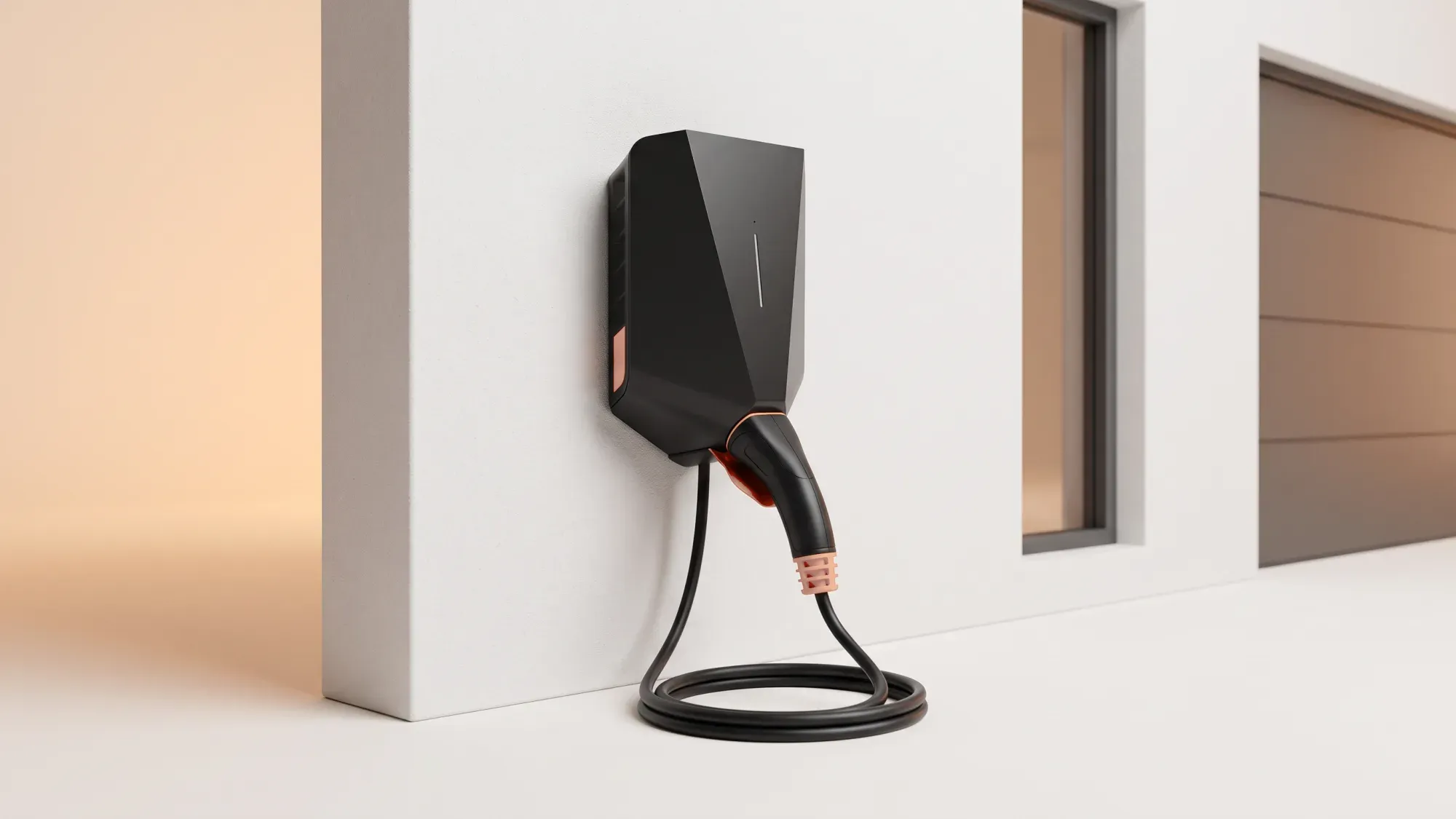
Choosing the right electricity tariff for your electric vehicle (EV) can be an effective way UK bill-payers can cut their energy bills. This is a crucial financial decision for UK homeowners, who are actively seeking to lower their home charging costs. The EV tariff market is competitive and often confusing, with each supplier offering different rates, off-peak windows, and smart charging requirements. Our guide cuts through the noise, helping you find the right EV tariff and improve your savings.
Take the stress out of finding the right tariff. Fuse Energy doesn't offer a dedicated EV tariff, but our off-peak variable tariff gives you the same lower rates during off-peak periods, applied to your entire household during a 7-hour window from 12:30am to 7:30am. Enjoy transparent pricing, competitive peak rates, real-time half-hourly usage data, 24/7 human customer support, and a modern energy experience designed around you. Switch to Fuse Energy today in as little as 3 minutes, start saving on your bills, and see how simple energy can be.
Enter your address to get a quote and see how much you could save
A quick checklist before choosing an EV tariff
- Confirm you have a connected smart meter installed.
- Verify your EV and charger model are compatible with smart-scheduled tariffs.
- Look for a tariff with an off-peak window long enough to cover your usual charging times.
- Understand if the cheap rate applies to your entire home's electricity usage, or just the EV.
- Plan to switch any high-demand appliance usage, like washing machines, into the off-peak window where possible for maximum savings.
The core principles of EV tariffs
The foundation of every EV tariff is time-of-use (ToU) pricing, a model designed to encourage customers to draw power when overall grid demand is low, typically overnight. This structure benefits the grid by balancing load, and it benefits you by offering a drastically cheaper unit rate for the electricity you consume during a set off-peak period, which on Fuse Energy's off-peak variable tariff is a 7-hour window from 12:30am to 7:30am.
ToU pricing
The ToU structure is what helps you benefit from lower rates during charging. During the off-peak window, the unit rate is low, compared to peak rates that can be much higher. The primary way to determine the best EV tariff for you is by the combination of the length of this window and the absolute price during those hours.
Understanding the standing charge vs unit rate balance
While the off-peak unit rate is the headline number, the daily standing charge is equally critical to your total savings. The total cost of a tariff is a balance: an extremely low off-peak unit rate is often paired with a high daily standing charge, sometimes over £0.50/day. If you drive less and don't charge frequently, this high standing charge can easily erode all the savings you make from the cheap energy. The most cost-effective tariff for any UK homeowner is one that perfectly balances a competitive off-peak rate with a reasonable standing charge, making the total annual cost lower than a single-rate tariff. Fuse Energy doesn't offer a dedicated EV tariff, but our off-peak variable tariff keeps peak rates competitive too, so you aren't hit with excessively high day rates.
Why a smart meter is essential for EV owners
Modern EV tariffs, particularly those with automated scheduling capabilities, are largely dependent on having a connected smart meter. This technology tracks your electricity usage in half-hourly increments and accurately applies the different unit rates, peak and off-peak, to your bill. Without a connected smart meter, energy suppliers cannot verify when you are charging your car and cannot apply the discounted rates. If you don't have one, ask your current supplier to arrange a free installation immediately to unlock your full saving potential. With Fuse Energy, we install the latest SMETS2 meters - a dual-rate compatible meter is all you need to access our off-peak variable tariff.
Choosing the right EV tariff
You must take into account your charging habits and whether the tariff you go with applies off-peak rates for the entire household or only for EV charging. You must also ensure your EV and charger models are compatible with the EV tariff.
The best for simple off-peak charging
Tariffs that offer a fixed off-peak window are the simplest to manage. You program your car or charger to begin charging during that fixed window, and you know exactly what rate you are paying. These tariffs are perfect for homeowners with older, non-smart chargers or for those who simply prefer to manually control their charging schedule. They are straightforward, but they often feature slightly higher off-peak rates than their smart-scheduled counterparts because they require less grid management from the supplier's side.
Smart tariffs with automated scheduling
The most competitive tariffs use automated scheduling, where the supplier's app or platform directly communicates with your car or smart charger. While the savings are typically higher, these tariffs have strict eligibility requirements regarding the make of your car or the model of your home charger. These complex requirements can be a blocker for EV owners who simply want a straightforward way to save money.
Checking your EV and charger compatibility
Before committing to a smart-scheduled tariff, you must check the supplier's approved list. You should also follow this process to ensure you get the best savings you can.
- Confirm your charger and EV: Note the exact model of your home charger and your EV's make and model. Confirm eligibility by checking with your supplier.
- Confirm smart meter status: Double-check that your smart meter is operating correctly and sending half-hourly readings to your supplier.
- Connect the app: Once switched, immediately download and connect the supplier's app to your car or charger to ensure the automated scheduling is active and successful.
Cheap rates for your whole home
One of the greatest, often-overlooked benefits of most EV tariffs is that the cheap off-peak rate typically applies to all of your home's electricity usage, not just the power going into your car. This means your EV tariff isn't just an EV charger; it is a full-home savings plan. By shifting high-demand, flexible-use appliances, such as washing machines, tumble dryers, dishwashers, and even hot water heaters, to run exclusively within the off-peak window, you can multiply your savings without changing your total consumption.
Leveraging Fuse Energy's off-peak tariff
Fuse Energy offers a smarter alternative to traditional EV tariffs. Rather than a dedicated EV tariff, we offer an off-peak variable tariff with the same lower rates during off-peak periods, applied to your usual household usage, not just when charging. Our pricing is fully transparent (VAT included) with quarterly-updated rates below the Ofgem energy price cap. With seamless app-based charging control, real-time half-hourly usage insights, and fast 24/7 human customer support with fast response times of under 5 minutes, Fuse makes managing your energy simple. Switch to Fuse Energy in as little as 3 minutes and find out about our mission.
Frequently asked questions
What is an EV tariff and how does it work?
An EV tariff is an electricity plan that offers different unit rates for different times of the day, known as time-of-use (ToU) pricing. It works by providing a drastically reduced unit rate, usually overnight, to encourage EV owners to charge when demand on the national grid is low, leading to substantial savings.
Why might I not be eligible for the cheapest EV tariffs?
Ineligibility usually stems from one of two requirements: you do not have a connected SMETS2 smart meter, or your specific EV model or home charger is not on the supplier's approved compatibility list for their smart-scheduled tariffs. These smart-scheduled tariffs require a connected device to allow the supplier to control the charging process.
How can I switch to Fuse Energy?
Switching to Fuse Energy is simple and can be done in as little as 3 minutes by completing the online onboarding process here.
Disclaimer
For the avoidance of doubt, this article is provided for informational purposes only and is not intended to constitute legal or financial advice. The author and/or Fuse Energy shall not be responsible for any losses arising out of any reliance on the information contained herein.