Portable solar panels: power on the go
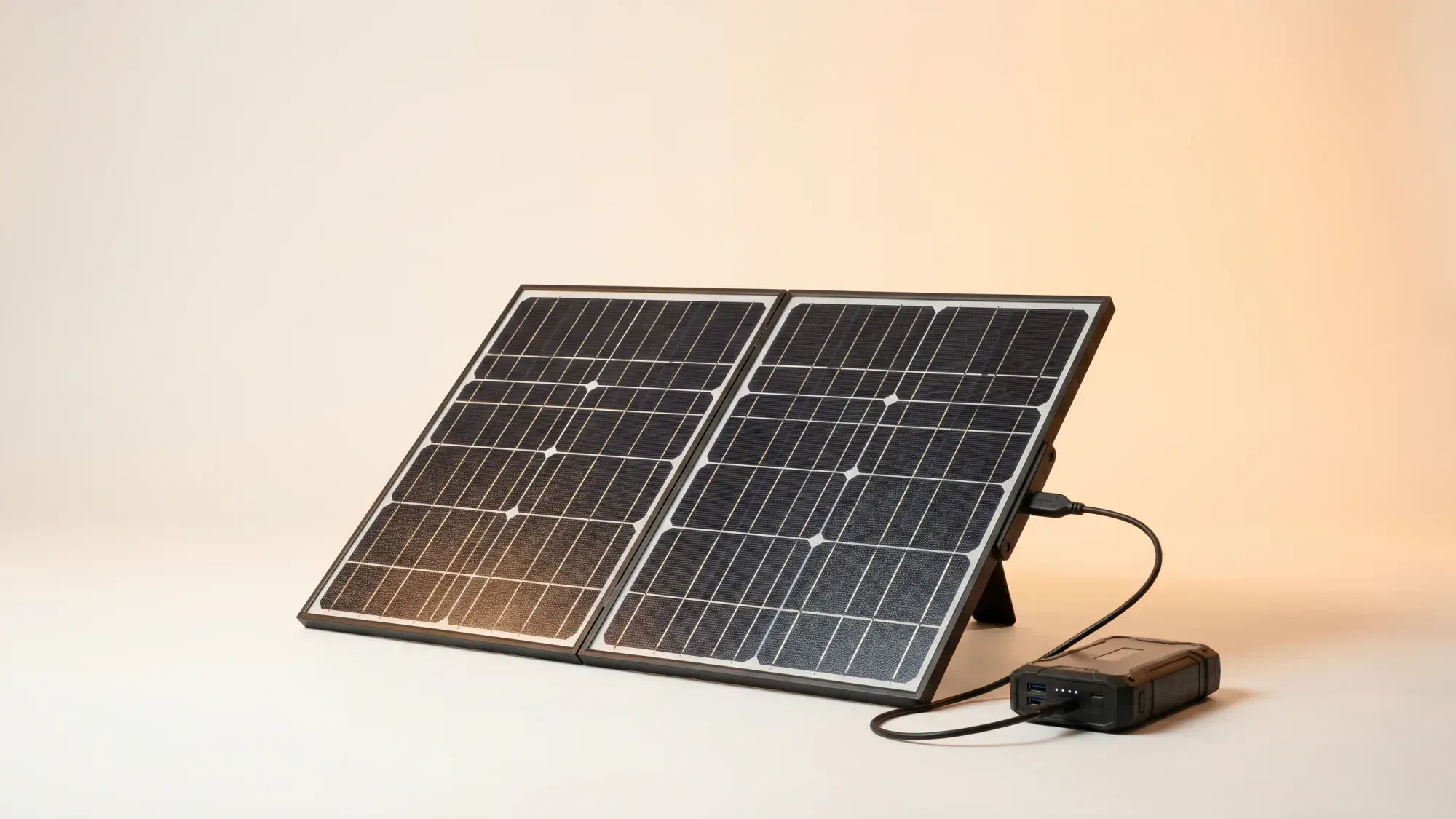
Portable solar panels offer a flexible way to generate electricity off-grid, perfect for charging devices or power stations. This guide provides practical, data-backed advice on how to choose, use, and optimise these panels for your specific needs, especially considering the UK's unique climate. We will help you understand how to harness the sun's energy, transforming it into reliable power for your adventures or as an emergency backup. Fuse Energy does not currently supply or install portable solar panels. The quote button below is for a full home solar installation.
What are portable solar panels?
Portable solar panels are compact, lightweight devices designed to convert sunlight into electricity, providing power away from traditional grid connections. They are a direct response to the need for convenient, on-demand energy, enabling users to maintain their digital lives and power essential equipment whether camping, travelling, or facing an unexpected power cut.
How portable solar panels work
At their core, portable solar panels function on the photovoltaic effect. When sunlight hits the semiconductor material within the solar cells, it dislodges electrons, creating an electric current. This direct current (DC) is then typically routed through a charge controller to either directly charge a device or, more commonly, to replenish a portable power station or battery bank. The performance of these panels is highly dependent on direct sunlight, the angle at which they are positioned, and local weather conditions.
Types of portable solar panels
The market offers several types of portable solar panels, each with distinct characteristics. Monocrystalline panels are generally the most efficient, often featuring a uniform dark appearance. They perform well in bright, direct sunlight and are a popular choice for those prioritising power output. Polycrystalline panels are slightly less efficient but often more affordable, identifiable by their speckled blue appearance. They are a good all-rounder for general use. Lastly, thin-film panels are the most flexible and lightweight, making them highly portable. While their efficiency is typically lower, their ability to perform better in low-light conditions and their robust, bendable nature make them suitable for specific applications where durability and flexibility are paramount. Portable solar panel efficiency for these models typically ranges from 15% to over 20%.
Choosing the right portable solar panel
Selecting the right portable solar panel means matching its capabilities to your personal energy demands and how you plan to use it. Underestimating the impact of UK weather and seasonal daylight on panel performance is a common pitfall to avoid.
Assessing your power requirements
Before buying, assess your specific power requirements and the devices you intend to charge. List all the gadgets you plan to power - phones, tablets, laptops, portable fridges, or even small medical devices - and note their wattage and battery capacity. This calculation helps determine the total wattage your portable solar panel needs to deliver. For context, the average UK home uses around 2,700 kWh of electricity per year1, highlighting the scale difference between household consumption and portable needs. Knowing your daily energy consumption in watt-hours (Wh) will guide you to a panel with sufficient output to keep your devices running. Understanding your energy usage can also help you consider your average monthly electric bill with solar panels at home.
Considering your use case: camping, travel, or emergency
Your primary use case will heavily influence your choice. For camping and hiking, lightweight, foldable panels are often preferred for their ease of transport. If you are using a motorhome or campervan, more rigid or semi-flexible panels might be suitable for semi-permanent mounting. For emergency backup, a robust panel paired with a high-capacity power station offers peace of mind, ensuring you have power when the grid goes down. Neglecting to consider the weight and portability for your specific use case (e.g., hiking versus motorhome) can lead to dissatisfaction.
Key features to look for
When comparing panels, look for features that enhance performance and usability. High efficiency ratings mean more power from a smaller surface area. Durability and weather resistance are crucial, especially for outdoor use in the UK. Consider the panel's output ports (USB-A, USB-C, DC) and ensure compatibility with your devices or power station. Integrated kickstands or mounting options simplify optimal positioning. Finally, check for built-in charge controllers or compatibility with external ones, as these protect your devices from overcharging.
Portable solar panel efficiency in the UK
The UK's climate presents unique challenges for solar panel performance, but understanding these can help you maximise your output.
Understanding UK weather impacts
UK weather, characterised by frequent cloud cover and seasonal variations in daylight, significantly influences the practical efficiency of portable solar panels. Cloud cover can significantly reduce solar panel output, with heavily clouded days typically seeing panels produce 10-25% of their maximum output compared to direct sunlight. Seasonal changes also play a major role; winter months offer fewer daylight hours and a lower sun angle, further impacting generation. This means you cannot expect the same performance year-round. For more information, you can read about do solar panels work on cloudy days.
Maximising output in variable conditions
To maximise output, always aim for direct sunlight and adjust the panel's angle throughout the day to follow the sun's path. Even on cloudy days, positioning the panel correctly can make a difference. Using an MPPT (Maximum Power Point Tracking) charge controller can significantly improve charging efficiency. These controllers intelligently find the optimal voltage and current at which the solar panel can produce maximum power, improving charging efficiency by up to 30% compared to simpler PWM (Pulse Width Modulation) controllers. Keeping panels clean from dirt and debris also ensures optimal light absorption.
Realistic expectations for performance
It is important to set realistic expectations for portable solar panel performance in the UK. While they offer invaluable off-grid power, they are not a direct replacement for grid electricity for entire homes. Instead, view them as a powerful tool to enable specific activities and maintain essential device functionality. Portable solar technology is continuously improving, with advancements in panel efficiency and battery storage capacity, offering ever-greater capability.
Setting up and optimising your portable solar system
Proper setup and maintenance are crucial for getting the most out of your portable solar panels and ensuring their longevity.
Optimal panel orientation and placement
For optimal performance, your portable solar panel needs to be oriented directly towards the sun. In the UK, this generally means facing south. The ideal angle will change with the seasons and time of day. In summer, a shallower angle (closer to horizontal) is often best, while in winter, a steeper angle is required to catch the lower sun. Adjusting the panel every few hours to track the sun will significantly boost its output. Avoid shaded areas, as even partial shading can drastically reduce overall power generation.
Connecting to power banks and devices
Most portable solar panels connect to power banks or devices via a charge controller, which regulates the voltage and current to prevent damage. Ensure your power bank or device is compatible with the panel's output. Many panels come with various adapters or USB ports for direct charging of smaller devices like phones. For larger power stations, a DC input cable is typically used. Always connect the charge controller to the battery first, then the solar panel, and disconnect in reverse order.
Maintenance and care for longevity
Maintaining your portable solar system is straightforward. Keep the panel surfaces clean from dust, dirt, and bird droppings, as these can block sunlight and reduce efficiency. Use a soft cloth and water for cleaning. Store panels in a dry, protected environment when not in use. Regularly check cables and connectors for any signs of wear or damage. Proper care ensures your panel remains effective for many years, providing reliable "power to play with" wherever your adventures take you.
Portable solar panels for specific applications
Portable solar panels offer immense capability across various off-grid scenarios, aligning with the idea of having energy wherever you are.
Camping and outdoor adventures
For campers and outdoor enthusiasts, portable solar panels provide the freedom to power lights, charge phones, GPS devices, and even small portable fridges without relying on noisy generators or limited battery packs. Foldable panels are particularly popular here due to their compact size and light weight, making them easy to carry in a backpack. They empower users to extend their trips and enjoy nature without sacrificing essential modern conveniences.
Motorhomes and campervans
Motorhome and campervan owners can use portable solar panels to keep their leisure batteries topped up, running appliances like interior lights, water pumps, and entertainment systems. This offers greater independence from mains hook-ups, allowing for longer stays in remote locations. Semi-rigid panels can be fixed to roofs, while foldable options provide additional power when parked in sunny spots.
Emergency backup power
In the event of a power cut, a portable solar panel paired with a power station can be a lifeline. It can keep essential communication devices charged, power emergency lighting, and even run small medical equipment. This capability provides control and independence from the grid for specific needs, embodying "power as capability" when it matters most.
Common questions about portable solar panels
Do portable solar panels work in winter?
Yes, portable solar panels do work in winter, but their efficiency is significantly reduced. The UK experiences fewer daylight hours and a lower sun angle during winter months, meaning less direct sunlight reaches the panels. Additionally, while colder temperatures can technically improve solar cell efficiency, the overriding factor is the reduced light availability. Expect lower power output and longer charging times compared to summer.
What can a portable solar panel power?
The power output of a portable solar panel determines what it can run. Smaller panels (e.g., 10-30W) are typically sufficient for charging smartphones, headlamps, and small USB-powered devices. Mid-range panels (50-100W) can charge tablets, laptops, and power small portable fridges when paired with a power station. Larger panels (100W+) can support more demanding devices, multiple gadgets simultaneously, and larger power stations for extended use.
Are foldable panels durable?
Foldable panels are designed for portability and often feature robust materials like ETFE or PET laminates that offer good durability against scratches and minor impacts. While they are generally less rigid than framed panels, many are built to withstand outdoor conditions, including moisture and dust. Their flexibility can also make them more resistant to damage from drops or bending compared to brittle glass panels. However, like all electronics, careful handling and proper storage will extend their lifespan.
References
Disclaimer
For the avoidance of doubt, this article is provided for informational purposes only and is not intended to constitute legal or financial advice. The author and/or Fuse Energy shall not be responsible for any losses arising out of any reliance on the information contained herein.