Is underfloor heating expensive to run?
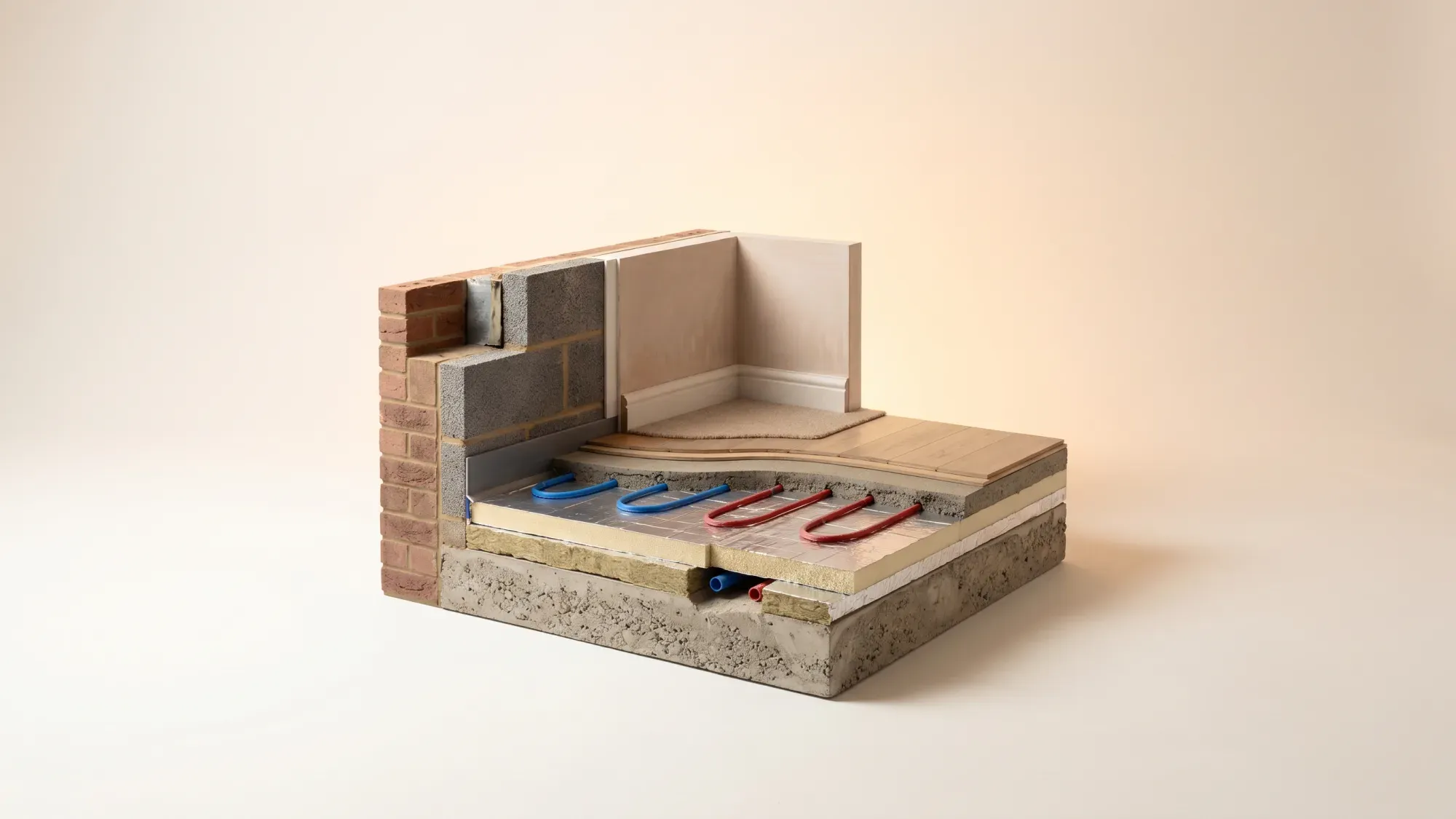
Underfloor heating (UFH) offers a comfortable and efficient way to warm your home, but many homeowners wonder about its running costs. Whether underfloor heating is expensive to run depends on several key factors, including the type of system, your property's insulation, and how you manage its use. This guide breaks down the real costs and helps you understand how to make the most economical choices for your home.
Understanding your energy consumption is crucial for managing heating costs. Fuse Energy helps you gain insight into your home's energy use, empowering you to make informed decisions and optimise your comfort. Click here to see how easy it is to switch.
Enter your address to get a quote and see how much you could save
Understanding underfloor heating running costs
Underfloor heating systems work by distributing warmth evenly across the floor surface, which then radiates upwards. This differs from traditional radiators, which heat the air directly. The efficiency of UFH largely stems from its ability to run effectively at lower temperatures.
How underfloor heating works
UFH systems consist of a network of pipes (for wet systems) or electric cables or mats (for electric systems) installed beneath your floor covering. These gently heat the floor, which then radiates heat into the room. This radiant heat provides consistent and comfortable warmth, often allowing you to set your thermostat a few degrees lower than with radiators for the same perceived warmth. Wet underfloor heating systems typically operate with water temperatures between 35°C and 55°C. Electric underfloor heating systems typically operate with floor temperatures between 25°C and 30°C.
The UK context for heating costs
In the UK, energy prices are a significant concern for homeowners. As of 1 July 2026, the Ofgem Price Cap for electricity is 26.11 pence per kilowatt-hour (kWh), with a daily standing charge of 57.19 pence. For gas, the unit rate is 7.33 pence per kWh, with a daily standing charge of 29.04 pence. These figures apply to standard variable tariffs and are reviewed quarterly by Ofgem. All tariff rates, including unit rates and standing charges, are quoted inclusive of 5% VAT. The average UK home uses around 2,500 kWh of electricity per year and 9,500 kWh of gas per year, according to Ofgem's Typical Domestic Consumption Values (TDCVs) effective from 1 July 2026.
Factors affecting underfloor heating expenses
The running costs of your UFH system are not fixed; they are influenced by several key variables. Understanding these can help you manage your energy consumption more effectively.
System type: wet vs electric UFH
The choice between wet (hydronic) and electric UFH is perhaps the most significant factor impacting running costs. Wet systems, connected to a boiler or heat pump, generally have lower running costs for whole-home heating due to the lower price of gas per kWh compared to electricity, or the high efficiency of heat pumps. Electric systems, while cheaper to install, tend to be more expensive to run for large areas or continuous heating due to the higher unit cost of electricity.
Property insulation and heat loss
Good insulation is paramount for any heating system, but especially for UFH. Since UFH heats from the floor up, poor insulation can lead to significant heat loss through the floor, walls, and ceiling, meaning your system has to work harder and longer to maintain the desired temperature. This directly translates to higher energy bills. Improving your property's insulation is one of the most effective ways to reduce UFH running costs.
Thermostat controls and usage patterns
How you use and control your UFH system plays a crucial role. Smart thermostats and zoned heating allow you to heat only the areas you need, when you need them, preventing wasted energy. Many homeowners often pair this with a smart meter installation to track usage. Leaving UFH on constantly at a high temperature, or trying to use it like an on-demand radiator system, will inevitably increase costs. Effective energy management, including smart thermostats and good insulation, is crucial for optimising UFH running costs and ensuring energy efficiency.
Energy tariffs and unit rates
The specific energy tariff you are on directly impacts your running costs. Variable tariffs, subject to the Ofgem Price Cap, fluctuate quarterly. Fixed tariffs offer price stability for a set period. Understanding your unit rates for electricity and gas, and how they compare, is essential for calculating and predicting your UFH expenses. You can learn more about how these rates are set by reading about the energy price cap explained.
Wet underfloor heating: running costs and efficiency
Wet UFH systems, also known as hydronic systems, circulate warm water through pipes beneath the floor. They are generally considered the most economical choice for heating an entire home.
Boiler-fed systems
When connected to a gas boiler, wet UFH benefits from the relatively lower cost of gas per kWh compared to electricity. These systems are efficient because they operate at lower flow temperatures than traditional radiators, typically between 35°C and 55°C. This means the boiler does not have to work as hard, consuming less fuel.
Heat pump-fed systems
Pairing wet UFH with a heat pump (air source or ground source) can offer even greater efficiency and lower running costs, especially as heat pumps are designed to operate most efficiently at the lower flow temperatures required by UFH. While the initial installation cost of a heat pump is higher, the long-term savings on energy bills can be substantial, making it a highly economical option for whole-home heating. You might also be eligible for heat pump grants in the UK to help with the upfront cost.
Typical running costs for wet UFH
The running cost of wet UFH depends heavily on the property's size, insulation, and the heat source. For an average well-insulated UK home, wet UFH can be cheaper to run than traditional radiators, primarily because it operates at lower temperatures and distributes heat more evenly, reducing heat loss and maintaining comfort with less energy input.
Electric underfloor heating: running costs and suitability
Electric UFH systems use heating cables or mats laid under the floor and are powered directly by electricity.
Applications and limitations
Electric UFH is typically easier and cheaper to install than wet systems, making it a popular choice for renovations or smaller areas. However, due to the higher unit cost of electricity, it is generally more expensive to run for whole-home heating or prolonged periods. Electric UFH systems typically operate with floor temperatures between 25°C and 30°C.
Calculating electric UFH costs
To estimate the running cost of electric UFH, you need to know the system's power output (in watts), the number of hours it runs, and your electricity unit rate. For example, a 150W/m² system covering 10m² would consume 1.5 kWh per hour. At the current electricity price cap of 26.11 pence per kWh, this would cost approximately 39.17 pence per hour to run. This calculation does not include the daily standing charge.
When electric UFH makes sense
Electric UFH is often best suited for:
- Smaller rooms: Bathrooms, ensuites, or conservatories where it provides luxurious warmth for shorter periods.
- Supplementary heating: Used in conjunction with another primary heating system to add comfort in specific zones.
- Intermittent use: Ideal for rooms that are not continuously occupied, allowing for quick heat-up times when needed.
Optimising your underfloor heating for lower bills
Making your UFH system as efficient as possible involves a combination of smart choices and ongoing management.
Insulation improvements
Prioritise improving your home's insulation. This includes loft insulation, cavity wall insulation, and ensuring your floor is adequately insulated beneath the UFH system. Reducing heat loss means your UFH system will not have to work as hard, leading to significant savings.
Smart controls and zoned heating
Install programmable or smart thermostats that allow you to set different temperatures for different zones and at different times of the day. This prevents heating unoccupied rooms or overheating areas unnecessarily. Many modern UFH systems integrate with smart home platforms for even greater control and optimisation.
Is underfloor heating cheaper to run than radiators?
Wet underfloor heating can be cheaper to run than radiators for whole-home heating, especially when well-insulated and paired with a heat pump. It operates at lower temperatures, providing even warmth. Electric underfloor heating, however, is generally more expensive to run than radiators for primary heating due to the higher cost of electricity per kWh.
Maintenance and system efficiency
Regular maintenance of your wet UFH system (e.g., checking boiler efficiency, bleeding pipes) ensures it runs optimally. For both wet and electric systems, ensure thermostats are calibrated correctly and that no furniture or thick rugs are blocking heat distribution, which can reduce efficiency.
Monitoring energy usage with Fuse Energy
Understanding your energy consumption is key to managing your heating bills. Fuse Energy's app provides granular insights into your overall home energy usage, helping you to track and understand how your heating contributes to your consumption. This data empowers you to identify patterns, make informed adjustments to your heating schedule, and optimise your UFH efficiency. With 24/7 human customer support, you can get personalised advice on interpreting your energy data and optimising your tariff for maximum savings.
By taking control of your energy data, you can enjoy the comfort of underfloor heating without the fear of excessive bills.
Managing your home's energy should be simple and transparent. Fuse Energy offers clear pricing, real-time usage data through our app, and 24/7 human customer support to help you understand and control your energy bills. Switching is quick and easy, allowing you to focus on keeping your home comfortable. Click here to switch to Fuse Energy today. You can also find out more about our mission to make energy abundant and affordable by clicking here.
Disclaimer
For the avoidance of doubt, this article is provided for informational purposes only and is not intended to constitute legal or financial advice. The author and/or Fuse Energy shall not be responsible for any losses arising out of any reliance on the information contained herein.