How much does it cost to charge an electric car?
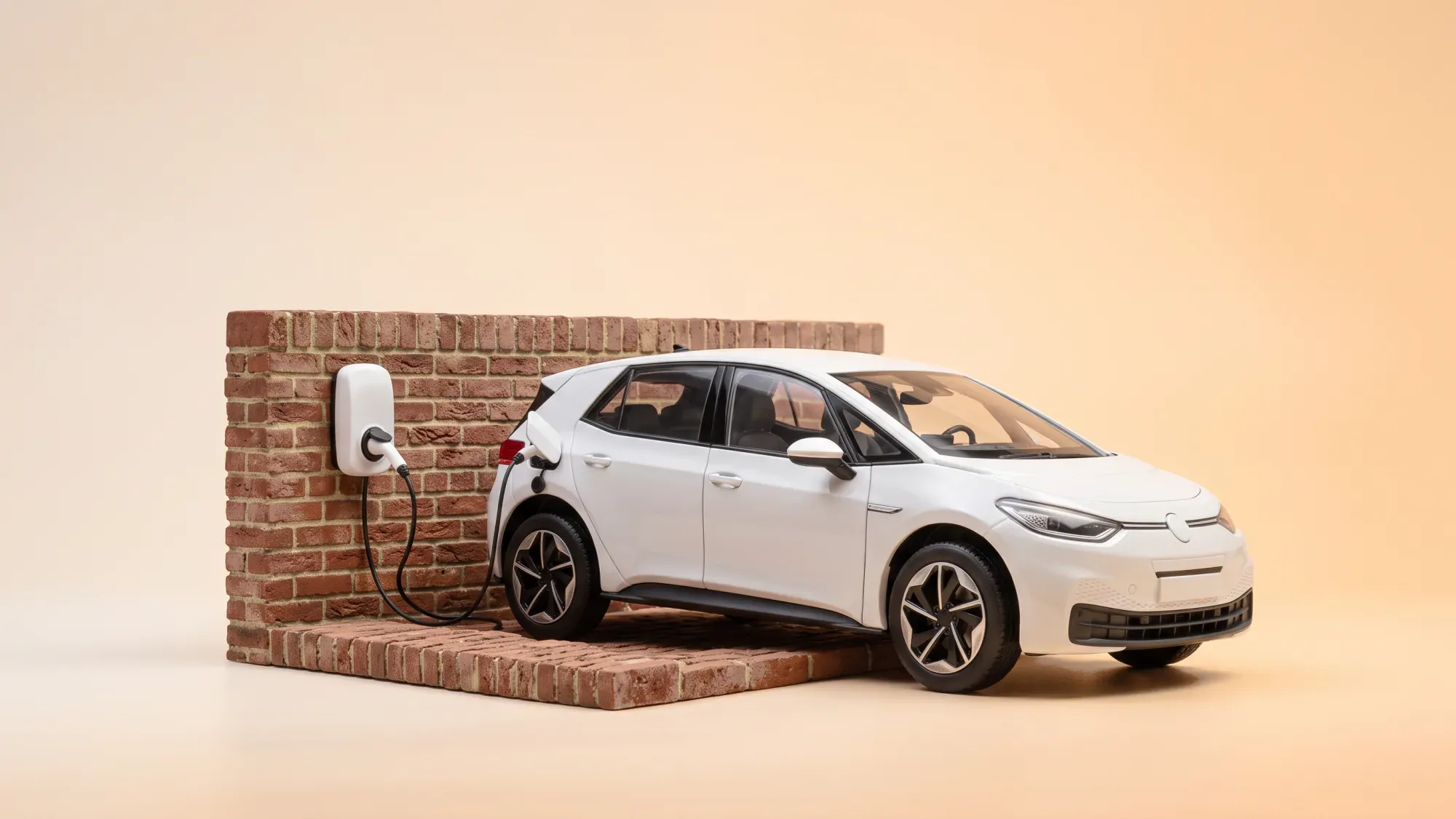
Understanding the true cost of charging an electric vehicle (EV) in the UK can feel complex, with prices varying significantly based on where and when you charge. For UK drivers considering or owning an EV, clarity on these costs and how to manage them is essential. Home charging, especially when using off-peak electricity tariffs, generally offers the most cost-effective solution for EV owners.
Optimising your EV charging costs starts with understanding your energy usage. Fuse Energy helps you do just that, putting control in your hands so you can manage your energy and avoid unexpected bills. Click here to get started.
Enter your address to get a quote and see how much you could save
Understanding electric car charging costs
The cost of charging an electric car in the UK is not a fixed figure. It fluctuates based on several key factors, from your vehicle's specifications to the type of charger you use and your electricity tariff.
Key factors influencing charging prices
The primary elements determining your EV charging costs include the size of your car's battery, its energy efficiency, and the price of electricity at the point of charge. Electricity unit rates can differ dramatically between home, public, and rapid charging options.
Battery capacity and vehicle efficiency
An EV's battery capacity, measured in kilowatt-hours (kWh), dictates how much electricity it can store. Most electric vehicles in the UK typically have battery capacities ranging from 40 kWh to 100 kWh, though some larger or luxury models can exceed 100 kWh. Vehicle efficiency, often expressed as miles per kWh, indicates how far your EV can travel on a single unit of electricity. Most modern electric cars in the UK achieve between 3.8 and 4.3 miles per kWh in real-world driving. This equates to roughly 0.23 to 0.26 kWh per mile.
The difference between AC and DC charging
Charging speeds are categorised into slow, fast, and rapid, corresponding to the power output (kW) and whether they use alternating current (AC) or direct current (DC). AC charging is common for home and slower public chargers, converting the AC from the grid to DC using the car's onboard charger. DC rapid chargers, often found at public stations, bypass the car's onboard charger and feed DC power directly to the battery, enabling much faster charging times. This speed often comes at a higher cost per kWh.
Home charging: your most cost-effective option
Charging your electric car at home is almost always the cheapest way to keep your EV topped up, offering significant savings compared to public charging. For more detailed advice, check out our electric vehicle home charging guide.
Calculating your home charging cost
To calculate the cost of charging your EV at home, you need three pieces of information: your car's battery capacity, its efficiency, and your home electricity unit rate.
For example, if you have an EV with a 60 kWh battery and your home electricity rate is 26.11p per kWh under the Ofgem Price Cap (for 1 July to 30 September 2026), a full charge from empty would cost approximately £15.67 (60 kWh x £0.2611).
If your EV achieves 3.5 miles per kWh, that 60 kWh charge would give you 210 miles of range. This equates to around 7.46p per mile (£15.67 / 210 miles).
The benefits of off-peak tariffs
The real savings from home charging come from utilising dual-rate variable tariffs or time-of-use tariffs. These offer significantly cheaper rates during periods of low demand, typically overnight. Some off-peak rates can be as low as 8p per kWh.
How much can off-peak tariffs save me?
Charging a 60 kWh EV on an off-peak tariff at 8p/kWh would cost just £4.80 for a full charge. This dramatically reduces your per-mile cost to around 2.28p (assuming 3.5 miles/kWh), making it roughly a third of the cost of charging on a standard tariff and significantly cheaper than petrol or diesel.
By scheduling your charging during these cheaper hours, you can drastically reduce your running costs. Many modern EVs and home chargers allow you to schedule charging sessions to automatically start when off-peak rates apply.
Smart meters and smart charging
Smart meters are crucial for accessing the best dual-rate variable tariffs, as they enable accurate, half-hourly readings that energy suppliers use to apply variable rates. With a smart meter, you can take advantage of smart charging features, either through your car, charger, or energy supplier's app. This allows for automated charging during the cheapest, greenest times, optimising your energy spend without manual intervention. Learn more about smart meter installation.
Installing a home EV charger
While you can charge an EV using a standard three-pin plug, a dedicated home EV charger offers faster, safer, and smarter charging. Fuse offers the Easee One EV charger, including installation, for £899. This enhances your smart charging capabilities and helps you maximise savings.
Public charging: on-the-go expenses
Public charging networks are essential for longer journeys or when home charging isn't an option, but they typically come at a higher price.
Pay-as-you-go vs subscription models
Public charging networks generally offer two pricing models: pay-as-you-go (PAYG) and subscription. PAYG rates are higher but offer flexibility, while subscriptions often provide reduced per-kWh rates in exchange for a monthly fee. For frequent public charger users, a subscription can lead to significant savings.
Rapid, fast, and slow charger costs
The cost of public charging varies by speed. As of April 2026, public EV chargers are categorised by power rating: standard (3kW to less than 8kW), standard plus (8kW to less than 50kW), rapid (50kW to less than 150kW), and ultra-rapid (150kW and above).
The weighted average PAYG price for standard and fast public chargers (3kW to 49kW) is around 54p per kWh. For rapid and ultra-rapid chargers (50kW and above), the average PAYG price is approximately 77p per kWh. This translates to roughly 16p per mile for slower public charging and up to 23p per mile for rapid charging, assuming an average-efficiency EV.
Navigating public charging networks
The public charging landscape is fragmented, with numerous networks operating different pricing structures and payment methods. Apps like Zapmap can help you locate chargers, compare prices, and plan your routes efficiently. Some EV manufacturers also offer their own charging networks or partnerships, which can provide preferential rates.
EV charging vs petrol/diesel: a cost comparison
Electric cars are generally cheaper to run than petrol or diesel vehicles, especially when home charging is maximised.
Per-mile cost analysis
Comparing the cost per mile highlights the financial advantage of EVs:
- Petrol cars (40-45 MPG): Typically cost between 15p and 22p per mile.
- Diesel cars (45-55 MPG): Range from 15p to 22p per mile.
- EVs (home charging on a standard tariff): Around 5p to 8p per mile.
- EVs (home charging on an off-peak tariff): As low as 2p to 5p per mile.
- EVs (public rapid charging): Can be 17p to 24p per mile, often comparable to or even exceeding petrol/diesel costs for long trips.
Long-term savings potential
While the upfront cost of an EV can be higher, the long-term fuel savings are substantial. Charging at home on an off-peak tariff can save drivers hundreds of pounds annually compared to running a petrol or diesel car. These savings, combined with lower maintenance costs and potential tax benefits, contribute to a lower total cost of ownership for EVs over their lifespan.
Strategies to reduce your EV charging costs
Taking control of your charging habits and energy plan can lead to significant savings.
Optimising your home energy tariff
Regularly review your home energy tariff to ensure it's the best fit for your EV charging needs. Dual-rate variable tariffs offer the most competitive rates for overnight charging. If you have a smart meter, you can switch to a time-of-use tariff that provides cheaper electricity during off-peak hours.
Maximising smart charging benefits
Use your EV's or home charger's smart features to schedule charging during off-peak periods. This automation ensures you always charge at the lowest rates without having to remember to plug in at specific times. Fuse's app provides transparency and control over energy usage, helping you track and manage your EV charging costs effectively.
Efficient driving habits
Driving efficiently can extend your EV's range and reduce the frequency of charging. Gentle acceleration, maintaining a steady speed, and using regenerative braking effectively can all contribute to lower energy consumption.
Utilising charging apps and memberships
For public charging, leverage apps like Zapmap to find the most affordable chargers in your area. Consider memberships with frequently used public networks to access discounted rates. Some networks also offer loyalty programmes or bundles that can reduce costs further.
Managing your energy bills should be clear and easy to understand. Fuse Energy focuses on straightforward pricing, so you can see exactly what you're paying without unnecessary complexity. If you have a smart meter, you can view detailed usage data through the app or website, helping you understand how you can lower your bills. If you don't have a smart meter, Fuse Energy can upgrade your non-smart meter, completely for free. This can make it easier to track spending and make informed decisions about your energy use. Our 24/7 human support team is always on hand with fast response times whenever you need help. Click here to switch to Fuse Energy today. Find out about our mission by clicking here.
Disclaimer
For the avoidance of doubt, this article is provided for informational purposes only and is not intended to constitute legal or financial advice. The author and/or Fuse Energy shall not be responsible for any losses arising out of any reliance on the information contained herein.