How does solar energy work?
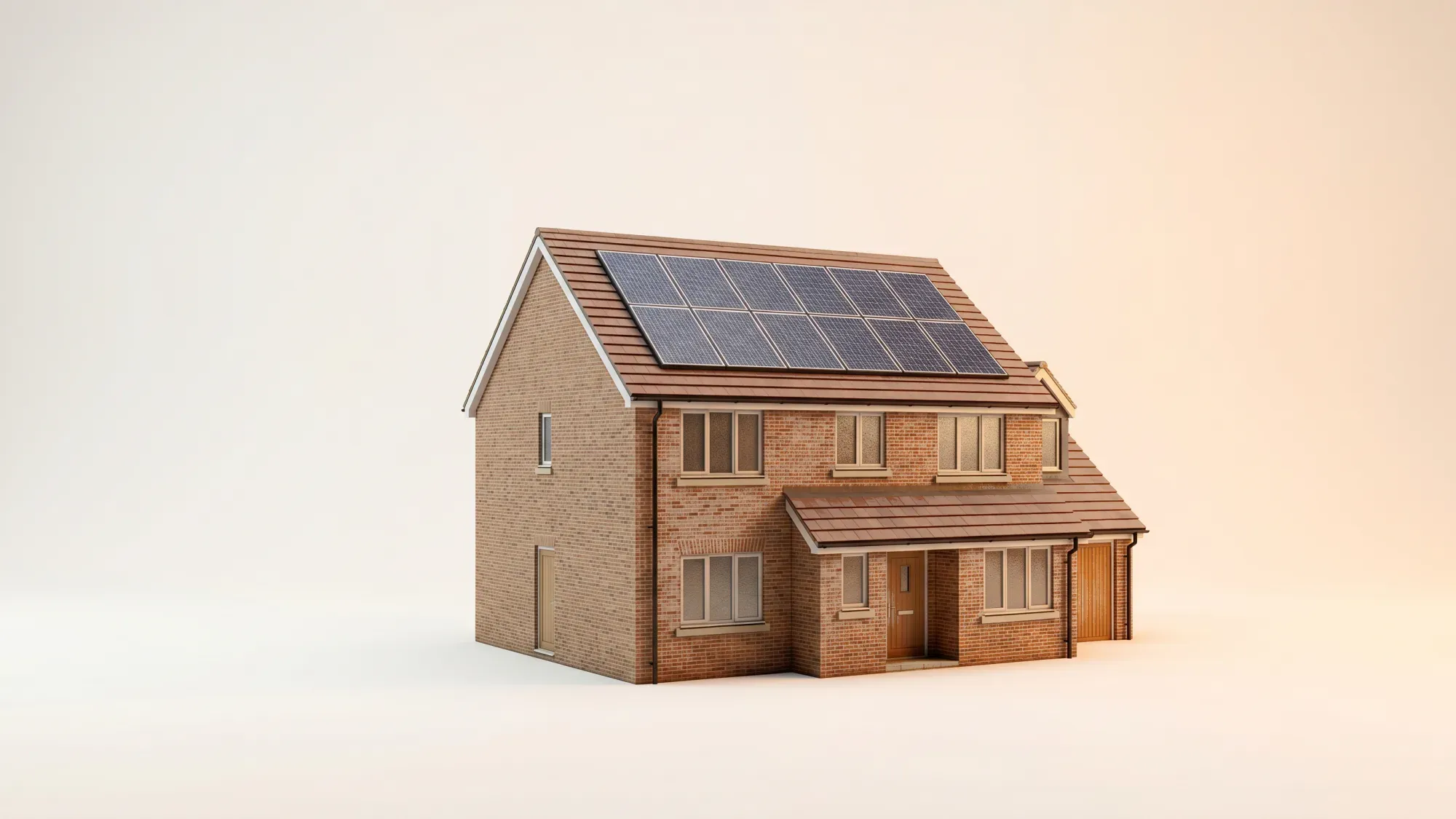
Understanding how solar energy works is a strategic move for homeowners, offering a clear path to greater energy control and capability. This guide demystifies the science behind solar panels, explaining their components and practical applications for UK homes.
Harnessing solar power gives you more control over your home's energy. Fuse Energy is here to help you make the most of it, with clear pricing and smart tools to manage your usage. Click here to switch to Fuse Energy today.
Enter your address to get a quote and see how much you could save
The science behind solar panels
Solar panels convert sunlight directly into usable electricity through a process known as the photovoltaic effect. This fundamental principle allows solar cells to capture the sun's energy, transforming it into direct current (DC) electricity suitable for powering your home.
What is the photovoltaic effect?
What is the photovoltaic effect?
The photovoltaic effect is the process where a material converts light into electricity. When photons from sunlight hit a semiconductor material, they knock electrons free from their atoms. These freed electrons then flow to create an electric current, directly generating electricity without any moving parts.
The photovoltaic effect is the fundamental process by which solar cells convert light into electricity. When sunlight, composed of tiny packets of energy called photons, strikes a solar panel, these photons are absorbed by the semiconductor materials within the photovoltaic cells. This absorption dislodges electrons from their atoms, creating an electric current. Solar cells are designed with an electric field that forces these freed electrons to flow in a specific direction, generating direct current (DC) electricity.
From sunlight to electricity
The journey from sunlight to electricity begins when photons from the sun strike the photovoltaic (PV) cells in solar panels. These cells are typically made from semiconductor materials, most commonly silicon. When photons are absorbed, they energise electrons, causing them to break free from their atomic bonds. This movement of electrons creates a direct current (DC) of electricity. This DC electricity is then ready for the next stage of conversion to be usable in your home.
Key components of a solar PV system
A complete solar photovoltaic (PV) system involves several key components working together to convert sunlight into usable electricity for your home. Each part plays a crucial role in ensuring efficient and reliable power generation.
Solar panels (photovoltaic modules)
Solar panels, also known as photovoltaic modules, are the most visible part of any solar energy system. They are composed of multiple solar cells connected together, designed to capture as much sunlight as possible. These cells are typically made from semiconductor materials, most commonly silicon, which is highly effective at converting light into electricity through the photovoltaic effect. The panels are built to be durable and weather-resistant, ensuring a long lifespan and consistent energy production.
Inverters: DC to AC conversion
The electricity generated by solar panels is direct current (DC), but most household appliances and the National Grid operate on alternating current (AC). This is where inverters become crucial. An inverter's job is to convert the DC electricity produced by the solar panels into AC electricity that can be used in your home or fed into the grid. Without an inverter, the solar power generated would be incompatible with your home's electrical system.
Battery storage and grid connection
Once solar panels generate electricity and the inverter converts it to AC, you have a few options for how that power is used. The electricity can directly power your home's appliances. If your panels produce more electricity than you need at that moment, the excess can be stored in a solar battery system for later use. This allows you to use your own solar power even when the sun isn't shining, such as at night or on cloudy days. Alternatively, any surplus electricity can be fed back into the National Grid, potentially earning you credits or payments through schemes like the Smart Export Guarantee (SEG). A grid connection also means you'll always have a backup supply of electricity when your solar panels aren't generating enough, or your battery is depleted.
Harnessing solar power for your home
Integrating solar power into your home means understanding how the generated electricity flows and the tangible benefits it brings. It's about taking control of your energy supply and making it work for you.
How solar electricity powers your property
When your solar panels are generating electricity, it first goes through the inverter to become AC power. This AC electricity then flows to your home's electrical panel, where it's distributed to power your lights, appliances, and other devices. If your solar system produces more electricity than your home is currently using, the excess can either charge a battery storage system or be exported to the National Grid. When your solar panels aren't producing enough power (e.g., at night), your home will draw electricity from your battery (if you have one) or from the National Grid, ensuring a continuous supply.
The benefits of solar energy
Solar power offers a range of compelling benefits for UK homeowners. Firstly, it provides a renewable and clean source of electricity, significantly reducing your carbon footprint and reliance on fossil fuels. This contributes to a cleaner environment and a more sustainable future. Secondly, generating your own electricity can lead to substantial savings on your energy bills, especially as energy prices fluctuate. By reducing the amount of electricity you need to buy from the grid, you gain greater control over your household expenses. You can explore more about the advantages of solar energy in detail. Finally, solar energy enhances your energy independence, making your home more resilient to power outages and giving you a sense of self-sufficiency.
Making the most of your solar energy
Maximising the benefits of solar energy involves understanding your consumption patterns and embracing smart technology to optimise your energy flow.
Understanding your energy flow
To truly make the most of your solar energy, it's essential to understand when you generate power and when you use it. Solar panels produce most electricity during daylight hours, with peak generation around midday. By aligning your energy-intensive activities, such as running washing machines or charging electric vehicles, with these peak generation times, you can maximise your self-consumption of free, clean energy. This reduces the amount of electricity you need to import from the grid.
How much electricity does an average UK home use?
The average UK home uses around 2,700 kWh of electricity per year, which equates to roughly 7.5 kWh per day. This figure is consistent with Ofgem's median-based typical domestic consumption value and GOV.UK subnational consumption data1. Understanding this baseline helps homeowners gauge their energy needs and how much solar power they might need to generate to cover their consumption.
Taking control with smart technology
Smart technology plays a pivotal role in optimising your solar energy usage. Smart meters provide real-time data on your electricity generation and consumption, allowing you to monitor your energy flow directly. Many modern solar systems integrate with smart home devices, enabling automated control over appliances based on solar availability or energy prices. For instance, you could program your electric vehicle to charge only when your solar panels are generating excess power, or your hot water cylinder to heat up during periods of high solar production. This level of control empowers you to manage your energy strategically, turning your solar investment into a true power play for your home. Understanding how to use devices like an Aclara smart meter can further enhance this control.
Conclusion
Solar energy offers a powerful and practical way for UK homeowners to take control of their energy future. By understanding the science behind solar panels, the role of key components like inverters, and how to optimise your energy flow, you can unlock greater energy independence and contribute to a cleaner planet. It's about making informed choices and leveraging technology to create a more abundant and resilient energy supply for your home.
Fuse Energy is committed to building a future with power to play with. We believe that understanding your energy is the first step towards gaining control. Our app provides clear insights into your usage, and our 24/7 human support team is always on hand to help. Switching to Fuse is quick and easy, allowing you to take charge of your energy bills from day one.
References
Disclaimer
For the avoidance of doubt, this article is provided for informational purposes only and is not intended to constitute legal or financial advice. The author and/or Fuse Energy shall not be responsible for any losses arising out of any reliance on the information contained herein.