How does a smart meter work?
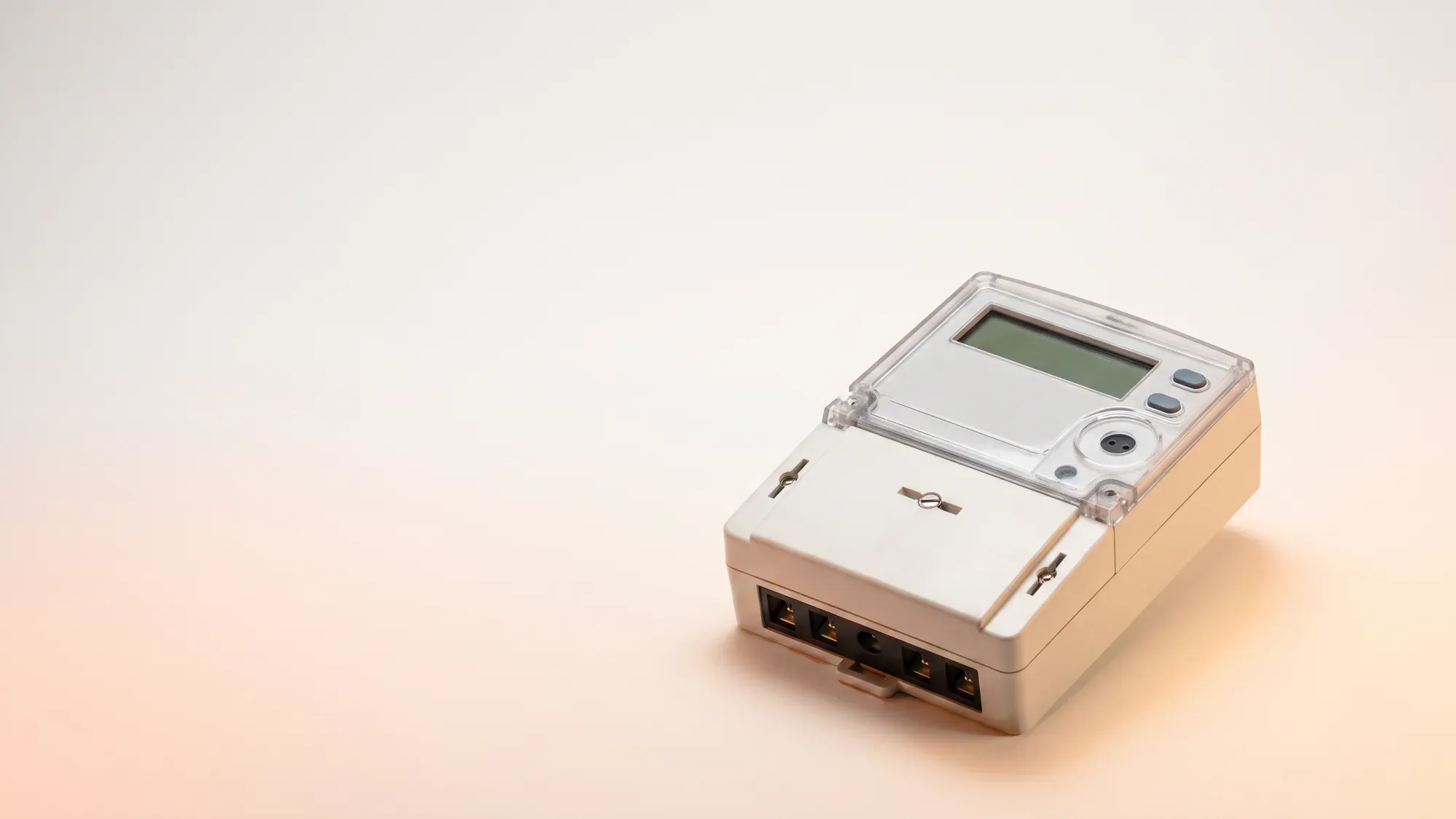
Smart meters are digital devices that automatically send your energy readings to your supplier, significantly reducing the need for manual meter readings. They are a foundational technology empowering UK households to take control of their home energy management, transforming energy from a source of anxiety into a resource with which to build and play.
Understanding how your smart meter works can help you make the most of its features and manage your energy consumption more effectively. Fuse Energy offers clear pricing, real-time usage data, and 24/7 human customer support to help you get the most from your smart meter. Click here to switch to Fuse Energy today.
Enter your address to get a quote and see how much you could save
What is a smart meter?
A smart meter is a new type of gas and electricity meter that digitally measures your energy consumption. Unlike older technology, these devices communicate directly with your energy supplier, providing accurate data on how much electricity (in kilowatt-hours, kWh) and gas (in cubic metres or feet cubed, converted to kWh) you use. This automatic data transfer significantly reduces the need for estimated bills and provides you with a clearer picture of your energy usage.
Beyond the traditional meter
Traditional meters require manual readings, often leading to estimated bills that can be inaccurate. Smart meters move beyond this, offering a more precise and dynamic way to track energy use. They are a key component of Great Britain's transition to a smarter, more efficient energy grid, with a national rollout underway to replace legacy meters across the country.
Key components of a smart meter system
A smart meter system typically consists of three main parts:
- The meter itself: This digital device replaces your existing electricity and gas meters, accurately measuring your consumption. Energy suppliers arrange and install these meters free of charge for eligible homes, typically using SMETS2 (Smart Metering Equipment Technical Specifications 2) models.
- The communications hub: Often integrated with the electricity meter, this hub is responsible for sending your energy data securely to your supplier.
- The in-home display (IHD): A small, portable screen that connects wirelessly to your smart meter, showing you your energy usage in near real-time.
The mechanics: how smart meters send data
Smart meters operate on a dedicated and secure wireless network, distinct from your home internet, to transmit energy data. This system ensures that your usage information reaches your supplier efficiently and safely.
Secure data transmission
Your smart meter automatically records your electricity and gas usage and sends this information to your energy supplier. This data is encrypted end-to-end and transferred via a secure Wide Area Network (WAN) managed by the Data Communications Company (DCC). This dedicated network is designed specifically for smart meters, ensuring that your energy data is protected and cannot be intercepted or misused.
The role of the communications hub
The communications hub acts as the central point for data transfer from your meters. It collects the readings from both your electricity and gas meters (if you have both) and sends them securely to your energy supplier. This process typically occurs at least once a day, enabling accurate billing and reducing the reliance on estimates. For more detailed insights, you can often choose to have readings sent more frequently, such as half-hourly, by providing explicit consent to your supplier. Understanding your half-hourly meter readings can help you optimise your energy use.
Understanding your in-home display (IHD)
The in-home display (IHD) is a small, portable monitor that connects wirelessly to your smart meter. It shows your energy usage in near real-time, often in pounds and pence, allowing you to see how much energy you are using and what it is costing you at any given moment. This immediate feedback can help you understand your energy habits and identify opportunities to manage your consumption more effectively. It is important to note that IHDs display indicative usage only; billing always relies on the meter data itself.
Benefits of smart meters for your home
Smart meters offer several advantages that can help you manage your home energy more effectively and contribute to a more efficient national energy system.
Accurate billing and fewer estimates
One of the primary benefits of smart meters is accurate billing. Because your meter automatically sends readings to your supplier, your bills are based on your actual energy consumption, not estimates. This significantly reduces the frustration of overpaying or underpaying for your energy and provides clarity on your household's energy expenditure.
Real-time energy insights
Your in-home display provides real-time insights into your energy usage, helping you track how much electricity and gas you are consuming and its cost. This immediate feedback empowers you to make informed decisions about your energy habits, potentially identifying areas where you can reduce consumption and save money. By actively engaging with this data, you can move beyond a scarcity mindset and make effective choices about your energy use.
Supporting a smarter energy grid
Smart meters are crucial for building a more dynamic and efficient energy system. The data they provide helps energy network operators understand and manage Britain's energy needs more effectively, reducing waste and cutting costs across the sector. This improved understanding of energy demand is vital for integrating more renewable energy sources and building a future with abundant power.
Addressing common smart meter concerns
It is natural to have questions about new technology, especially concerning data and connectivity. Smart meters are designed with these considerations in mind.
Data privacy and security
Smart meters are designed with security at their core, developed in collaboration with experts like the National Cyber Security Centre (NCSC). They are regulated by Ofgem, which, alongside the UK GDPR and Data Protection Act 2018, sets standards for their operation and data privacy. Your smart meter only records how much gas and electricity you use; it does not store personal information such as your name, address, or bank details. This usage data is transmitted securely over a dedicated network, not the internet. You have control over who can access your energy usage data, including how often and for what purposes, except where this is required for regulated purposes like billing. Explicit consent is generally required for half-hourly data or for sharing data with third parties.
What data does a smart meter collect?
A smart meter collects information about how much gas and electricity you use, measured over specific time periods. It does not record personal details like your name, address, or bank account information, nor does it monitor individual appliances or connect to your home Wi-Fi.
What if my smart meter goes offline?
Like any technology, smart meters can occasionally lose connection to the network. If your smart meter goes offline or stops sending readings, it means it is not communicating with your energy supplier via the DCC network. This can lead to estimated bills, as your supplier will not be receiving up-to-date usage information. In such cases, your meter will still record your energy use, and you may need to submit manual readings to ensure accurate billing. Your energy supplier can often resolve connectivity issues remotely or arrange for an engineer visit if necessary.
The radio Teleswitch service (RTS) switch-off
The Radio Teleswitch Service (RTS) meters are older technology that used a longwave radio signal to switch between peak and off-peak rates. These meters are being switched off in an industry-Wide phase-out that began on 30 June 2025. If you have an RTS meter, your current energy supplier is responsible for replacing it with a smart meter at no cost to you. This upgrade is a necessary step to ensure you continue to receive accurate billing and can access modern energy tariffs.
Getting and using your smart meter
Getting a smart meter is a straightforward process, and using its data can significantly enhance your energy management.
Smart meter installation process
Smart meters are installed free of charge by energy suppliers for eligible homes as part of the national rollout programme. Your energy supplier will arrange the installation, which typically takes around one to two hours for both gas and electricity meters. New installations use SMETS2 meters, the second generation of smart meters, which offer improved functionality and connectivity. You can learn more about the process in our guide to smart meter installation.
Making the most of your smart meter data
Once installed, your smart meter provides valuable data that can help you understand and manage your energy consumption. By regularly checking your in-home display or your energy supplier's app, you can identify patterns in your usage, pinpoint energy-intensive appliances, and make conscious choices to reduce your consumption. This active engagement with your energy data empowers you to make informed decisions and manage your home energy effectively.
The future of home energy with smart meters
Smart meters are more than just a billing tool; they are a critical foundation for the future of home energy management and the wider energy grid.
Enabling dynamic tariffs and renewables
With smart meters, you can access more flexible and dynamic tariffs that reward you for using energy during off-peak hours or when renewable generation is high. This capability is essential for balancing the grid as more intermittent renewable sources come online, allowing you to play an active role in a greener energy system.
Smart meters and energy independence
Smart meters are integral to building a future where energy is abundant and accessible. By providing transparent, real-time insights into your energy usage, they empower you to take greater control over your home energy. This aligns with Fuse Energy's vision for a future with power to play with, where customers can make informed decisions and manage their energy effectively, moving towards greater energy independence. Fuse Energy's intuitive app, built on the foundation of smart meters, provides these transparent insights, while 24/7 human customer support is available to assist with any smart meter queries or connectivity issues.
Managing your home energy should be simple and transparent. Fuse Energy offers clear pricing, real-time usage data through our app, and 24/7 human customer support to help you understand and control your energy consumption. Switching to Fuse is quick and easy, allowing you to take advantage of modern energy management tools. Click here to switch to Fuse Energy today and experience a smarter way to power your home. You can also find out more about our mission to make energy abundant by clicking here.
Disclaimer
For the avoidance of doubt, this article is provided for informational purposes only and is not intended to constitute legal or financial advice. The author and/or Fuse Energy shall not be responsible for any losses arising out of any reliance on the information contained herein.