Heat pump vs gas boiler: costs and efficiency
Deciding on a new home heating system involves weighing up upfront costs, running expenses, efficiency, and environmental impact. This comparison explores the key differences between heat pumps and gas boilers, helping you make an informed choice for your home.
Understanding your home heating choices
Home heating in the UK is transforming, driven by evolving energy costs and environmental commitments. For many homeowners, the choice between a modern, efficient gas boiler and a low-carbon heat pump is becoming increasingly relevant.
The shift in UK home heating
The UK is moving towards greener energy solutions, with government initiatives encouraging the adoption of low-carbon heating systems. This shift influences how homeowners approach heating upgrades, moving beyond traditional gas boilers towards alternatives like heat pumps. Regulatory changes, such as the Future Homes Standard, which aims to ensure new homes built from 2025 onwards produce significantly fewer carbon emissions, mean low-carbon heating is expected in most new developments. A full ban on new gas boilers in new builds is targeted for 2035. For existing homes, there is no forced removal programme or deadline to switch.
Why this comparison matters for homeowners
For homeowners, understanding the nuances between heat pumps and gas boilers is crucial. This decision impacts not only your household budget through energy bills but also your home's carbon footprint and its future-proofing against evolving energy policies. Making the right choice means balancing immediate financial outlay with long-term savings, comfort, and environmental responsibility.
How heat pumps and gas boilers work
Understanding the fundamental mechanics of each system is the first step in comparing them effectively. They operate on entirely different principles to deliver heat to your home.
The mechanics of a heat pump
Heat pumps do not generate heat by burning fuel; instead, they move it. An air source heat pump, for example, extracts heat from the outside air, even when temperatures are low. This heat is then compressed to increase its temperature and transferred into your home's heating system and hot water supply. For every unit of electricity consumed, heat pumps typically produce 2.5 to 3.5 units of heat, a measure known as the Seasonal Coefficient of Performance (SCOP). This makes them highly efficient.
How a gas boiler provides heat
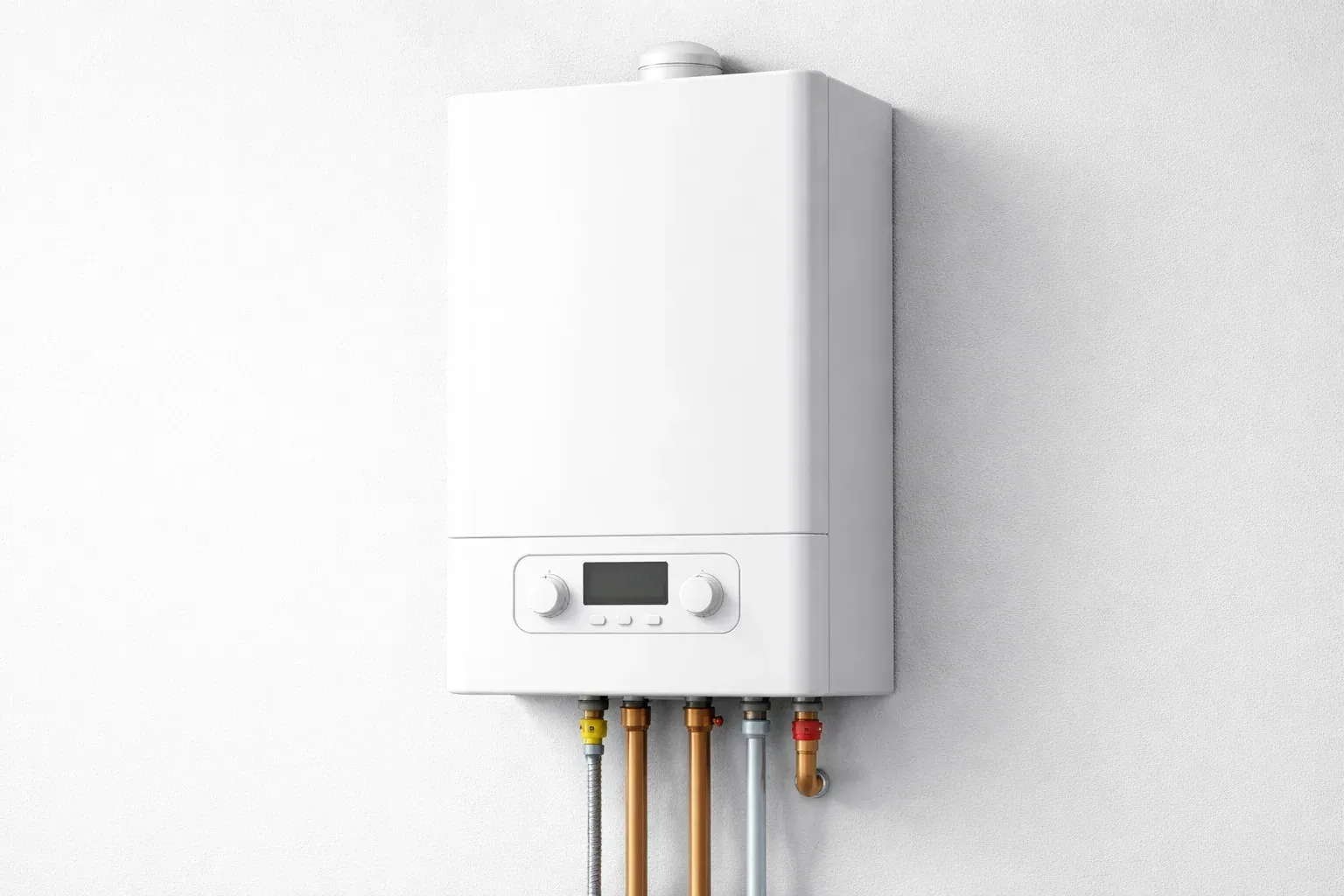
Gas boilers, in contrast, generate heat by burning natural gas. This combustion process heats water, which is then circulated through radiators and taps to provide central heating and hot water. Modern condensing gas boilers are highly efficient, converting around 90-94% of the gas they burn into usable heat. While effective, this process directly consumes fossil fuels and releases carbon emissions.
Comparing key factors: cost, efficiency, and environment
When deciding between a heat pump and a gas boiler, several critical factors come into play, each with financial and environmental implications.
Upfront installation costs: heat pump vs gas boiler
The initial installation cost is often a significant consideration. Heat pumps generally have a higher upfront cost than gas boilers. However, government support schemes can substantially reduce this difference. The UK's Boiler Upgrade Scheme (BUS) offers a grant of £7,500 towards the cost of installing an air source or ground source heat pump in eligible homes in England and Wales. After this grant, the installation cost of a heat pump can become comparable to that of a new gas boiler. You can learn more about the scheme in our blog on what is the BUS.
Running costs: heat pump vs gas boiler efficiency
Running costs are influenced by the efficiency of the system and the fluctuating prices of electricity and gas. While electricity is typically more expensive per unit than gas, the high efficiency of heat pumps (SCOP of 2.5 to 4.0) means they produce more heat per unit of energy consumed compared to gas boilers (90-94% efficiency). In a well-insulated UK home, the average running cost for a heat pump can be comparable to or even lower than a gas boiler, though this varies significantly with energy prices and household usage patterns. Understanding the energy price cap can help you estimate these costs.
What is SCOP for a heat pump?
SCOP, or Seasonal Coefficient of Performance, measures a heat pump's average efficiency over an entire heating season, accounting for varying outdoor temperatures. A SCOP of 3.0 means the heat pump produces 3 units of heat for every 1 unit of electricity consumed, offering a realistic picture of annual running costs and overall energy effectiveness.
Environmental impact and carbon footprint
The environmental impact is a key differentiator. Gas boilers burn fossil fuels, directly contributing to carbon emissions. Heat pumps, by contrast, use electricity to move heat, and their carbon footprint depends on the source of that electricity. As the UK grid decarbonises with more renewable energy sources, heat pumps become increasingly greener. Switching from a gas boiler to a heat pump can reduce a home's carbon emissions by approximately 75%.
Suitability for UK homes and practical considerations
Beyond costs and efficiency, practical aspects like property type, space, and how each system performs in the UK climate are important for homeowners to consider.
Property type and insulation requirements
Heat pumps operate most efficiently when delivering heat at lower flow temperatures over longer periods, making them ideal for well-insulated homes. Properties with good insulation, double glazing, and potentially larger radiators or underfloor heating are best suited for optimal heat pump performance. While gas boilers can work effectively in a wider range of property types, improving insulation will always enhance efficiency for any heating system.
Space, noise, and maintenance differences
Heat pumps require an outdoor unit, which needs sufficient space and can produce a low hum similar to a refrigerator fan. They also typically require a hot water cylinder, which may need space inside the home if not already present. Gas boilers are generally more compact and can often be wall-mounted. In terms of maintenance, heat pumps typically have a longer lifespan of 15-20 years compared to a gas boiler's 10-15 years. Heat pumps may also require less frequent professional servicing, often every 1-3 years, compared to annual checks for gas boilers.
Performance in the UK climate
Modern heat pumps are designed to operate effectively even in cold UK winters, extracting heat from the air at temperatures as low as -15°C or lower. While their efficiency can slightly decrease in extreme cold, they are still capable of heating a home comfortably. Gas boilers are generally unaffected by external temperatures, providing consistent heat regardless of the weather.
Government support and the future of heating
Government policy and future regulations are increasingly shaping the heating landscape, making long-term planning essential for homeowners.
The Boiler Upgrade Scheme and other grants
The BUS is the primary government incentive for homeowners in England and Wales to switch to low-carbon heating, offering a £7,500 grant for heat pump installations. This scheme aims to make heat pumps a more accessible option. Other local grants or schemes may also be available, so it is worth researching what support exists in your area.
Future regulations for gas boilers
The UK government is actively pursuing policies to reduce carbon emissions from heating. This includes plans for the Future Homes Standard, which will effectively require low-carbon heating in new build homes from 2025, with a full ban on new gas boilers in new builds from 2035. For existing homes, there is no current ban on gas boiler installations, but the long-term direction is clear: a move towards low-carbon heating solutions.
Long-term investment and property value
Investing in a heat pump can be seen as a long-term investment in your home. With a lifespan of 15-20 years, often outlasting gas boilers, and the potential for lower running costs over time, a heat pump can offer financial benefits. Furthermore, as energy efficiency and carbon emissions become more critical, a low-carbon heating system could enhance your property's value and appeal in the future.
Making your informed heating decision
Deciding on the right heating system for your home involves careful consideration of your specific circumstances and priorities.
Key questions to ask yourself
Before making a decision, ask yourself:
- What is my budget for upfront installation, and how can grants reduce this?
- How well insulated is my home, and am I prepared to make improvements?
- What are my priorities regarding running costs, environmental impact, and long-term investment?
- Do I have sufficient space for an outdoor unit and a hot water cylinder?
Seeking professional advice
Consulting with certified heating engineers is crucial. They can assess your property's suitability, provide detailed quotes for both heat pumps and gas boilers, and offer tailored advice based on your home's unique characteristics and your heating needs. This professional guidance will ensure you choose the most effective and efficient heating solution for your property.
Disclaimer
For the avoidance of doubt, this article is provided for informational purposes only and is not intended to constitute legal or financial advice. The author and/or Fuse Energy shall not be responsible for any losses arising out of any reliance on the information contained herein.