Heat pumps for Middlesbrough homes
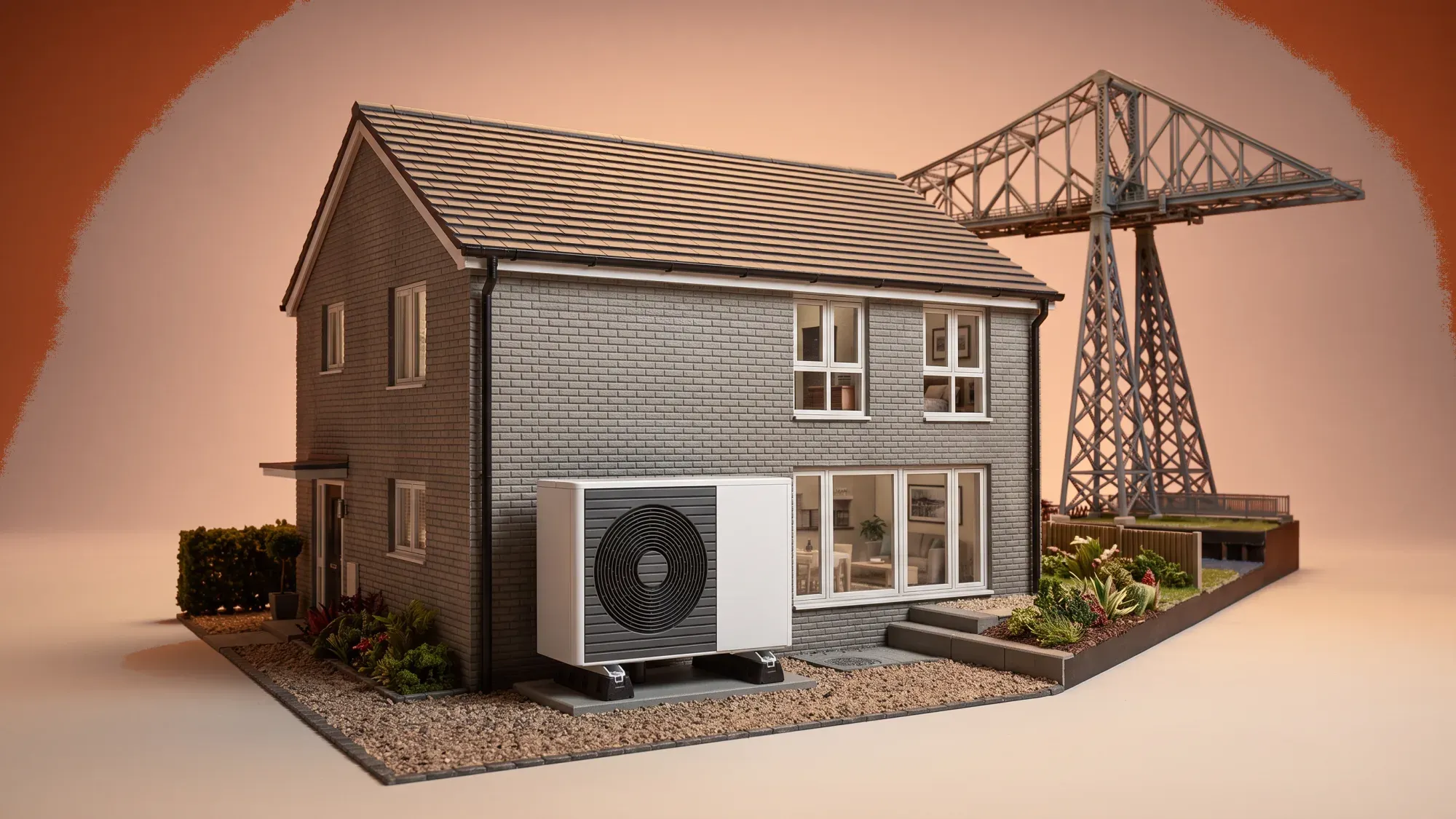
Middlesbrough, a town with a rich industrial heritage, offers a varied landscape for homeowners considering heat pumps. From its traditional housing stock to newer developments, understanding how heat pumps fit into Middlesbrough's unique environment is key to efficient home heating. This guide provides clear, localised information to help you make an informed decision about transitioning to a more sustainable heating system.
Heat pumps offer an energy-efficient and environmentally friendly alternative to traditional heating systems, a crucial consideration for homeowners looking to reduce their carbon footprint and energy bills.
Heat pumps in Middlesbrough: a local perspective
Middlesbrough's unique housing and climate
Middlesbrough's housing landscape includes a mix of semi-detached and terraced homes, alongside detached properties. Older housing areas, particularly in inner Middlesbrough, may require upgrades to meet modern energy efficiency standards. Properties in areas like Linthorpe and Acklam often feature semi-detached houses, while the town centre and areas like Park End have a higher density of terraced houses.
Despite its northern location and coastal proximity, modern heat pumps are designed to operate efficiently even in colder climates, provided they are correctly sized and paired with adequate home insulation. This means Middlesbrough's weather is not a barrier to effective heat pump performance, as long as installations are specified properly.
Understanding your local energy landscape
Middlesbrough is located within the North East England electricity distribution region. This influences the unit rates and standing charges homeowners pay for electricity, as Ofgem sets a separate price cap for each of the 14 electricity distribution regions across Great Britain, updated quarterly1.
The Distribution Network Operator (DNO) responsible for the electricity network in Middlesbrough is Northern Powergrid2. They manage the infrastructure that delivers electricity to homes across the North East, Yorkshire, and northern Lincolnshire. Understanding your DNO is important for issues like power cuts or new connections.
Why consider a heat pump for your Middlesbrough home?
Switching to a heat pump can bring significant benefits, from improved efficiency to long-term savings and a reduced environmental impact.
Efficiency in the North East
Heat pumps extract heat from the air, ground, or water, even when outside temperatures are low. For every kilowatt-hour (kWh) of electricity used, a heat pump can generate three to four kWh of thermal energy3, making them significantly more efficient than modern gas boilers, which typically operate at 90% efficiency or above. This efficiency holds true even in colder northern and coastal weather, provided the system is correctly sized and your home has good insulation. You can learn more about whether heat pumps are worth it for your home.
Environmental benefits
Heat pumps produce significantly fewer carbon emissions than fossil fuel heating systems, contributing to a greener Middlesbrough and helping the UK meet its net-zero targets. By utilising renewable heat sources, they reduce reliance on gas and oil, offering a more sustainable way to heat your home.
Long-term savings
While the initial investment for a heat pump can be higher than a traditional boiler, the long-term savings on energy bills can be substantial due to their high efficiency. Furthermore, the Boiler Upgrade Scheme (BUS) can significantly offset the upfront cost, making the transition more financially viable.
Types of heat pumps for Middlesbrough properties
Two primary types of heat pumps are suitable for residential properties in Middlesbrough: air source and ground source.
Air source heat pumps
Air source heat pumps are the most common type in the UK. They absorb heat from the outside air and transfer it to your home's heating system, even when temperatures drop below freezing. They are generally easier and less disruptive to install than ground source systems, making them a popular choice for many Middlesbrough homes, especially those with limited outdoor space.
Ground source heat pumps
Ground source heat pumps extract heat from the ground using a network of buried pipes. While they require more land for installation and a higher upfront cost, they offer consistent performance year-round as ground temperatures are more stable than air temperatures. This option might be more suitable for properties in Middlesbrough with larger gardens or land availability.
Grants and funding for heat pumps in England
Several financial incentives are available to help homeowners in England make the switch to a heat pump.
The Boiler Upgrade Scheme (BUS)
The BUS, administered by Ofgem, offers a grant towards the cost of installing an air source or ground source heat pump in eligible properties in England and Wales4. Homeowners can receive £7,500 towards the cost of either an air source or ground source heat pump. From 21 July 2026, households in England and Wales currently on heating oil can claim an uplifted £9,000 to move off the oil grid5.
Who is eligible for the BUS?
The BUS is available to homeowners in England and Wales6. To qualify, you must own the property, be replacing an existing fossil fuel heating system (such as an oil or gas boiler, or electric heating system) and have the heat pump installed by an MCS-certified installer7. Your property also needs a valid Energy Performance Certificate (EPC) with no outstanding loft or cavity wall insulation recommendations. New-build homes are generally not eligible, though self-build properties can be an exception.
To qualify for the BUS, your heat pump must be installed by an MCS-certified installer. The installer will apply for the grant on your behalf, and the grant amount is then deducted from the total cost of your installation.
Other potential financial support
Beyond the BUS, other programmes like the ECO4 scheme may offer further support for eligible low-income and fuel-poor households in Middlesbrough, providing fully funded home energy upgrades including heat pump systems. It is worth investigating if you meet the criteria for such additional assistance.
Finding a reputable heat pump installer in Middlesbrough
Choosing the right installer is crucial for the efficient and effective operation of your heat pump system and for accessing available grants.
The importance of MCS certification
MCS (Microgeneration Certification Scheme) certification is a mandatory requirement for installers to enable homeowners to access government grants like the BUS. An MCS-certified installer ensures that your heat pump system is designed and installed to a high standard, giving you peace of mind and validating your eligibility for financial incentives. Several MCS-accredited installers operate in and around the Middlesbrough area.
Questions to ask potential installers
When obtaining quotes, ask potential installers about their MCS certification, their experience with properties similar to yours in Middlesbrough, and what aftercare and maintenance services they provide. Request detailed breakdowns of costs, including the heat pump unit, installation, and any necessary upgrades to your heating system or insulation. Comparing multiple quotes will help you find the best value and ensure you are comfortable with your chosen provider.
Making the switch to efficient heating
The transition to a heat pump involves several steps, from preparing your home to understanding the installation process.
Preparing your home
Before installing a heat pump, it is essential to assess your home's current insulation and heating requirements. Good insulation, particularly in the loft and cavity walls, is vital for maximising heat pump efficiency and keeping running costs down. An MCS-certified installer will typically conduct a thorough assessment of your property to ensure the heat pump is correctly sized and integrated with your home's existing heating system.
What to expect during installation
The installation process for a heat pump can vary depending on the type of system and your property. Air source heat pumps generally involve installing an outdoor unit and connecting it to your indoor heating system. Ground source systems require excavation for the ground loops. Your installer should provide a clear timeline and manage the process from start to finish, including commissioning the system and providing a handover.
Making the switch to a heat pump in Middlesbrough is a significant step towards a more energy-efficient and sustainable home. By understanding the local context, available grants, and the importance of certified installers, you can confidently navigate the process and enjoy the benefits of modern, clean heating.
References
- Ofgem. Default tariff cap
- Northern Powergrid. Middlesbrough
- Simple Green Energy. Air Source Heat Pump Efficiency in the UK (2026)
- UK Government. Apply for the Boiler Upgrade Scheme
- UK Government. Thousands of homes will be eligible for £9,000 off a heat pump
- Eco Approach. Who Is Eligible For Boiler Upgrade Scheme
- UK Government. Apply for the Boiler Upgrade Scheme: Check if you're eligible
Disclaimer
For the avoidance of doubt, this article is provided for informational purposes only and is not intended to constitute legal or financial advice. The author and/or Fuse Energy shall not be responsible for any losses arising out of any reliance on the information contained herein.