Heat pumps for Merseyside homes
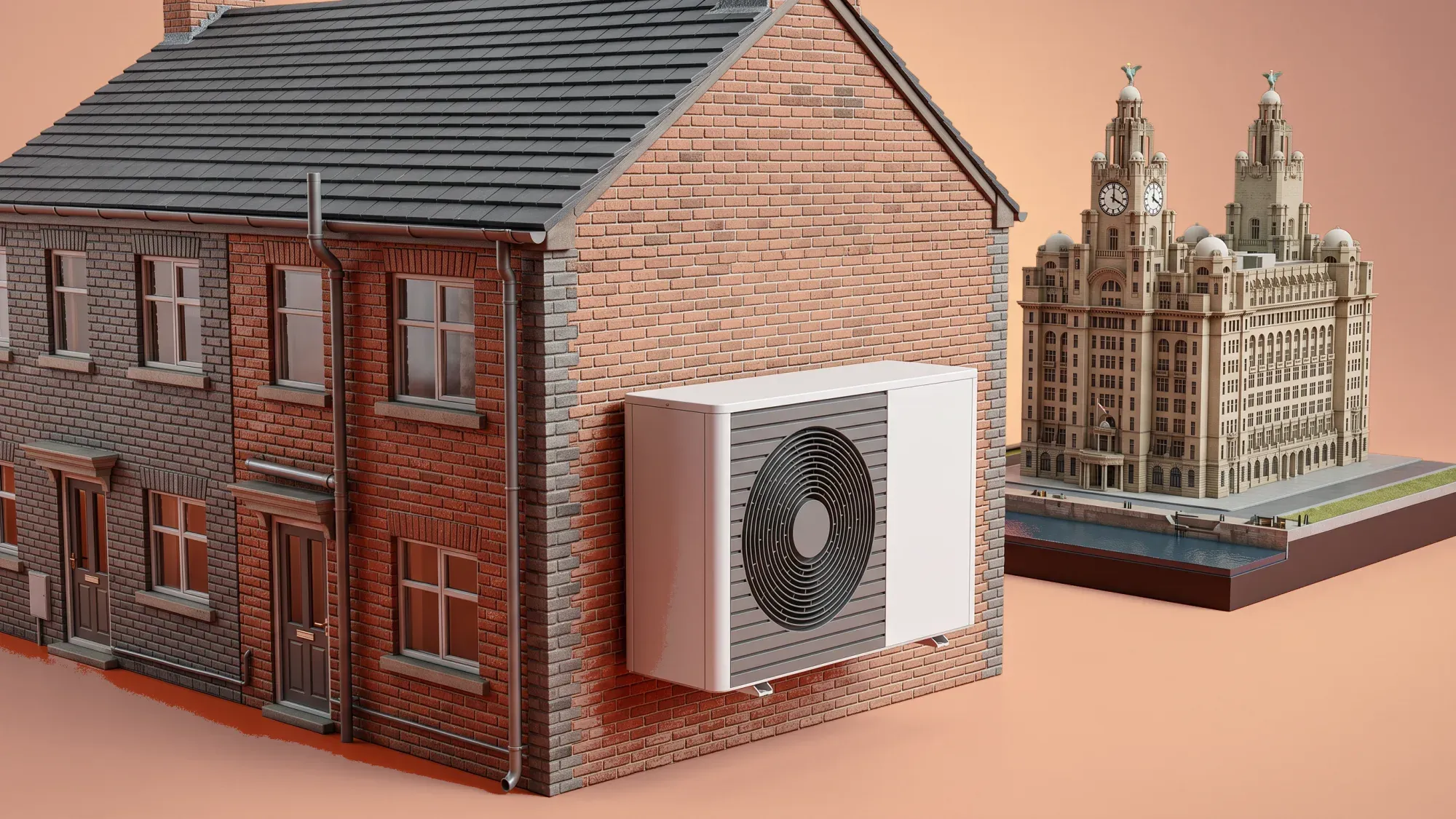
Merseyside homeowners are increasingly seeking efficient heating solutions for their diverse properties, from historic Victorian terraces to modern builds. Modern heat pumps are proving highly effective in the North West's climate, offering greater energy control. This guide provides clear, localised advice for residents considering a heat pump.
Heat pumps for Merseyside homes
Merseyside's unique character and heating needs
Merseyside's varied housing, from historic properties to modern builds, means heating needs differ significantly. Older homes, particularly in areas like Sefton and Knowsley, often benefit from improved insulation before a heat pump installation. The region's coastal climate can also bring cooler, damper conditions compared to inland areas, making efficient heating essential. Heat pumps provide consistent, comfortable warmth, adapting well to these local conditions when correctly specified.
How heat pumps work: efficiency explained
Heat pumps operate by moving heat rather than generating it, which makes them remarkably efficient. They extract warmth from the air (known as air source heat pumps) or the ground (known as ground source heat pumps) outside your home, even in cold temperatures, and transfer it inside. While this process uses electricity to run components like the compressor and fan, the heat delivered into your home is typically several times greater than the electrical energy consumed. This fundamental difference allows heat pumps to significantly reduce energy consumption compared to traditional gas or oil boilers.
Benefits and performance in Merseyside
Efficiency in colder climates
Modern heat pumps are designed to perform efficiently even when outside temperatures drop well below freezing. This makes them entirely suitable for colder northern conditions, including Merseyside's winters. Optimal performance relies on correct sizing for your home's heat demand and ensuring your property has good insulation. With proper planning, a heat pump can maintain comfortable indoor temperatures consistently, regardless of the weather outside. For more details on suitability, you can explore whether heat pumps are worth it for your property.
Reducing energy bills and carbon footprint
By moving heat rather than creating it, heat pumps use less energy overall. This directly translates to lower energy bills for Merseyside homeowners, especially as electricity becomes increasingly decarbonised. Beyond financial savings, switching to a heat pump significantly reduces your home's carbon footprint, contributing to cleaner air and a more sustainable future for the region.
Grants and local energy infrastructure
The Boiler Upgrade Scheme for England and Wales
For homeowners in England and Wales, including all of Merseyside, the UK Government's Boiler Upgrade Scheme (BUS)1 provides a substantial financial incentive. The scheme offers a £7,500 grant towards the installation of an air source or ground source heat pump. This grant significantly reduces the upfront cost, making heat pump technology more accessible. To qualify for the BUS grant, your chosen installer must be Microgeneration Certification Scheme (MCS) certified.
What is the BUS?
The BUS is a government initiative in England and Wales offering a £7,500 grant to help homeowners install air source or ground source heat pumps. It aims to encourage the adoption of low-carbon heating systems and reduce reliance on fossil fuels.
Merseyside's energy network: power cuts and DNOs
Understanding your local energy infrastructure is crucial for grasping potential running costs. Your unit rates and daily standing charges are influenced by Ofgem's regional price cap, which is updated quarterly. The local Distribution Network Operator (DNO) is responsible for maintaining the electricity grid and responding to power cuts. If you experience a power cut, you can dial the free national number 105, which will connect you to your DNO. You can also find your specific network operator by postcode using the Energy Networks Association (ENA) 'Find my network operator' tool. Knowing your DNO helps you understand who manages the physical delivery of electricity to your home.
Finding a certified heat pump installer in Merseyside
The importance of MCS certification
Choosing a MCS certified installer is paramount for any heat pump installation in Merseyside. MCS is a quality assurance scheme that certifies renewable energy technologies and installers. Crucially, MCS certification is a mandatory requirement to qualify for government grants like the BUS. It ensures your heat pump system is designed and installed to a high standard, giving you peace of mind and protecting your investment. Without an MCS-certified installer, you will not be able to claim the £7,500 BUS grant.
Questions to ask potential installers
When seeking an air source heat pump installer in Merseyside or a ground source heat pump installer, ask about their MCS certification status upfront. Inquire about their experience with similar properties in the region, particularly regarding insulation requirements and system sizing for Merseyside's climate. Request detailed quotes that clearly outline all costs, including the heat pump unit, installation, and any necessary upgrades to your heating system or insulation. Your installer should guide you through the BUS grant application process, but remember that the customer is responsible for applying for the grant themselves.
Making the switch to a heat pump
Assessing your home's suitability
The first step in making the switch is to assess your home's suitability for a heat pump. This involves evaluating your current insulation levels, window efficiency, and overall heat demand. While modern heat pumps are effective in colder northern conditions, good insulation is key to maximising their efficiency and ensuring your home stays warm. An MCS-certified installer will conduct a thorough assessment to recommend the right type and size of heat pump for your Merseyside property.
The installation process overview
Once your home's suitability is confirmed and you've chosen an MCS-certified installer, the installation process typically involves several stages. This includes the removal of your old boiler, installation of the heat pump unit (either outside for air source or underground for ground source), connection to your existing heating system (radiators or underfloor heating), and electrical work. The installer will then commission the system and provide you with instructions on how to operate it efficiently. They will also guide you through the BUS application process.
References
- UK Government. Apply for the Boiler Upgrade Scheme.
Disclaimer
For the avoidance of doubt, this article is provided for informational purposes only and is not intended to constitute legal or financial advice. The author and/or Fuse Energy shall not be responsible for any losses arising out of any reliance on the information contained herein.