Heat pump grants and costs in England
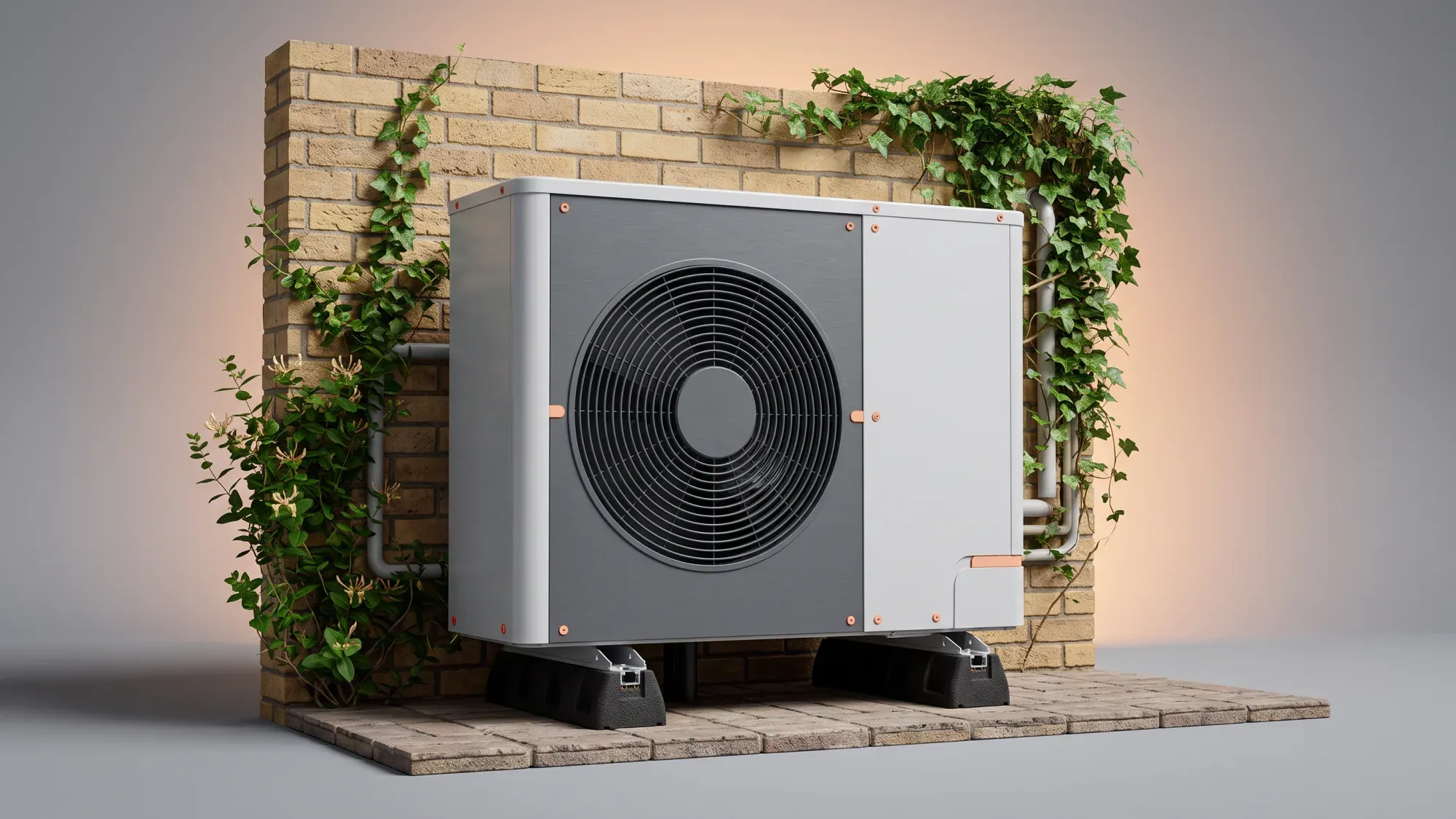
For homeowners in England, understanding heat pump installation, from available grants to running costs, is crucial for making an informed energy choice. England's diverse energy landscape, with its distinct electricity distribution regions, means the financial impact of switching to a heat pump can vary significantly depending on your location. This guide offers clear, England-specific insights into heat pumps as a strategic move towards greater energy independence and control over your household bills.
Understanding heat pumps for English homes
What is a heat pump and how it works?
A heat pump is an efficient, sustainable heating system that moves heat from one place to another rather than generating it from fuel. Imagine a fridge in reverse: instead of expelling heat from inside, it extracts warmth from the air, ground, or water outside your home, concentrates it, and then releases it indoors. This heats your radiators or underfloor heating, and your hot water. This process uses electricity, but because it moves existing heat rather than creating it, heat pumps can produce significantly more heat energy than the electrical energy they consume.
Types of heat pumps suitable for England
The two primary types of heat pumps suitable for homes in England are air source heat pumps (ASHP) and ground source heat pumps (GSHP). ASHPs draw heat from the outside air, even in cold temperatures, making them a popular choice due to their relatively simpler installation. Ground source heat pumps, on the other hand, extract heat from the ground via buried pipes, offering consistent performance but requiring more extensive groundwork. Both types are highly efficient, with modern heat pumps maintaining a high Seasonal Coefficient of Performance (SCOP) across a typical UK winter when correctly sized for the property and paired with sensible insulation. You can explore the pros and cons of air source heat pumps to see if one is right for your home.
Heat pump grants in England: the Boiler Upgrade Scheme
What the BUS offers
The Boiler Upgrade Scheme (BUS), administered by Ofgem, is a key government initiative designed to encourage the adoption of low-carbon heating systems in England and Wales. It offers a substantial grant of £7,500 towards the cost of installing an air source or ground source heat pump. From 21 July 2026, households in England and Wales currently using heating oil or LPG can claim an uplifted £9,000 grant to move off the oil grid. This scheme is a significant incentive, making the transition to a heat pump more financially accessible for many homeowners.
Eligibility criteria for English homeowners
To qualify for the BUS grant, your property must be located in England or Wales and be an existing home or a self-build property. The heat pump must replace a fossil fuel heating system, such as a gas or oil boiler. Crucially, the installation must be carried out by an MCS-certified installer, as MCS certification is required for a heat pump installation to qualify for the BUS. Your property must also have a valid Energy Performance Certificate (EPC). However, the requirement for an EPC to have no outstanding recommendations for loft or cavity wall insulation was removed in April 2026.
How to access the grant
The process for accessing the BUS grant is designed to be straightforward for homeowners. The scheme is installer-led, meaning your chosen MCS-certified installer applies for the grant on your behalf. Ofgem will then contact you to confirm your consent for the application. Once approved, the grant amount is paid directly to your installer, who then deducts this amount from the overall installation cost. This means you, as the homeowner, only pay the reduced price, simplifying the financial transaction and ensuring the grant's benefit is immediately realised.
Costs and running a heat pump in England
Installation costs and the grant's impact
While the upfront cost of installing a heat pump can be higher than a traditional gas boiler, the BUS significantly reduces this barrier. With the £7,500 or £9,000 grant, the net installation cost becomes much more competitive. The total cost will vary based on the type of heat pump, the size of your property, and any necessary upgrades to your heating system or insulation. Understanding the air source heat pump cost can help you budget effectively.
Regional electricity costs: how England's distribution regions affect your bills
The running costs of a heat pump are primarily influenced by electricity prices. Great Britain is divided into 14 electricity distribution regions, and Ofgem's price cap sets different unit rates and standing charges for each. This means that your specific location within England can impact your energy bills, and consequently, the operational cost-effectiveness of your heat pump. These regional variations stem from different distribution and network costs, such as population density, distance from generation, and network age. Understanding these regional variations is crucial for an accurate assessment of long-term savings.
Efficiency and long-term savings
Modern heat pumps are highly efficient, especially when correctly sized for the property and paired with sensible insulation. Their high Seasonal Coefficient of Performance (SCOP) means they deliver more heat energy than the electrical energy they consume, even during colder UK winters. This efficiency, combined with the potential for lower electricity tariffs (especially with smart tariffs designed for heat pumps), can lead to significant long-term savings on your heating bills compared to traditional fossil fuel systems. Many homeowners ask, are heat pumps worth it? The long-term savings and environmental benefits often make them a worthwhile investment.
Heat pump installation: what English homeowners need to know
Finding an MCS-certified installer
Choosing the right installer is paramount. For your heat pump installation to be eligible for the BUS, your installer must be MCS-certified. This certification ensures that the installer meets high standards of quality and competence, giving you peace of mind regarding the system's design, installation, and performance. Always obtain multiple quotes from MCS-certified professionals to compare options and ensure the best fit for your home.
Sizing and insulation considerations for English properties
A heat pump must be correctly sized for your property to operate efficiently. An undersized system will struggle to heat your home adequately, while an oversized one will cycle inefficiently. Adequate insulation is also critical. While the BUS no longer requires specific insulation upgrades as a condition for the grant, heat pump performance is maximised in well-insulated homes. This is particularly important for older English properties. Ensuring your home has good loft and cavity wall insulation will help you get the most out of your heat pump and maintain a comfortable indoor temperature.
The installation process
The installation process typically involves an initial assessment of your home's heating needs and insulation, followed by the design of your heat pump system. Once approved, the installer will proceed with the physical installation, which includes fitting the outdoor unit (for ASHP) or ground loops (for GSHP), connecting it to your indoor heating system and hot water cylinder, and making any necessary electrical upgrades. The MCS-certified installer will then commission the system and provide you with instructions on its operation and maintenance.
Beyond installation: your energy future with a heat pump
Heat pumps as a 'power play' for energy control
Installing a heat pump is more than just an upgrade to your heating system; it is a strategic 'power play' for greater energy control. By reducing reliance on volatile fossil fuel prices and leveraging electricity, homeowners gain more autonomy over their energy consumption and costs. This shift empowers you to move beyond a 'use less' narrative, instead offering the potential for energy abundance and comfort on your terms.
Integrating with smart home technology
Heat pumps integrate seamlessly with modern smart home technology, allowing for optimised performance and greater convenience. Smart thermostats and energy management systems can learn your heating preferences, adjust to weather conditions, and even respond to electricity price fluctuations, ensuring your heat pump operates at peak efficiency when energy is cheapest. This digital-first approach aligns with a future where homeowners have greater insights into their energy usage and enhanced control over their home's climate.
The long-term value of a heat pump
Beyond immediate savings and grants, a heat pump represents a significant long-term investment in your property and the environment. As the UK transitions to a low-carbon economy, homes with heat pumps are likely to become more attractive and valuable. They offer a future-proof heating solution, contributing to a sustainable energy system and providing consistent, comfortable warmth for years to come.
Disclaimer
For the avoidance of doubt, this article is provided for informational purposes only and is not intended to constitute legal or financial advice. The author and/or Fuse Energy shall not be responsible for any losses arising out of any reliance on the information contained herein.