Geothermal HVAC for UK homes
For UK homeowners seeking a long-term, energy-efficient, and environmentally friendly way to heat and cool their properties, geothermal HVAC systems offer a compelling solution. These systems, primarily ground source heat pumps, harness the stable temperatures beneath the earth's surface to provide consistent comfort and reduce reliance on traditional fossil fuels. This guide explores how they work, their benefits, costs, and key considerations for installation in the UK.
Considering a geothermal HVAC system for your home? Fuse Energy provides smart tariffs and an app to help you manage your electricity supply efficiently once your system is installed. Click here to see how Fuse can support your low-carbon home.
Enter your address to get a quote and see how much you could save
What is geothermal HVAC?
Geothermal HVAC, or geothermal heating, ventilation, and air conditioning, refers to systems that use the earth's natural thermal energy. Unlike conventional heating and cooling methods that rely on outdoor air temperature, geothermal systems tap into the ground's consistent warmth, which remains relatively stable year-round, regardless of the weather above.
Harnessing the earth's stable temperature
The fundamental principle behind geothermal HVAC is simple: the ground acts as a vast, natural solar battery, absorbing nearly half of the sun's energy. Just a few metres below the surface, the temperature remains remarkably constant, typically between 8°C and 12°C in the UK. Geothermal systems exploit this stability, using the earth as a heat source in winter and a heat sink in summer.
Ground source heat pumps in the UK
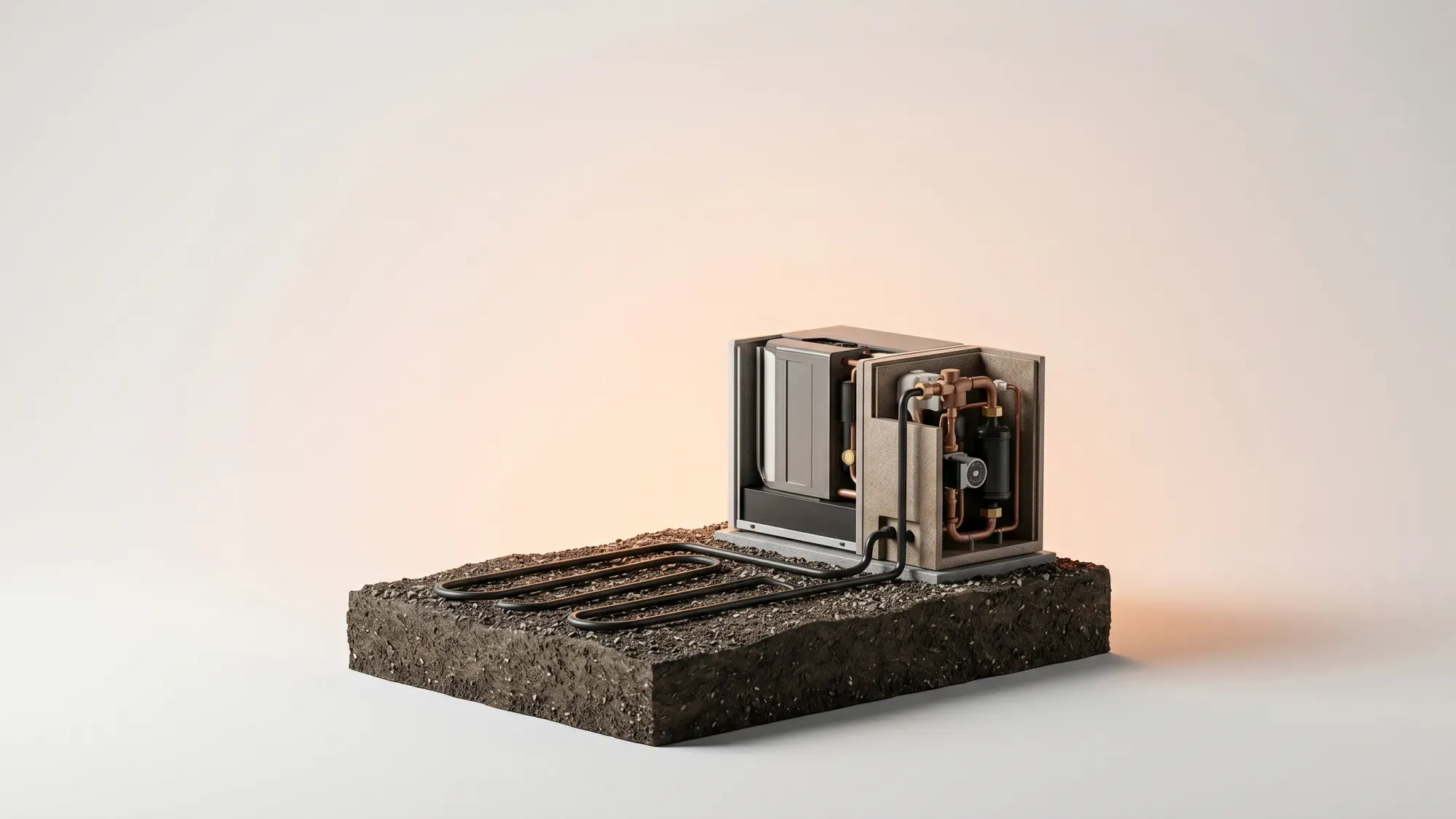
In the UK, the most common type of geothermal HVAC is the ground source heat pump (GSHP). These systems circulate a mixture of water and antifreeze (often called 'brine') through a network of buried pipes, known as a ground loop. This fluid absorbs heat from the ground, which is then transferred to a heat pump unit within the home to provide heating and hot water. While ground source heat pumps are less common than air source heat pumps in the UK, they are a viable option for homes with suitable outdoor space and ground conditions.
How geothermal HVAC systems work
A ground source heat pump system consists of three main parts: the ground loop, the heat pump unit, and the heat distribution system within the home.
The ground loop: horizontal vs vertical
The ground loop is the buried pipework that exchanges heat with the earth. There are two primary types:
- Horizontal loops: These are laid in trenches, typically 1-2 metres deep and 1 metre apart. They require a significant amount of land but are generally less expensive to install than vertical loops.
- Vertical loops: These involve drilling boreholes, often hundreds of metres deep, into which U-shaped pipes are inserted. Vertical loops are ideal for properties with limited outdoor space but come with higher drilling costs.
Inside these pipes, the thermal transfer fluid continuously circulates, absorbing heat from the ground.
The heat pump unit and heat exchange process
The fluid from the ground loop then enters the heat pump unit, usually located inside the home. Here, the absorbed heat passes through a heat exchanger to a refrigerant. The refrigerant's temperature is increased through compression, and this higher-temperature heat is then transferred to your home's central heating system. While the heat pump uses electricity to power its compressor, it delivers significantly more energy as heat than it consumes in electricity.
Heating and cooling your home
The heat generated by the heat pump unit is distributed throughout your home via your central heating system, typically through underfloor heating or radiators. Many ground source heat pump systems can also provide cooling by reversing the process, extracting heat from your home and dissipating it back into the cooler ground. This provides year-round climate control, maintaining a comfortable indoor temperature regardless of external conditions.
Benefits of geothermal HVAC for UK homeowners
Investing in a geothermal HVAC system offers a range of advantages for UK homeowners, from significant energy savings to a reduced environmental impact.
Exceptional energy efficiency and lower running costs
Ground source heat pumps are highly efficient, typically achieving a Coefficient of Performance (CoP) of 3.0 to 5.0. This means that for every unit of electricity consumed to run the heat pump, it can produce between 3 and 5 units of heat. This efficiency drastically reduces the amount of energy needed for heating, leading to lower running costs compared to traditional systems. For context, the average UK home uses around 9,500 kWh of gas per year for heating1. A ground source heat pump can significantly cut this consumption.
Consistent comfort and reduced carbon footprint
Geothermal systems provide stable and consistent heating and cooling because they rely on the earth's constant temperature, rather than fluctuating air temperatures. This translates to reliable comfort throughout the year. Furthermore, by extracting renewable heat from the ground instead of burning fossil fuels, ground source heat pumps significantly reduce a home's carbon emissions, contributing to a lower environmental footprint.
Long lifespan and low maintenance
Ground source heat pumps are known for their durability and longevity. The underground pipework (ground loops) can last for over 50 years, while the indoor heat pump unit typically has a lifespan of 20 to 25 years. With fewer moving parts and protection from outdoor elements, these systems generally require minimal maintenance, leading to lower long-term repair costs compared to conventional heating and cooling systems.
Geothermal HVAC costs and available grants
While the benefits of geothermal HVAC are substantial, the upfront installation costs are a key consideration for many homeowners. However, various grants and incentives can help offset this initial investment.
Understanding upfront installation expenses
The cost of installing a ground source heat pump in the UK typically ranges from £18,000 to £50,000. This wide range depends on factors such as the size of the system required, the type of ground loop (horizontal systems are generally cheaper than vertical boreholes), and the complexity of the installation. Government data from the Boiler Upgrade Scheme indicates median installed costs around £23,000-£27,000 before grants.
The Boiler Upgrade Scheme and other incentives
To encourage the adoption of low-carbon heating technologies, the UK government offers the Boiler Upgrade Scheme (BUS). Homeowners in England and Wales can receive a grant of £7,500 towards the cost of installing a ground source heat pump. The MCS-certified installer applies for this grant on the homeowner's behalf, and the grant value is deducted from the installation quote. For properties heated by oil or LPG that are not connected to the mains gas grid, an additional £1,500 is available, bringing the total grant to £9,000. This uplift is available from 21 July 2026 until 31 March 2027. To be eligible for this scheme, the installation must be carried out by an MCS (Microgeneration Certification Scheme) certified installer.
What is MCS certification for heat pumps?
MCS (Microgeneration Certification Scheme) certification is the UK's quality assurance standard for microgeneration technologies like heat pumps. It ensures that both the products and the installers meet rigorous industry standards for quality, reliability, and performance. Crucially, MCS certification is a prerequisite for accessing government grants such as the BUS.
Long-term savings and return on investment
Despite the higher upfront cost, the exceptional efficiency of ground source heat pumps can lead to significant long-term savings on energy bills. These systems can drastically reduce your home's energy consumption for heating, making them a sound financial investment over their long lifespan. The combination of lower running costs and available grants helps to improve the overall return on investment.
Key considerations for geothermal HVAC installation
Before committing to a geothermal HVAC system, several practical considerations need to be assessed to ensure it is the right fit for your property.
Property suitability and land requirements
The suitability of your property is paramount. Ground source heat pumps require outdoor space for the ground loop installation. Horizontal loops need a substantial area of land, while vertical boreholes require less surface area but need access for drilling equipment. The geology of your land also plays a role in determining the most effective ground loop design. Additionally, ensuring your property is well-insulated is crucial to maximise the efficiency benefits of the system.
Choosing an MCS-accredited installer
Selecting the right installer is critical for a successful ground source heat pump installation. It is essential to choose an MCS-certified installer, as this is a requirement for accessing government grants like the BUS. An accredited installer will conduct a thorough home suitability assessment, including a heat loss survey and a review of your ground conditions, to design an optimally sized and configured system for your home.
Planning and disruption
The installation of a ground source heat pump involves significant groundwork, whether it is digging trenches for horizontal loops or drilling boreholes for vertical ones. This can cause temporary disruption to your garden or outdoor space. Internal plumbing modifications may also be necessary to integrate the heat pump with your existing heating system. While generally considered permitted development, planning permission may be required for certain ground loop installations, particularly vertical boreholes, so it is always wise to check with your local council.
Pros and cons of geothermal heating and cooling
Understanding the advantages and potential drawbacks of ground source heat pumps can help homeowners make an informed decision.
Advantages of ground source heat pumps
- High efficiency: They deliver 3 to 5 units of heat for every unit of electricity consumed, leading to substantial energy savings.
- Lower running costs: Reduced energy consumption typically results in lower heating bills compared to fossil fuel systems.
- Environmental benefits: They significantly reduce carbon emissions by using renewable energy from the earth.
- Consistent comfort: Stable ground temperatures provide reliable heating and cooling year-round.
- Long lifespan: Ground loops can last over 50 years, and heat pump units for 20 to 25 years, offering long-term value.
- Low maintenance: With few external components, they require minimal upkeep.
- Quiet operation: Unlike air source heat pumps, ground source units are typically installed indoors and operate very quietly.
Potential drawbacks to consider
- High upfront cost: The initial investment for installation can be substantial, ranging from £18,000 to £50,000 before grants.
- Land requirements: Horizontal loops need considerable outdoor space, while vertical loops require drilling access.
- Installation disruption: The groundwork involved can cause temporary disruption to your property.
- Property suitability: Not all properties are suitable due to land availability, geology, or insulation levels.
- Not a "quick fix": These systems require careful planning and a significant investment, making them a long-term commitment rather than a cheap or immediate solution.
Geothermal HVAC, particularly ground source heat pumps, represents a foundational step towards a future where homeowners have abundant, reliable energy at their fingertips. By embracing this technology, you are not just upgrading your heating system; you are investing in long-term energy independence, consistent home comfort, and a reduced environmental impact.
Managing your energy bills should be clear and easy to understand. Fuse Energy focuses on straightforward pricing, so you can see exactly what you are paying without unnecessary complexity. If you have a smart meter, you can view detailed usage data through the app or website, helping you understand how you can lower your bills. If you do not have a smart meter, Fuse Energy can upgrade your non-smart meter, completely for free. This can make it easier to track spending and make informed decisions about your energy use. Our 24/7 human support team is always on hand with fast response times whenever you need help. Click here to switch to Fuse Energy today. Find out about our mission by clicking here.
References
Disclaimer
For the avoidance of doubt, this article is provided for informational purposes only and is not intended to constitute legal or financial advice. The author and/or Fuse Energy shall not be responsible for any losses arising out of any reliance on the information contained herein.