Mastering fleet charge
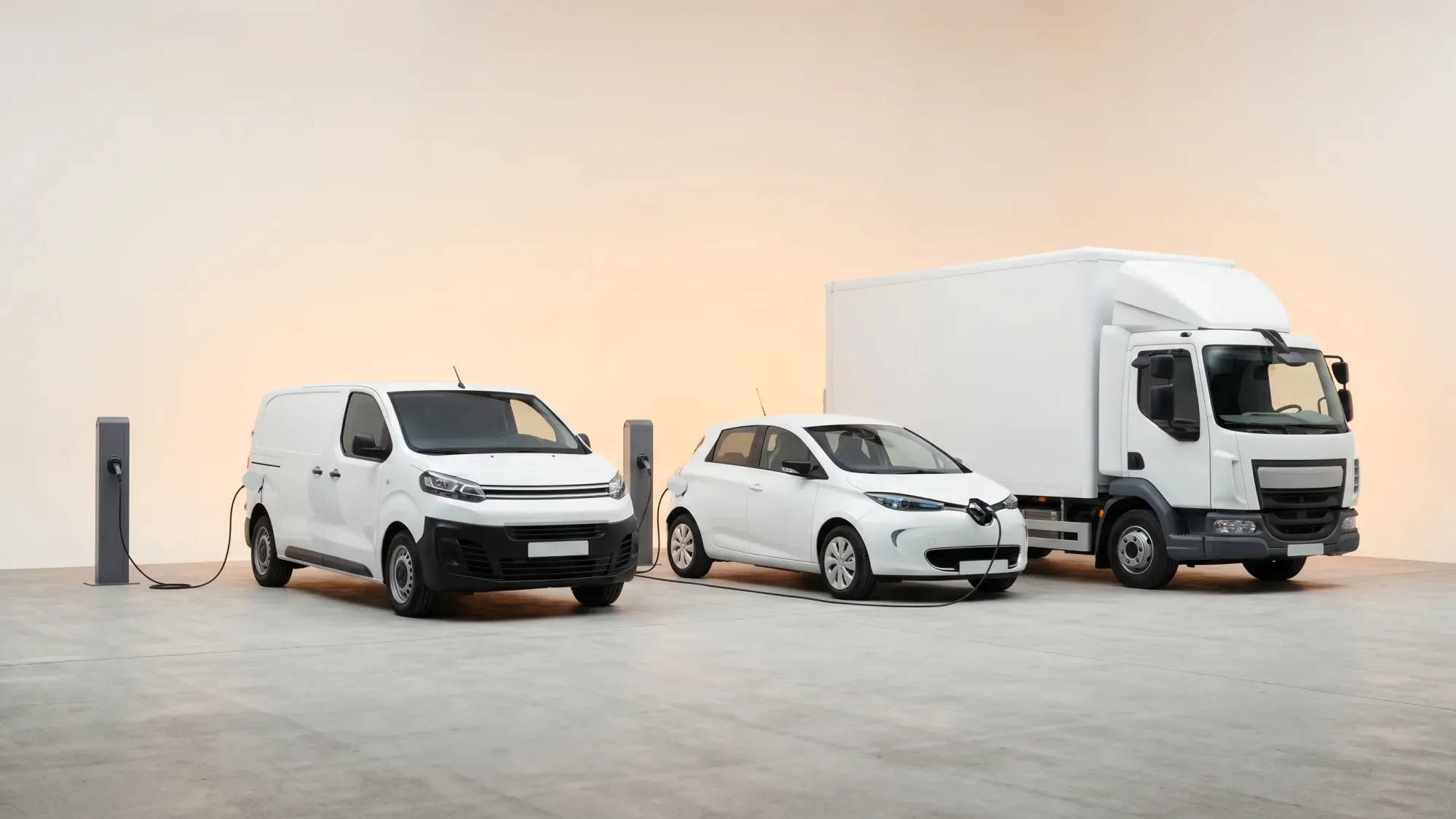
Transitioning a commercial fleet to electric vehicles (EVs) presents a significant opportunity for businesses to reduce operational costs and meet sustainability targets. However, it requires careful planning of the charging infrastructure. This guide provides fleet managers with practical, unbiased advice to implement efficient and scalable EV charging solutions, ensuring long-term viability without incurring excessive costs or future-proofing issues.
While this article focuses on EV solutions for commercial fleets, Fuse Energy is dedicated to powering homes across the UK with smart, sustainable energy. We believe in a future where energy is abundant and affordable for everyone. Interested fleet managers can join our business energy waitlist for future offerings, but for your home energy needs, Fuse offers clear pricing, real-time usage data, and 24/7 human customer support. Click here to switch to Fuse Energy today.
Enter your address to get a quote and see how much you could save
Understanding your fleet's charging needs
Before committing to any fleet charge infrastructure, a thorough assessment of your fleet's specific requirements is essential. This initial planning helps to avoid common pitfalls, such as underestimating power requirements or selecting unsuitable hardware, which can lead to inefficient charging or costly downtime.
Assessing vehicle types and usage patterns
The first step involves a detailed analysis of your current fleet and its operational demands. Consider the types of electric vehicles you plan to deploy, whether they are vans, cars, or heavy goods vehicles, as their battery sizes and charging needs vary significantly. Evaluate daily operational routes, typical mileage, and dwell times to determine when and for how long vehicles will be available for charging. This insight will inform the optimal charging speeds and locations for your electric vehicle charging points.
Evaluating site infrastructure and power supply
A critical aspect of planning your fleet charge strategy is evaluating your existing electrical infrastructure. This includes assessing the current grid capacity at your depots and potential charging locations. Upgrading your electrical supply can be a substantial part of the total cost of ownership, so understanding your Distribution Network Operator (DNO) requirements and any necessary grid reinforcement is paramount. Early engagement with your DNO is advisable, particularly for larger installations that may impact grid capacity.
Choosing the right fleet charge solutions
Selecting appropriate fleet charge solutions depends heavily on your operational model and vehicle usage. A mix of charging strategies often provides the most flexible and cost-effective approach.
Depot charging: on-site power for your fleet
Depot charging forms the backbone of most commercial fleet charge strategies. Installing electric car chargers on-site allows vehicles to charge overnight or during extended downtime, ensuring they are ready for their next shift. This can range from slower alternating current (AC) charging points, suitable for longer overnight stays, to rapid direct current (DC) chargers for vehicles requiring quicker turnarounds. The choice depends on the available power supply and the operational schedule of your fleet.
On-route and public charging strategies
For fleets with longer routes or unpredictable schedules, integrating on-route and public charging stations into your strategy is crucial. This ensures drivers can top up their vehicles when away from the depot. Access to a reliable network of public charging points can significantly enhance operational flexibility. Consider solutions that offer simplified payment and access across various networks to streamline the driver experience.
Employee home charging considerations
For company cars or smaller vans, employee home charging can be a cost-effective and convenient fleet charge solution. Providing employees with a home car charging point, potentially supported by an EV charger grant, can reduce the need for extensive depot infrastructure. The EV Chargepoint Grant for renters and flat owners provides up to £500 towards installing a chargepoint, making electric car charger home installation more affordable for eligible individuals.
Cost implications of fleet charge implementation
The cost of implementing fleet charge infrastructure is a primary concern for fleet managers. Understanding both upfront and ongoing expenses, alongside available grants, is key to developing a sustainable strategy.
What is the Workplace Charging Scheme (WCS)?
The WCS is a UK government grant that offers financial support for eligible businesses, charities, and public sector organisations to install EV chargepoints. It provides up to £500 per socket, for a maximum of 40 sockets across all sites, significantly reducing the upfront cost of commercial fleet charging infrastructure.
Upfront costs: chargers, installation, and grid upgrades
Initial costs for fleet charge solutions encompass the purchase of charging units, their installation, and any necessary upgrades to your electrical infrastructure. The cost of installing an electric car charging point varies based on charger type (AC vs DC), power output, and site-specific complexities. Grid upgrades, particularly for high-power rapid charging, can be a significant investment, making early DNO consultation vital.
Operational costs: electricity tariffs and maintenance
Ongoing operational costs include electricity tariffs and maintenance. Smart charging and energy management systems can help optimise these costs by scheduling charging during off-peak hours when electricity is cheaper. Regular maintenance of your charging points ensures their reliability and longevity, preventing unexpected downtime. Understanding your energy bill can also help identify areas for cost savings.
Leveraging government grants and incentives
Several government grants and incentives are available to help businesses offset the cost of fleet charge implementation. The WCS offers up to £500 per socket, for up to 40 sockets, for eligible businesses, charities, and public sector organisations. Additionally, the EV Chargepoint Grant for renters and flat owners provides up to £500 towards installing a chargepoint for eligible domestic users. These Office for Zero Emission Vehicles (OZEV) grants can significantly reduce the financial burden of installing new charging points.
Implementing and managing your fleet charge infrastructure
Successful implementation of your fleet charge infrastructure goes beyond initial installation; it requires strategic planning for growth and efficient management systems.
Planning for scalability and future growth
Your fleet charge strategy should be scalable and future-proof. Consider modular systems that can be expanded as your fleet grows and technology evolves. This approach avoids premature obsolescence and ensures your infrastructure can adapt to future demands, such as higher-power charging or increased vehicle numbers.
Integrating smart charging and energy management systems
Integrating smart charging and energy management systems is crucial for optimising your fleet charge operations. These systems allow you to monitor energy consumption, schedule charging to take advantage of lower electricity tariffs, and balance the load across your charging points. A smart meter installation is often a foundational step for effective energy management. This not only reduces operational costs but also helps manage your overall energy demand and grid impact.
Working with installers and network operators
Selecting a reputable installer is paramount for a safe and efficient fleet charge setup. They can guide you through the installation process, ensure compliance with all regulations, and assist with DNO notification where required. Maintaining a good relationship with your DNO is also important for any future grid capacity discussions or upgrades.
Future-proofing your fleet charge strategy
The EV landscape is rapidly evolving, making future-proofing a key consideration for any fleet charge strategy.
Adapting to evolving technology and standards
Stay informed about advancements in charging technology, such as faster charging speeds, improved battery chemistries, and new connector standards. While a modern onshore wind turbine typically produces around 4,700 MWh (4,700,000 kWh) per year, enough for approximately 1,900 average UK homes, and the average UK home uses around 2,500 kWh of electricity per year1, the energy demands of commercial fleets are substantial and will continue to grow as technology progresses. Designing your infrastructure with adaptability in mind will help you integrate new solutions as they become available.
Ensuring grid resilience and capacity
As more commercial fleets electrify, the strain on the National Grid will increase. Ensuring your fleet charge infrastructure is resilient and contributes positively to grid stability, perhaps through vehicle-to-grid (V2G) capabilities, can be a long-term advantage. This foresight helps mitigate potential capacity issues and positions your fleet as a responsible energy consumer.
Next steps for your fleet's electric transition
Embarking on the electric transition for your fleet is a significant undertaking, but with careful planning, it can lead to substantial benefits.
Developing a phased rollout plan
A phased rollout plan allows you to learn and adapt as you electrify your fleet. Start with a pilot programme to test your chosen fleet charge solutions and gather data on their performance. This iterative approach helps refine your strategy and ensures a smoother, more cost-effective transition for your entire fleet.
Joining the Fuse Energy business waitlist
While Fuse Energy currently supplies residential energy only, we are actively working towards future commercial offerings. By joining the Fuse Energy business waitlist, you can stay informed about our developments and be among the first to access our innovative energy solutions designed to support the evolving needs of businesses.
For your home energy needs, Fuse Energy offers clear pricing, real-time usage data, and 24/7 human customer support. We make managing your energy simple and transparent, helping you take control of your bills. Click here to switch to Fuse Energy today and experience a modern approach to home energy.
References
Disclaimer
For the avoidance of doubt, this article is provided for informational purposes only and is not intended to constitute legal or financial advice. The author and/or Fuse Energy shall not be responsible for any losses arising out of any reliance on the information contained herein.