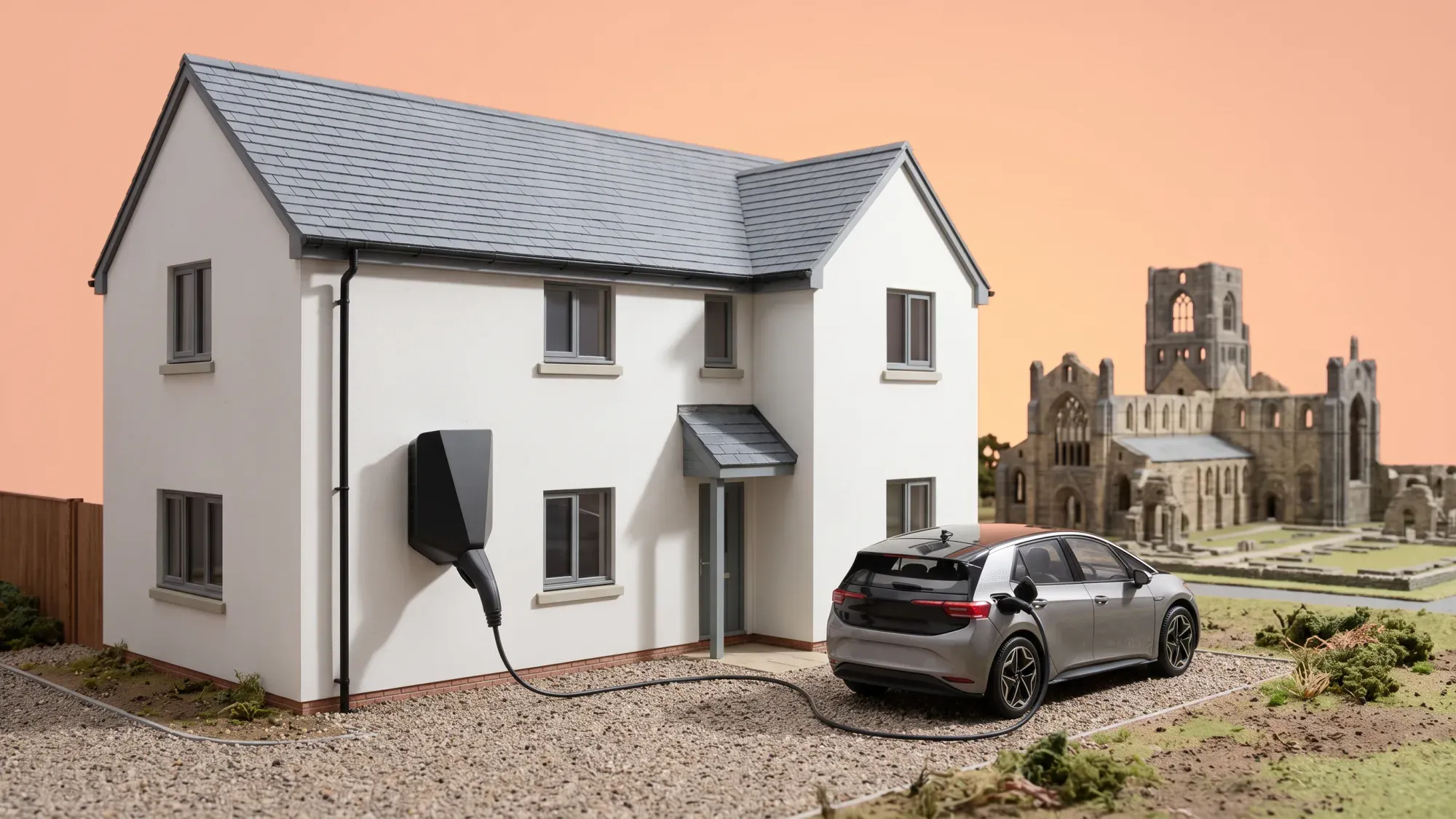
Installing an electric vehicle (EV) charger at home in West Yorkshire offers greater energy independence and convenience. Understanding the local aspects of EV charger installation is essential, from dealing with Northern Powergrid, your local Distribution Network Operator (DNO), to accessing government grants and understanding regional energy pricing. This guide aims to clarify the process, helping you connect your EV charger to a smarter home energy system for an informed transition.
Why install an EV charger at home in West Yorkshire?
Convenience and cost savings for West Yorkshire drivers
Charging your electric vehicle at home provides unmatched convenience, removing the need for frequent trips to public charging stations and ensuring your car is always ready. For drivers in West Yorkshire, this means more time enjoying the region's scenic routes or navigating urban centres, rather than waiting for a charge. While public charging costs can vary, home charging, especially when combined with smart tariffs, often leads to significant cost savings over time1.
Boosting your home's energy independence
A Home EV charger integrates your vehicle into your household's energy ecosystem, giving you greater control. This approach offers West Yorkshire residents more autonomy over their energy consumption and vehicle charging. By managing when and how your EV charges, you can optimise for lower electricity rates and potentially reduce your overall energy expenditure. For example, understanding how to pick the right home EV charger can significantly impact your long-term savings. The Fuse app provides transparency and control over home energy usage, complementing smart EV charging.
The EV charger installation process in West Yorkshire
Initial assessment and site survey
Before any installation, a qualified installer will carry out an initial assessment of your home. This involves evaluating your property's electrical supply to ensure it can safely support an EV charger and assessing parking arrangements. Factors such as the distance from your consumer unit (fuse box) to the charging point and the type of electrical cabling required will influence the complexity and cost of the installation.
Understanding Northern Powergrid and grid connection requirements
For new home EV charger installations in West Yorkshire, notifying Northern Powergrid is a mandatory step. Northern Powergrid is the DNO for Yorkshire, responsible for the electricity cables and infrastructure that deliver power to your home. This notification falls under specific engineering recommendations, set out by the Energy Networks Association, which ensure your new charger does not negatively impact the local electricity network. Typically, your chosen installer handles this notification on your behalf, ensuring compliance and a smooth connection. Should you experience a power cut in West Yorkshire, you would dial the free national number 105, which routes directly to your DNO.
What are connect-and-notify and apply-to-connect for EV chargers?
Connect-and-notify and apply-to-connect are the two ENA routes for connecting devices like EV chargers to the electricity network. The connect-and-notify route applies where the property's total demand stays at or below 60amps, with the DNO notified after installation. Larger or more complex installations need DNO approval before work starts. These standards ensure grid stability and safety.
Typical installation steps
Once the initial assessment is complete and any necessary DNO notifications are underway, the physical installation can proceed. This typically involves mounting the chargepoint unit, running the necessary electrical cables from your consumer unit to the chargepoint, and ensuring all connections are secure and compliant with safety standards. After installation, the installer will usually test the unit and provide a demonstration of its operation. You can learn more about the overall EV charger installation process in the UK.
Grants and local support for West Yorkshire residents
The OZEV EV Chargepoint Grant explained
The UK government offers financial support to help reduce the upfront cost of installing a home EV charger. The EV Chargepoint Grant2 for renters and flat owners, for example, provides up to £500 towards the cost of purchasing and installing a chargepoint. This grant is specifically available for eligible flat owner-occupiers and people in rental accommodation across the UK, including West Yorkshire, provided they have private off-street parking. To qualify, both you and your chosen chargepoint model and installer must meet the grant's eligibility criteria. The customer applies for this grant themselves via the GOV.UK website; the installer's role begins after the application is approved.
Exploring on-street charging with the LEVI scheme
Not all homes in West Yorkshire have off-street parking, making home charger installation challenging. For these residents, the Local Electric Vehicle Infrastructure (LEVI) fund offers a solution. This government programme supports local authorities in England, including West Yorkshire Combined Authority, in deploying public charging infrastructure, such as on-street residential chargepoints. West Yorkshire has received significant LEVI funding to build a network of public EV chargepoints, particularly for those without driveways.
Impact of the 'Yorkshire' price-cap region on running costs
West Yorkshire falls within the "Yorkshire" electricity distribution region for Ofgem's price cap3. This regional categorisation means that the unit rates and daily standing charges for electricity in West Yorkshire can differ from other parts of the UK. Ofgem updates the price cap quarterly, influencing the cost of charging your EV at home. Understanding these regional variations is crucial for accurately estimating your running costs.
Choosing your EV charger and a trusted West Yorkshire installer
Types of home EV chargers available
Home EV chargers come in various types, primarily distinguished by their charging speed and features. Most domestic chargers are 'fast' chargers, typically 7kW or 7.4kW, which can fully charge an average EV overnight. Fuse Energy offers the Easee One charger, which has a 7.4kW power output. You can choose between tethered units (with a cable permanently attached) or untethered units (requiring you to use your car's charging cable). Many modern chargers also offer smart features, allowing you to schedule charging, monitor energy usage, and integrate with home energy management systems. Understanding how much an EV charger costs involves considering these factors.
Key considerations when selecting an installer
Selecting the right installer in West Yorkshire is as important as choosing the right charger. Look for installers with a strong local reputation, clear pricing, and comprehensive after-sales support. It is advisable to obtain multiple quotes and compare not just the price, but also the scope of work included, warranty details, and customer reviews.
Ensuring OZEV accreditation and local expertise
Crucially, ensure your chosen installer is OZEV-accredited if you intend to apply for an EV Chargepoint Grant. OZEV accreditation signifies that the installer meets the government's standards for quality and safety. Beyond accreditation, local expertise is invaluable; an installer familiar with West Yorkshire's housing types and Northern Powergrid's specific requirements can ensure a smoother, more compliant installation.
Maximising your EV charging experience
Integrating your charger with smart home energy
Integrating your EV charger into a broader smart home energy strategy can unlock further efficiencies and savings. This might involve pairing your charger with smart energy tariffs, solar panels, or home battery storage systems. Fuse aims to simplify home energy upgrades, including EV charger integration, for a seamless experience that puts more 'power to play with' in your hands.
Tips for efficient charging in West Yorkshire
To make the most of your home EV charger in West Yorkshire, consider charging during off-peak hours when electricity rates are typically lower. Smart chargers and energy apps can automate this process, optimising your charging schedule for cost-effectiveness. Regularly monitoring your energy usage through a transparent app can also help you identify patterns and further refine your charging habits. Fuse offers 24/7 human customer support to assist with any energy-related queries, providing peace of mind for EV owners.
For the avoidance of doubt, this article is provided for informational purposes only and is not intended to constitute legal or financial advice. The author and/or Fuse Energy shall not be responsible for any losses arising out of any reliance on the information contained herein.