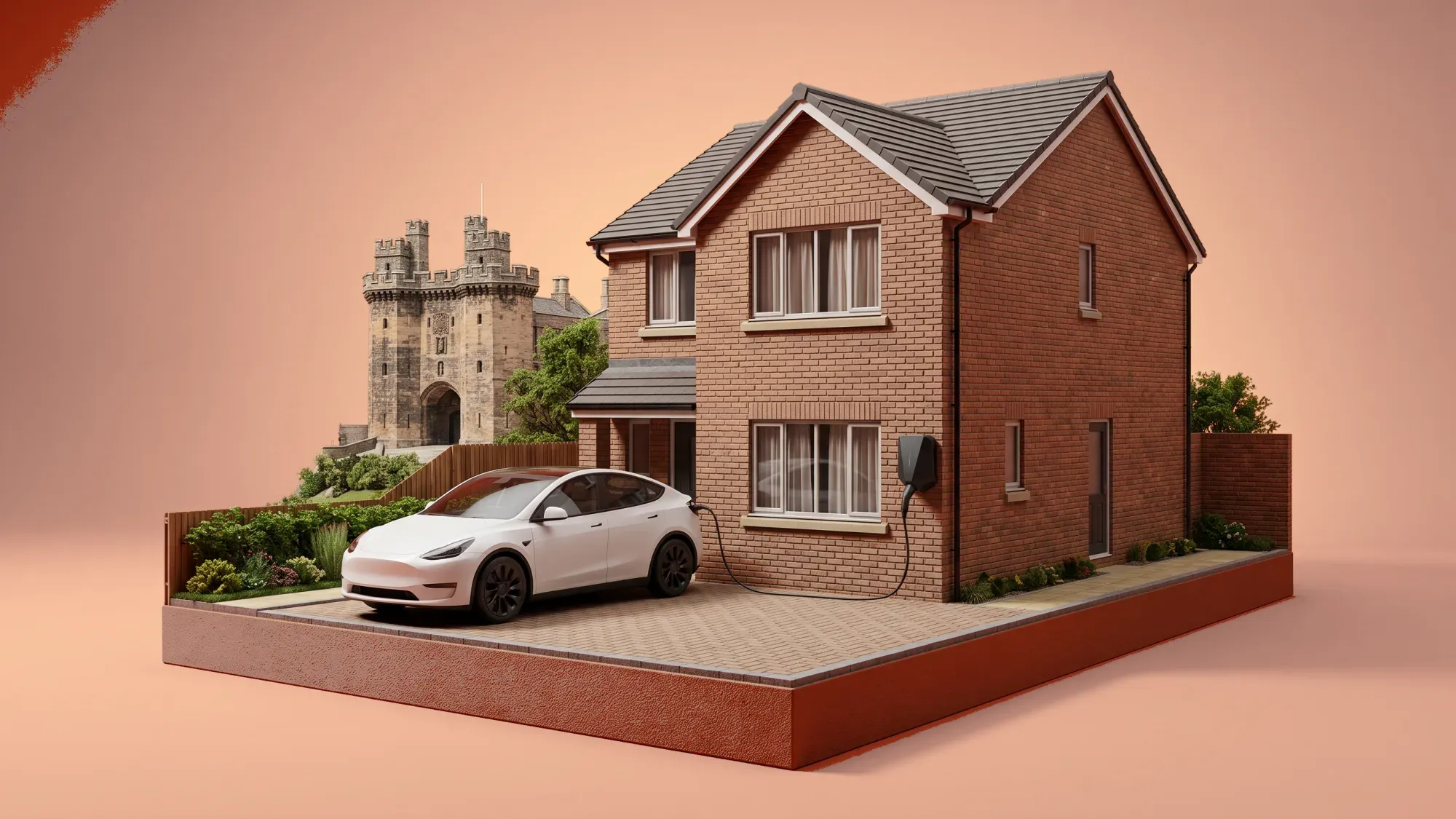
For homeowners across Lancashire, from its bustling towns to serene rural landscapes, installing an EV charger at home is a practical step towards managing energy use. Understanding the local energy landscape, including regional electricity pricing and grid connection requirements, is crucial for a smooth installation process.
Why install an EV charger in your Lancashire home?
The convenience of home charging
Charging your electric vehicle (EV) at home offers significant convenience, allowing you to top up your battery overnight and begin each day with a full charge. This reduces reliance on public charging infrastructure and can integrate seamlessly into your daily routine. With the average UK home using around 2,700 kWh of electricity per year, adding EV charging means considering how this fits into your overall home energy consumption.
Lancashire's unique energy landscape
Lancashire sits within the North West England electricity distribution region. Ofgem, the energy regulator, sets a price cap that varies by region, meaning your electricity unit rates and daily standing charges are subject to this regional cap, which is updated quarterly. The local Distribution Network Operator (DNO) for Lancashire is Electricity North West, responsible for maintaining the local electricity grid and managing power cuts. In the event of a power cut, residents can dial the free national number 105, which routes directly to their DNO.
Types of EV chargers and costs
Understanding charger types and speeds
Home EV chargers typically fall into two main categories:
Slow chargers: Often 3kW, these are the slowest option, usually requiring 8-12 hours for a full charge. They are suitable for overnight charging.
Fast chargers: Most common for home installations, these are typically 7kW. A 7kW charger can fully charge an EV in 4-8 hours1, depending on the car's battery size. For a deeper dive into choosing the right home EV charger, you can explore our guide on how to pick the right home EV charger.
22kW chargers are also available but require a three-phase electricity supply, which is rare in residential properties.
The choice depends on your vehicle, daily mileage, and available electrical capacity.
Typical EV charger installation costs in Lancashire
The cost of EV charger installation in Lancashire can vary widely, typically ranging from £800 to £1,5002. Factors influencing this cost include the type of charger, the complexity of the electrical work required, the distance from your fuse box to the charging point, and any necessary upgrades to your home's electrical supply. Obtaining multiple quotes from OZEV-approved installers is advisable to ensure competitive pricing. To understand the various factors that influence the total cost, read our detailed article on how much an EV charger costs.
Grants and financial support for Lancashire EV owners
The OZEV EV Chargepoint Grant
The UK government offers the Office for Zero Emission Vehicles (OZEV) EV chargepoint grants3 to support the cost of installing home charging points. For eligible flat owner-occupiers and people in rental accommodation with private off-street parking, the EV Chargepoint Grant for renters and flat owners provides up to £500 towards the cost of purchasing and installing a home EV charger. This grant is designed to make home charging more accessible for those who might otherwise face higher installation costs due to their property type.
Who is eligible for the EV Chargepoint Grant for renters and flat owners?
The EV Chargepoint Grant for renters and flat owners is available to eligible flat owner-occupiers and people living in rental accommodation across the UK. It provides up to £500 towards the cost of installing a home EV charger. Eligibility requires private off-street parking, and the installer must be OZEV-approved.
Local initiatives and on-street charging (levi)
For Lancashire residents without off-street parking, the government's EV Chargepoint Grant for households with on-street parking offers a solution, providing up to £500 towards installing a cross-pavement solution (e.g. a charging gully). This scheme provides grant funding to local authorities, enabling them to install on-street residential chargepoints. This is particularly beneficial for properties, such as many Victorian terraces in Lancashire, where a private driveway is not available, ensuring wider access to EV charging infrastructure.
The EV charger installation process in Lancashire
Initial assessment and electrical requirements
Before installation, a qualified electrician will assess your home's suitability. This involves checking your electrical capacity, ensuring your consumer unit (fuse box) can handle the additional load, and confirming adequate parking space for safe charging. Some older properties in Lancashire may require an upgrade to their main fuse or consumer unit to accommodate an EV charger.
Navigating Electricity North West and grid connections
New home EV charger installations in Lancashire require notification to Electricity North West, your local DNO, under the ENA connect-and-notify process. This is a regulatory requirement to ensure the new connection does not negatively impact the local electricity grid. Reputable installers typically manage this notification process on your behalf, submitting the necessary paperwork to Electricity North West. This ensures your installation complies with local grid regulations and avoids potential issues. For more comprehensive information on the entire process, from surveys to regulations, refer to our EV charger installation guide.
What to expect on installation day
On the day of installation, the electrician will typically install the charging unit, run the necessary cabling, and connect it to your home's electricity supply. They will then test the unit to ensure it is functioning correctly and safely. The process usually takes a few hours, and the installer should provide a demonstration of how to use your new charger.
Choosing an EV charger installer in Lancashire
The importance of OZEV approval
When selecting an EV charger installer in Lancashire, it is essential to choose one that is OZEV-approved. OZEV approval ensures that the installer meets specific standards for safety and quality, and it is a prerequisite for accessing the government's EV chargepoint grants. An OZEV-approved installer will also be familiar with the ENA connect-and-notify process for Electricity North West.
Questions to ask potential installers
Before committing to an installer, consider asking:
Are you OZEV-approved?
Do you handle the DNO notification process with Electricity North West?
What warranty do you offer on the charger and the installation?
Can you provide references from previous installations in Lancashire?
What are the total costs, including any potential electrical upgrades?
Integrating with your smart home energy
Choosing an EV charger that can integrate with your broader smart home energy strategy offers greater control and efficiency. This could include linking with smart meters, solar panels, or home battery storage systems. A digital-first approach, like that offered by Fuse Energy, can provide clarity and control over your home energy usage, allowing you to optimise EV charging against regional tariffs and contribute to a more resilient local energy system in Lancashire.
Your next steps towards home EV charging
Installing an EV charger in your Lancashire home is a forward-thinking investment. By understanding the local energy landscape, leveraging available grants, and choosing a certified installer, you can ensure a smooth and efficient transition to home EV charging. This not only offers daily convenience but also integrates your vehicle into a smarter, more energy-independent home.
For the avoidance of doubt, this article is provided for informational purposes only and is not intended to constitute legal or financial advice. The author and/or Fuse Energy shall not be responsible for any losses arising out of any reliance on the information contained herein.