Home EV charger installation cost
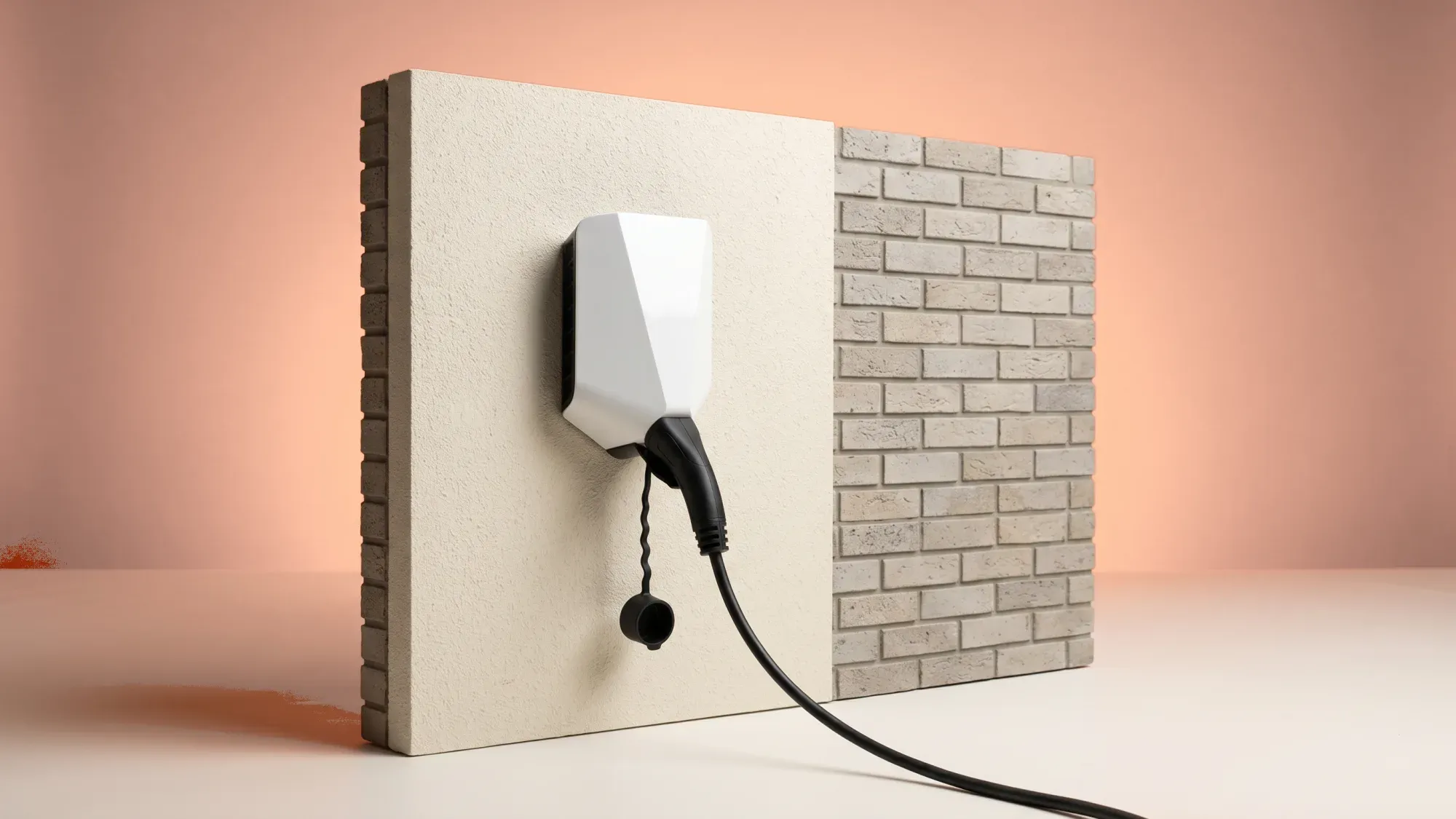
Installing an electric vehicle (EV) charger at home gives you direct control over your vehicle's energy supply, aligning with modern home energy management. For homeowners, understanding the total cost of this upgrade is crucial for budgeting and embracing electric driving. This guide breaks down the typical expenses, factors influencing the price, and available financial support to help you make an informed decision.
Understanding home EV charger installation costs
The cost of installing an EV charger at home can vary significantly, but it is a worthwhile investment for convenience and long-term savings. The full installation involves several components and labour, not just the charger unit price.
Average costs for standard and faster chargers
For most homes, a standard 7kW home EV charger is the most common choice, capable of fully charging most electric vehicles overnight. The average cost to install a 7kW home EV charger typically ranges from £800 to £1,600, before any grants are applied. This usually includes the charger unit, basic installation, and connection to your home's existing electrical system.
While 22kW chargers offer faster charging, they usually require a three-phase electricity supply, which is rare in domestic properties and significantly increases installation complexity and cost.
What is included in the installation price?
A comprehensive installation price usually covers the EV charger unit itself, the labour for a qualified electrician, necessary cabling, and any minor electrical adjustments to your home's consumer unit. It also includes testing and certification to ensure the installation complies with safety standards. However, more extensive electrical upgrades or longer cable runs can add to the overall expense.
Key factors influencing your installation price
Several elements dictate the final price of your home EV charger installation. Being aware of these can help you anticipate costs and avoid surprises.
Type of charger and power output
The power output of your chosen charger is a primary cost driver. Standard 7kW chargers are typically ideal for most domestic users, providing a full charge overnight. Faster chargers, such as 22kW units, are generally much more expensive to install in a domestic setting due to the need for a three-phase supply, often requiring significant network upgrades.
Location and cable length
The distance between your home's consumer unit (fuse box) and the desired mounting location for your EV charger plays a crucial role in the cost. Longer cable runs require more materials and labour, increasing the overall price. The complexity of routing the cable - whether it needs to go through walls, under floors, or across exterior surfaces - also impacts the installation time and cost.
Property's existing electrical system
The age and condition of your property's electrical system can significantly influence the installation cost. Older homes may require upgrades to their consumer unit to safely accommodate the new load of an EV charger. This could involve replacing an outdated fuse box with a modern consumer unit that has adequate spare capacity and RCD (Residual Current Device) protection.
Additional electrical work and upgrades
Beyond the consumer unit, other electrical upgrades might be necessary. This could include improving your property's earthing system to meet current regulations or upgrading the main fuse (cut-out Fuse) provided by your Distribution Network Operator (DNO) if your existing supply cannot handle the additional demand. Such upgrades can add hundreds of pounds to the total cost and may require coordination with your DNO.
Government grants and financial support
Government initiatives are in place to help reduce the upfront cost of installing a home EV charger, making this essential upgrade more accessible.
The OZEV EV Chargepoint Grant explained
The government's Office for Zero Emission Vehicles (OZEV) offers financial support through the EV Chargepoint Grant. This grant provides up to £500 towards the cost of purchasing and installing a home charge point for eligible properties. The grant aims to encourage the adoption of electric vehicles by making home charging more affordable.
Eligibility criteria
The EV Chargepoint Grant for renters and flat owners provides up to £500 towards installing a chargepoint at the property. To be eligible, you must own and live in a flat, or rent and live in any residential property, and have private off-street parking. There is also an EV Chargepoint Grant for households with on-street parking, offering up to £500 for installing a cross-pavement solution.
It is important to note that a typical homeowner who owns and lives in a house with private off-street parking does not qualify for any current domestic chargepoint grant. The customer applies for the grant themselves via the GOV.UK eligibility/application page; the OZEV-authorised installer's role begins only after the customer's application is approved.
Who is eligible for the OZEV EV Chargepoint Grant?
The OZEV EV Chargepoint Grant is available to eligible renters and flat owners with private off-street parking, and to households with on-street parking installing a cross-pavement solution. It offers up to £500 towards the cost of an EV charger and its installation. Owner-occupiers in houses with private off-street parking are not eligible. Always consult the official OZEV guidance for the latest information.
Choosing the right charger and qualified installer
Making informed choices about your charger and installer ensures a safe, efficient, and cost-effective installation.
Selecting the best charger for your needs
Consider your vehicle's charging capabilities, your daily driving habits, and your budget when choosing a charger. A standard "fast" charger, typically 7kW or 7.4kW, is usually ideal for most domestic users, providing a full charge overnight. Look for smart features that allow you to schedule charging during off-peak hours to take advantage of cheaper electricity tariffs, further enhancing your cost savings.
Finding an OZEV-approved installer
It is crucial to select a qualified and OZEV-approved installer. OZEV accreditation ensures that the installer meets specific standards for safety and competence, and it is a requirement for claiming the government grant. All electrical installations must also comply with the latest IET Wiring Regulations (BS 7671) and local building regulations. A reputable installer will be able to advise on these requirements.
Getting and comparing multiple quotes
Always obtain multiple detailed quotes from different OZEV-approved installers. This allows you to compare not just the final price, but also the scope of work included, the type of charger offered, and any potential additional costs for electrical upgrades. A good quote will be transparent about all charges, ensuring you have a clear understanding of what you are paying for.
The home EV charger installation process
Installing a home EV charger is a straightforward process when handled by professionals. Here is what you can expect.
Pre-installation assessment
Before any work begins, a qualified installer will conduct a site survey or ask for detailed information about your property's electrical system and desired charger location. This assessment helps them determine the best installation approach, identify any necessary electrical upgrades, and provide an accurate quote. They will also check your main fuse rating and earthing arrangements.
What happens on installation day
On the day of installation, the electrician will typically:
- Mount the charger unit: Securely fix the charge point to your chosen wall.
- Run the cable: Install the dedicated cable from your consumer unit to the charge point.
- Connect to the mains: Safely connect the charger to your home's electricity supply.
- Install protection devices: Add any necessary circuit breakers or RCDs to your consumer unit.
- Test the system: Thoroughly test the charger and your electrical system to ensure everything is working correctly and safely.
Post-installation checks and certification
Once the installation is complete, the installer will issue an Electrical Installation Certificate (EIC) or a Minor Electrical Installation Works Certificate (MEIWC), confirming that the work complies with safety standards. They should also demonstrate how to use your new charger and register it for any smart features or warranty. This certification is vital for your home insurance and for future electrical work.
Long-term benefits of home EV charging
Beyond the initial installation, a home EV charger offers significant long-term advantages, making it a smart investment for any EV owner.
Convenience and cost savings
Having a charger at home provides unparalleled convenience. You can simply plug in your EV overnight and wake up to a full battery, eliminating trips to public charging stations. Furthermore, home charging is generally cheaper than using public rapid chargers, especially if you switch to an EV-friendly electricity tariff that offers lower rates during off-peak hours. This can lead to substantial cost savings over time.
Integrating with smart home energy
Installing an EV charger is more than just adding a new appliance; it is an opportunity to integrate your vehicle into a broader smart home energy ecosystem. Modern smart chargers can communicate with other home energy devices, allowing you to optimise charging times based on electricity prices, solar panel generation, or even grid demand. This positions your EV charger as a foundational element in a future where energy is abundant and accessible for all your needs, aligning with the vision of easy home energy upgrades and empowering you to make the most of your home's power.
Disclaimer
For the avoidance of doubt, this article is provided for informational purposes only and is not intended to constitute legal or financial advice. The author and/or Fuse Energy shall not be responsible for any losses arising out of any reliance on the information contained herein.