EV charger installation in Barking
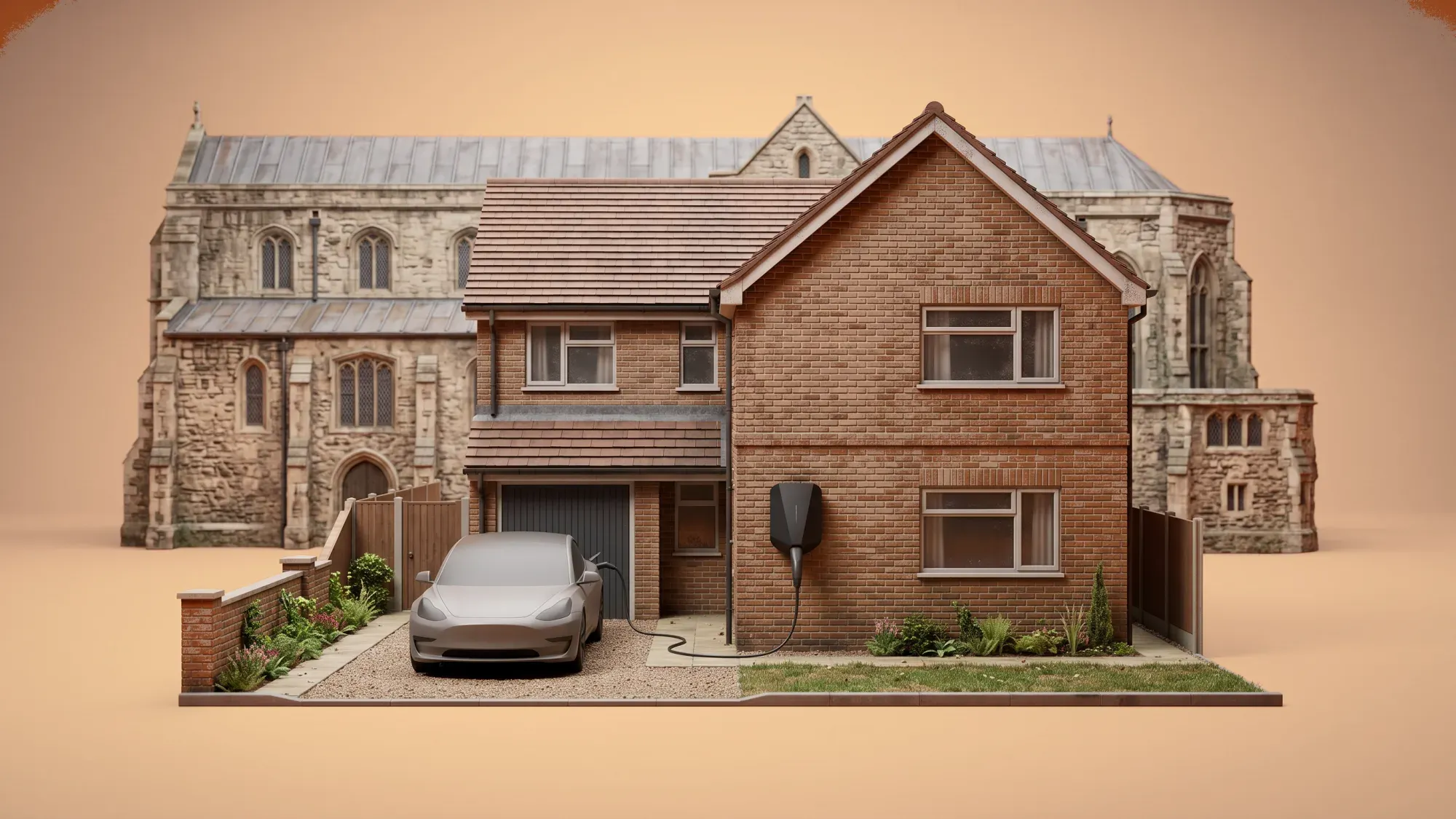
For residents in Barking, a borough known for its diverse housing, from established terraced homes to newer developments, installing a home EV charger is a practical step towards sustainable living. The area's mix of housing means that while many have off-street parking suitable for a home charger, others rely on public charging infrastructure. Navigating the specifics of local regulations and finding a trustworthy installer can be challenging, but understanding the local context is key to a smooth installation process.
Your guide to EV charger installation in Barking
Barking's unique context for EV owners
Barking, situated in East London, presents a unique landscape for electric vehicle owners. The local council is actively working to expand public charging options, with hundreds of electric vehicle charging points (EVCPs) planned by 2030 to ensure residents are within reasonable walking distance of a charge point1. This is particularly important for those in properties without dedicated off-street parking. The London Borough of Barking and Dagenham has already seen a significant rollout of public charge points, with plans for more, to boost EV infrastructure.
Why home EV charging matters
Home EV charging offers unparalleled convenience, allowing you to power your vehicle overnight and wake up to a full battery. It often proves more cost-effective than relying solely on public charging networks, especially when combined with off-peak energy tariffs. Having a home charger means no more detours to public stations or waiting in queues, integrating seamlessly into your daily routine.
Understanding home EV charger installation
Types of home EV chargers
Home EV chargers typically come in two main types: untethered and tethered. Untethered chargers feature a universal socket, allowing you to use your vehicle's charging cable, which can be convenient for different EV models. Tethered chargers, on the other hand, have a cable permanently attached, offering a grab-and-go solution. Chargers also vary in power output; for example, the Easee One charger offers 7.4 kW, providing a full charge in several hours. Choosing the right home EV charger depends on your specific needs.
Key considerations for your property
Before installation, consider your property's electrical capacity. A qualified installer will assess your home's existing electrical supply to ensure it can safely support an EV charger. Parking arrangements are also crucial; you'll need dedicated off-street parking to be eligible for some government grants. Future-proofing your installation by choosing a smart charger is advisable, as these often integrate with energy management systems and can take advantage of cheaper off-peak electricity rates. You can learn more about EV charger installation requirements.
Grants and financial support for Barking residents
OZEV EV chargepoint grants explained
The UK government offers financial support for home EV charger installations through various OZEV (Office for Zero Emission Vehicles) EV Chargepoint Grants2. These grants aim to make EV charging more accessible. For example, the EV Chargepoint Grant for renters and flat owners provides up to £500 towards the cost of purchasing and installing an approved smart home charger. This funding is confirmed until 31 March 2027.
Eligibility for Barking homeowners and renters
The EV Chargepoint Grant for renters and flat owners is specifically designed for flat owner-occupiers and people in rental accommodation across the UK, including Barking. To qualify, you must have dedicated off-street parking that is accessible to you at all times. Alternatively, the EV Chargepoint Grant for households with on-street parking provides up to £500 for those installing a cross-pavement solution. You must also own, lease, or have on order an eligible electric or plug-in hybrid vehicle. It is important to use an OZEV-authorised installer. The customer applies for the grant themselves via the GOV.UK website, and the installer's role begins after the application is approved.
Who is eligible for OZEV EV chargepoint grants?
OZEV EV chargepoint grants are available to flat owner-occupiers and those in rental properties with private off-street parking, or households with on-street parking installing a cross-pavement solution. You must own or lease an eligible electric vehicle. The customer applies for the grant themselves, which can provide up to £500 towards a home charger installation.
Navigating Barking's local electricity network
UK Power Networks: Barking's distribution network operator
For all electricity matters in Barking, your local Distribution Network Operator (DNO) is UK Power Networks. They are responsible for managing the local electricity grid infrastructure that delivers power to your home. In the event of a power cut, Barking residents can dial the free national number 105, which will route directly to UK Power Networks for assistance.
The DNO notification process for new connections
Installing a new home EV charger involves connecting to the electricity grid, which requires notification to UK Power Networks under the ENA connect-and-notify process. This process ensures grid stability and safety by informing the DNO of new connections. Your chosen OZEV-authorised installer will handle this notification on your behalf, ensuring all regulatory requirements are met. For single domestic connections, installers can use UK Power Networks' Smart Connect portal to notify them within 28 days of installation.
Electricity price cap region: London
Barking falls within the "London" electricity distribution region for Ofgem's price cap3. This means the maximum unit rates and daily standing charges for electricity suppliers are set specifically for this region. These rates can differ from other parts of the country, influencing the overall cost of charging your EV at home. Ofgem updates these price caps quarterly, typically on 1 January, 1 April, 1 July, and 1 October.
Choosing the right installer for your Barking home
What to look for in an OZEV-authorised installer
Selecting the right installer is crucial. You must choose an installer registered with OZEV as an authorised installer to be eligible for the EV Chargepoint Grants. An OZEV-authorised installer will not only ensure compliance with grant requirements but also adhere to high safety standards. They should be able to guide you through the entire process, from initial assessment to final connection. Understanding how much an EV charger costs can also help you evaluate quotes.
Ensuring local expertise and reliability
Opting for an installer with local expertise in Barking can be highly beneficial. They will be familiar with the specifics of the local electricity network, including UK Power Networks' procedures, and may have experience with the types of housing stock common in the area. Reliability is paramount; look for installers who offer clear communication, comprehensive warranties, and good customer reviews.
The EV charger installation process in Barking
From initial survey to final connection
The installation process typically begins with an initial home survey. Your chosen installer will assess your property's electrical system, parking area, and discuss your charging needs. They will then provide a tailored quote. If you are eligible for an OZEV grant, you will need to apply for it yourself. Once your grant application is approved, the installer will schedule the installation. The installer will also handle the necessary notification to UK Power Networks under the ENA connect-and-notify process.
What happens on installation day
On the day of installation, the installer will arrive at your property to carry out the work. This involves mounting the charger, routing the necessary cabling, and connecting it to your home's electricity supply. They will install an RCBO (Residual Current Breaker with Overcurrent protection) and connect it to your main supply. After installation, comprehensive safety tests will be conducted to ensure the charger is operating correctly and safely. The installer will also explain how to use your new EV charger.
Powering your EV with Fuse Energy in Barking
Choosing Fuse Energy for your EV charger installation in Barking means you benefit from reliable 24/7 human customer support. We empower customers with control over their energy, integrating EV charging with smart home energy management via our app, allowing you to manage your energy and charging needs effectively. Our mission is to make energy abundant and accessible, giving you the power to play with.
References
- Barking and Dagenham Post. Barking and Dagenham set for 250 new electric vehicle charging points
- UK Government. Electric vehicle chargepoint grants
- Ofgem. Energy price cap (default tariff) levels
Disclaimer
For the avoidance of doubt, this article is provided for informational purposes only and is not intended to constitute legal or financial advice. The author and/or Fuse Energy shall not be responsible for any losses arising out of any reliance on the information contained herein.