Finding your energy supplier in North Wales
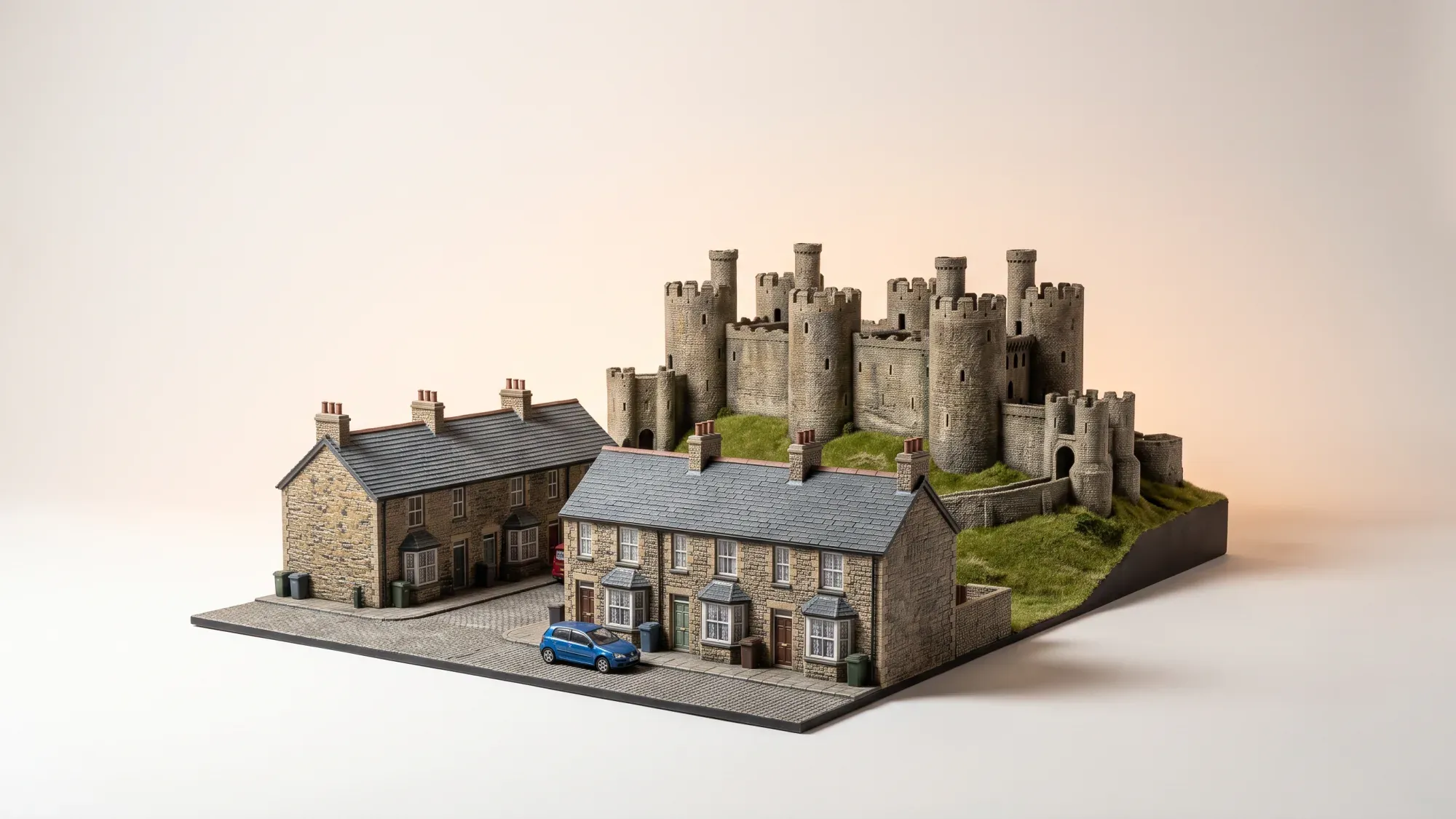
Choosing an energy supplier in North Wales involves understanding the region's unique energy landscape. From the rugged peaks of Eryri (Snowdonia) to the coastal communities, homes here face distinct energy considerations. This guide offers practical advice for households in North Wales to find a reliable, cost-effective energy supplier.
Managing your energy should be straightforward, no matter where you live. Fuse Energy offers clear pricing, real-time usage data, and 24/7 human support to help you take control of your energy bills. Click here to switch to Fuse Energy today.
Enter your address to get a quote and see how much you could save
Understanding the North Wales energy landscape
North Wales has its own set of rules and infrastructure when it comes to energy supply. Understanding these local specifics is the first step to making informed decisions about your home's energy.
North Wales's unique energy context
The diverse landscape of North Wales means energy needs can vary significantly. Rural areas might have a higher proportion of homes off the gas grid, making electricity supply particularly critical. Coastal properties can experience higher exposure to winds, influencing heating demands. These factors mean that a "one-size-fits-all" approach to energy supply often falls short.
Your price cap region: Merseyside & North Wales
For residents in North Wales, the energy price cap set by Ofgem is specifically tailored to the "Merseyside & North Wales" electricity distribution region. This means that the unit rates for electricity and the daily standing charges you pay will differ from other parts of Great Britain. The price cap is reviewed and updated quarterly, typically on 1 January, 1 April, 1 July, and 1 October, reflecting changes in wholesale energy costs and other factors. Understanding this regional variation is crucial, as it directly impacts your energy bills.
Identifying your local distribution network Operator
Your local Distribution Network Operator (DNO) is responsible for maintaining the local electricity network, ensuring power reaches your home, and responding to power cuts. Your energy supplier handles your billing and customer service, but it is the DNO who manages the physical infrastructure. If you experience a power cut, you should dial the free national number 105, which will connect you directly to your DNO for assistance. You can also find your DNO using the Energy Networks Association's postcode tool. In North Wales, that local network operator is SP Energy Networks.
What is a DNO?
A DNO owns and operates the local electricity network, including pylons, substations, and cables that deliver power to your home. They are responsible for maintaining this infrastructure and restoring power during outages, regardless of who your energy supplier is.
Finding your current energy supplier
Before you can compare or switch, you need to know who currently supplies your energy. This is usually straightforward, but there are several ways to check if you are unsure.
Checking your energy bills
The easiest way to identify your current energy supplier is to look at a recent energy bill. Your supplier's name and contact details will be clearly displayed, along with your account number and meter readings.
Using online tools
If you do not have a recent bill to hand, several online tools can help. For electricity, you can use National Grid's "What's My Supplier?" tool. For gas, you can use the "Find My Supplier" service. These tools allow you to enter your postcode and find out who supplies your energy.
What if you cannot find your supplier?
In cases where you cannot find your supplier through bills or online tools, you can use your Meter Point Administration Number (MPAN) for electricity or Meter Point Reference Number (MPRN) for gas. These unique identifiers are found on your energy bills and can help identify your supplier through the national databases. If you are struggling, your chosen new supplier can often assist in identifying these numbers.
Comparing energy suppliers in North Wales
Once you know your current supplier, the next step is to compare what other providers offer. This goes beyond just the headline price.
Key factors for homeowners
When comparing energy suppliers, consider more than just the unit rate. Look at the daily standing charge, as this can vary significantly and impact your overall bill. Customer service reputation is also vital; a cheaper tariff might not be worth it if you struggle to get support when you need it. Consider how transparent the supplier is with your usage data and how easy it is to manage your account.
Tariff types and what they mean
Energy suppliers typically offer a few main tariff types:
- Variable tariffs: The unit rate and standing charge can change, usually quarterly, in line with the Ofgem Price Cap. These often have no exit fees.
- Fixed tariffs: The unit rate and standing charge are fixed for a set period, usually between 12 and 18 months. These can offer price certainty but may come with exit fees if you leave early.
- Off-peak tariffs: These tariffs offer different prices for electricity at different times of the day (e.g., cheaper overnight). Eligibility for off-peak tariffs depends on your meter configuration (SSC), not necessarily requiring a smart meter.
Considering customer service and support
Reliable customer service is paramount. Check reviews and ratings for suppliers, particularly their responsiveness and ability to resolve issues. For example, some suppliers offer 24/7 human support, which can be a significant advantage. Understanding your energy usage can also help manage costs, and a smart meter installation can provide valuable insights into your consumption patterns.
Switching energy suppliers: a step-by-step guide
Switching energy suppliers is a regulated process designed to be straightforward. Here is how to do it.
Gathering necessary information
Before initiating a switch, you will need:
- Your address and postcode.
- Details of your current supplier.
- Your MPAN for electricity and MPRN for gas (found on your bill).
- A recent meter reading (or access to your smart meter data).
The switching process explained
- Compare tariffs: Use an Ofgem-accredited comparison service or go directly to supplier websites to find a tariff that suits your needs.
- Choose your new supplier: Select the tariff and supplier you want to switch to.
- Initiate the switch: Your new supplier will handle most of the process. You will typically provide them with your details and a meter reading.
- Cooling-off period: You have a 14-day cooling-off period, running from your switch-in date, during which you can cancel the switch without penalty.
- Switch completion: The switch typically takes up to 5 working days. Your new supplier will confirm the switch date.
What happens after you switch
Once the switch is complete, your new supplier will send you a welcome pack and your first bill. You will continue to receive energy through the same pipes and wires; only the company billing you changes. It is a good idea to submit a final meter reading to your old supplier and an opening reading to your new one to ensure accurate billing. If you had credit with your previous supplier, you will need to contact them directly for a refund.
National energy support schemes
Several schemes are available to help residents manage their energy costs and improve home efficiency.
Warm Home Discount and other support
The Warm Home Discount scheme1 provides a £150 rebate on electricity bills to eligible low-income households, usually paid directly by your energy supplier. As North Wales is in Wales, the Welsh Government's Nest scheme also offers free energy-efficiency improvements (such as insulation or a more efficient heating system) to eligible households, alongside the GB-wide ECO4 scheme. Further information on energy bill savings and support can help manage household costs.
If you are disabled or have a long-term health condition, you can complain if your supplier did not make a reasonable adjustment you asked for, such as bills in an accessible format. Other support includes the Winter Fuel Payment for those of State Pension age.
Support for vulnerable customers
If you are in a vulnerable situation, you may be eligible for additional support through the Priority Services Register (PSR). This free service, managed by energy suppliers and network operators, provides extra help during power cuts or other energy-related issues. Eligibility for the PSR can include being of State Pension age, having young children, living with a disability or long-term medical condition, or experiencing recent life changes like recovering from an injury or job loss.
Choosing a modern energy supplier
For homeowners, choosing an energy supplier is about finding a provider that meets your needs.
The benefits of digital-first energy management
A modern, digital-first energy supplier offers tools that put you in control. An app, for instance, can provide clear visibility over your energy usage and costs. This transparency allows you to track consumption, understand your bills, and make informed decisions about your energy use, moving beyond the traditional 'use less' narrative.
24/7 support and transparency
Many modern energy suppliers provide round-the-clock human customer support, offering peace of mind. This means you can get answers to your energy queries at any time, without being limited to standard business hours. Coupled with transparent pricing and straightforward account management, it simplifies what can often be a complex and anxiety-inducing part of household management.
Empowering your energy choices
The philosophy of "power to play with" contrasts with the traditional industry focus on scarcity. Instead of constantly being told to "use less," some suppliers aim to empower customers to use energy without anxiety, by building a system that delivers abundant, reliable power. It is about giving you more control and capability, turning energy management into a power play where you have the advantage.
Ready to take control of your energy? Fuse Energy offers transparent pricing, real-time usage data through our app, and 24/7 human customer support. Switching is quick and easy, designed to put you in charge of your energy costs. Click here to switch to Fuse Energy today. You can also learn more about our mission to deliver abundant, clean energy by clicking here.
References
- Citizens Advice. Grants and benefits to help you pay your energy bills
Disclaimer
For the avoidance of doubt, this article is provided for informational purposes only and is not intended to constitute legal or financial advice. The author and/or Fuse Energy shall not be responsible for any losses arising out of any reliance on the information contained herein.