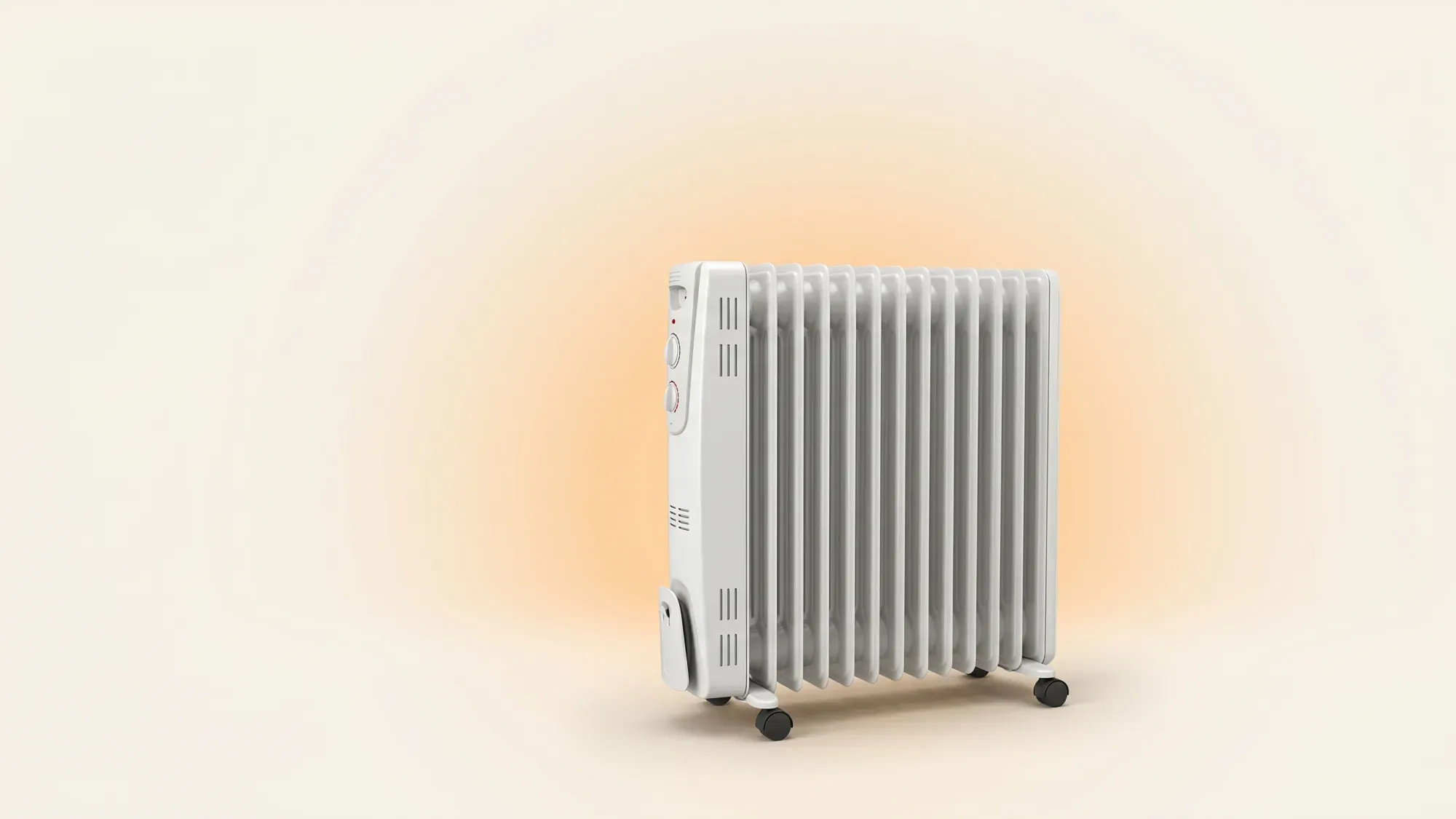
Understanding the cost of running an oil radiator is essential for managing household expenses, especially with fluctuating energy prices. Oil radiators are electric heaters, and their running cost is directly tied to your electricity unit rate and the appliance's wattage. This guide breaks down how to calculate these costs and offers practical advice to keep your heating bills manageable.
Managing your heating costs effectively means staying informed and proactive. Fuse Energy offers clear pricing and in-app usage data to help you understand and control your energy expenditure. Click here to switch to Fuse Energy today.
What is an oil radiator?
An oil radiator, also known as an oil-filled electric heater, is a sealed unit containing thermal oil. When switched on, an internal electrical element heats this oil. The oil then retains heat effectively, radiating warmth slowly and steadily into a room, even after the power is turned off. This contrasts with fan heaters, which rely on constant airflow, making oil radiators a dependable choice for supplementary heating that provides a consistent, gentle warmth.
Why running costs matter to UK households
For many UK adults, high electricity bills are a significant concern. Knowing precisely how much your oil radiator costs to run empowers you to make informed decisions about your heating choices and manage your household budget effectively. Transparent information about appliance running costs is crucial for budgeting and can help alleviate anxiety around energy bills.
Calculating the running cost of your oil radiator is straightforward once you have two key pieces of information: its wattage and your electricity unit rate.
Finding your radiator's wattage
Your oil radiator's wattage indicates how much power it consumes. You can usually find this on a label on the appliance itself, in the user manual, or on the manufacturer's website. Common wattages for oil radiators range from 500W for smaller models to 2500W for larger ones.
Identifying your electricity unit rate
Your electricity unit rate is the price you pay per kilowatt-hour (kWh) of electricity. This figure can be found on your energy bill or within your energy supplier's app or online account. For Direct Debit customers, the current Ofgem Price Cap rate for electricity is 26.11p per kWh from 1 July to 30 September 2026.
Step-by-step calculation examples
To calculate the hourly running cost, use this simple formula:
(Wattage of appliance / 1000) x Electricity Unit Rate (in pence)
For example, using the Ofgem Price Cap rate of 26.11p per kWh:
- A 500W oil radiator costs approximately 13.06p per hour to run (0.5 kW x 26.11p/kWh).
- A 2500W oil radiator costs approximately 65.28p per hour to run (2.5 kW x 26.11p/kWh).
You can then estimate daily or monthly costs based on your typical usage patterns. For instance, running a 2500W radiator for 4 hours a day would cost approximately £2.61 per day (65.28p x 4).
Several factors beyond just wattage and unit rate can influence how much you spend on heating with an oil radiator.
Thermostat settings and room temperature
Setting your radiator's thermostat to a lower temperature will reduce its running time and, consequently, its energy consumption. Aim for a comfortable but not excessive room temperature to balance warmth and cost.
Insulation and draught-proofing
Good insulation and effective draught-proofing in your home can significantly reduce heat loss. This means your oil radiator will not have to work as hard or as long to maintain the desired temperature, leading to lower running costs.
Radiator placement and size
Placing your radiator strategically, away from draughts and not obstructed by furniture, allows heat to circulate more effectively. Additionally, choosing an oil radiator with a wattage appropriate for the room size prevents overworking a small heater or overheating a space with an oversized one.
Managing the cost of your oil radiator involves smart usage and optimising your heating setup.
Optimising usage patterns
Use your oil radiator to heat specific rooms when and where you need them, rather than trying to heat your entire home. Turn it off when you leave a room for an extended period or when you are not at home.
Using timers and smart plugs
Timers and smart plugs allow you to schedule your oil radiator to switch on and off automatically. This ensures it only operates when necessary, preventing wasted energy and providing warmth precisely when you need it, such as before you wake up or arrive home.
Maintaining your radiator
While oil radiators require minimal maintenance, keeping them clean and free of dust can help ensure they operate efficiently. Dust can act as an insulator, reducing the radiator's ability to emit heat effectively.
Understanding how oil radiators stack up against other electric heating options can help you choose the right solution for your needs.
Oil radiator vs fan heater
Fan heaters provide instant, directional heat but can be less efficient for sustained warmth in a larger space due to their constant fan operation. Oil radiators offer a slower, more consistent heat that lingers, making them better for maintaining ambient room temperature over time.
Oil radiator vs convection heater
Convection heaters warm the air directly, circulating it around the room. They can heat a space more quickly than an oil radiator but may not retain heat as long once switched off. Oil radiators' thermal oil provides a lasting warmth, even after the power is cut.
When an oil radiator is the right choice
Oil radiators are often a good choice for supplementary heating in individual rooms, especially where a consistent, gentle warmth is preferred over rapid heating. Their silent operation and ability to retain heat make them suitable for bedrooms, studies, or living areas where prolonged, comfortable warmth is desired.
Managing your heating costs effectively means staying informed and proactive.
Reviewing your energy tariff
Regularly reviewing your energy tariff is crucial. Ensure you are on a competitive rate for your electricity, as this directly impacts the running cost of your oil radiator and all other electric appliances. Ofgem regulates the energy market in Great Britain, including setting the energy price cap, which limits the unit rates suppliers can charge.
The benefits of transparent energy management
Understanding your energy consumption and the associated costs can significantly reduce anxiety around energy bills. By having clear, actionable information, you can make informed decisions, optimise your usage, and take control of your household's energy expenditure. The average UK home uses around 2,500 kWh of electricity per year1, providing a benchmark for understanding your own consumption.
Taking control of your energy usage and costs is simpler than you might think. Fuse Energy provides clear, transparent billing and in-app tools to help you track your electricity consumption. Our 24/7 human support team is always on hand to answer your questions and help you make the most of your energy. Switch to Fuse Energy today and experience a modern approach to home energy. Click here to get started.