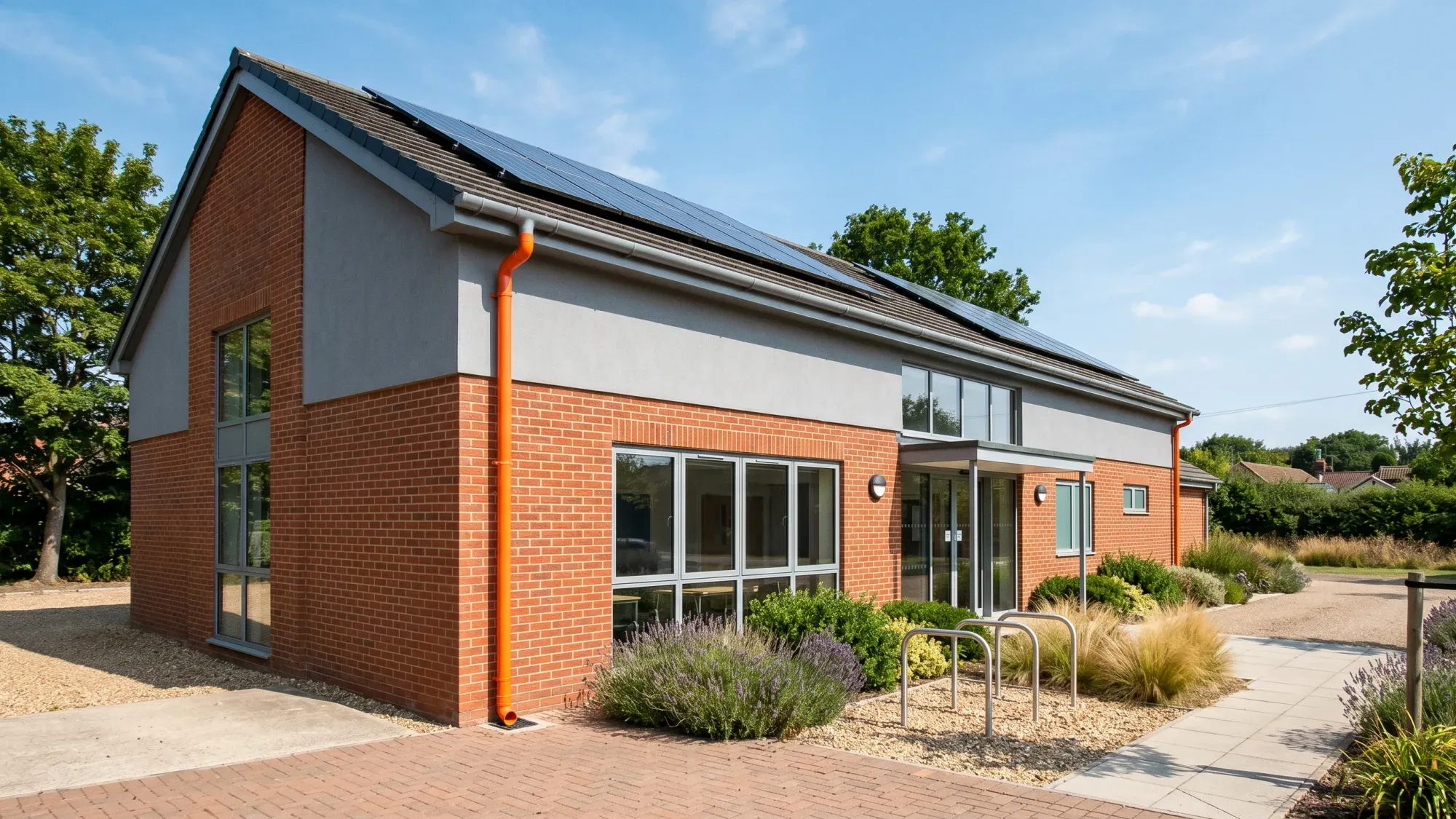
Local communities across the UK are increasingly taking control of their energy future, moving towards clean, locally-owned power. Establishing a community power corporation allows local leaders, activists, and entrepreneurs to develop and manage their own clean energy projects, fostering economic benefits and greater energy independence for their areas. This guide outlines the steps and considerations for setting up such initiatives in the UK.
Thinking about Community power corporation models? With Fuse Energy, you get clear pricing, real-time usage data, 24/7 human customer support, and a modern energy experience designed around you. Signing up takes just a few minutes, so you can take control of your bills from day one. Click here to switch to Fuse Energy today and start saving.
What is a community power corporation?
A community power corporation represents a local energy initiative where the ownership, generation, and management of clean energy assets are in the hands of the community it serves. These projects are designed to deliver benefits directly to local residents, rather than solely to commercial shareholders. They empower local communities to own and manage their energy generation, often focusing on renewable sources.
Defining community energy in the UK
Community energy in the UK encompasses projects where local people are actively involved in the generation, supply, or reduction of energy. This can range from installing solar panels on community buildings to developing local wind farms or managing energy efficiency programmes. These initiatives aim to provide local economic benefits, increase energy independence, and contribute to decarbonisation targets within the UK. Renewable energy sources like wind and solar are commonly used in UK community power projects.
Economic advantages for local areas
Community energy projects often generate local economic benefits through job creation, local investment, and revenue sharing. These benefits can include local employment opportunities, reduced energy costs for community members, and funds reinvested into local services or further sustainability initiatives.
Environmental impact and energy independence
By focusing on renewable energy sources, community power corporations contribute significantly to decarbonisation targets. They reduce reliance on fossil fuels and increase local energy independence, bolstering the UK's overall energy security. This shift supports a cleaner, more sustainable energy system.
Strengthening local communities
Community energy projects foster strong local engagement and cohesion. They provide a common goal that unites residents, leading to increased participation in local decision-making and a stronger sense of ownership over shared resources. This strengthens community bonds and builds local capacity.
Community benefit Societies and co-operatives
Legal structures such as Community Benefit Societies (CBS) and Industrial and Provident Societies (IPS) are frequently used by community energy groups in the UK. CBS are governed by the Financial Conduct Authority (FCA) and are designed to operate for the benefit of the wider community, not just their members. Co-operatives, another common structure, are owned and controlled by their members, who benefit from the services provided.
Other legal forms for community energy
While CBS and co-operatives are popular, other legal forms can also be adopted, depending on the project's specific goals and scale. These might include charitable incorporated organisations (CIOs) for projects with a strong charitable purpose, or even limited companies for more commercially driven ventures where community benefit is still a core objective. Each structure has different implications for governance, funding, and risk.
Governance models and decision-making
Effective governance is crucial for the success of community power corporations. Decision-making processes typically involve local stakeholders, ensuring that projects align with community needs and priorities. This often includes a board of directors, elected by members or representatives from the local area, responsible for strategic oversight and operational management.
Grants and government support
Securing adequate initial funding is a critical step for community power projects. The UK government's Community Energy Fund has provided financial support for community energy projects. Such grants can help cover initial feasibility studies, development costs, and even capital expenditure for smaller projects.
Community share offers and local investment
Community share offers are a popular method for raising capital, allowing local residents and organisations to invest directly in their energy projects. This not only provides funding but also strengthens community ownership and engagement. Investors typically receive a modest return on their investment, alongside the wider community benefits.
Commercial loans and partnerships
For larger projects, commercial loans from banks or specialist lenders may be necessary. Partnerships with commercial energy developers can also provide access to capital, expertise, and economies of scale, while still maintaining a degree of community control and benefit. Robust financial planning is essential to ensure long-term sustainability.
Facilitating project development
Local government plays a pivotal role in facilitating community power projects. This can involve providing strategic support, identifying suitable sites, and helping to navigate local planning regulations. Their involvement can significantly accelerate project development and ensure alignment with broader local development goals.
Policy support and planning
Local authorities can implement policies that actively support community energy, such as including renewable energy targets in local plans or offering preferential treatment for community-owned schemes. Policy support and planning are crucial for creating a favourable environment for these initiatives to thrive.
Engaging with Distribution Network Operators (DNOs)
Engaging with Distribution Network Operators (DNOs) is essential for any energy generation project. Grid connection requirements and processes are managed by DNOs. Local government and project teams must work closely with DNOs to ensure that new generation assets can be safely and efficiently connected to the local electricity grid.
Project initiation and feasibility
The first step involves defining the community's energy needs and the project's scope. This includes conducting feasibility studies to assess technical, economic, and environmental viability. Engaging local stakeholders early on helps build a core project team and ensures community buy-in.
Securing land and grid connection
Once a project is deemed feasible, securing appropriate land or sites for energy generation is necessary. Simultaneously, the process of applying for and securing a grid connection with the relevant Distribution Network Operator (DNO) must begin. This can be a complex and time-consuming process requiring expert guidance.
Operation and long-term sustainability
After construction and connection, the focus shifts to operating the energy generation assets efficiently and ensuring their long-term sustainability. This involves ongoing maintenance, monitoring, and financial management, often with mechanisms in place to reinvest profits back into the community or for future energy projects.
Regulatory hurdles and market access
Community energy projects in the UK must comply with Ofgem regulations for generation and supply. Navigating the UK's energy regulatory landscape and securing market access can be challenging for smaller, community-led initiatives. This often requires specialist legal and technical advice.
Scaling up community energy initiatives
While many successful community energy projects exist, scaling up these initiatives across the UK presents a significant challenge. This requires overcoming barriers such as access to finance, technical expertise, and complex regulatory frameworks. However, the potential for widespread local impact remains substantial.
The evolving UK energy landscape
The UK's energy landscape is continually evolving, driven by decarbonisation targets and technological advancements. Community power corporations are well-positioned to play a crucial role in this transition, contributing to a more decentralised, resilient, and community-focused energy system. Their continued growth will depend on supportive policy, innovative funding models, and strong local leadership.
Fuse Energy focuses on providing residential energy solutions for individual homes, helping them manage their energy use smartly and sustainably. While we do not offer services for commercial energy projects or community power corporations, we believe in transparent energy education. We aim to provide objective, informational content to help UK professionals understand the energy sector.