Commercial electricity meters explained
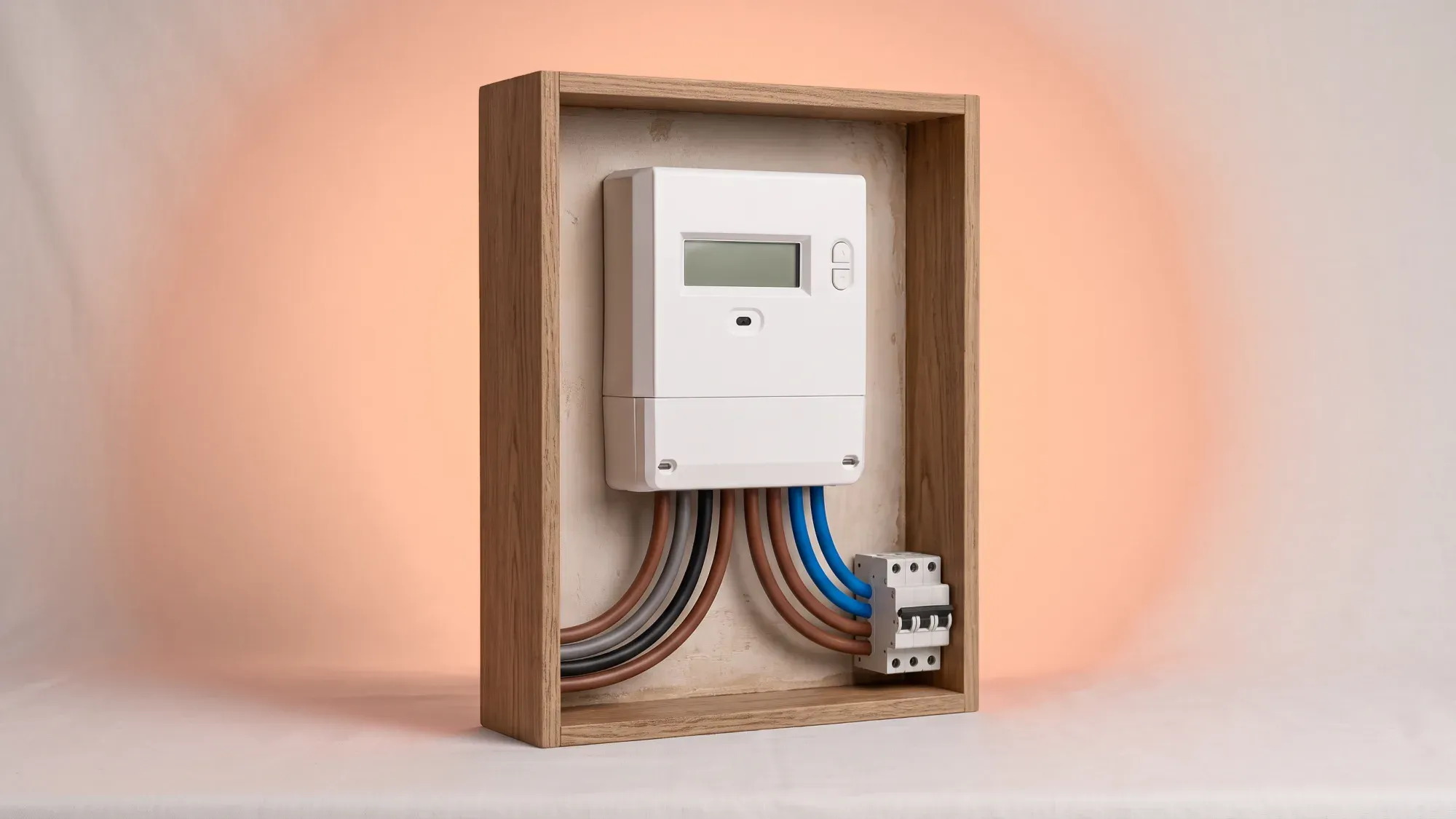
Understanding your commercial electricity meter is the first step to taking control of your business's energy consumption and costs. These devices are far more than simple counters; they are crucial tools for accurate billing and effective energy management in UK businesses. By demystifying meter data, businesses can shift from fearing energy costs to proactively managing and optimising their usage, moving towards a mindset of energy abundance.
What is a commercial electricity meter?
A commercial electricity meter measures the amount of electricity your business consumes. Unlike domestic meters, which are designed for household use, commercial meters cater to the higher and more complex energy demands of businesses, from small shops to large industrial sites.
Beyond the domestic meter
Commercial electricity meters are built to handle greater loads and often provide more detailed data than their domestic counterparts. This enhanced capability is essential because business energy usage patterns can be highly variable and significantly larger, directly impacting operational costs.
Why accurate metering matters for business
Accurate metering ensures your business is billed precisely for the electricity it uses, preventing costly estimates and providing a clear picture of consumption. This precision is fundamental for effective budgeting, identifying inefficiencies, and making informed decisions about energy strategy. Without accurate data, businesses operate in the dark, missing opportunities to save money and improve sustainability.
Types of commercial electricity meters
The UK energy market features several types of commercial electricity meters, each with specific implications for how your business is billed and how you can manage your energy.
Non-half-hourly (NHH) meters
Non-half-hourly (NHH) meters are typically found in smaller businesses with lower energy consumption. These meters record total energy usage, and readings are usually taken monthly or quarterly, either manually or via estimated readings. While they provide a record of consumption, they offer less granular data compared to other types.
Half-hourly (HH) meters
Half-hourly (HH) meters are mandatory for UK businesses with higher energy consumption. Specifically, businesses with a maximum demand of 100 kW or more, or a maximum import capacity (MIC) of 100 kVA or greater, are typically required to have a half-hourly meter installed. These meters record electricity usage every 30 minutes, providing a detailed profile of a business's energy demand throughout the day. This granular data is vital for suppliers to understand peak usage times and for businesses to manage demand charges and optimise their energy strategy.
Smart meters for business
Commercial smart meters represent the latest advancement in metering technology, offering automated readings and detailed consumption data. They significantly reduce the need for manual meter readings and estimated bills, ensuring accurate billing based on actual usage. The UK government has a programme for smart meter rollout that includes non-domestic premises, encouraging businesses to adopt this technology. From 1 January 2027, energy suppliers cannot enter into new fixed-term energy contracts with non-domestic customers unless the customer has, or agrees to have, smart or advanced meters installed.
What is the main difference between commercial and domestic electricity meters?
Commercial electricity meters are designed for higher energy demands and often provide more detailed consumption data than domestic meters. They cater to the complex usage patterns of businesses, enabling more precise billing and advanced energy management strategies, which are crucial for operational efficiency and cost control.
The benefits of smart meters for businesses
Upgrading to a smart meter offers significant advantages for UK businesses, transforming how they interact with and manage their energy consumption.
Real-time data and Insights
Smart meters provide businesses with near real-time data on their energy usage, often broken down into half-hourly intervals. This detailed information allows businesses to see exactly when and where they are consuming the most energy, helping to identify patterns, spikes, and anomalies. This level of insight is crucial for making informed decisions about energy use.
Improved billing accuracy
One of the most immediate benefits of smart meters is the significant reduction in estimated bills. By automatically sending readings to your supplier, smart meters ensure that your business is billed accurately for the energy it actually uses. This predictability helps with budgeting and cash flow management.
Enhanced energy management
With the detailed data provided by smart meters, businesses gain enhanced control over their energy consumption. This allows for proactive energy management, enabling businesses to spot waste, implement energy-saving strategies, and reduce overall operational costs. Research from the Behavioural Insights Team (BIT) estimates that smart meters could cut business electricity consumption by an average of 3.4% and lower gas usage by about 3.0%.
Leveraging meter data for business energy savings
The true power of modern commercial electricity meters lies in the data they provide. Businesses can use this information to drive significant energy savings and operational improvements.
Identifying consumption patterns
Analysing meter data allows businesses to pinpoint specific times of high energy usage. This could reveal opportunities to adjust operations, reschedule energy-intensive tasks, or identify equipment that is consuming more power than necessary outside of working hours.
Optimising energy usage
Once consumption patterns are understood, businesses can implement targeted strategies to optimise energy use. This might involve upgrading to more energy-efficient equipment, adjusting heating and cooling schedules, or integrating smart building management systems that respond to real-time data.
Informing supplier choices
Detailed meter data empowers businesses during negotiations with energy suppliers. By understanding their exact consumption profile, businesses can seek out tariffs that best match their usage patterns, potentially leading to more favourable rates and significant cost reductions. Suppliers are also typically required to provide access to up to 13 months of historic smart or advanced meter energy use data upon request.
Commercial electricity meter installation and upgrades
The process of getting a new commercial electricity meter or upgrading an existing one is a crucial step towards better energy management.
Getting a new business electricity meter
When setting up a new business premises or requiring a new connection, you will need to arrange for a commercial electricity meter installation. This typically involves contacting an energy supplier or a meter operator (MOP) to assess your business's specific needs and install the appropriate meter type.
Upgrading to a smart meter
Many businesses are choosing to upgrade to smart meters to benefit from automated readings and detailed data. The government is accelerating the rollout of smart meters across the UK. By the end of September 2025, 59% of non-domestic meters were smart or advanced. This upgrade is often free of charge, and your energy supplier can arrange the installation.
The Radio Teleswitch service (RTS) phase-out
The Radio Teleswitch Service (RTS), used by some older multi-rate meters to switch between peak and off-peak rates, is being phased out across the UK. The service began its shutdown on 30 June 2025. This means businesses with RTS meters must replace them with smart meters or alternative solutions to avoid disruption to heating, hot water, and accurate billing. Energy suppliers are responsible for upgrading these meters and should contact affected customers to arrange a replacement.
Understanding your commercial electricity meter gives your business the power to play with its energy consumption. By embracing advanced metering, particularly smart meters, businesses can gain greater control over their energy usage, reduce costs, and contribute to a more efficient and data-driven energy future.
While Fuse Energy currently supplies residential energy only, we believe in empowering all energy users with knowledge. We are working towards offering commercial energy services in the future. Join our waitlist for future commercial energy services and stay ahead in the evolving energy landscape.
Disclaimer
For the avoidance of doubt, this article is provided for informational purposes only and is not intended to constitute legal or financial advice. The author and/or Fuse Energy shall not be responsible for any losses arising out of any reliance on the information contained herein.