Buying a house with solar panels explained
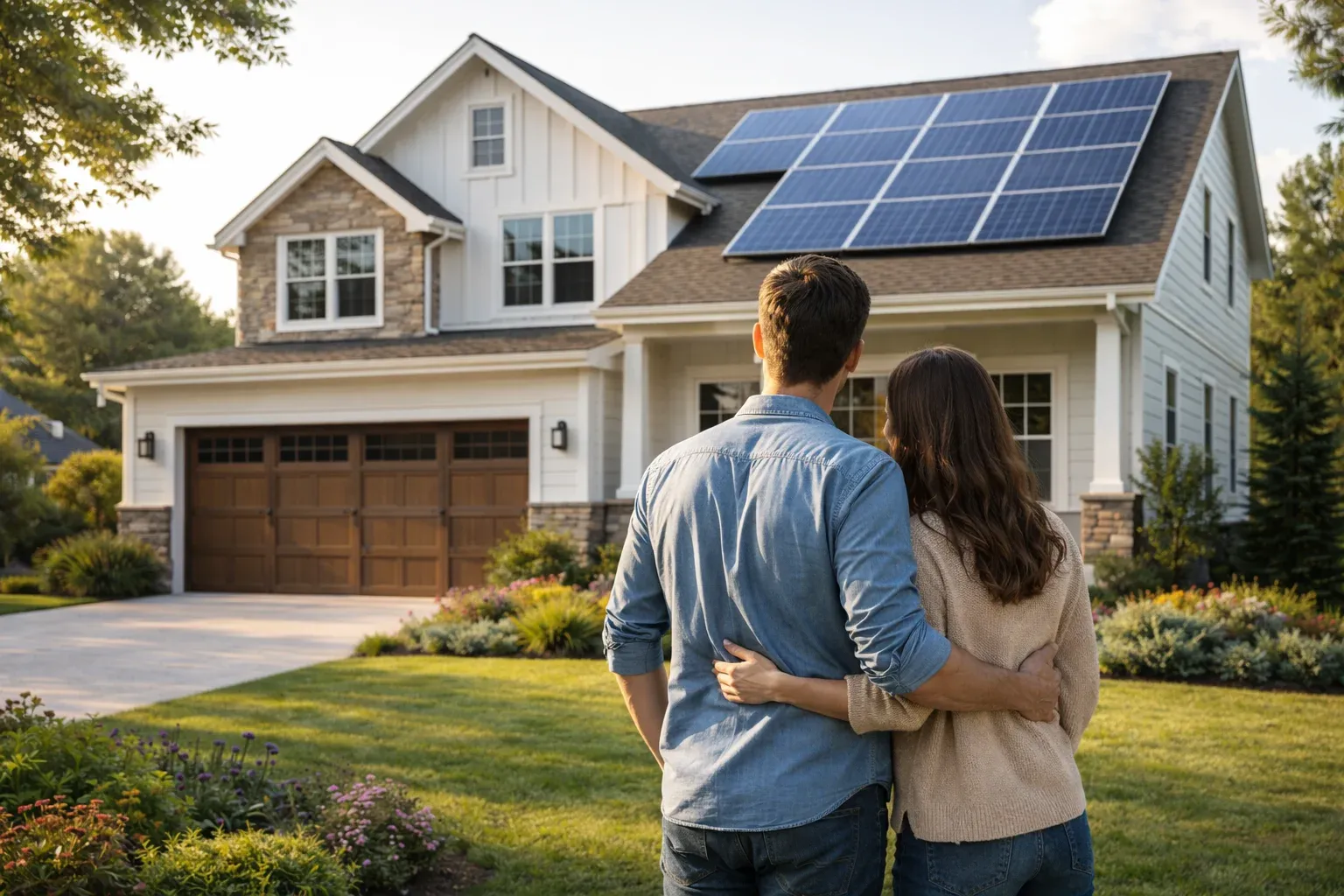
Considering buying a house with solar panels in the UK? Our essential guide covers owned versus leased systems, crucial legal and technical checks, financial benefits, and how to manage your energy bills with existing solar panels, ensuring a smooth transition into your energy-efficient home.
Buying a house is a big step, and for many UK prospective homeowners, finding a property that aligns with energy efficiency, cost savings, and sustainability goals is a top priority. Homes equipped with solar panels offer a fantastic opportunity to reduce your carbon footprint and energy bills. However, it is not always straightforward. Understanding the nuances of existing solar installations - from ownership types to legal implications - is crucial. This guide will walk you through everything you need to know about buying a house with solar panels in the UK, helping you make an informed decision.
Make managing your energy simple in your new solar-equipped home. With Fuse Energy, you get clear pricing, real-time usage data, 24/7 human customer support, and a modern energy experience designed around you. Switching takes as little as 3 minutes, so you can take control of your bills from day one. Click here to switch to Fuse Energy today and start saving.
Understanding solar panels: owned versus leased systems
One of the first things to clarify when buying a house with solar panels is the ownership status of the system. This distinction profoundly impacts legal, financial, and mortgage considerations.
The pros and cons of buying a house with solar panels
There are clear advantages to buying a house with solar panels already installed. You benefit from immediate energy savings, reduced reliance on grid electricity, and a lower carbon footprint without the upfront installation costs. Solar panels can also increase a property's appeal and value, with studies suggesting they can add between 0.9% and 14% to a home's value in the UK, and often improve its Energy Performance Certificate (EPC) rating1. However, there are potential disadvantages. Older systems might be less efficient or require maintenance.
Leased solar panels: agreements, mortgage impact, and "rent a roof" schemes
Many solar panel systems in the UK were installed under a lease agreement, often referred to as "rent a roof" schemes. This means the homeowner does not own the panels; a third-party company does, and they lease the roof space. While the original homeowner might have benefited from free installation or reduced electricity, buying a house with leased solar panels can complicate things. Mortgage lenders may be wary of properties with leased panels, as the lease agreement can take precedence over their charge on the property. You will need to thoroughly review the lease agreement, understand its terms, duration, and any transfer fees or obligations you would inherit. Some lenders may not accept applications for homes with leased panels, or may have strict criteria, such as the unconditional right to break the lease terms in the event of repossession. Failure to do so could lead to delays or even the collapse of your purchase. It may be possible to buy out a solar lease, often at a price based on the original installation cost plus a premium.
Essential checks and legal considerations for existing solar panels
When you are buying a house with existing solar panels, due diligence is paramount. Do not just assume everything is in order; ask the right questions and gather all necessary documentation.
Key questions to ask about documentation and export tariffs
Start by asking the seller or estate agent for comprehensive documentation. This includes the Microgeneration Certification Scheme (MCS) certificate, which confirms the system meets industry standards. You should also ask for the Distribution Network Operator (DNO) approval letter, as DNO approval is required to connect a solar photovoltaic (PV) system to the grid, especially for systems over 3.68kWp, and is essential for safe operation and eligibility for export payments2.
For financial benefits, inquire about any existing export tariffs. The Feed-in Tariff (FiT) scheme, which paid homeowners for generated and exported electricity, closed to new applicants on 31 March 2019. If the property benefits from an older FiT agreement, you will need to understand the process for transferring these payments. The Smart Export Guarantee (SEG) scheme, which replaced FiT and launched on 1 January 2020, requires licensed electricity suppliers to pay homeowners for electricity exported to the grid. Learn more about SEG here. Ensure you know which scheme applies and how the payments are managed. Fuse Energy offers an export tariff for customers who export electricity to the grid.
Assessing system performance, warranties, and roof integrity
Beyond paperwork, it is vital to assess the physical system. Ask about the panels' age, their performance history, and any maintenance records. Check the warranty status for both the panels and the inverter, as these are critical components. Solar panels typically come with a product warranty (10-25 years) and a performance warranty (often 25 years, guaranteeing 80-85% output). Inverters usually have a shorter warranty, around 5-20 years3. A specialist survey can help determine the system's efficiency and identify any potential issues. Furthermore, since solar panels are installed on the roof, assessing the roof integrity is crucial. Look for any signs of damage, leaks, or structural issues that might have arisen from the installation or age of the panels. Buying a house with solar panels already installed should mean fewer headaches, but only if you have done your homework.
Financial benefits and managing your energy bills with solar
One of the biggest draws of buying a house with solar panels is the potential for significant financial benefits and better control over your energy bills.
Maximising savings and understanding your energy consumption
With solar panels, you generate your own electricity, reducing the amount you need to import from the grid. This directly translates to lower electricity bills. To maximise these savings, understanding your energy consumption patterns is key. Using high-energy appliances during daylight hours when your panels are generating most can dramatically cut your costs. For homes with solar panels already installed, smart meters can provide valuable insights into your generation and consumption, helping you optimise your usage.
Transparent energy billing for solar-equipped homes with Fuse Energy
Once you have successfully purchased your solar-equipped home, managing your energy bills transparently is essential. This is where Fuse Energy steps in. We specialise in clear, accurate energy billing and meter management for UK households. For homes with solar panels, our system ensures you always know exactly what you are paying for.
Fuse Energy's billing system provides clear, itemised statements that accurately reflect the energy imported from the grid. This means your bills will naturally show lower import charges due to your self-generated electricity. Any energy you export to the grid is accounted for separately through our export tariff, ensuring a true picture of your energy flow. We leverage smart meter data to ensure your bills are based on actual, half-hourly usage. By demystifying your energy consumption, Fuse Energy empowers you to understand how your solar panels impact your overall energy costs, aligning with your interest in energy efficiency and cost savings.
Take the stress out of managing your energy. With Fuse Energy, you get clear pricing, real-time usage data, 24/7 human customer support, and a modern energy experience designed around you. Switching takes as little as 3 minutes, so you can take control of your bills from day one. Click here to switch to Fuse Energy today and start saving. Find out about our mission by clicking here.
References
- The Renewable Energy Hub. Do Solar Panels Increase Property Value in the UK?
- Eco Approach. Dno Approval For Solar Panels
- The Renewable Energy Hub. Solar Panel Warranty and Guarantees for the UK
Disclaimer
For the avoidance of doubt, this article is provided for informational purposes only and is not intended to constitute legal or financial advice. The author and/or Fuse Energy shall not be responsible for any losses arising out of any reliance on the information contained herein.