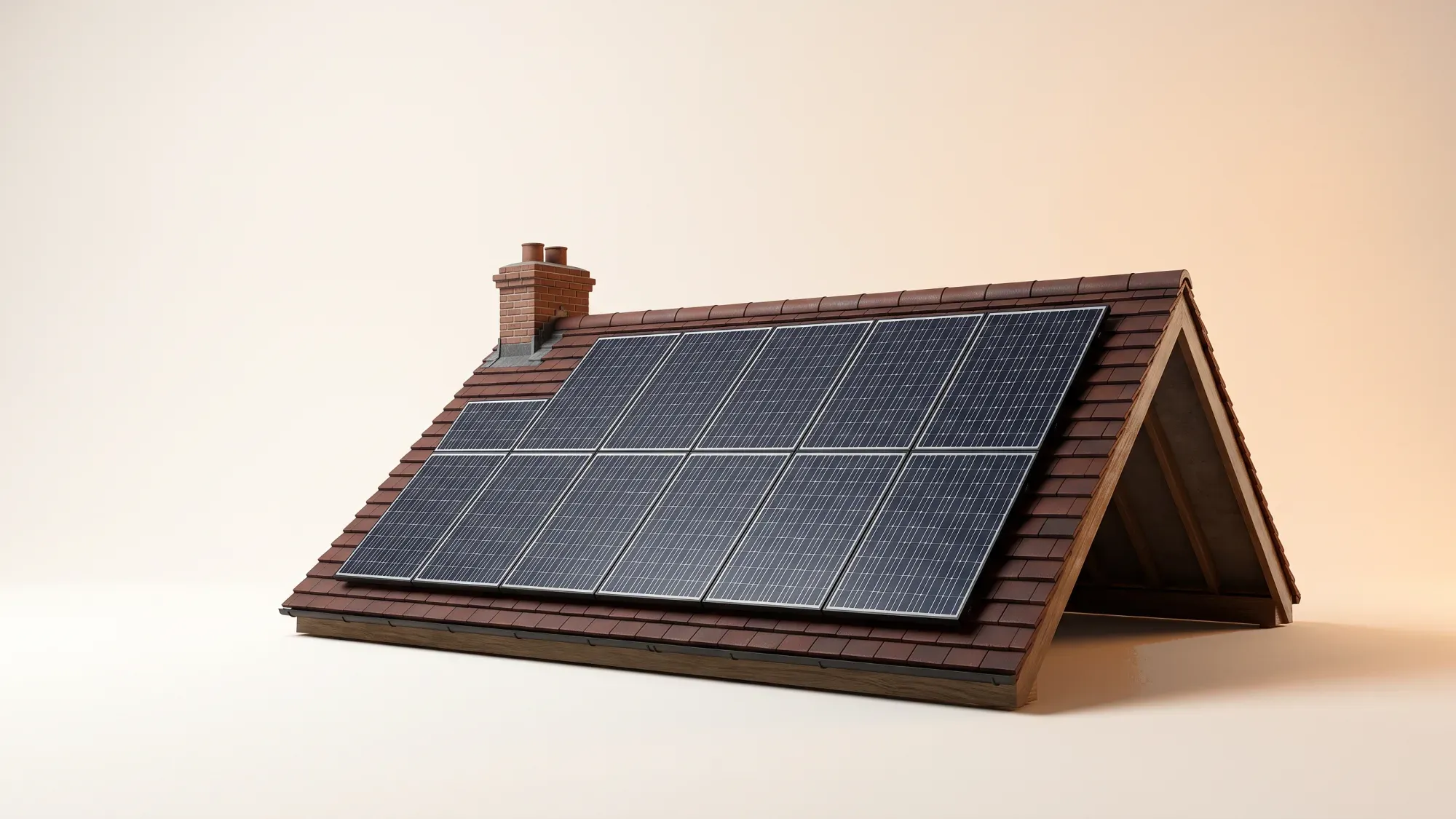
For UK homeowners with solar panels the Smart Export Guarantee (SEG) is the key to getting paid for the clean energy you export back to the grid. This guide explains how the scheme works, outlines eligibility, and helps you compare the best SEG tariff rates so you can maximise your solar export income. It is a critical financial decision especially for homeowners looking to secure strong long-term returns on their renewable investment. Choosing a transparent and competitive provider like Fuse Energy can make a meaningful difference.
Take the stress out of finding the right tariff. With Fuse Energy, we'll help you choose the best option for your home; simple, clear, and tailored to you. Enjoy transparent pricing, real-time half-hourly usage data, 24/7 human customer support, and a modern energy experience designed around you. Switch to Fuse Energy today in as little as 3 minutes, start saving on your bills, and see how simple energy can be.
A quick checklist to understand SEG
- Confirm MCS certification for your solar installation.1
- Check you have a smart meter capable of recording export readings.
- Identify your export MPAN, a 13-digit code indicating your supply number.
- Compare all available SEG rates not just headline offers.
- Consider how battery storage affects your export numbers.
The SEG is a UK government scheme that requires large electricity suppliers to pay households for exported electricity. It was introduced in January 2020 replacing the Feed-in Tariff (FiT) which closed to new applicants in 20192. Click here to learn about Fuse Energy's SEG licensee status.
To qualify your system must meet several criteria:
- Your renewable system must have a capacity of up to 5MW.
- Installation must be certified under the MCS or equivalent.
- You must have a smart meter capable of measuring export.
- You must have an export MPAN which identifies your export supply point.
Your export MPAN can usually be obtained from your Distribution Network Operator (DNO).
Application process
- Gather documents including MCS certificate and commissioning details.
- Confirm your import and export MPANs.
- Choose an SEG tariff provider.
- Complete your provider's online application form; you can contact them for this.
- Submit an initial meter reading.
- Begin submitting readings regularly to receive payments.
Payments are typically made quarterly or biannually depending on the supplier.
Optimising SEG earnings often depends on how you manage your energy usage and storage. If you export energy immediately during the day a fixed rate tariff may work well. If you have battery storage you can store energy and export it later when rates are higher which can increase earnings. Another important consideration is tax. For most UK households SEG income is not treated as taxable3 because it is considered compensation for domestic generation rather than commercial activity. An alternative to exporting is maximising self-consumption which reduces your import bill and can effectively deliver the highest value per kilowatt-hour.
Managing your energy tariff should be clear and easy to understand. Fuse Energy focuses on straightforward pricing, so you can see exactly what you're paying without unnecessary complexity. Fuse Energy's export tariff pays 13p per kWh for every unit of electricity you send back to the grid. With some of the lowest rates on the market, our tariffs make an attractive choice for bill-payers in the UK. If you have a smart meter, you can also view detailed usage data through the app or website, helping you understand how your tariff translates into actual costs. This can make it easier to track spending and make informed decisions about your energy use. Our 24/7 human support team is always on hand with fast response times of under 5 minutes whenever you need help. Switch to Fuse Energy in as little as 3 minutes and find out about our mission.
Is there a limit to how much electricity I can export?
There is no specific export limit under SEG. Eligibility depends on your system capacity which must be under 5MW and properly certified. Your export volume depends on your generation and usage patterns.
How much can I earn from SEG
Your earnings depend on the amount of electricity you export and the tariff rate you secure. Higher export volumes and better rates lead to higher payments. With Fuse Energy, you are paid 13p per kWh for the electricity you export to the grid.
How can I switch to Fuse Energy?
Switching to Fuse Energy and accessing our tariffs is simple and can be done in as little as 3 minutes by completing the online onboarding process here.
References
- GOV.UK. Smart Export Guarantee (SEG): earn money for exporting the renewable electricity you have generated
- Ofgem. Smart Export Guarantee (SEG)
- EON Next. Smart Export Guarantee (SEG) scheme