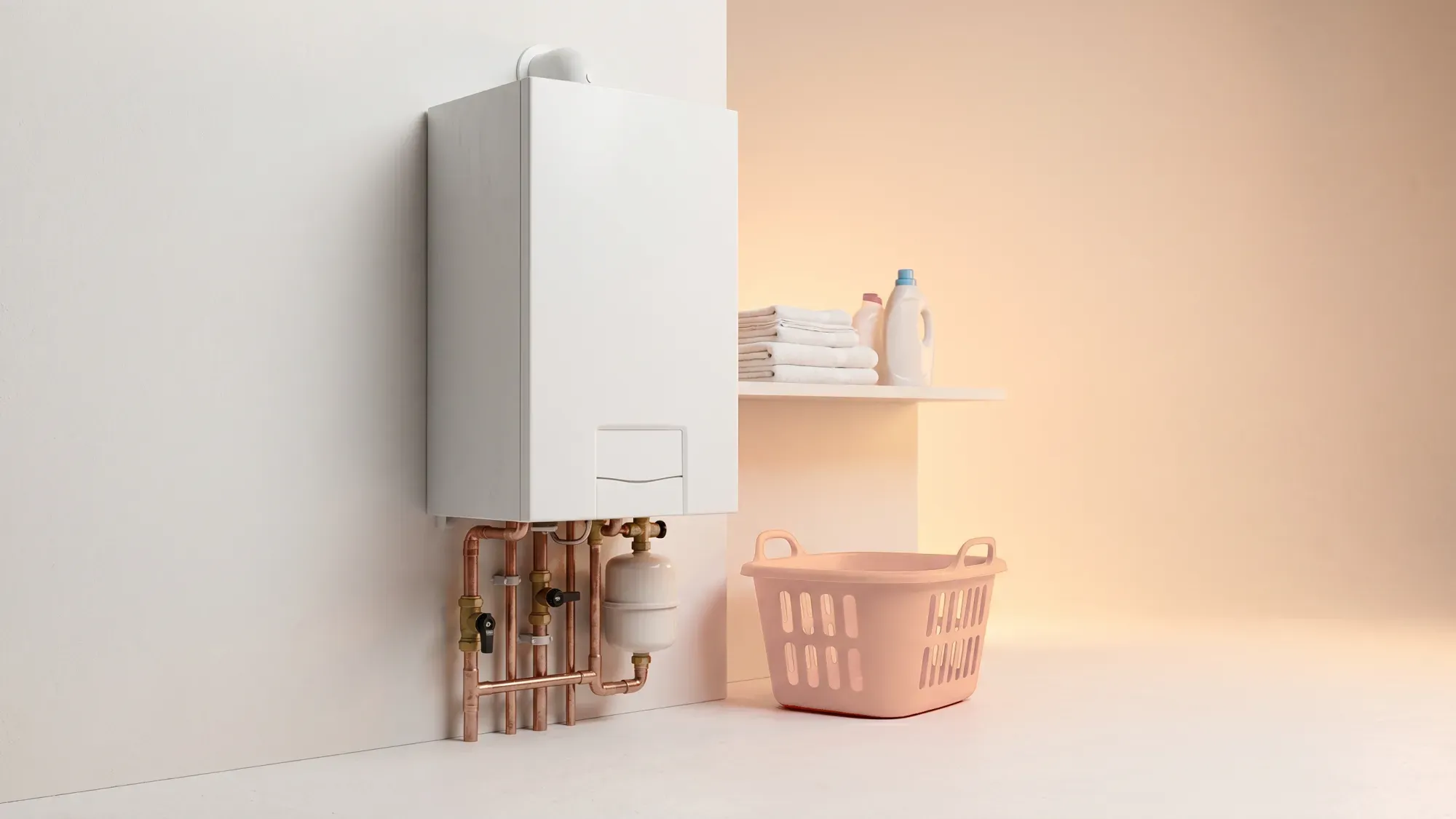
Understanding your boiler's efficiency is crucial for managing your home's heating costs and ensuring a comfortable living environment. Fuse Energy helps homeowners optimise their energy use for comfort and control through efficient boiler operation and smart energy management.
What is boiler efficiency?
Understanding the basics
Boiler efficiency measures how effectively your boiler converts the fuel it uses (like gas) into usable heat for your home. For example, if a boiler is 90% efficient, it means 90% of the energy from the fuel is converted into heat, with only 10% lost as waste. An inefficient boiler, conversely, wastes a larger percentage of the fuel you pay for.
Why efficiency matters for your home
The efficiency of your boiler directly impacts your energy consumption and, consequently, your heating costs. A more efficient boiler uses less fuel to provide the same amount of heat, leading to lower energy bills and a reduced carbon footprint. This means a warmer home without the worry of excessive spending.
UK boiler efficiency ratings explained
The ErP Directive (a-g ratings)
In the UK, boiler efficiency is primarily rated using the Energy-related Products (ErP) Directive. This system uses a letter-based scale from A+++ (most efficient) down to G (least efficient). All new boilers sold in the UK since 2015 must display an ErP rating, and modern gas boilers are legally required to be A-rated, meaning they achieve at least 92% efficiency under the Boiler Plus legislation introduced in 2018.
What is an A-rated boiler?
An A-rated boiler is a modern, highly efficient boiler that achieves at least 92% efficiency under the ErP (Energy-related Products) Directive. This means 92% or more of the fuel it consumes is converted into usable heat for your home, leading to lower energy bills and reduced waste.
SEDBUK: a historical perspective
Before the ErP Directive, the Seasonal Efficiency of Domestic Boilers in the UK (SEDBUK) system was used to rate boiler efficiency. SEDBUK initially rated boilers from A to G, similar to ErP, with A-rated boilers typically achieving over 90% efficiency and G-rated boilers below 70%. In 2009, SEDBUK moved to a percentage-based system, making it easier to compare specific efficiency figures. While ErP is now the primary rating, you might still encounter SEDBUK ratings on older boilers.
How to check your boiler's efficiency
Finding your boiler's rating
To find your boiler's efficiency rating, you can check the boiler's energy label, which is usually a coloured sticker on the appliance itself. This label will typically show its ErP rating. If you cannot find a label, consult your boiler's manual or look up the make and model online. The age of your boiler can also give you a clue: boilers installed before 2005 are likely non-condensing and less efficient.
Signs of an inefficient boiler
Several practical signs can indicate your boiler is not running as efficiently as it should. These include unexpectedly high energy bills despite consistent usage, your home taking longer to heat up, or cold spots in your radiators. Strange noises coming from the boiler, frequent breakdowns, or the boiler constantly cycling on and off can also point to inefficiency or underlying issues.
Improving your boiler's efficiency
Optimising your heating controls
Making the most of your heating controls is one of the simplest ways to improve boiler efficiency. Using a programmable thermostat allows you to set your heating to come on only when needed, avoiding wasted energy. Smart thermostats offer even greater control, often learning your habits and allowing remote management via an app. The Fuse app can help you monitor your energy usage, enabling you to understand the impact of boiler efficiency on your overall consumption and make adjustments. For more ways to cut down on your energy use, explore our energy saving tips.
Simple maintenance tips for homeowners
Basic maintenance can go a long way in keeping your boiler efficient. Regularly bleeding your radiators, for example, removes trapped air that prevents them from heating effectively. Insulating exposed pipes can also reduce heat loss, ensuring more warmth reaches your home rather than escaping into unheated spaces.
Maintaining optimal boiler performance
The importance of annual servicing
Just like a car, your boiler benefits significantly from regular professional checks. An annual boiler service by a Gas Safe registered engineer ensures your system is running safely and efficiently. Servicing can help prevent a significant drop in performance over time and extend the boiler's lifespan by catching minor issues before they become costly problems. It also helps keep your manufacturer's warranty valid.
Bleeding radiators and pipe insulation
Bleeding radiators is a straightforward task that homeowners can do themselves. If the top of your radiator is cold while the bottom is warm, it likely has trapped air that needs releasing. Pipe insulation, particularly on pipes in unheated areas like lofts or garages, prevents heat loss and ensures the hot water reaches your radiators and taps at the intended temperature.
When to consider a new, efficient boiler
Benefits of modern condensing boilers
Modern condensing boilers are a significant leap forward in efficiency. They can achieve efficiencies of 90% or more, significantly outperforming older, non-condensing models which might be 60-80% efficient. This higher efficiency is due to their ability to recover heat from exhaust gases that would otherwise be wasted. Upgrading from an old, inefficient boiler to a new A-rated model can lead to substantial savings on heating bills for an average UK home, potentially saving hundreds of pounds per year.
The Vaillant ecotec Plus advantage
If you are considering an upgrade, the Vaillant ecoTEC Plus is a leading example of a highly efficient condensing boiler. These models boast a heating energy efficiency of up to 94% and are A-rated for both heating and hot water. Fuse Energy offers installations of the Vaillant ecoTEC Plus boiler, enabling customers to achieve superior home heating performance and long-term savings. This aligns with Fuse's philosophy of 'having more' comfort and financial predictability, giving you greater control over your home energy use. Fuse also offers 24/7 human customer support to assist with boiler-related queries, ensuring homeowners have reliable assistance to maintain efficient systems.
For the avoidance of doubt, this article is provided for informational purposes only and is not intended to constitute legal or financial advice. The author and/or Fuse Energy shall not be responsible for any losses arising out of any reliance on the information contained herein.