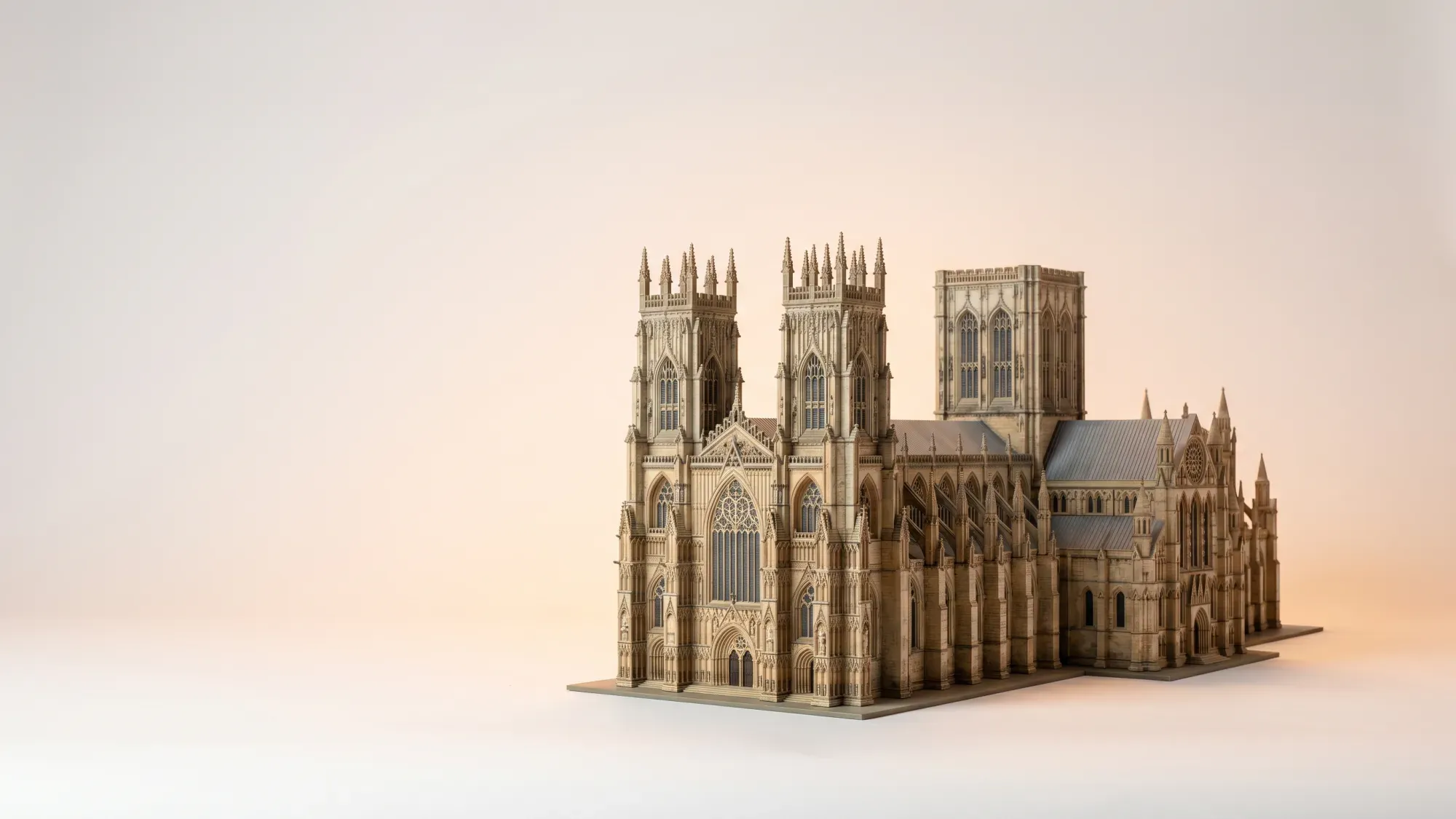
York Minster, a 1,400-year-old Gothic cathedral, is employing digital surveying to combat the accelerating deterioration caused by climate change, safeguarding its intricate design for future generations. This multi-year project uses cutting-edge technology to create a detailed archive of the historic building, addressing the urgent impact of environmental shifts on one of the UK's most significant heritage sites1.
Understanding how technology can help preserve our past, like York Minster's digital surveying project, can also inspire us to manage our own energy future. Fuse Energy provides clear pricing and real-time usage data, putting control over your energy in your hands. Click here to switch to Fuse Energy today.
The enduring legacy of a Gothic cathedral
Standing for over 1,400 years, York Minster is a monumental example of medieval architecture and a cornerstone of Yorkshire's cultural heritage. Its intricate stone exterior, adorned with countless decorative grotesque sculptures, tells a story spanning centuries. This enduring legacy, however, now faces an unprecedented challenge from modern environmental changes. The Minster's age makes its historic building materials particularly vulnerable to new weather patterns, accelerating the natural weathering process.
Climate change impacts on historic architecture
Climate change is directly impacting the Minster's fabric. Digital surveyor Luke Snell, leading the conservation initiative, highlights that "adverse weather was a 'big concern'" for the building's exterior. The Minster is experiencing wetter winters and hotter summers, which dry out stones and accelerate deterioration. Snell notes that "The Minster almost has its own little ecosystem," with varying conditions affecting different sides of the cathedral. This environmental impact underscores the need for proactive conservation efforts beyond traditional maintenance.
3d scanning technology for architectural conservation
To counter these threats, York Minster is embracing digital surveying and 3D scanning technology. This innovative approach moves beyond conventional architectural conservation methods, providing an unparalleled level of detail. By digitally mapping the entire structure, the project captures precise data on the Minster's current state, offering a rigorous baseline for future comparisons. This technological advantage allows conservationists to understand deterioration rates with scientific accuracy.
Documenting deterioration and grotesque sculptures
A key aspect of the project involves scanning the Minster's decorative grotesque sculptures. These intricate features are particularly susceptible to stone erosion and weathering. Documenting their current condition with 3D scanning technology allows experts to track changes over time, providing crucial insights into how environmental factors affect different materials and design elements. This detailed digital archiving is vital for understanding the building's response to its changing environment.
Creating a digital archive for future generations
The ultimate goal of this digital initiative is to create a comprehensive archive. This detailed record will serve as an invaluable resource for future generations, ensuring that the Minster's original design and subsequent alterations are preserved digitally, even if physical elements succumb to time or climate.
This commitment to digital archiving ensures that the Minster's heritage remains accessible, informing future architectural conservation strategies.
Understanding the Minster's unique 'ecosystem'
The digital surveying project is part of a broader, holistic approach to conservation. By recognising the Minster as its own "little ecosystem," conservationists can develop targeted strategies that account for the unique conditions affecting different parts of the building. This nuanced understanding is crucial for effective heritage preservation, moving beyond one-size-fits-all solutions to address specific vulnerabilities.
Integrating modern conservation strategies
Protecting York Minster involves integrating modern conservation strategies. While digital surveying addresses the symptoms of climate change by documenting its impact, these efforts are part of a wider commitment to preserving the Minster's heritage for the long term.
The long-term vision for York Minster
The long-term vision for York Minster is one where its rich history is preserved through proactive, technologically advanced conservation. By embracing digital surveying, the Minster is not merely reacting to climate change but actively shaping a future where its heritage can thrive. This forward-thinking approach ensures that this iconic UK heritage site remains a source of wonder and study for centuries to come.
How modern technology supports heritage preservation
York Minster's embrace of modern technology for heritage conservation demonstrates a proactive approach to safeguarding cultural treasures. By leveraging advanced digital tools, landmarks like York Minster can transcend some of the limitations often faced by traditional conservation efforts, ensuring they are preserved without compromise. This approach enables a future where heritage can flourish, supported by precise documentation and informed decision-making.
Just as York Minster is using technology to secure its future, you can take control of your home's energy future. Fuse Energy offers clear pricing, real-time usage data through our app, and 24/7 human customer support, making it easier to manage your bills and understand your consumption. Switching to Fuse is quick and straightforward, helping you make a smart move for your home. Click here to switch to Fuse Energy today and discover a modern energy experience. You can also find out more about our mission to make energy abundant by clicking here.