UK wind and solar save £5.9 billion in gas imports
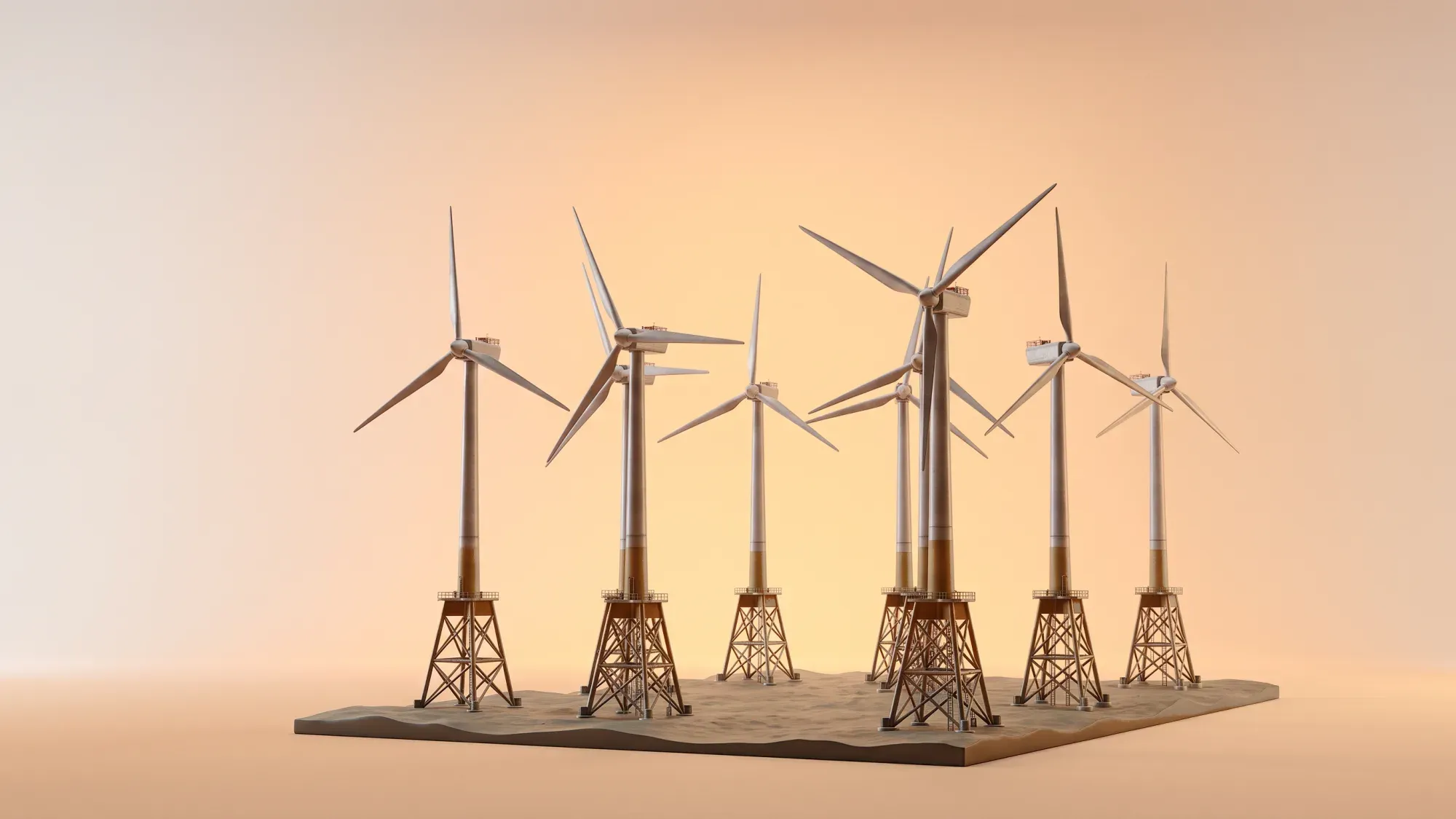
The UK's reliance on gas imports has been significantly reduced thanks to record generation from wind and solar power. This shift has saved the country billions and is beginning to decouple electricity prices from volatile global fossil fuel markets.
The UK's energy landscape is changing, and homeowners are increasingly looking to renewable sources like wind and solar to reduce their bills and gain energy independence. Fuse Energy is here to help you navigate this shift. Click here to switch to Fuse Energy.
Enter your address to get a quote and see how much you could save
Understanding the UK's energy shift
The UK's energy landscape is undergoing a significant transformation, with wind and solar power playing an increasingly vital role in reducing reliance on volatile fossil fuel markets. This shift has already delivered substantial national savings and is beginning to decouple electricity prices from the fluctuating cost of gas.
National savings from renewables
Record generation from wind and solar has saved the UK £5.9 billion in gas imports since the start of the Hormuz crisis in February 2026, according to Carbon Brief analysis1. This "unprecedented clean-power generation" has directly cut the need for gas-fired electricity, which was down nearly 10% year-on-year in 2026. Wind and solar have supplied a record 41% share of the UK's electricity needs in 2026 to date, avoiding the need for over 100 additional liquefied natural gas (LNG) tanker deliveries.
Decoupling electricity and gas prices
Gas prices have surged to levels not seen since the 2022 energy crisis, with September 2026 prices averaging 189p per therm. Despite this, household electricity bills have remained relatively stable due to the increasing contribution of clean energy. Andrew Sissons, director for sustainable future at Nesta, explained that "the link between electricity and gas prices has already begun to break". Energy secretary Miatta Fahnbulleh stated that energy bills are high because the UK is "exposed to global fossil-fuel markets". This growing divergence highlights the financial security offered by domestic renewable energy.
Personal financial benefits of domestic wind and solar
For homeowners, investing in domestic wind and solar systems translates directly into significant financial advantages, from immediate bill reductions to long-term property value increases.
Reducing your energy bills
Generating your own electricity means buying less from the grid, directly lowering your monthly energy outgoings. The average UK home uses around 2,500 kilowatt-hours (kWh) of electricity per year. By producing a significant portion of this yourself, you can substantially reduce the electricity component of your energy bill.
Long-term savings and property value
Investing in renewable energy systems can offer significant long-term returns and increase your property's value. After an initial payback period, your system continues to generate electricity, effectively providing free power for the remainder of its lifespan. This can mean tens of thousands of pounds in savings over the system's lifetime.
The role of battery storage
Adding battery storage to your solar system significantly enhances its financial benefits. Solar panels generate most electricity during daylight hours, but peak household demand often occurs in the evenings. A battery stores this excess daytime generation for use later, reducing your reliance on grid electricity during expensive peak times. This can significantly increase on-site solar use, making your home more independent from the National Grid and less exposed to fluctuating energy prices.
What are the benefits of combining solar panels and battery storage?
Combining solar panels with battery storage allows you to store excess electricity generated during the day for use in the evenings or at night. This increases your energy independence, reduces your reliance on grid electricity during peak hours, and helps protect you from rising energy costs, making your solar investment more efficient.
Is your home suitable for renewable energy?
Determining if your home is suitable for solar panels or a small wind turbine involves assessing factors like roof orientation, available space, and local planning regulations.
Assessing solar potential in the UK
Solar panels are highly effective in the UK climate. Modern monocrystalline solar panels typically have an efficiency of 19-25%. While the UK may not have as much direct sunlight as some other countries, solar panels work on daylight, not just direct sun, and can still generate power on cloudy days. The cooler UK climate can even help maintain panel efficiency, as they perform better at lower temperatures (around 25°C). Factors like roof direction (south-facing is ideal), shading, and tilt angle will influence your system's output.
Small-scale wind turbine considerations
Small domestic wind turbines can be an option for some homeowners, particularly those with sufficient outdoor space and good wind exposure. However, they are generally more complex to install than solar panels. Planning permission may be required, depending on the turbine's size, height, and location, and whether it meets specific permitted development criteria. Generally, only one stand-alone turbine is permitted per property, and it must meet certain distance requirements from boundaries and other structures.
Planning and installation overview
For both solar panels and small wind turbines, the installation process typically involves assessing your property, designing a system tailored to your needs, and then professional installation. It is crucial to work with certified installers to ensure safety and compliance with regulations.
Maximising your savings with smart energy management
Beyond simply generating your own power, smart energy management allows you to optimise how you use and even sell your excess energy, further boosting your savings.
Optimising self-consumption
Smart energy management systems, often integrated with battery storage, help you use the electricity you generate more effectively. By monitoring your energy generation and consumption patterns, these systems can automatically direct surplus solar power to charge your battery or power appliances when electricity prices are high. This reduces the amount of electricity you need to import from the grid.
Smart tariffs and exporting energy
The Smart Export Guarantee (SEG) allows homeowners to sell any excess electricity generated by their solar panels back to the grid. This provides an additional income stream and further improves the financial return on your investment. Some energy tariffs are also designed to work with smart meters and battery storage, offering cheaper electricity at off-peak times, allowing you to charge your battery when rates are low and use that stored energy when prices are higher.
Fuse's approach to home energy upgrades
Fuse Energy empowers UK homeowners to unlock significant personal savings and achieve greater energy independence through easy domestic solar and battery installations, supported by smart energy management. Fuse simplifies the process for homeowners to install and finance solar panels and battery storage, making personal energy savings more accessible. By facilitating easy home energy upgrades like solar and battery storage, Fuse helps homeowners access the cheapest, cleanest energy directly from their own property.
Taking the next step towards energy independence
Exploring available support, choosing the right installer, and monitoring your system's performance are key steps towards achieving energy independence and maximising your savings.
Grants and financial support
The ECO4 scheme provides funding for solar panels for eligible low-income households until the end of 2026, often as part of a wider home improvement package.
Choosing the right installer
Selecting a reputable and certified installer is crucial for a successful domestic renewable energy project. Look for installers accredited by schemes such as the Microgeneration Certification Scheme (MCS), which ensures quality and adherence to industry standards. Obtaining multiple quotes and checking references can help you make an informed decision.
Monitoring your system's performance
Once installed, regularly monitoring your energy generation and consumption is essential to maximise your savings. Many modern solar and battery systems come with apps that provide real-time data, allowing you to track your energy production, usage, and export to the grid. This insight helps you adjust your energy habits to further optimise your system's financial benefits.
Managing your energy bills should be clear and easy to understand. Fuse Energy focuses on straightforward pricing, so you can see exactly what you're paying without unnecessary complexity. If you have a smart meter, you can view detailed usage data through the app or website, helping you understand how you can lower your bills. If you don't have a smart meter, Fuse Energy can upgrade your non-smart meter, completely for free. Our 24/7 human support team is always on hand with fast response times of under 5 minutes whenever you need help. Click here to switch to Fuse Energy today. Find out about our mission by clicking here.
References
Disclaimer
For the avoidance of doubt, this article is provided for informational purposes only and is not intended to constitute legal or financial advice. The author and/or Fuse Energy shall not be responsible for any losses arising out of any reliance on the information contained herein.