Developing UK solar PV projects
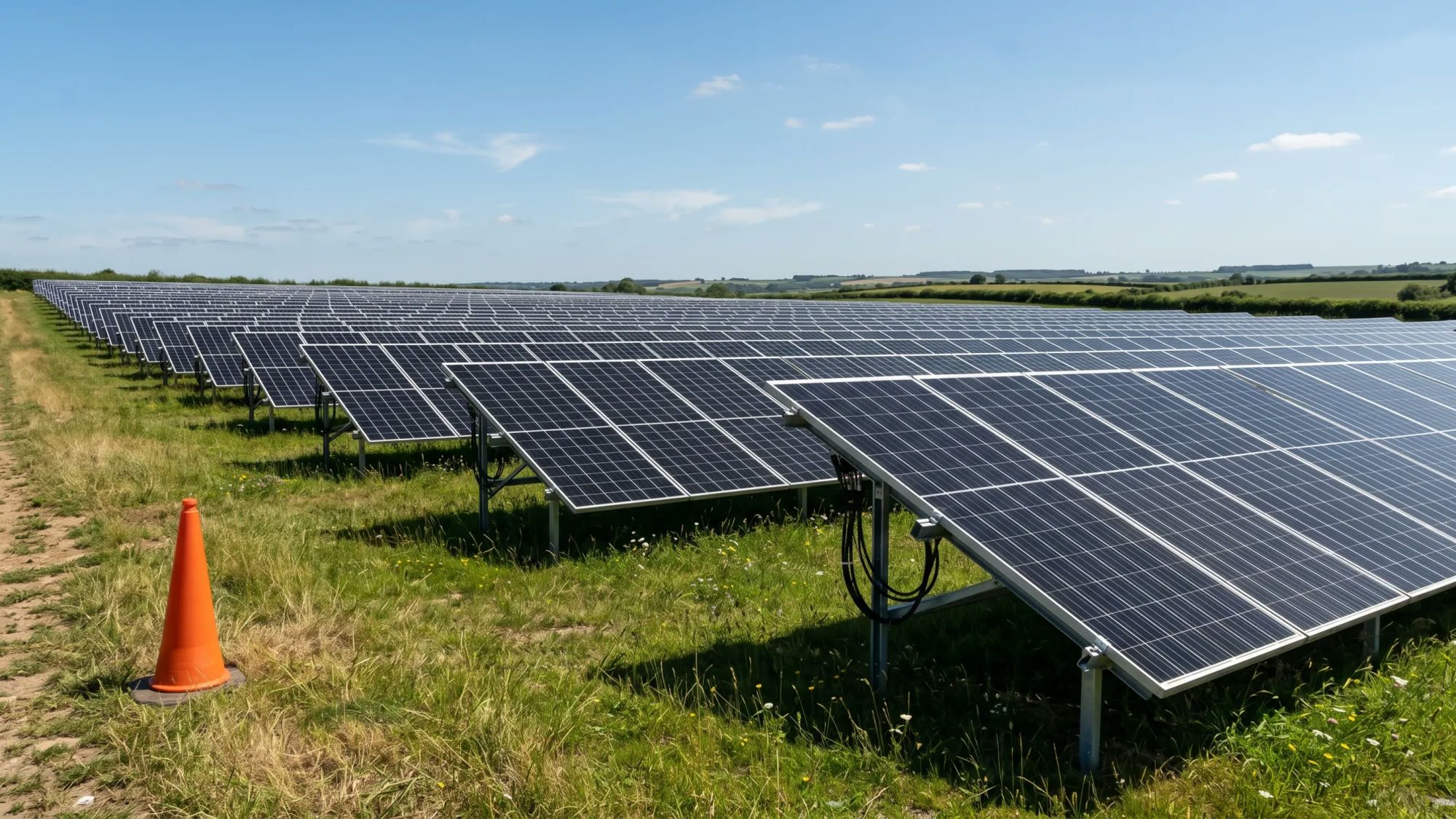
The UK's renewable energy landscape is rapidly evolving, with significant focus on large-scale solar photovoltaic (PV) projects. Independent power producers (IPPs) and investors are navigating the complex journey from initial concept to grid connection, driven by the ambition to build a cleaner, more secure energy system. This article explores the key stages, regulatory frameworks, and financing mechanisms vital for developing utility-scale solar farms across the UK, highlighting recent developments and the vision for an abundant energy future.
While this article explores the large-scale development of solar PV projects, remember that clean energy solutions are also available for your home. Discover how Fuse Energy can help you manage your home's energy with clear pricing and smart insights. Click here to switch to Fuse Energy today.
Enter your address to get a quote and see how much you could save
Understanding the UK solar PV landscape
The UK's energy transition hinges on a significant expansion of renewable capacity, with large-scale solar PV projects playing a fundamental role. These developments are not merely about generating electricity; they are about building the infrastructure for a cleaner, more secure energy system, moving away from scarcity towards abundance.
The role of utility-scale solar
Utility-scale solar farms are central to meeting the UK's net-zero targets. These projects, often spanning hundreds of acres and generating tens or hundreds of megawatts (MW), feed directly into the National Grid, providing a substantial and reliable source of clean electricity. Their development requires considerable capital investment, intricate planning, and robust grid connection infrastructure.
Key players: independent power producers
Independent Power Producers (IPPs) are vital to the growth of the UK's solar sector. These companies develop, finance, build, and operate power generation facilities, selling electricity to the grid or directly to consumers. IPPs like Elgin are driving significant investment and deployment, demonstrating a commitment to expanding the UK's renewable energy capacity. Their expertise in project management, risk assessment, and securing financing is indispensable for bringing large-scale solar projects to fruition.
Navigating the development stages
Developing a large-scale solar PV project in the UK is a multi-faceted process, requiring meticulous planning and adherence to various regulatory frameworks.
Site selection and feasibility
The initial phase involves identifying suitable land. This isn't just about available space; factors such as solar irradiance, proximity to grid connection points, environmental impact, and local community considerations are paramount. Thorough feasibility studies, including technical assessments, environmental impact assessments (EIAs), and financial modelling, are crucial to determine a project's viability and potential challenges.
Planning permission and environmental impact
Securing planning permission is often the most complex and time-consuming stage. Solar farms are subject to national planning policy frameworks, such as the National Planning Policy Framework in England, and devolved administration policies in Wales and Scotland. Developers must engage early with local authorities and stakeholders, addressing concerns related to land use, visual impact, biodiversity, and agricultural land classification. A well-executed EIA is essential to mitigate potential environmental harm and secure necessary approvals.
Securing grid connection
Obtaining a grid connection offer and agreement is a critical step. This involves working with Distribution Network Operators (DNOs) and National Grid to ensure sufficient capacity and manage the timelines and costs associated with infrastructure upgrades. Misjudging grid connection capacity or underestimating the associated costs can lead to significant project delays and financial implications.
Financing and revenue stability
Large-scale solar projects demand substantial investment, making robust financing strategies and revenue stability mechanisms essential for attracting capital.
The contracts for difference (CfD) scheme
The Contracts for Difference (CfD) scheme is a cornerstone of the UK government's strategy to support new low-carbon electricity generation. It provides long-term revenue stability for renewable energy projects by guaranteeing a minimum strike price for the electricity they generate. This mechanism protects developers from volatile wholesale power prices, making projects more attractive to investors.
What is the Contracts for Difference (CfD) scheme?
The Contracts for Difference (CfD) scheme is a UK government mechanism designed to incentivise investment in low-carbon electricity generation. It provides eligible renewable energy projects with a guaranteed minimum price for the electricity they produce, offering long-term revenue stability and reducing investment risk.
While CfD is a crucial support mechanism, it is not the only viable revenue stream. Projects can also secure private Power Purchase Agreements (PPAs) with corporate off-takers, offering an alternative route to market and revenue certainty.
Investment opportunities in UK solar
The UK solar sector continues to attract significant investment, driven by government support, ambitious climate targets, and falling technology costs. The long-term revenue visibility offered by schemes like CfD, coupled with the UK's commitment to energy transition, creates a compelling environment for clean energy investment. Developers and investors are actively seeking opportunities in utility-scale solar, often combining it with energy storage projects to enhance grid stability and maximise revenue.
Case studies: pioneering UK solar projects
Real-world examples illustrate the scale and complexity of UK solar PV development.
Elgin's recent developments
Independent power producer Elgin recently commenced construction on three new solar PV plants across England and Wales, totalling 112MW1. These projects include the Aston Flamville and Thorpe projects in Leicestershire and Staffordshire, and the Maes Mawr project in Glamorgan. Greece-headquartered Metlen Energy & Metals is serving as the Engineering, Procurement, and Construction (EPC) contractor, with Mitie's G2 Energy providing grid connection services. These developments contribute to Elgin's ambition to deploy a 1GW solar and energy storage pipeline by 2030, supported by a £500 million funding package. Elgin secured 382MW across eight projects in the recent CfD Auction Round 7, highlighting the scheme's role in enabling such large-scale investments.
Fuse Energy's contribution to utility-scale solar
Fuse Energy is actively involved in developing and operating its own utility-scale solar projects, demonstrating a commitment to building the infrastructure for a new energy system. Projects like Netley North, a 5.2 MW solar site in Hampshire, and Bullous Park, a 12 MW solar site in Devon, exemplify Fuse's approach to deploying large-scale, cost-effective solar generation. These projects contribute directly to the grid, providing real-world experience in the complexities of solar PV project development, from site acquisition and planning to grid connection and operational management.
Regulatory framework and policy support
A clear understanding of the regulatory landscape and ongoing policy support is essential for successful solar development.
UK renewable energy policy
The UK government's renewable energy policy framework, including the CfD scheme, aims to accelerate the deployment of clean energy technologies. Planning policy for solar farms is governed by national and devolved administration guidelines, which balance energy needs with environmental protection and local community interests. Navigating these policies requires expert knowledge and proactive engagement.
Future of UK solar capacity
The outlook for UK solar capacity is optimistic. With ambitious targets for decarbonisation and energy independence, the government continues to support renewable energy growth. This includes ongoing CfD auction rounds and initiatives to streamline planning processes and grid connections. The expansion of solar, often coupled with energy storage, is expected to play an increasingly significant role in the UK's energy mix, driving further investment and innovation in the sector.
Building an abundant energy future
The development of large-scale solar PV projects is more than an economic opportunity; it is a strategic imperative for the UK's energy future.
Fuse Energy's vision
At Fuse Energy, we believe that energy is the fundamental source for human progress. Our mission is to deliver the abundant, clean energy the future requires. By vertically integrating and rebuilding the energy system from scratch, we aim to make energy so cheap and clean that it ceases to be a constraint on ambition. Utility-scale solar projects are a direct manifestation of this vision, providing the foundational infrastructure for a world where energy is plentiful and accessible.
Next steps for developers and investors
For developers and investors looking to contribute to the UK's energy transition, the path forward involves a rigorous approach to project development, a deep understanding of the regulatory environment, and strategic financing. Engaging with experienced partners, leveraging government support schemes, and focusing on sustainable, community-integrated projects will be key to unlocking the full potential of UK solar PV.
Fuse Energy is committed to delivering the abundant, clean energy the future requires, not just through large-scale projects but also by empowering homes across the UK. We offer clear pricing, real-time usage data through our app, and 24/7 human customer support to help you take control of your energy bills. Switching to Fuse Energy is quick and easy, taking as little as 3 minutes. Click here to switch to Fuse Energy today and join us in building a brighter energy future. You can also learn more about our mission here.
References
- Solar Power Portal. IPP Elgin launches construction on 112MW of solar PV across England and Wales
Disclaimer
For the avoidance of doubt, this article is provided for informational purposes only and is not intended to constitute legal or financial advice. The author and/or Fuse Energy shall not be responsible for any losses arising out of any reliance on the information contained herein.