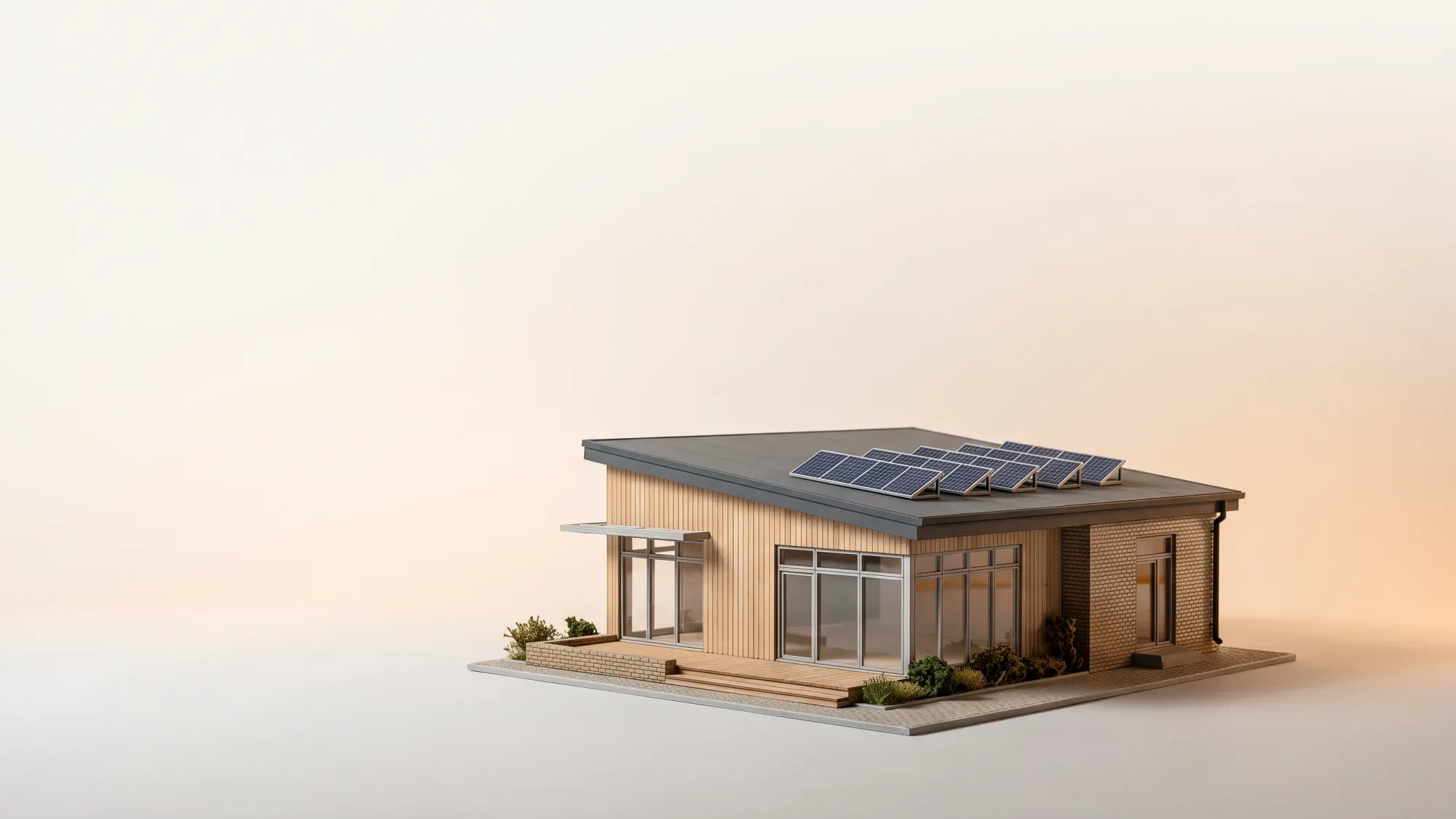
UK solar panel loan: report urges cheaper financing
A recent report is urging UK ministers to significantly reduce the cost of loans for household solar panels, aiming to make them more accessible for a wider range of families1. The Common Wealth thinktank proposes a scheme involving "solar bonds" - retail investment products similar to national savings - to fund a universal entitlement to solar panels. This initiative could halve current market interest rates, potentially saving households approximately £250 annually on energy bills.
The challenge of financing solar panels in the UK
Why upfront costs deter UK homeowners
Installing solar panels offers homeowners a powerful way to generate their own clean electricity, reduce reliance on the grid, and gain independence from volatile energy prices. However, the initial cost of a solar panel system, typically ranging from £5,000 to £10,000, can be a significant barrier for many households. This upfront investment often deters homeowners from adopting sustainable home energy solutions, despite the long-term financial and environmental benefits.
The long-term benefits of domestic solar solutions
Beyond immediate energy bill reductions, domestic solar solutions offer substantial long-term advantages. They can increase property value, reduce carbon footprint, and provide a hedge against future energy price rises. The ability to generate your own electricity offers greater control over household energy consumption and expenditure, aligning with a broader shift towards sustainable home energy.
Proposed solutions for more affordable solar loans
The Common Wealth thinktank's 'solar bonds' proposal
The Common Wealth thinktank is advocating for government intervention to make solar panels universally accessible. Their proposal centres on "solar bonds", which would be retail investment products similar to national savings investments. These bonds would allow savers to receive interest payments on their cash, in turn funding a scheme that provides low-interest loans for solar panel installations. Donal Brown, a lead author of the Common Wealth report, stated that this would be a "state-backed product that everybody would be eligible for".
What are 'solar bonds'?
'Solar bonds' are a proposed retail investment product, similar to national savings, that would allow individuals to invest their money and receive interest. The funds raised would then be used by the government to provide low-interest loans to households for installing solar panels, creating a universal entitlement to solar energy.
Potential impact on interest rates and energy bill savings
The proposed 'solar bonds' scheme could significantly reduce the financial burden on homeowners. Current market interest rates for solar panel loans typically range from 9% to 10%. The Common Wealth report suggests that this new scheme could halve these rates, making loans much more affordable. This reduction in interest, combined with energy generation, could save households approximately £250 annually on their energy bills. The loans are envisioned with a 25-year repayment term, repaid through energy bills and attached to the property, ensuring repayment security.
Government's role in driving down costs and ensuring accessibility
The thinktank argues that government involvement is crucial not only for funding but also for driving down installation costs. Donal Brown noted that "The government doing it would also drive down the installation cost". This comprehensive approach aims to overcome the primary barriers to solar adoption: high upfront costs and prohibitive interest rates, thereby boosting the UK's booming solar sector and providing clean energy access to more families.
Understanding current solar panel financing options
Types of green loans and mortgages for solar
While 'solar bonds' are a proposed future solution, several financing options currently exist for UK homeowners looking to install solar panels. These include green loans, which are specifically designed for energy-efficient home improvements and often come with more favourable terms than standard personal loans. Some mortgage providers also offer 'green mortgages' or additional borrowing options for homeowners undertaking energy-saving upgrades, potentially at lower interest rates.
Comparing interest rates and repayment terms
When exploring current financing, it is essential to compare interest rates and repayment terms carefully. Standard personal loans for home improvements can vary widely, and as noted, market rates for solar panel loans are currently around 9% to 10%. Repayment terms can also differ significantly, impacting the total cost of the loan and your monthly outgoings.
Eligibility criteria for solar panel financing
Eligibility for solar panel loans typically depends on your credit score, income, and the value of your property. Lenders will assess your financial stability to determine your ability to repay the loan. For green mortgages or additional borrowing on an existing mortgage, the equity in your home and the overall loan-to-value ratio will also be key factors.
Maximising the benefits of your solar investment
Calculating energy bill savings with solar panels
Investing in solar panels can lead to substantial savings on your energy bills. The amount you save will depend on factors such as the size of your system, your household's energy consumption, and the amount of electricity you generate and use. Generating your own power reduces the amount you need to buy from the grid, directly lowering your monthly outgoings. Any surplus electricity can also be sold back to the grid through schemes like the Smart Export Guarantee (SEG).
Increasing property value with sustainable home energy
Beyond direct energy savings, installing solar panels can increase the value of your property. Homes with sustainable energy features are increasingly attractive to buyers, who value lower running costs and environmental benefits. This makes solar panels a sound long-term investment, enhancing both your daily living and your property's market appeal.
Contributing to renewable energy investment
By installing solar panels, you are directly contributing to the growth of renewable energy in the UK. This personal investment supports the transition away from fossil fuels, reduces carbon emissions, and helps the country meet its climate targets. It's a tangible way for homeowners to participate in the wider clean energy access movement.
For the avoidance of doubt, this article is provided for informational purposes only and is not intended to constitute legal or financial advice. The author and/or Fuse Energy shall not be responsible for any losses arising out of any reliance on the information contained herein.