UK power grid balancing: renewable shift raises system risks
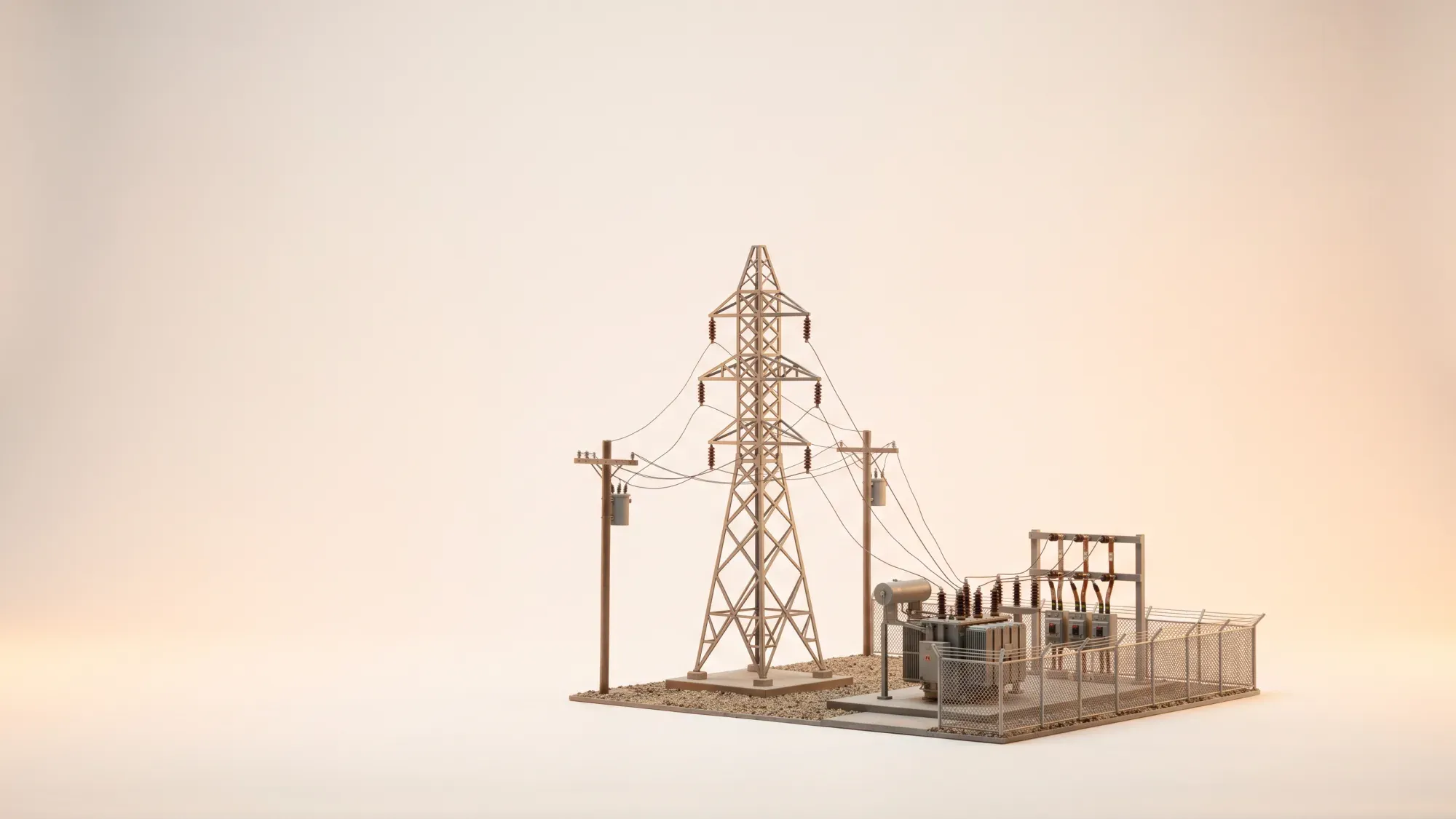
The UK electricity grid faces a complex challenge: maintaining constant stability while rapidly transitioning to renewable energy. This shift demands innovative solutions to balance supply and demand, manage costs, and ensure a reliable power supply for every home. The British power grid is currently under examination as the ongoing transition towards renewable energy sources is reportedly increasing system risks1.
Fuse Energy is committed to a future with abundant, clean energy. We believe that by embracing smart technology and efficient systems, we can help balance the grid and keep energy affordable for everyone. Click here to switch to Fuse Energy today.
Enter your address to get a quote and see how much you could save
Understanding the UK power grid's balancing act
Keeping the lights on in the UK requires a continuous, instantaneous balance between the electricity generated and the electricity consumed. This delicate equilibrium is fundamental to grid stability.
The fundamental principle of supply and demand
The national electricity grid operates on a simple, yet critical, principle: supply must always match demand in real-time. If generation exceeds demand, the system frequency rises; if demand outstrips generation, it falls. Both scenarios can destabilise the grid, potentially leading to power outages or damage to appliances. The National Energy System Operator (NESO), established on 1 October 2024, is The Independent, government-owned body responsible for operating and balancing Great Britain's electricity system every second of every day.
Why grid stability matters
Grid stability is paramount for a functioning society. It ensures that homes, businesses, hospitals, and transport systems receive a consistent and reliable power supply. Without it, power cuts become a risk, impacting daily life and critical services. NESO balances the electricity grid in real time, ensuring generation matches demand to maintain stability, managing factors like frequency.
The renewable energy transition: new balancing challenges
The UK government has committed to fully decarbonising the country's power system by 2035, a significant acceleration from previous targets. This ambition relies heavily on integrating more renewable energy sources, which introduces new complexities for grid balancing.
Intermittency of wind and solar power
Intermittent renewable energy sources, such as wind and solar, have variable outputs that depend on weather conditions. The sun doesn't always shine, and the wind doesn't always blow at consistent speeds, making their generation less predictable than traditional fossil fuel plants. This variability means that flexible balancing services are essential to match supply with demand at all times.
Increased volatility and forecasting demands
The influx of intermittent renewables increases the grid's volatility. While renewables are becoming the backbone of UK generation, their weather-dependent output means that when supply drops, the grid often fills the gap with gas, leading to price spikes. This structural volatility requires sophisticated forecasting and dynamic adjustments to maintain stability. The UK's ageing grid infrastructure, originally designed for one-way power flow from large, centralised power plants, struggles to accommodate this decentralised and variable generation.
The cost of imbalance
Balancing the grid is a substantial and growing expense, ultimately passed on to consumers through their energy bills. Analysis by the Nuclear Industry Association (NIA) showed that balancing costs reached £2.1 billion between January and September in 2022 alone, a 25% increase from the previous year. These costs surge when variable output is excessive or too low, often requiring expensive gas-fired plants to be brought online.
Key mechanisms for maintaining grid stability
To counteract the challenges posed by variable generation, NESO employs various market mechanisms and services to ensure grid stability.
Frequency response services
Frequency response services are crucial for maintaining the grid's operating frequency at a steady 50 Hz. When frequency deviates due to imbalances between supply and demand, these services rapidly inject or absorb power to bring it back within safe limits. This quick reaction prevents widespread disruptions.
Reserve and reactive power
Reserve power refers to additional generation capacity that can be called upon quickly to meet unexpected surges in demand or compensate for sudden drops in supply. Reactive power, on the other hand, helps to maintain voltage levels across the network, which is vital for efficient power transmission and overall system health. Both are essential for grid resilience.
Demand-Side Response
Demand-Side Response (DSR) programmes incentivise households to adjust their electricity consumption in response to grid signals. This might involve reducing usage during peak demand times or increasing it when there's an abundance of renewable generation. DSR helps to free up grid capacity, reduce reliance on expensive backup generation, and lower overall system costs. In the winter of 2023-2024, 2.6 million households participated in the Demand Flexibility Service, saving several gigawatt-hours (GWh) of electricity.
What is Demand-Side Response (DSR)?
Demand-Side Response (DSR) is a mechanism where electricity users are incentivised to modify their energy consumption patterns in response to signals from the grid. This helps balance supply and demand, particularly during periods of high stress or abundant renewable generation, contributing to grid stability and potentially reducing costs for all.
Technological innovations and future solutions
The transition to a decarbonised grid by 2035 necessitates significant technological advancements and strategic investments.
The role of energy storage systems
Energy storage solutions, particularly large-scale batteries, are increasingly vital for providing rapid response and flexibility to the grid. They can store excess renewable energy during periods of high generation and release it when demand is high or renewable output is low, smoothing out intermittency. Lithium-ion batteries are currently the dominant technology for large-scale storage, offering efficient and cost-effective solutions. The UK is becoming a leading market for battery storage, with operational capacity at 4.4 gigawatts (GW) and a pipeline of 95 GW of new projects.
Smart grid technologies and digitalisation
Smart grid technologies integrate information and communication technology to monitor and control generation and demand in near real-time. This "internet for gas and electricity" allows for more efficient matching of supply and demand.
Managing your home's energy should be simple and transparent. Fuse Energy offers clear pricing, real-time usage data through our app, and 24/7 human customer support to help you understand and control your energy consumption. We're building a future where energy is abundant, affordable, and clean. Discover our mission and how we're making a difference here. Ready to take control of your energy? Click here to switch to Fuse Energy today.
References
Disclaimer
For the avoidance of doubt, this article is provided for informational purposes only and is not intended to constitute legal or financial advice. The author and/or Fuse Energy shall not be responsible for any losses arising out of any reliance on the information contained herein.