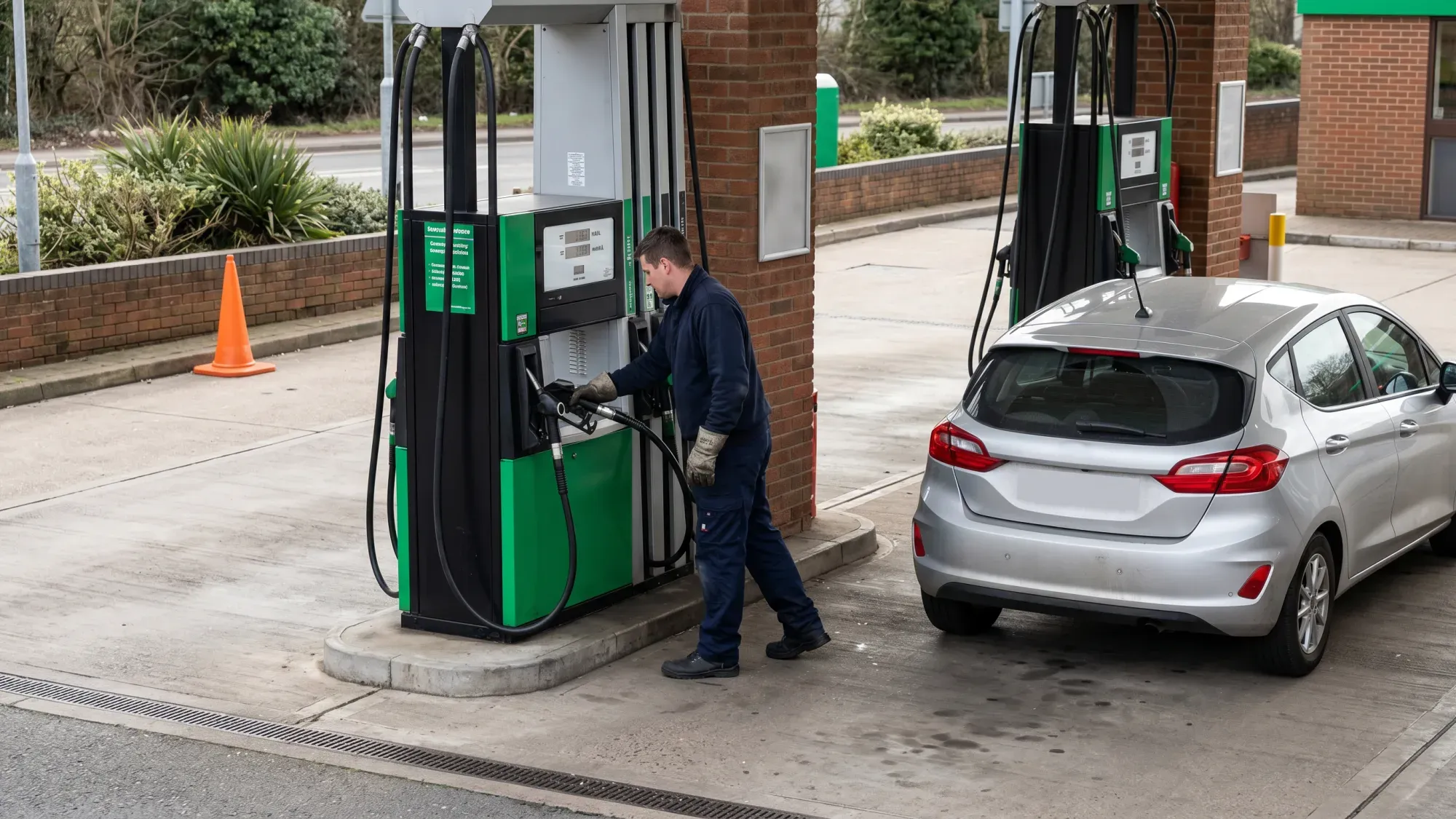
UK motorists are currently seeing petrol and diesel prices fall, a welcome change after recent surges. Understanding the forces behind these fluctuations is key to managing your motoring costs. This article will break down what is driving your fuel bill, offer practical tips for finding cheaper options, and explore how a shift in energy choices can lead to greater stability.
While the cost of filling up your car can be unpredictable, managing your home energy does not have to be. Fuse Energy offers clear pricing and real-time usage data to help you take control of your household bills. Click here to switch to Fuse Energy today.
Recent price drops and their causes
UK drivers are experiencing a notable reduction at the pumps, with petrol and diesel prices reaching their lowest levels since early March. This positive shift largely follows a deal between the US and Iran, which has contributed to stabilising global oil markets1. Previously, geopolitical tensions and disruptions in energy production had caused fuel costs to climb significantly.
The role of global oil markets and geopolitical events
The price of crude oil on the international market is a major determinant of what you pay at the pump. Wholesale Brent crude oil, a key benchmark, had peaked above $120 a barrel during the conflict but has now stabilised around $76-$80. This significant drop in wholesale costs is directly impacting pump prices. Geopolitical events, supply-demand dynamics, and even currency exchange rates all play a part in this volatile market.
Forecasts for petrol and diesel price reductions
Motoring organisations are optimistic about further reductions. The AA noted that the timing of these price drops is "perfect for the start of the summer holidays". Even more encouragingly, the RAC's head of policy, Simon Williams, predicts that petrol could fall below 150p a litre, noting that "the rate of reduction ought to accelerate as the price of a barrel of oil has been under $80 for the last two days - something we haven't seen since the start of March".
Wholesale crude oil costs and exchange rates
The price of crude oil accounts for a significant portion of the pump price. As seen with the recent US-Iran deal, global events can cause rapid shifts. The strength of the pound against the dollar also influences costs, as crude oil is traded in US dollars. A weaker pound means it costs more to buy the same amount of oil.
Fuel duty and VAT: the government's impact on pump prices
Government taxes also make up a substantial part of the fuel price. This includes fuel duty, which is a fixed amount per litre, and Value Added Tax (VAT), which is applied to both the fuel price and the duty. The postponement of a 5p fuel duty increase has provided some relief for drivers, preventing prices from climbing even higher.
Retailer margins and regional variations
Once wholesale costs and taxes are accounted for, retailers add their own margins. These can vary significantly between different fuel stations and regions. Larger supermarkets often use fuel as a loss leader to attract customers, leading to lower prices compared to smaller, independent stations or those on motorways. The official markets regulator has "not seen evidence of retailers actively changing their pricing strategies to take advantage of the crisis," suggesting market forces are generally at play.
Using fuel price comparison tools effectively
One of the most straightforward ways to save money is to compare prices. The UK government's Fuel Finder scheme, launched in September 2023, makes live retail fuel price data available from over 8,300 petrol stations across the UK. This data can be accessed through participating third-party apps and websites, allowing you to find the cheapest fuel in your local area before you set off.
Adopting fuel-efficient driving habits
Your driving style has a direct impact on fuel consumption. Smooth acceleration and deceleration, maintaining a steady speed, and avoiding harsh braking can all help. Driving at lower speeds on motorways (e.g., 60-65mph instead of 70mph) can also improve fuel economy.
Maintaining your vehicle for optimal fuel economy
Regular vehicle maintenance is crucial. Properly inflated tyres reduce rolling resistance, while a well-serviced engine runs more efficiently. Removing unnecessary weight from your boot and taking off roof racks when not in use can also cut down on drag and improve your miles per gallon.
The inherent volatility of fossil fuel prices
The recent fluctuations in UK petrol and diesel prices highlight the inherent volatility of fossil fuels. Tied to global markets and geopolitical events, these costs can shift rapidly, making it difficult for drivers to budget and plan. This reliance on a scarcity-driven energy system often leaves consumers feeling powerless over their transport costs.
Gaining control with home EV charging and off-peak tariffs
For those considering a shift to electric vehicles (EVs), there is an opportunity to gain greater control over transport energy costs. Charging an EV at home, particularly with a smart meter and an off-peak tariff, allows you to take advantage of cheaper off-peak electricity rates. This means you can charge your vehicle when energy is less expensive, often overnight, significantly reducing your 'fuel' bill compared to fluctuating pump prices. These benefits are enabled by off-peak tariffs for smart meter users, offering a more transparent and manageable approach to energy expenditure.
Fuse Energy's vision for abundant, clean transport energy
Fuse Energy is committed to a future where energy is abundant, clean, and less subject to global shocks. By focusing on smart home energy solutions, including support for EV charging through off-peak tariffs, Fuse offers a strategic alternative to the ongoing challenge of volatile fossil fuel costs. This approach aligns with a vision of rebuilding the energy system, empowering drivers to manage their energy use more effectively and embrace a future where transport energy costs are less of a constraint.
Managing your home energy bills should be clear and easy to understand. Fuse Energy focuses on straightforward pricing, so you can see exactly what you are paying without unnecessary complexity. If you have a smart meter, you can view detailed usage data through the app or website, helping you understand how you can lower your bills. If you do not have a smart meter, Fuse Energy can upgrade your non-smart meter, completely for free. This can make it easier to track spending and make informed decisions about your energy use. Our 24/7 human support team is always on hand with fast response times whenever you need help. Click here to switch to Fuse Energy today. Find out about our mission by clicking here.
References
- BBC News. What's happening to UK petrol and diesel prices now the US and Iran have a deal?