UK offshore wind: Morecambe and Morgan grid connection approved
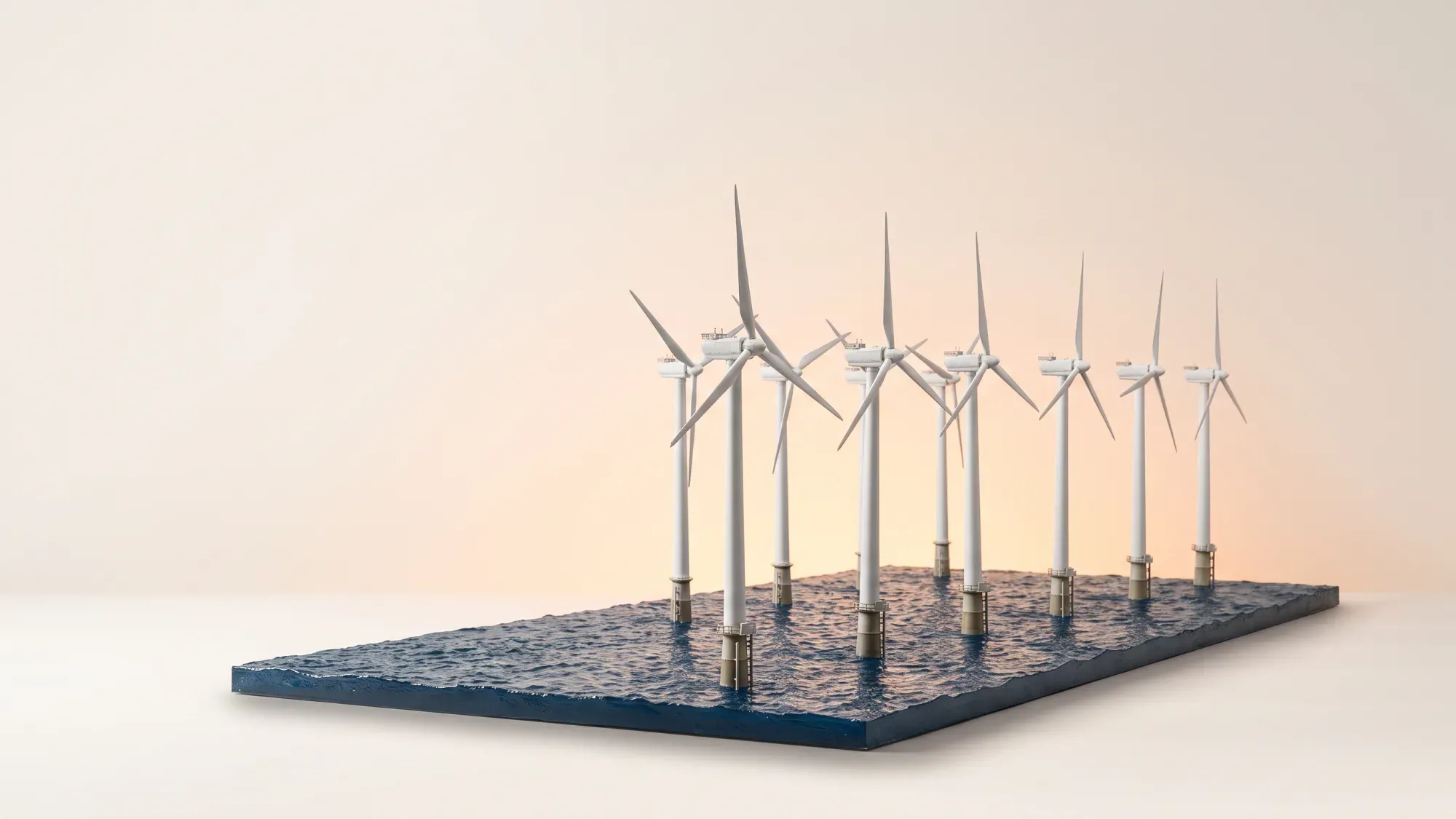
The UK Department for Energy Security and Net Zero has granted development consent for the transmission infrastructure connecting the Morecambe and Morgan offshore wind projects to the National Grid1. This approval, announced on 14 September 2026, marks a significant step in bolstering the UK's energy security and advancing its net zero targets by enabling the integration of substantial new renewable capacity into the national electricity network.
Thinking about UK offshore wind? With Fuse Energy, you get clear pricing, real-time usage data, 24/7 human customer support, and a modern energy experience designed around you. Signing up takes just a few minutes, so you can take control of your bills from day one. Click here to switch to Fuse Energy today and start saving.
Enter your address to get a quote and see how much you could save
The critical role of UK offshore wind connections
The UK is committed to significantly expanding its offshore wind capacity, a cornerstone of its strategy to enhance energy security and achieve ambitious net zero emissions goals. This expansion hinges not just on building wind farms, but on the complex and often challenging process of connecting them reliably to the National Grid.
Driving UK energy security and net zero
Offshore wind power is already a vital component of the UK's energy mix. In 2025, the UK had an installed offshore wind capacity of 16.4 GW, accounting for around 15% of its total installed capacity. This contribution is set to grow substantially, with offshore wind supplying nearly a fifth of the UK's electricity generation. The drive for greater capacity is a strategic imperative, reducing reliance on imported fossil fuels and providing a stable, clean domestic energy source.
Understanding grid connection infrastructure
Connecting offshore wind farms to the National Grid requires extensive infrastructure, both at sea and on land. This typically includes offshore export cables that carry electricity from the wind farm to the coast, onshore landfall infrastructure where these cables come ashore, and onshore export and grid connection cables that transport the power to substations. These substations then transform the electricity to the correct voltage for transmission, often involving circuit breaker compounds and other related infrastructure to ensure a secure and stable connection to the National Grid.
Latest developments: Morecambe and Morgan projects
Recent regulatory decisions highlight the ongoing progress in developing the necessary infrastructure for the UK's offshore wind ambitions. The focus is currently on two major projects in the Irish Sea: Morecambe and Morgan.
Development consent for transmission infrastructure
On 14 September 2026, the Department for Energy Security and Net Zero (DESNZ) granted development consent for the transmission infrastructure associated with the Morecambe and Morgan offshore wind projects. This critical approval enables the construction of the necessary offshore and onshore assets to link these wind farms to the national electricity network. The approved infrastructure specifically covers offshore export cables, onshore landfall infrastructure, onshore export and grid connection cables, substations, and circuit breaker compounds.
Project details: Morecambe and Morgan wind farms
The Morecambe offshore wind project, developed by Copenhagen Infrastructure Partners, has a planned capacity of 480 MW. It received its Development Consent Order (DCO) for the generation assets in December 2025. Adjacent to this, the Morgan project is significantly larger, with a substantial capacity of 1.5 GW. Both projects are located in the Irish Sea.
The Crown Estate's role in offshore wind development
The Crown Estate plays a pivotal role in the UK's offshore wind sector, managing the seabed around England, Wales, and Northern Ireland, and leasing areas for offshore wind development. While the Morecambe project is progressing, the Morgan project's journey has seen a change in developers. Its lease was abandoned by its original developers in early 2026, and the site is now set for reallocation by the Crown Estate through an accelerated tender process.
Navigating the offshore wind grid connection process
Connecting an offshore wind farm to the National Grid is a multi-stage process, involving intricate planning, regulatory approvals, and significant infrastructure development. Understanding each step is crucial for energy sector professionals.
Development consent orders (DCOs) explained
DCOs are a statutory requirement in the UK for nationally significant infrastructure projects, including large-scale energy developments like offshore wind farms and their associated transmission infrastructure. The DESNZ is the government body responsible for granting these DCOs for energy infrastructure. It is important to note that separate DCOs are typically required for the wind farm's generation assets and for its transmission infrastructure, each undergoing a rigorous examination process.
Key stakeholders: DESNZ, National Grid, and ESO
The grid connection process involves a range of key entities. The DESNZ, as mentioned, grants DCOs. The Crown Estate manages seabed leasing, which is the initial step for any offshore wind development. National Grid and the Energy System Operator (ESO) are central to the physical connection and operation of the grid. ESO manages the overall electricity system, ensuring stability and balancing supply and demand, while National Grid develops and maintains the high-voltage transmission network. Ofgem, the energy regulator, oversees the UK's electricity and gas markets, including aspects related to grid connection and transmission charges.
Planning for onshore and offshore transmission
The planning and development of transmission infrastructure is a complex undertaking. It begins with securing a lease for offshore wind development, often from the Crown Estate. Following this, DCOs must be obtained for both the wind farm's generation assets and its transmission infrastructure. This infrastructure includes the development and installation of offshore export cables, the establishment of onshore landfall infrastructure, and the laying of onshore export and grid connection cables. Finally, onshore substations and circuit breaker compounds must be constructed and commissioned before the transmission infrastructure can be connected to the UK's National Grid.
Challenges in UK offshore wind transmission
Integrating large-scale offshore wind into the UK's electricity network presents a unique set of challenges, from technical complexities to regulatory hurdles. Addressing these requires strategic foresight and innovative solutions.
Technical hurdles in wind power transmission
The sheer scale of modern offshore wind farms means transmitting vast amounts of power over long distances, often requiring high-voltage direct current (HVDC) technology for efficiency. Technical challenges include managing voltage fluctuations, ensuring grid stability with intermittent renewable sources, and designing robust subsea and onshore cable systems that can withstand environmental stresses and minimise energy losses. The integration of these new power flows must also be carefully managed to avoid overloading existing infrastructure.
Regulatory and environmental planning complexities
The DCO process, while essential, is inherently complex and can be lengthy. It involves extensive environmental impact assessments, public consultations, and detailed technical submissions. Securing consent for onshore infrastructure, such as cable routes and substation locations, often faces local planning challenges and environmental considerations. Navigating these regulatory and environmental planning complexities requires significant expertise and can impact project timelines.
What is a DCO?
A DCO is a legal authorisation required in the UK for nationally significant infrastructure projects, including large-scale energy developments like offshore wind farms and their associated grid connections. It streamlines the planning process for major projects, granting permission for construction and operation.
Grid reinforcement and capacity considerations
The existing National Grid was not originally designed for the massive influx of renewable energy from remote offshore locations. This necessitates significant grid reinforcement and upgrades to increase capacity and flexibility. Rather than viewing these as insurmountable obstacles, they represent opportunities for strategic investment in modernising the UK's energy infrastructure. This proactive approach can unlock the full potential of offshore wind, transforming grid capacity challenges into catalysts for innovation and a more resilient network.
Innovating for a future-proof grid
The UK's commitment to offshore wind demands a forward-looking approach to grid development, embracing strategic investments, advanced technologies, and supportive policy frameworks.
Strategic investments in grid infrastructure UK
To accommodate the growing offshore wind capacity, substantial and strategic investments in grid infrastructure are paramount. This includes developing new transmission lines, upgrading existing substations, and exploring innovative solutions like offshore transmission networks and multi-purpose interconnectors that can link wind farms and connect the UK to neighbouring countries. Such investments are not merely about capacity; they are about building a smarter, more resilient grid capable of handling diverse and distributed energy sources.
Advanced offshore wind technology and integration
Technological advancements in offshore wind are not limited to larger, more efficient turbines. They extend to improved grid integration technologies, such as advanced power electronics, energy storage solutions, and smart grid management systems. These innovations help to smooth out the intermittency of wind power, enhance grid stability, and optimise the flow of electricity from generation to demand centres. Continued research and development in these areas are crucial for maximising the value of offshore wind.
Policy frameworks for sustainable energy development
Robust and consistent policy frameworks are essential to support the long-term development of offshore wind and its associated grid infrastructure. This includes clear targets for renewable energy deployment, stable regulatory environments for investment, and mechanisms that incentivise grid upgrades and innovation. Effective policy ensures that the UK remains an attractive destination for renewable energy investment and provides the certainty needed for large-scale infrastructure projects to proceed.
Unlocking the UK's offshore wind potential
The journey towards a future powered by abundant, clean energy is intrinsically linked to the successful integration of offshore wind. The recent approval for the Morecambe and Morgan grid connections exemplifies the tangible progress being made.
The path to increased UK wind power capacity
The UK has a clear path to significantly increase its wind power capacity, with a strong pipeline of projects under development. The successful connection of projects like Morecambe and Morgan is vital, demonstrating that the necessary infrastructure can be planned, consented, and built. This continuous expansion of offshore wind capacity is fundamental to meeting the UK's energy demands sustainably and reducing its carbon footprint.
Ensuring a clean energy transition for the UK
A clean energy transition for the UK relies heavily on transforming theoretical offshore wind potential into real, usable energy. Robust, modernised grid connections are the indispensable 'power play' for unlocking this potential. Fuse Energy believes in never settling for outdated or insufficient grid infrastructure, advocating for modernisation to unlock the full potential of offshore wind. Effective grid connections represent a critical 'power play' for the UK, transforming theoretical offshore wind capacity into real, usable energy and paving the way for a future with power to play with.
Managing your energy bills should be clear and easy to understand. Fuse Energy focuses on straightforward pricing, so you can see exactly what you're paying without unnecessary complexity. If you have a smart meter, you can view detailed usage data through the app or website, helping you understand how you can lower your bills. If you don't have a smart meter, Fuse Energy can upgrade your non-smart meter, completely for free. This can make it easier to track spending and make informed decisions about your energy use. Our 24/7 human support team is always on hand with fast response times of under 5 minutes whenever you need help. Click here to switch to Fuse Energy today. Find out about our mission by clicking here.
References
Disclaimer
For the avoidance of doubt, this article is provided for informational purposes only and is not intended to constitute legal or financial advice. The author and/or Fuse Energy shall not be responsible for any losses arising out of any reliance on the information contained herein.