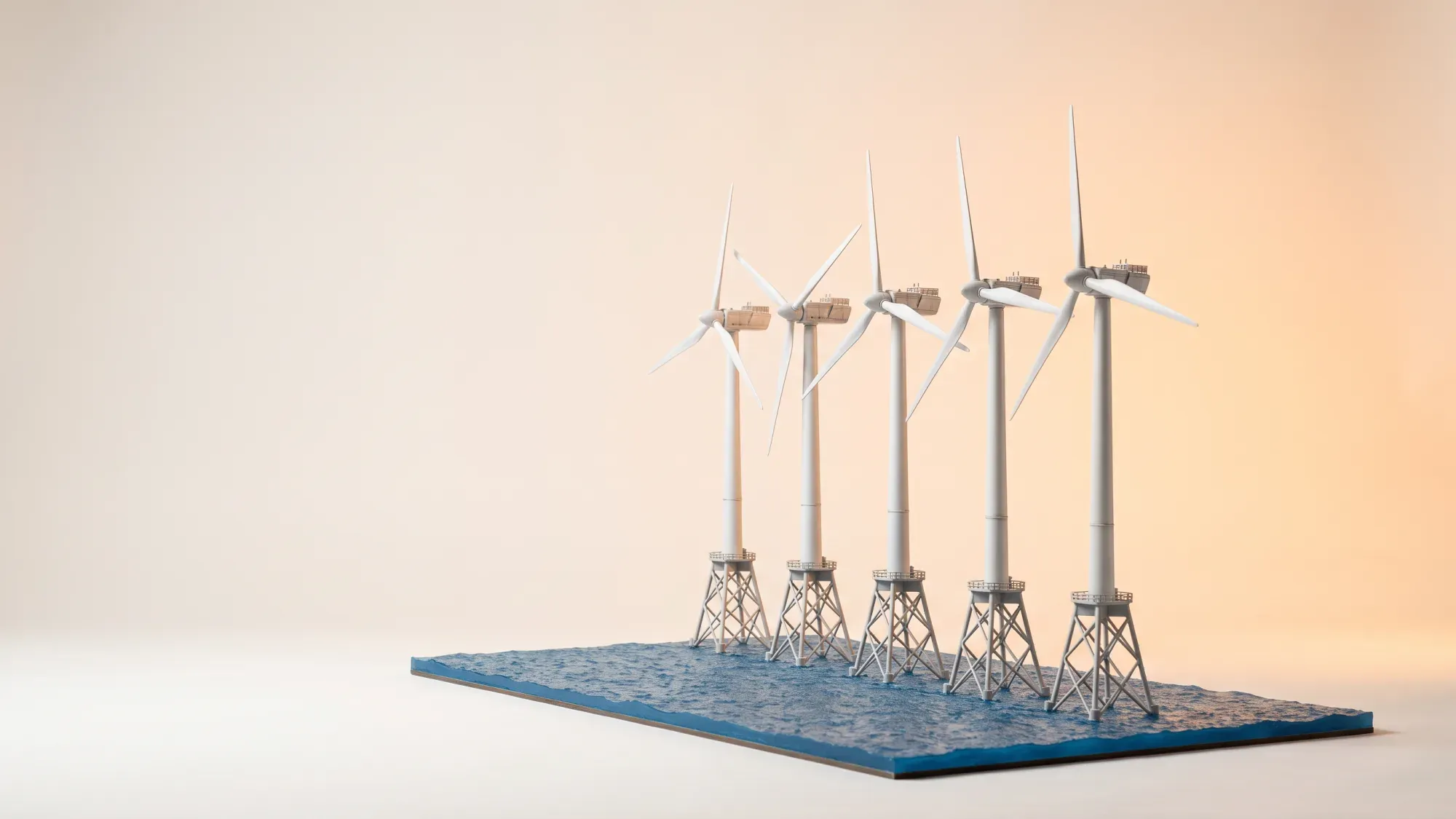
The UK's ambitious target of 50 gigawatts (GW) of offshore wind power by 2030 is under considerable strain following the collapse of the massive 1.5 GW Morgan joint venture in January 2026. This project, intended for the Irish Sea, was "quietly handed back"1 to the Crown Estate, creating a significant gap in the country's clean energy plans and highlighting broader industry challenges driven by economic headwinds.
The challenges facing UK offshore wind are not insurmountable, but they do require a "never settle" mindset to innovate and overcome. Fuse Energy is committed to building a future with abundant, clean energy. We believe that by providing transparent pricing, real-time data, and 24/7 human support, we empower our customers to make informed decisions about their energy consumption. Click here to switch to Fuse Energy today.
Setting the scene: a global leader in offshore wind
The United Kingdom has long been a frontrunner in the global offshore wind industry, boasting some of the largest operational wind farms worldwide. The country's strategic geographical position and strong policy support have fostered significant growth in the sector, with offshore wind now playing a crucial role in the UK's energy mix.
The significance of the 2030 target
The UK government has set an ambitious target to deploy up to 50 GW of offshore wind capacity by 2030. This goal is central to the UK's efforts to achieve Net-Zero emissions and enhance energy security. The 50 GW target is not merely a political promise; it carries full legal weight, making every gigawatt crucial.
The Morgan project: a major setback for UK offshore wind
In January 2026, the massive 1.5 GW Morgan joint venture, planned for the Irish Sea, collapsed and was returned to the Crown Estate. This setback wiped out a significant chunk from the country's clean energy plans, as the project alone could have powered over 1.3 million homes. The Morgan project, initially awarded in 2021, was a joint venture between German energy firm EnBW and JERA Nex BP. Its abandonment underscores the vulnerabilities within the offshore wind sector.
The impact of high inflation and rising interest rates
The failure of projects like Morgan is not an isolated incident but part of broader industry trends. Offshore wind projects are capital-intensive and highly sensitive to economic factors. High inflation, rising interest rates, and soaring equipment costs have significantly strained project economics. Elevated interest rates have further reduced project margins, contributing to rising project costs and delays across the sector.
Soaring equipment costs and supply chain pressures
Supply chain bottlenecks, particularly for wind turbines, foundations, and installation vessel services, have exacerbated the financial pressures. Many suppliers struggle to meet demand, leading to price increases and delays. The build-out of offshore grid connections has also lagged in several countries, creating additional hurdles.
Financing large-scale renewable energy projects
The deteriorating investment climate has cooled developer interest in offshore wind auctions, leading to project cancellations. Developers have argued that the strike prices offered were no longer viable under current cost conditions. Renewable energy projects, including offshore wind, are particularly sensitive to interest rate rises and cost inflation due to their high upfront investment costs.
Mitigating the impact: an emergency tender process
To mitigate the impact of Morgan's collapse and maintain momentum, the Crown Estate, which manages the seabed around England, launched an emergency fast-track rebid for the site. This accelerated tender process aims to quickly secure a new developer, with development rights expected to be awarded by the end of 2026. Officials describe it as a "proportionate tender process" tailored for a site that has already achieved significant development milestones. The new auction process offers upfront price clarity to attract buyers. The tender was launched for the Morgan offshore wind site in the Irish Sea, and the UK reopened the auction for the abandoned site.
Leveraging existing progress: DCO and grid connection
The rebid leverages substantial existing progress, making the project more attractive to new developers. The Morgan project secured a Development Consent Order (DCO) for its wind farm asset in August 2025, which is a crucial regulatory hurdle in UK energy. Furthermore, a direct grid connection agreement is already in place with the National Energy System Operator (NESO), a critical component that can often take years to secure. This groundwork means a new owner can build on existing foundations without starting from scratch.
Gus Jaspert on maintaining momentum
A gap in clean energy plans
The loss of the 1.5 GW Morgan project creates a significant gap in the UK's clean energy plans, making the 50 GW by 2030 target more challenging to achieve. While the UK currently has over 16 GW operational and another 30 GW built or committed, with 7.2 GW in the approval pipeline, the margin for error has shrunk considerably.
The re-tender as a crucial indicator
The outcome of the Morgan re-tender, with bids due in summer 2026 and a winner expected by the end of the year, is seen as a crucial indicator of investor confidence in the UK's green energy sector. A successful auction would demonstrate the sector's resilience and ability to recover from setbacks, while a weak result could confirm fears about the economics of offshore wind.
Broader effects on green energy investment
The challenges faced by the offshore wind industry, including those highlighted by the Morgan project, have broader implications for green energy investment. Governments and the industry must work together to restore market confidence, drive down costs, and accelerate the clean energy transition. This includes setting clear deployment targets, designing robust auction mechanisms, streamlining planning and grid connection processes, and addressing supply chain bottlenecks.
Policy adjustments and support mechanisms
Meeting the UK's ambitious offshore wind targets requires robust policy frameworks and innovative financing. Further policy adjustments, such as relaxing eligibility criteria for fixed-bottom offshore wind farms to allow earlier participation in Contracts for Difference (CfD) rounds, could help accelerate deployment.
Innovation in financing and project delivery
The current economic climate necessitates innovative approaches to financing and project delivery. The Crown Estate's new tender process for Morgan, which offers upfront price clarity and phases payments over 20 years, is an example of de-risking the development phase for investors. Such mechanisms are vital to attract the necessary private capital for large-scale renewable energy investments.
Building a resilient energy infrastructure for abundance
The challenges facing UK offshore wind are not insurmountable but require a "never settle" mindset to innovate and overcome. Achieving abundant clean energy, "power to play with," relies on the successful deployment of large-scale projects like offshore wind, making their viability crucial. The current energy system's vulnerabilities, exposed by offshore wind project setbacks, underscore the need to vertically integrate and rebuild energy infrastructure for resilience. Fuse Energy maintains an optimistic outlook on UK offshore wind's future, grounded in a rigorous, data-backed understanding of the challenges and necessary solutions.
Fuse Energy is committed to building a future with abundant, clean energy. We believe that by providing transparent pricing, real-time data, and 24/7 human support, we empower our customers to make informed decisions about their energy consumption. Join us in making energy abundance a reality. Click here to switch to Fuse Energy today. Find out more about our mission to deliver power to play with by clicking here.
References
- Energies Media. Britain's biggest offshore wind project was quietly handed back and now a race against time has begun to save the country's clean energy future