UK family slashes energy bills to £9 monthly
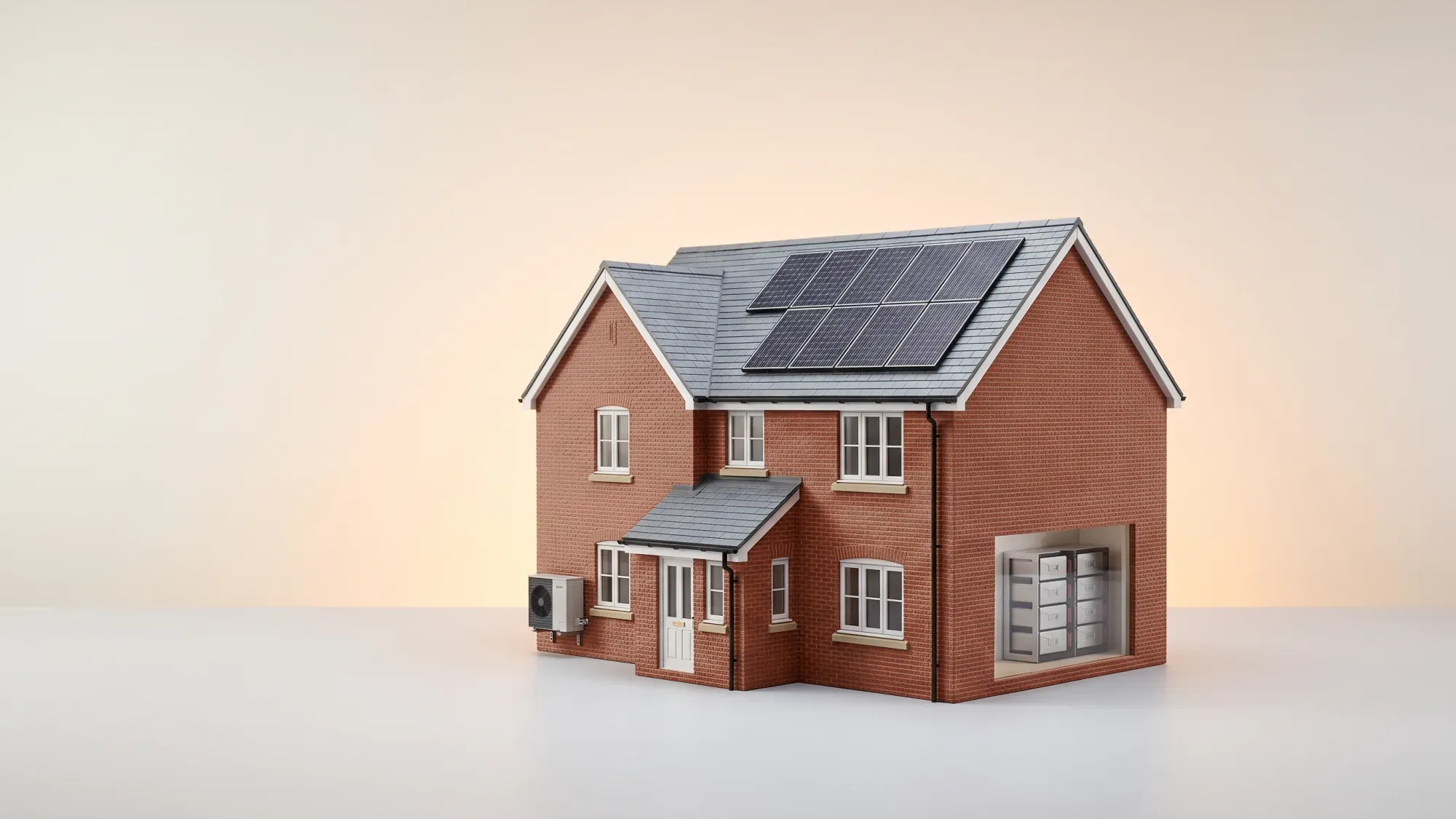
A family in the Cotswolds has dramatically reduced their monthly energy bills to approximately £91 by adopting a comprehensive home electrification strategy. This compelling example demonstrates how integrating technologies like solar panels, battery storage, a heat pump, and smart electricity tariffs can lead to substantial savings and a tangible path to energy independence. It highlights that moving beyond simple energy-saving tips to a whole-home approach can actively optimise energy consumption and generation, leading to significant UK home energy savings.
If you are looking to take control of your home energy, Fuse Energy offers clear pricing and smart tools to help you understand and manage your usage. Click here to switch to Fuse Energy today.
Enter your address to get a quote and see how much you could save
The UK home energy savings challenge
Rising energy costs and household impact
Many UK households face the ongoing challenge of high energy bills, often feeling powerless to make lasting savings. The energy landscape is complex, with costs influenced by global markets and domestic policy. Ofgem, the UK's energy regulator, provides advice on energy savings and consumer protection, but the core problem for many remains the struggle to control their monthly outgoings. The average UK home uses around 2,500 kilowatt-hours (kWh) of electricity per year, a figure that helps illustrate the scale of household energy consumption.
Moving beyond basic energy-saving tips
While turning off lights and reducing thermostat settings can help, these minor behavioural changes often fall short of delivering significant, long-term UK home energy savings. The true potential for reducing energy costs lies in addressing the underlying energy infrastructure of a home and implementing integrated solutions. Relying on a single upgrade in isolation, such as better insulation, might offer some relief but often fails to unlock the full benefits of a holistic approach.
The whole-home energy strategy: a Cotswolds success story for UK home energy savings
Aanand Davé's integrated approach
Industrial designer Aanand Davé, with his wife Leanne, transformed their five-bedroom Cotswolds home into a "light-touch" smart home, achieving remarkable UK home energy savings. Their strategy involved integrating solar panels, battery storage, a heat pump, and smart electricity tariffs. This comprehensive approach demonstrates how "several home upgrades can work together, rather than relying on a single change to lower costs". Davé noted that "it's actually everything working together that has the biggest positive impact".
The power of synergy: solar, battery, and heat pumps
The success of the Cotswolds family lies in the synergy of their chosen technologies. Solar panels generate electricity, which is then stored in a home battery for use when the sun is not shining or when electricity prices are higher. A heat pump provides efficient heating and cooling, further reducing reliance on traditional, often more expensive, energy sources. This integrated system allows homeowners to maximise self-consumption of their generated power and minimise imports from the grid, leading to substantial reductions in their UK energy bill.
Key technologies for UK home energy savings
Solar panels: generating your own power
Installing solar panels is a foundational step towards energy independence and significant UK home energy savings. These panels convert sunlight into electricity, reducing your reliance on grid power. The effectiveness of solar power can be enhanced by considering factors like roof orientation and local sunlight exposure.
Home battery storage: maximising self-consumption
A home battery system stores excess electricity generated by solar panels, allowing you to use your own clean energy even after sunset. This is crucial for optimising self-consumption and reducing peak-time electricity purchases. Battery storage also provides a degree of energy resilience during power outages.
Heat pumps: efficient heating and cooling
Heat pumps are an increasingly popular solution for efficient home heating and cooling, contributing significantly to UK home energy savings. They extract heat from the air, ground, or water and transfer it into your home, operating far more efficiently than traditional boilers. The Boiler Upgrade Scheme (BUS) offers grants for heat pump installations in England and Wales, providing up to £7,500 off the cost of air source and ground source heat pumps. For eligible off-gas grid properties, this grant is £9,000, available from 21 July 2026 until 31 March 2027.
What is the BUS?
The BUS is a UK government initiative providing grants to property owners in England and Wales. It encourages the replacement of fossil fuel heating systems with low-carbon alternatives like heat pumps, helping to reduce installation costs and promote sustainable home heating.
Optimising UK home energy savings with smart tariffs
Understanding smart electricity tariffs
Smart electricity tariffs are essential for maximising UK home energy savings, especially when combined with renewable generation and battery storage. These tariffs offer varying electricity prices throughout the day, typically cheaper during off-peak hours. By shifting energy-intensive activities, such as charging an electric vehicle or running appliances, to these cheaper periods, homeowners can significantly reduce their overall energy costs. Smart meters are vital for accessing these tariffs and enabling accurate, real-time energy monitoring.
The role of smart home energy management systems
Smart home energy management systems integrate various technologies to optimise energy flow. They can automatically direct solar power to your battery, export excess energy to the grid during high-price periods, and charge your EV when electricity is cheapest. This intelligent orchestration ensures that your home operates at peak energy efficiency, making the most of your investments in solar, battery, and heat pump technologies.
Achieving energy independence and resilience
An integrated whole-home energy strategy, supported by smart tariffs and management systems, moves homeowners closer to energy independence. By generating and storing their own power, and intelligently managing consumption, households become less vulnerable to fluctuating energy prices and grid instabilities. This approach also enhances energy resilience, providing peace of mind during unexpected outages.
Making your own UK home energy savings a reality
Assessing your home's potential
The first step towards significant UK home energy savings is to assess your current energy consumption and identify areas for improvement. Consider your property's suitability for solar panels, the potential for battery storage, and whether a heat pump is a viable heating solution.
Exploring grants and financial incentives
The upfront cost of home energy upgrades can be substantial, but various government grants and financial incentives are available to help. Beyond the BUS, explore other local and national schemes that support energy efficiency and renewable technologies. The integrated system implemented by the Cotswolds family had a payback period of five to seven years, demonstrating the long-term financial viability of such investments.
Your step-by-step path to lower bills
Achieving substantial UK home energy savings involves a structured approach:
- Assess and plan: Understand your current energy usage and plan an integrated suite of upgrades tailored to your property.
- Research incentives: Look into available grants and financial support for energy efficiency and renewable technologies.
- Implement upgrades: Install technologies such as solar panels, battery storage, and a heat pump.
- Integrate smart management: Set up smart energy management systems and switch to an optimised smart electricity tariff.
- Monitor and optimise: Continuously monitor your energy usage and savings to ensure ongoing efficiency and maximum benefit.
By taking a proactive, integrated approach, UK homeowners can follow the example of the Cotswolds family and take control of their energy future, leading to dramatically lower bills and greater energy independence.
Take the stress out of managing your energy. With Fuse Energy, you get clear pricing, real-time usage data, 24/7 human customer support, and a modern energy experience designed around you. Signing up takes just a few minutes, so you can take control of your bills from day one. Click here to switch to Fuse Energy today and start saving.
Managing your energy bills should be clear and easy to understand. Fuse Energy focuses on straightforward pricing, so you can see exactly what you're paying without unnecessary complexity. If you have a smart meter, you can view detailed usage data through the app or website, helping you understand how you can lower your bills. If you don't have a smart meter, Fuse Energy can upgrade your non-smart meter, completely for free. This can make it easier to track spending and make informed decisions about your energy use. Our 24/7 human support team is always on hand with fast response times of under 5 minutes whenever you need help. Click here to switch to Fuse Energy today. Find out about our mission by clicking here.
References
Disclaimer
For the avoidance of doubt, this article is provided for informational purposes only and is not intended to constitute legal or financial advice. The author and/or Fuse Energy shall not be responsible for any losses arising out of any reliance on the information contained herein.