UK heat stress food system resilience
The UK food system faces growing challenges from heat stress, impacting crops, livestock, and the cold chain. Discover how adaptation strategies and abundant clean energy can build resilience and secure food supply.
Thinking about UK heat stress food system resilience? With Fuse Energy, you get clear pricing, real-time usage data, 24/7 human customer support, and a modern energy experience designed around you. Signing up takes just a few minutes, so you can take control of your bills from day one. Click here to switch to Fuse Energy today and start saving.
Enter your address to get a quote and see how much you could save
The growing threat of heat stress to UK food
Recent record-breaking heatwaves have exposed the UK food system's increasing susceptibility to high temperatures. This is not merely about uncomfortable summer days; it represents a systemic strain with far-reaching consequences for food security and the economy. The UK has experienced two record-breaking heatwaves in May and June, placing significant pressure on nature and farmed animals alike1.
"The UK’s food system, including nature and farmed animals, is increasingly coming under strain from periods of high heat, and we’ve had two record breaking heat waves in both May and June." — Jez Fredenburgh, senior analyst – food and climate, the Energy and Climate Intelligence Unit (ECIU)
Economic toll on agriculture
The financial impact of heat stress on the UK's agricultural sector is already substantial. Economic losses are estimated at £205 million annually across various sectors, with projections indicating a potential rise to £2.3 billion by the 2030s in extreme scenarios. These figures underscore the urgent need for effective mitigation and adaptation strategies to protect the industry's viability.
Vulnerability of key crops
Horticulture, in particular, is highly vulnerable to rising temperatures. Many common crops struggle in prolonged heat, leading to significant yield reductions and crop loss. Lettuce, for instance, has an optimal growing temperature of 20°C, with heat stress beginning to kick in above 24°C. This sensitivity means that even moderate heatwaves can devastate harvests, impacting availability and prices.
Impact on farmed animal welfare
Heat stress extends beyond crops, posing serious welfare and productivity challenges for farmed animals. Dairy cows, for example, experience reduced milk yields in hot weather because they tend to eat less. This not only affects animal health but also has direct implications for food production. Ensuring animal welfare in hotter conditions is becoming a critical concern for farmers across the UK.
"Lettuce really doesn’t like heat – its maximum optimum growing temperature is 20C and over 24C heat stress starts kicking in." — Ben Andrews, salad and brassica grower, Herefordshire
Understanding the impact of heat stress on the UK food system highlights the critical need for resilient energy solutions. While Fuse Energy currently focuses on residential supply, our mission to deliver abundant, clean energy is key to a future where all sectors, including food production, can thrive. Discover how Fuse Energy is working towards a more sustainable energy future for your home by clicking here.
The cold chain: a critical vulnerability
The UK's cold chain, which underpins approximately 50% of the country's food supply, is facing immense pressure from extreme heat. This vital infrastructure, responsible for transporting and storing perishable goods, was not designed for the increasingly frequent and intense heat events now being experienced.
Pressure on infrastructure
Existing refrigeration systems and cold storage facilities are struggling to cope with sustained high temperatures. When temperatures rise sharply, every stage of the cold chain, including infrastructure and the workers who operate it, comes under increased strain. This can lead to increased energy consumption and put existing infrastructure under pressure, potentially leading to higher operational costs and a greater risk of equipment failure if not adequately maintained. Much of the UK's cold storage facilities are over 20 years old, highlighting a significant gap in infrastructure resilience.
Maintaining food quality and safety
Disruptions to the cold chain can have severe consequences for food quality and safety. When temperatures rise above safe limits, perishable goods can spoil more quickly, leading to waste and potential health risks. Maintaining consistent cold temperatures throughout the supply chain is paramount to preventing spoilage and ensuring that food remains safe for consumption.
Strategies for adaptation and resilience
Building a resilient food system in the face of heat stress requires a multifaceted approach, combining on-farm measures, technological advancements, and collaborative policy. The Climate Change Committee provides analysis and advice on climate change adaptation for the UK, including impacts on agriculture and food security, highlighting the need for strategic planning.
On-farm adaptation measures
Farmers are already implementing various strategies to protect their crops and livestock. These include planting trees to shade livestock, restoring hedgerows, and improving soil health to cool landscapes and retain water. Dairy farmers also make use of shade from trees, get jobs done early in the morning and later in the evening, and use misting systems and fans in milking parlours to keep cows cool.
Technological innovations
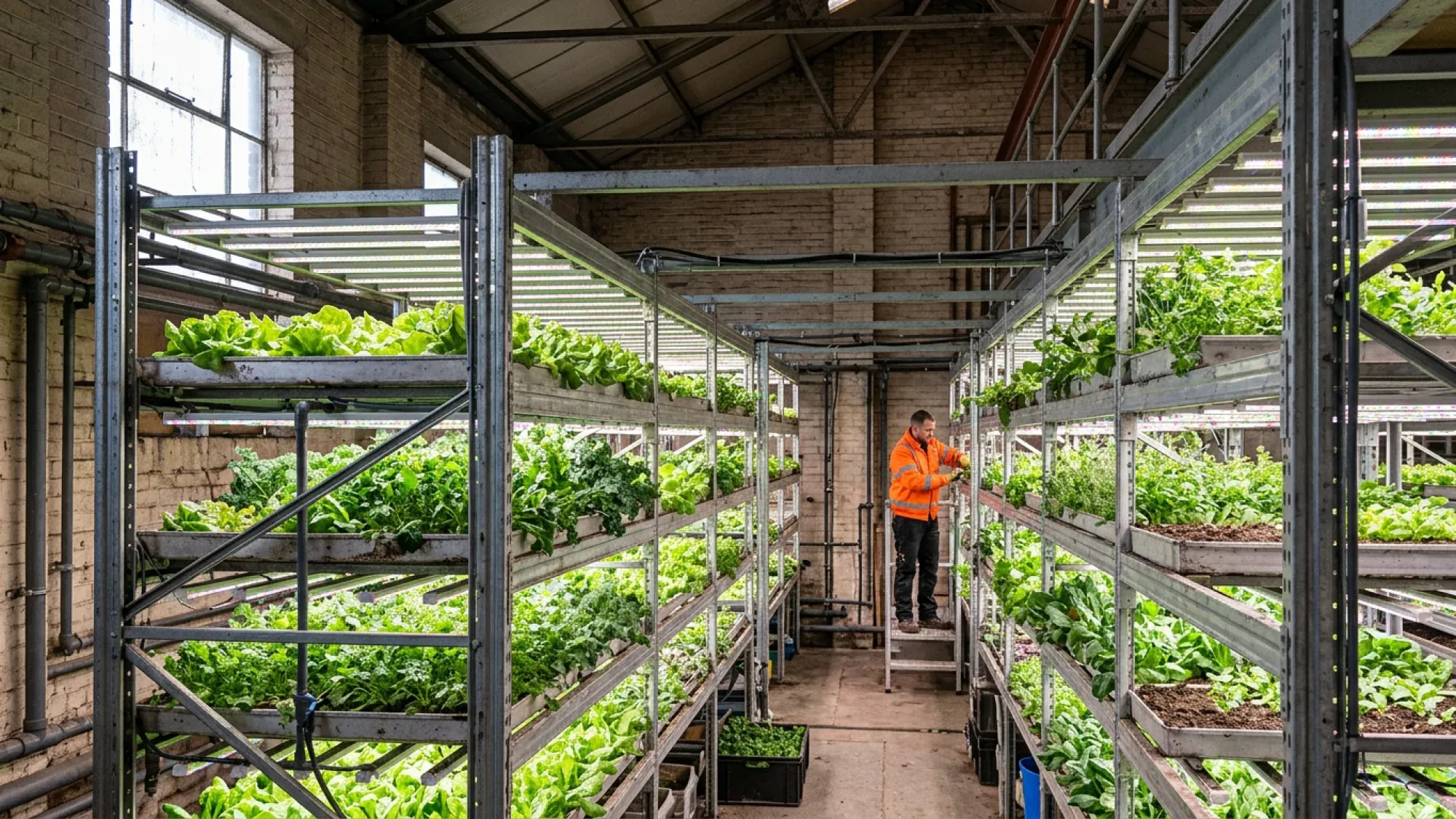
Advanced agricultural technologies offer promising solutions for future resilience. Climate-controlled environments, such as vertical farms and greenhouses with sophisticated cooling systems, could shield crops from extreme temperatures. Precision irrigation systems could also optimise water use, ensuring plants receive adequate hydration without waste. These innovations could significantly reduce vulnerability to heat.
Policy and industry collaboration
Effective adaptation requires systemic change, fostered through collaboration between farmers, industry, and policymakers. Developing robust agricultural adaptation plans, investing in resilient infrastructure, and integrating climate considerations into food policy are crucial steps. This collective effort ensures that strategies are comprehensive and widely adopted.
Powering a resilient food system with abundant clean energy
The vision of a resilient UK food system, capable of withstanding the challenges of heat stress, is fundamentally linked to the availability of abundant, clean energy. This energy is not merely a utility; it is the foundational enabler for the advanced technologies and robust infrastructure needed to secure our food supply.
Enabling advanced agriculture
Clean energy can power the next generation of agriculture. Imagine vertical farms running on renewable electricity, precisely controlling temperature, humidity, and light to grow crops efficiently, regardless of external heat. This abundant energy allows for the widespread adoption of advanced climate-controlled systems and precision farming techniques, reducing reliance on weather-dependent outdoor cultivation.
Strengthening cold chain infrastructure
A robust cold chain demands reliable and cost-effective power. Abundant clean energy can fuel resilient refrigeration systems, ensuring that food remains fresh from farm to fork, even during prolonged heatwaves. This includes powering advanced cold storage facilities and electric transport fleets, reducing both operational costs and carbon emissions while enhancing food safety.
Long-term food security
By providing reliable, cheap, and clean energy, we can support human progress by securing food supply against climate challenges. This approach challenges the scarcity consensus, demonstrating how abundant energy can lead to abundance in food production, rather than trade-offs. It enables a future where food security is not threatened by extreme weather, allowing for innovation and growth in food production.
Building the future of UK food security
Addressing heat stress in the UK food system requires a proactive, long-term vision. It means moving beyond reactive measures to implement systemic changes that build genuine resilience.
A proactive approach
This involves continuous assessment of vulnerabilities, ongoing investment in adaptation measures, and a commitment to integrating clean energy solutions across the entire food supply chain. By anticipating future climate challenges, we can develop robust strategies that protect both our agricultural sector and our food security.
Fuse Energy's contribution
Fuse Energy's mission is to deliver the abundant, clean energy the future requires. We believe energy is the fundamental source for human progress, and our vision is a future where energy is no longer a constraint on ambition. While Fuse Energy currently supplies residential energy only, our approach to rebuilding the energy system from scratch aims to create the infrastructure that can support a more resilient UK food system. By working towards a future of abundant, clean energy, we enable the technological advancements and robust infrastructure necessary for food security, helping to build the future we all imagined.
Managing your home's energy can feel complex, especially with external factors like heat stress impacting wider systems. Fuse Energy aims to simplify this by offering clear pricing, real-time usage data, and 24/7 human customer support, helping you take control of your energy bills. Switch to Fuse Energy today and join a community building a future of abundant, clean energy. Click here to get started. You can also learn more about our mission to deliver the abundant, clean energy the future requires by clicking here.
References
Disclaimer
For the avoidance of doubt, this article is provided for informational purposes only and is not intended to constitute legal or financial advice. The author and/or Fuse Energy shall not be responsible for any losses arising out of any reliance on the information contained herein.