Centrica CEO warns UK gas storage crisis threatens national security
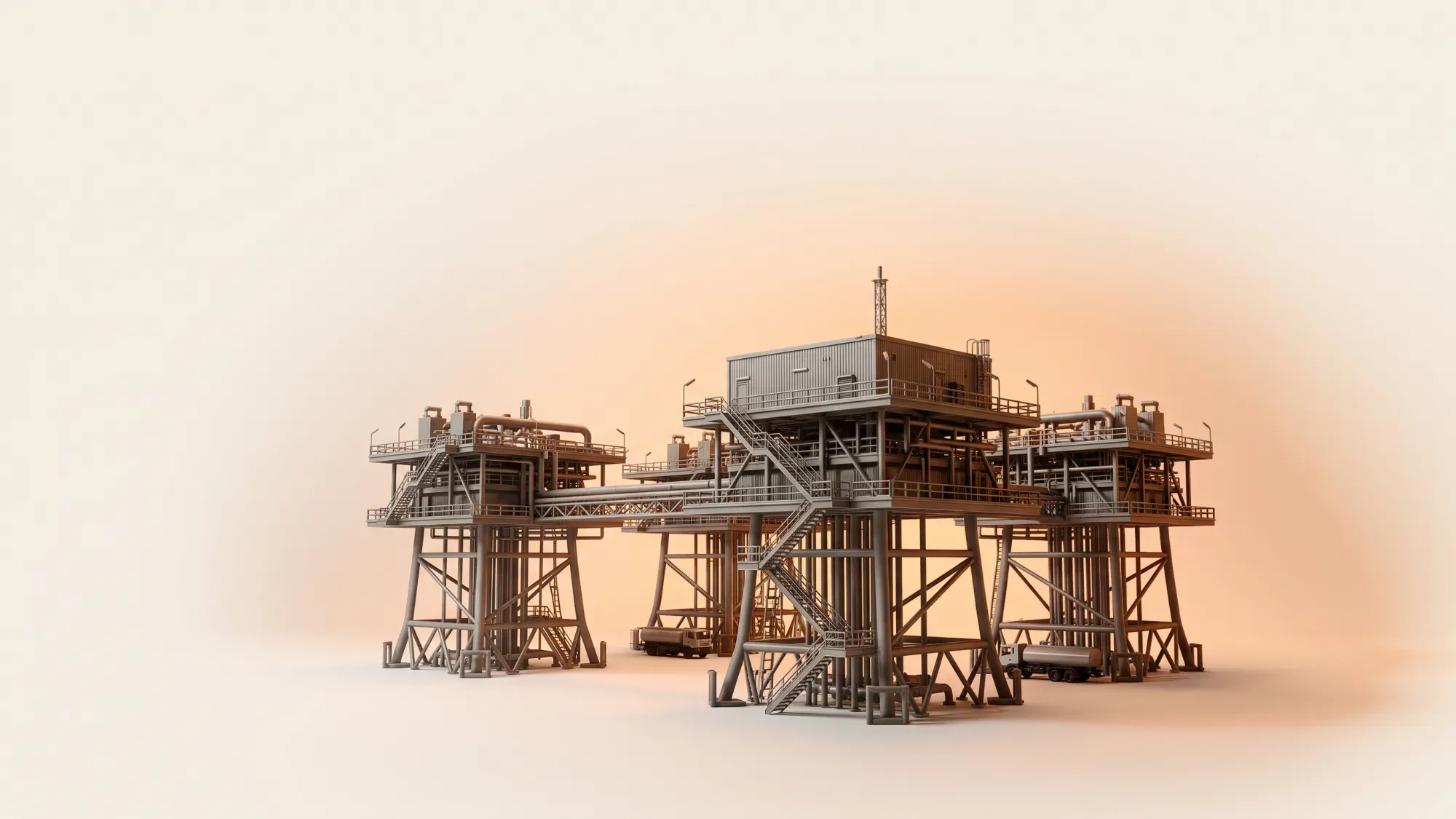
The UK's insufficient gas storage capacity poses a significant threat to national energy security, leaving the country vulnerable to supply disruptions and price spikes. Centrica CEO Chris O'Shea has warned that this lack of storage is a critical issue, stating, "Without energy there is no economy; without energy security there can be no national security."1 While the nation transitions towards a net-zero future, gas remains a vital component of energy resilience, acting as a buffer against market volatility. Fuse Energy aligns with the vision of a resilient energy future where energy is not a constant concern, seeing robust gas storage as a foundational 'power play' for national energy security and abundance.
The UK's energy security is a critical concern, and understanding the role of gas storage is key. Fuse Energy is committed to providing reliable and transparent energy for your home, helping you manage your usage and costs effectively. Click here to switch to Fuse Energy today.
Enter your address to get a quote and see how much you could save
The state of UK gas storage: a capacity crisis
The UK's gas storage infrastructure is currently in a precarious state, marked by significantly lower capacity compared to its European neighbours and the underutilisation of its largest facility.
Current capacity and key facilities
The UK operates several natural gas storage facilities, including salt cavern storage, which allows for rapid injection and withdrawal, and depleted gas fields, typically used for longer-term seasonal storage. The largest and most strategically important of these is the Rough facility, located offshore in the North Sea.
How the UK compares to European neighbours
The UK lags significantly behind major European economies in gas storage capacity. Countries like Germany, France, and the Netherlands possess around ten times more storage capacity than the UK. This disparity leaves the UK particularly exposed to market fluctuations, as it relies heavily on imports via pipelines and liquefied natural gas (LNG) shipments.
The Rough gas storage challenge
Rough, the UK's only large-scale gas storage facility, is currently "practically empty" because prevailing market conditions do not make its operation financially viable. Centrica, the facility's owner, has indicated that it is not injecting gas into Rough for the upcoming winter without a suitable regulatory framework. This situation highlights a critical gap in the UK's energy resilience, as Rough has historically provided a substantial portion of the nation's long-term storage capacity.
Why gas storage is vital for UK energy security
Adequate gas storage is not merely a convenience; it is a fundamental pillar of national energy security and market stability, acting as a crucial safeguard against unforeseen events.
Mitigating supply disruptions
Gas storage acts as a buffer against sudden interruptions in supply, whether due to geopolitical events, infrastructure failures, or extreme weather. Without sufficient reserves, the UK's energy system becomes highly vulnerable to external shocks, potentially leading to shortages for homes. Security crises in Ukraine and the Middle East have triggered damaging energy shocks, underscoring the fragility of global energy markets and the importance of domestic resilience.
Stabilising energy prices
One of the primary functions of gas storage is to help stabilise energy prices. By allowing gas to be stored when demand is low and released when demand is high, storage facilities can smooth out price volatility caused by supply-demand imbalances. During periods of high demand or supply constraints, wholesale gas prices can spike dramatically, directly impacting consumer bills and industrial costs.
An insurance policy against market volatility
Centrica CEO Chris O'Shea succinctly describes gas storage as "an insurance policy against supply disruption and price spikes." This analogy highlights its role in providing a safety net, protecting the economy from the worst impacts of an unpredictable global energy market. Without this insurance, the UK is left exposed to the full force of international market volatility, with significant economic consequences.
Economic and geopolitical risks of insufficient storage
The UK's limited gas storage capacity carries substantial economic and geopolitical risks, threatening both domestic stability and national security.
Impact on industries and consumers
Insufficient gas storage can have a cascading effect across the economy. Industries reliant on gas, from manufacturing to power generation, face increased operational costs and potential shutdowns during price spikes or supply shortages. For consumers, this translates into higher energy bills and a greater risk of energy poverty.
Vulnerability to global energy shocks
With low storage levels, the UK becomes disproportionately vulnerable to global energy shocks. Geopolitical tensions, conflicts in energy-producing regions, or even decisions by other nations to prioritise their own energy security can directly impact the UK's gas supply and pricing. This reliance on external markets diminishes the UK's energy independence and its ability to navigate international crises without significant domestic repercussions.
National security implications
The link between energy security and national security is direct and profound. As Chris O'Shea has warned, "Without energy there is no economy; without energy security there can be no national security." A nation unable to reliably power its homes, industries, and critical infrastructure is fundamentally weakened, impacting its defence capabilities, economic stability, and social cohesion. Investing in robust energy infrastructure, including gas storage, is therefore a strategic imperative for national security.
The path forward: policy, investment, and resilience
Addressing the UK's gas storage deficit requires decisive government action, private investment, and a coherent long-term energy strategy.
The need for a robust regulatory framework
The primary barrier to maintaining and expanding gas storage capacity is the lack of a stable and supportive regulatory framework. Market forces alone have proven insufficient to make large-scale gas storage financially viable. Government intervention is necessary to create a regulatory model that incentivises investment, recognising gas storage as a critical national asset rather than a purely commercial venture. The government has acknowledged that the market is unlikely to support storage on a purely commercial basis and has been consulting on the future of gas security.
Centrica's proposed investment in Rough
Centrica has expressed its readiness to invest £2 billion to preserve and redevelop the Rough gas storage facility, provided the right regulatory framework is established. This significant private investment could secure a vital piece of the UK's energy infrastructure, preventing its closure and potential job losses. Such an investment would not only enhance energy security but also signal a commitment to long-term energy resilience.
O'Shea stresses that without government intervention, Rough risks closure, leading to job losses. He states:
"Storage is an insurance policy against supply disruption and price spikes." — Chris O'Shea, Group Chief Executive, Centrica
Integrating storage into future energy strategy
Gas storage must be integrated as a core component of the UK's broader energy strategy. This involves not only addressing immediate capacity shortfalls but also planning for its evolving role within a transitioning energy system. A comprehensive strategy would consider how gas storage complements renewable energy sources, supports grid stability, and contributes to overall energy independence.
Gas storage in a net-zero future
While the UK accelerates its transition to net-zero, gas storage retains a crucial role, acting as a bridge and a stabiliser in a future energy landscape dominated by renewables.
Bridging the transition to renewables
As renewable energy sources like wind and solar become more prevalent, their inherent intermittency creates a need for flexible backup power. Gas-fired power plants, supported by robust gas storage, can provide this dispatchable capacity, ensuring electricity supply when renewable generation is low. Gas storage thus acts as a critical bridge, enabling a smoother and more secure transition to a fully renewable energy system.
Ensuring grid stability and flexibility
A resilient energy system requires flexibility to manage fluctuations in supply and demand. Gas storage contributes to grid stability by allowing rapid adjustments to gas supply, which in turn supports electricity generation. This flexibility is essential for balancing the grid, preventing blackouts, and ensuring a reliable energy supply as the UK moves towards a more decentralised and renewable-heavy system.
Long-term energy resilience beyond fossil fuels
Looking beyond the immediate need for natural gas, existing gas storage infrastructure, particularly depleted gas fields like Rough, could potentially be repurposed for future energy needs, such as storing hydrogen or for carbon capture and storage (CCS) projects. This foresight ensures that investments in gas storage today can continue to contribute to the UK's long-term energy resilience and climate goals.
Managing your energy bills should be clear and easy to understand. Fuse Energy focuses on straightforward pricing, so you can see exactly what you're paying without unnecessary complexity. If you have a smart meter, you can view detailed usage data through the app or website, helping you understand how you can lower your bills. Our 24/7 human support team is always on hand with fast response times whenever you need help. Click here to switch to Fuse Energy today. Find out about our mission by clicking here.
References
Disclaimer
For the avoidance of doubt, this article is provided for informational purposes only and is not intended to constitute legal or financial advice. The author and/or Fuse Energy shall not be responsible for any losses arising out of any reliance on the information contained herein.