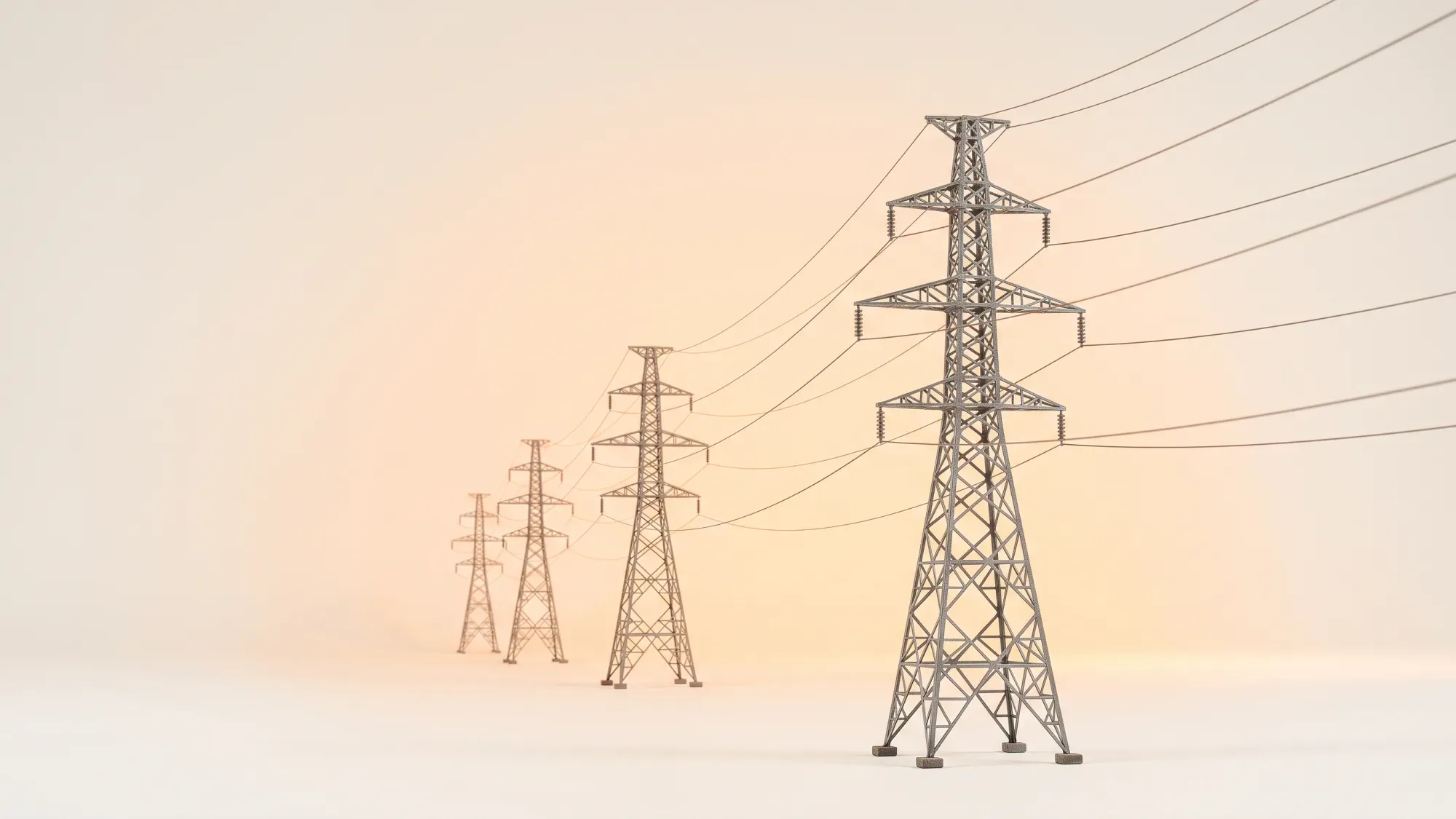
Britain is embarking on a monumental £150 billion project1 to overhaul its electricity grid, aiming to fortify energy security and meet ambitious climate targets. This initiative is not merely an upgrade; it is a fundamental transformation, involving the construction of thousands of miles of new power lines, pylons, and subsea cables by 2041. This represents an infrastructure build-out five times greater than what was achieved in the previous three decades, reflecting the accelerated pace required for the energy transition.
As the UK upgrades its energy grid to handle more renewable power, Fuse Energy is focused on making that cleaner energy accessible and affordable for your home. Click here to switch to Fuse Energy today.
The UK's electricity network, largely designed for a bygone era of centralised fossil fuel power stations, is struggling to cope with the influx of renewable energy sources. This megaproject seeks to modernise this ageing infrastructure, enabling the efficient transmission of clean power from where it is generated - particularly from offshore wind farms and Scotland - to homes across the country.
The challenge of an ageing network
For decades, the UK's grid saw limited investment, leaving it ill-equipped for the demands of a modern, decarbonised energy system. Energy secretary Miatta Fahnbulleh acknowledged this historical underinvestment, stating, "For a decade and a half, under the last government, we didn’t invest in our energy system, we didn’t invest in the grid, and we’re going to have to deal with that."
Connecting the surge in renewable energy
The rapid expansion of renewable energy, especially wind and solar farms, has outpaced the grid's capacity to connect and transmit this clean power. This often leads to "curtailment," where renewable generation is switched off because the grid cannot transport it, resulting in wasted clean energy and higher costs. Keith Bell, Professor of Electronic and Electrical Engineering at the University of Strathclyde, highlights the urgency: "If we don’t have enough transmission network capacity, we won’t be able to make full use of renewable energy resources."
Ensuring energy security and stability
The grid upgrade is crucial for enhancing the UK's energy security. By reducing reliance on volatile fossil fuel markets and increasing the capacity for homegrown renewables, Britain can better shield households from future energy shocks and price spikes.
The sheer scale of the undertaking is unprecedented. Britain's National Energy System Operator (NESO) recently estimated that over £150 billion in investment will be needed for transmission projects.
Thousands of miles of new infrastructure
By 2041, the project will see well over 4,000 miles of new power lines installed, alongside significant improvements to existing cables. This expansion is five times greater than the infrastructure built in the previous three decades, demonstrating the accelerated pace of development.
Pylons, power lines, and subsea cables
The upgrade involves a mix of new overhead lines, modern pylons, and extensive subsea cables.
Key projects: Eastern Green Link and Sea Link interconnector
Major projects like the Eastern Green Links and Sea Link interconnectors are central to this plan. These "electricity superhighways" are subsea cables designed to connect Scottish wind farms on the east coast to demand centres across England, bypassing existing bottlenecks and transmitting gigawatts of renewable energy.
This massive investment will have both short-term and long-term implications for UK households and the wider economy.
Short-term costs versus long-term savings
In the short term, household energy bills are expected to rise to help fund the grid transformation. However, experts argue that these investments will ultimately lead to lower energy costs by reducing the UK's reliance on expensive gas generation and enabling the wider use of cheaper renewables.
Investment figures and funding mechanisms
NESO estimates that £64 billion of investment will be needed for transmission projects by 2030, with a further £89 billion beyond that, totalling over £150 billion. This will largely be paid for by surcharges on household bills.
The cost of inaction: grid bottlenecks and wasted renewables
A failure to upgrade the grid would also incur significant costs. Congested transmission networks currently force the system to switch off renewable energy output, leading to wasted clean power and higher balancing costs, which are ultimately passed on to consumers.
The scale of the grid upgrade means it faces significant challenges, including local opposition and planning complexities.
Visual impact and environmental concerns
Much of the new infrastructure, particularly new power lines and pylons, will be visible, cutting across the countryside and bringing construction to rural communities. This has prompted protests, with some residents claiming they face an "energy invasion" due to the scale of the planned infrastructure.
Planning delays and rural community opposition
The project faces potential delays due to planning processes and opposition from local residents concerned about the visual impact and environmental disruption. The National Audit Office has warned the government that dozens of grid projects risk delay.
The debate over underground cabling versus overhead lines
While underground cabling can mitigate visual impact, it is significantly more expensive than overhead lines. Experts state that alternatives like underground cabling are, on average, four to five times more expensive, which would lead to higher electricity bills than would otherwise be the case.
Managing your home's energy should be clear and easy. Fuse Energy focuses on straightforward pricing, so you can see exactly what you're paying without unnecessary complexity. With our app, you can view detailed usage data, helping you understand how to lower your bills. Our 24/7 human support team is always on hand with fast response times whenever you need help. Click here to switch to Fuse Energy today. Find out about our mission to make energy abundant by clicking here.
References
- The Guardian. Mapped: the £150bn megaproject that aims to protect Britain from energy shocks