UK energy bill discount: new infrastructure scheme explained
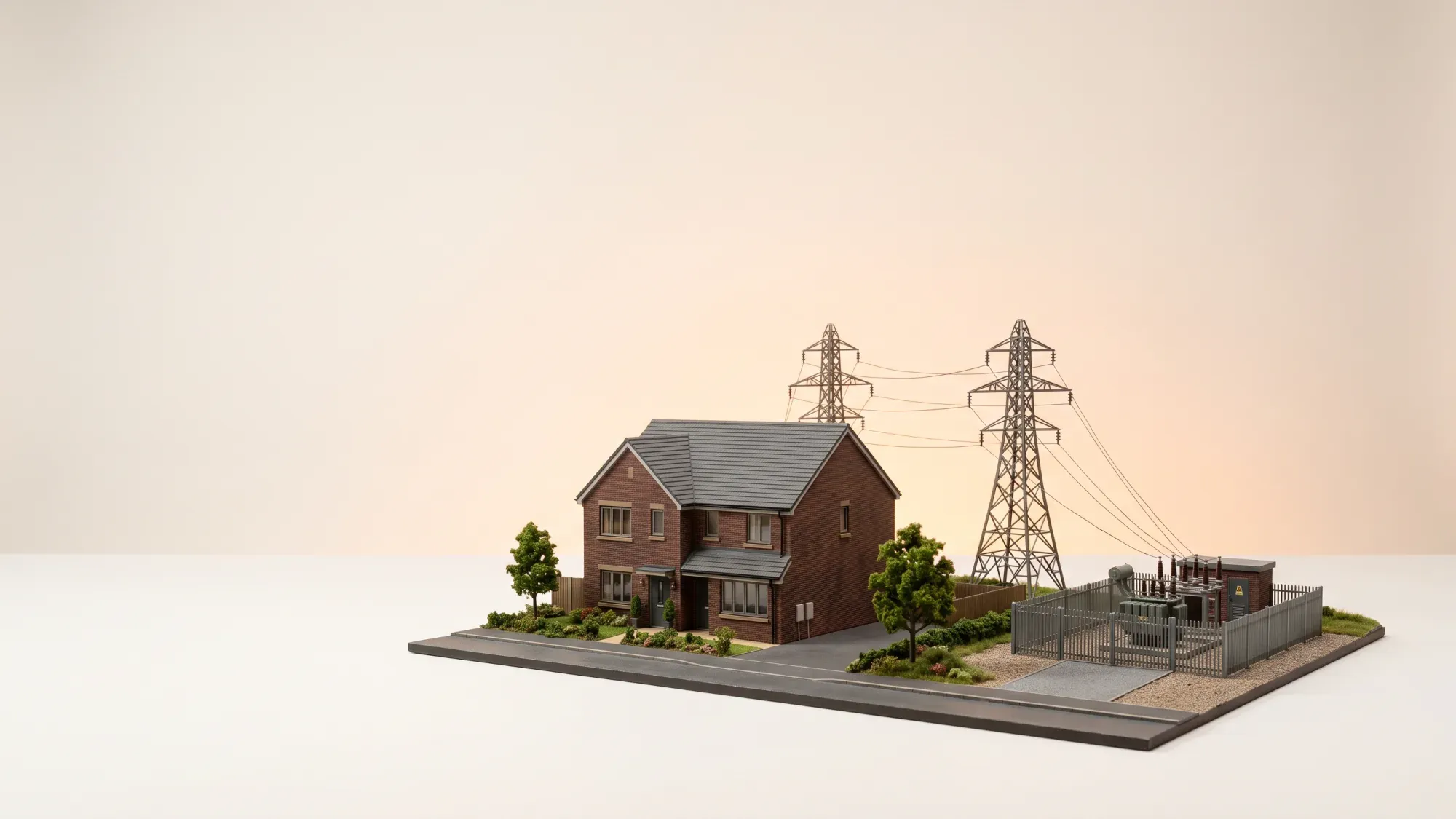
Households in England, Scotland, and Wales living within 500 metres of new or significantly upgraded onshore electricity infrastructure could receive up to £250 off their energy bills annually for up to 10 years. This new UK Government scheme aims to provide financial relief to those most affected by energy developments, with payments expected to commence in the first half of 2027.
Understanding new energy bill discounts can help you manage your household budget. Fuse Energy provides clear pricing and real-time usage data to help you stay on top of your energy costs. Click here to switch to Fuse Energy today.
Enter your address to get a quote and see how much you could save
Understanding the new electricity infrastructure discount
The Bill Discount Scheme is a UK Government initiative designed to provide financial support to households located near new or upgraded onshore electricity transmission infrastructure. This scheme acknowledges the impact of such developments on local communities by offering a direct discount on electricity bills. Eligible households could see up to £250 deducted from their energy bills each year, for a period of up to 10 years. The discount will typically be paid in two six-monthly instalments of £125 each year.
What is the 500-metre proximity rule?
Eligibility for the Bill Discount Scheme hinges on a 500-metre proximity rule. Your property must be located within 500 metres of qualifying new or significantly upgraded onshore electricity transmission infrastructure. For overhead lines, this 500-metre zone is measured from the edge of the infrastructure’s limit of deviation, as specified in the grant of planning permission. The 'eligibility zone' is defined by this 500-metre radius from the infrastructure boundary of the qualifying works.
How is the 500-metre proximity rule measured for overhead lines?
For overhead electricity lines, the 500-metre eligibility zone for the Bill Discount Scheme is measured from the edge of the infrastructure’s limit of deviation. This limit is explicitly specified in the grant of planning permission for the new or upgraded onshore electricity transmission infrastructure, ensuring a clear and defined boundary for eligibility.
Qualifying infrastructure and construction dates
The scheme applies to specific types of infrastructure and construction timelines. It covers new or significantly upgraded onshore electricity transmission infrastructure. Crucially, the qualifying construction must start on or after 10 March 2025 and before 1 January 2040. Projects completed outside this window will not be eligible. For example, the Viking Energy wind farm, which concluded construction in 2024, will not qualify for this electricity bill discount scheme1.
Eligibility criteria for households
The Bill Discount Scheme is designed for households in England, Scotland, and Wales. However, not all properties will be eligible, even if they fall within the 500-metre proximity rule.
Geographic location and property type
The scheme is available across Great Britain, specifically England, Scotland, and Wales. Certain property types are explicitly excluded from the scheme. These include care/nursing homes, purpose-built student accommodation, properties for religious communities, and vacant properties. Furthermore, households will only be able to benefit from the scheme once, regardless of whether they are located near multiple eligible projects.
Automatic vs opt-in schemes
For most eligible households, receiving the discount will be an automatic process. Your electricity supplier will apply the discount directly to your bill. This 'automatic scheme' means you will not need to actively apply for the discount. However, a minority of households may not have a standard domestic electricity supply contract. For these cases, an 'opt-in scheme' will be available, allowing them to apply and receive their benefit via bank transfer or cash vouchers worth equivalent to £250 each year.
How the discount will be applied
Understanding the mechanism of the discount and its payment timeline is essential for managing expectations.
Role of electricity suppliers
Electricity suppliers will play a central role in delivering the Bill Discount Scheme. They are responsible for applying the discount directly to the bills of most eligible households. Suppliers will also ensure that eligible customers with prepayment meters receive their scheme benefits.
When to expect payments
Energy regulator Ofgem will publish a consultation on how it will administer the discount scheme this summer, before legislation is expected to pass through Parliament later in the year. Subject to parliamentary approval, the first discounts are intended to be delivered to eligible households in the first half of 2027. Ofgem has been appointed as the scheme administrator and plans to publish a consultation this summer to detail its administrative approach, including identifying eligible households and setting up delivery mechanisms.
Broader UK energy bill support schemes
Beyond the new infrastructure discount, several other UK government schemes exist to help households manage energy costs.
Warm Home Discount scheme
The Warm Home Discount Scheme offers a one-off £150 discount on your electricity bill. For winter 2026/2027, most eligible customers will receive this discount by 31 March 2027.
Eligibility varies slightly by region:
- England and Wales: You typically qualify if you receive the Guarantee Credit element of Pension Credit or are on a qualifying benefit (Universal Credit, Housing Benefit, Income-based Jobseeker's Allowance, Income-related Employment and Support Allowance, or Income Support).
- Scotland: The scheme also applies in Scotland, with specific eligibility criteria.
Most eligible households in England and Wales receive the discount automatically. The scheme for winter 2026 to 2027 opens again in October 2026, with payment by 31 March 2027.
Other government assistance
The UK government provides a range of other support options for those struggling with energy bills:
- Winter Fuel Payment: An annual payment of between £100 and £300 to help with heating bills, typically for those over State Pension age.
- Cold weather payment: Provides £25 for each 7-day period of very cold weather between November and March, for those on certain benefits.
- Help is also available with the cost of energy-saving home improvements, such as insulation, a new boiler, or heating upgrades.
- Subsidised insulation may be available for eligible homes.
- Local councils can provide assistance for energy bills and other essentials.
- Help is available for individuals to repay energy debts directly from their benefit payments.
Preparing for future energy bill savings
Staying informed about energy policy changes and exploring long-term savings strategies can help you manage your household energy costs effectively.
Staying informed on policy changes
Energy policy is dynamic, with new schemes and regulations frequently introduced or updated. Keep an eye on official government websites and announcements from energy regulator Ofgem for the latest information on eligibility criteria, payment timelines, and any new support programmes. Fuse Energy aims to provide clear, timely information on how to reduce energy costs, helping you navigate these schemes.
Long-term energy cost reduction
While discounts offer immediate relief, long-term energy cost reduction often involves improving your home's energy efficiency. Consider measures such as upgrading insulation, installing more efficient heating systems like heat pumps, or exploring renewable energy options like solar panels. Many government schemes can help with the upfront costs of these improvements.
Managing your energy bills should be clear and easy to understand. Fuse Energy focuses on straightforward pricing, so you can see exactly what you are paying without unnecessary complexity. If you have a smart meter, you can view detailed usage data through the app or website, helping you understand how you can lower your bills. If you do not have a smart meter, Fuse Energy can upgrade your non-smart meter, completely for free. This can make it easier to track spending and make informed decisions about your energy use. Our 24/7 human support team is always on hand with fast response times of under 5 minutes whenever you need help. Click here to switch to Fuse Energy today. Find out about our mission by clicking here.
References
- Shetland News. Islanders living near new energy
Disclaimer
For the avoidance of doubt, this article is provided for informational purposes only and is not intended to constitute legal or financial advice. The author and/or Fuse Energy shall not be responsible for any losses arising out of any reliance on the information contained herein.