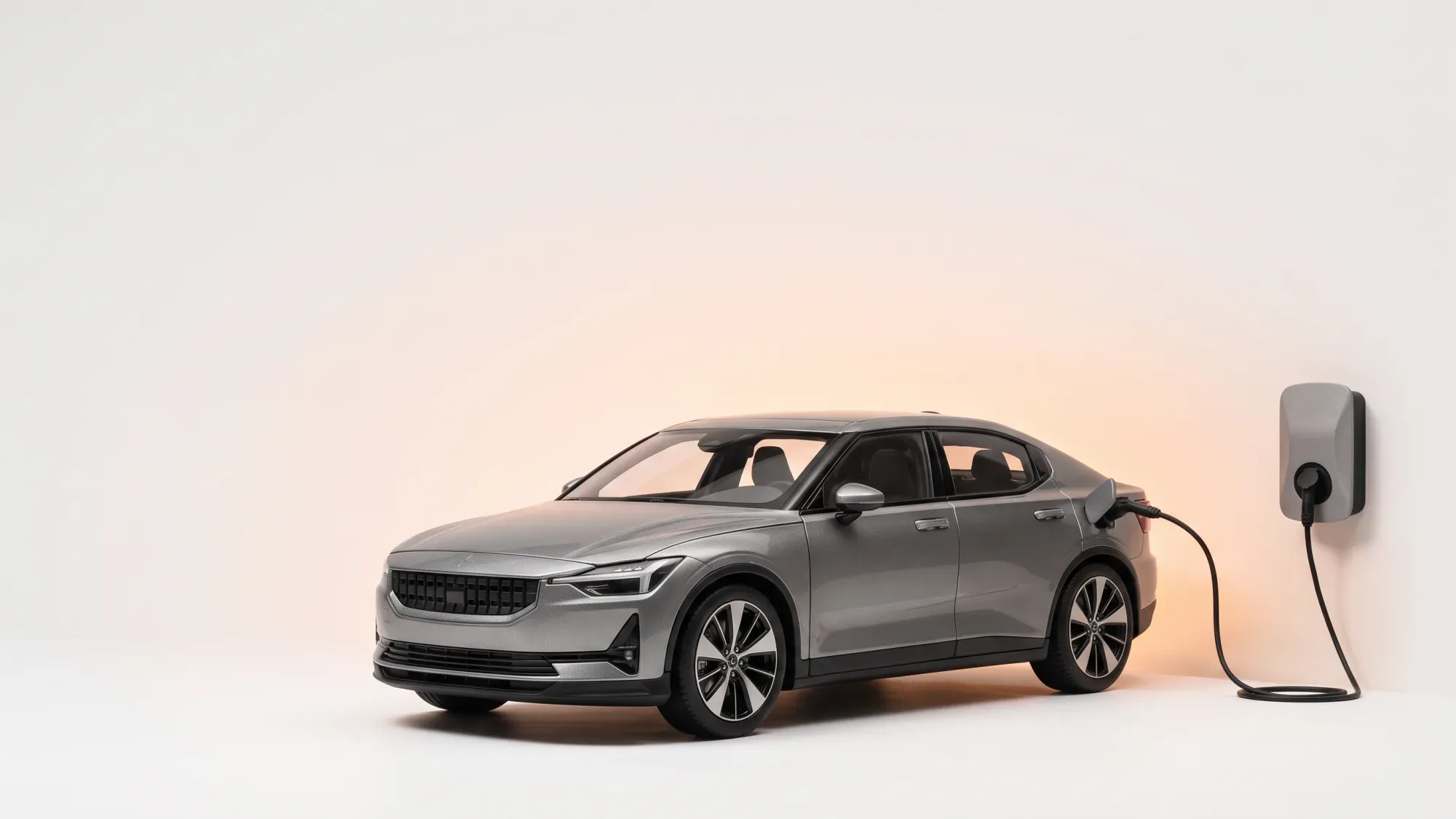
The UK electric car market experienced a significant surge in August 2026, with registrations increasing by 30% compared to the previous year1. Battery electric vehicles (BEVs) became the single largest fuel type in the market, driven by rising fuel costs and consumer demand. Amidst this growth, the government is reviewing its Zero-Emission Vehicle (ZEV) mandate, prompting industry leaders to call for policy certainty.
As electric vehicles become more popular, managing your home energy efficiently is key to optimising running costs. Fuse Energy helps you take control of your electricity usage, making EV ownership more cost-effective and convenient. Click here to switch to Fuse Energy today and power your EV smarter.
The automotive landscape in Britain is rapidly evolving, with electric vehicles at the forefront of this transformation.
August's significant registrations
New car registrations across Britain rose by 17.5% year-on-year in August 2026, reaching 93,977 units. Within this growth, battery electric vehicles (BEVs) demonstrated a remarkable performance, with registrations increasing by 30% compared to August 2025. This made BEVs the single biggest fuel type in the market last month, with 27,876 new BEVs registered.
Market share by fuel type
In August 2026, battery electric vehicles secured nearly 30% of the market share, making them the best-selling powertrain and outselling every other fuel type. Hybrid electric vehicles (HEVs) followed closely, accounting for approximately 29% of the market. In contrast, petrol cars represented about 21.5% of new registrations.
Driving forces behind EV adoption
The shift towards electric vehicles is largely propelled by escalating fuel costs, which are prompting consumers to seek more economical alternatives. Global oil shocks have steered customers towards electric vehicles, increasing their appeal.
Government policy plays a crucial role in shaping the UK's electric vehicle market, with the Zero-Emission Vehicle (ZEV) mandate being a key driver.
Understanding the ZEV mandate
The ZEV mandate, introduced in 2024, is a UK government policy that requires car manufacturers to sell a rising proportion of electric cars each year. For 2026, EVs are targeted to account for 33% of new car sales, increasing to 80% by 2030 and 100% by 2035.
The ongoing policy review
The UK government is reviewing its Zero-Emission vehicle strategy. This involves launching a review of existing targets that gradually phase out new petrol and diesel cars.
Industry calls for certainty
Industry leaders are vocal about the need for policy certainty during this review period. Ben Nelmes, CEO of New AutoMotive, noted that "As policymakers and lobbyists wrangle over the fine print of the ZEV mandate, the automotive industry is busy delivering electric cars and vans to consumers who increasingly want to buy them." James Court, public policy director at Octopus Electric Vehicles, cautioned against slowing progress, stating, "The worst thing we could do now is slam the brakes on a success story that is gathering pace." He emphasised that "What drivers, manufacturers and investors need is certainty to keep the UK firmly in the EV fast lane."
The UK electric vehicle market is becoming increasingly competitive, with established brands and new entrants vying for market share.
Leading battery electric vehicle brands
Tesla continues to hold a significant position in the UK battery EV market, leading with an 8.8% share year-to-date. South Korea's Kia follows, securing 6.7% of the market, and retained the top spot for monthly battery-electric vehicle registrations for the second consecutive month. China's BYD has seen substantial growth, expanding its UK electric vehicle share to 6.4%.
While the initial purchase of an electric car is a significant decision, managing ongoing running costs is crucial for maximising its value.
The impact of charging on running costs
The cost of charging an electric vehicle is a primary factor in its overall running costs. While EVs generally offer lower per-mile fuel costs than petrol cars, these savings depend heavily on how and when you charge. For context, the average UK home uses around 2,500 kWh of electricity per year. An EV can add significantly to this consumption, making efficient charging essential.
Leveraging smart energy for your EV
Optimising EV charging costs is a strategic advantage for owners. Smart energy solutions, often managed through dedicated apps, allow you to schedule charging during off-peak hours when electricity is cheaper. This approach aligns with Fuse's vision of a future with "power to play with," where abundant, clean energy makes EV ownership more practical and cost-effective. By taking control of your energy usage, you can turn EV charging into a strategic advantage, reducing your running costs and making the most of your vehicle.
Future-proofing your electric car investment
As EV technology evolves and the market matures, smart energy management becomes increasingly vital for future-proofing your investment. By optimising charging for efficiency and cost savings, you ensure your electric car remains an economical choice for years to come. The ability to manage your EV's energy consumption through an all-in-one app provides real-time insights and control, integrating your vehicle into a smarter home energy system and enabling you to use more energy without concern.
The trajectory for electric cars in the UK points towards continued growth and evolving market dynamics.
Continued growth and consumer shift
The consistent rise in EV registrations, particularly the strong performance in August 2026, signals a sustained consumer shift towards electric vehicles. With increasing model availability and ongoing concerns about fuel prices, this trend is expected to continue, further solidifying EVs' position in the UK automotive market.
Challenges and opportunities
While the growth is clear, challenges remain, particularly around charging infrastructure development and policy stability. However, these also present opportunities for innovation and investment. For consumers, the opportunity lies in embracing smart energy management to fully realise the economic and environmental benefits of electric vehicle ownership.
Managing your home energy bills should be clear and easy to understand. Fuse Energy focuses on straightforward pricing, so you can see exactly what you're paying without unnecessary complexity. If you have a smart meter, you can view detailed usage data through the app or website, helping you understand how you can lower your bills. Our 24/7 human support team is always on hand with fast response times whenever you need help. Click here to switch to Fuse Energy today. Find out about our mission by clicking here.