Report warns: power access, not demand, will decide UK data centre future
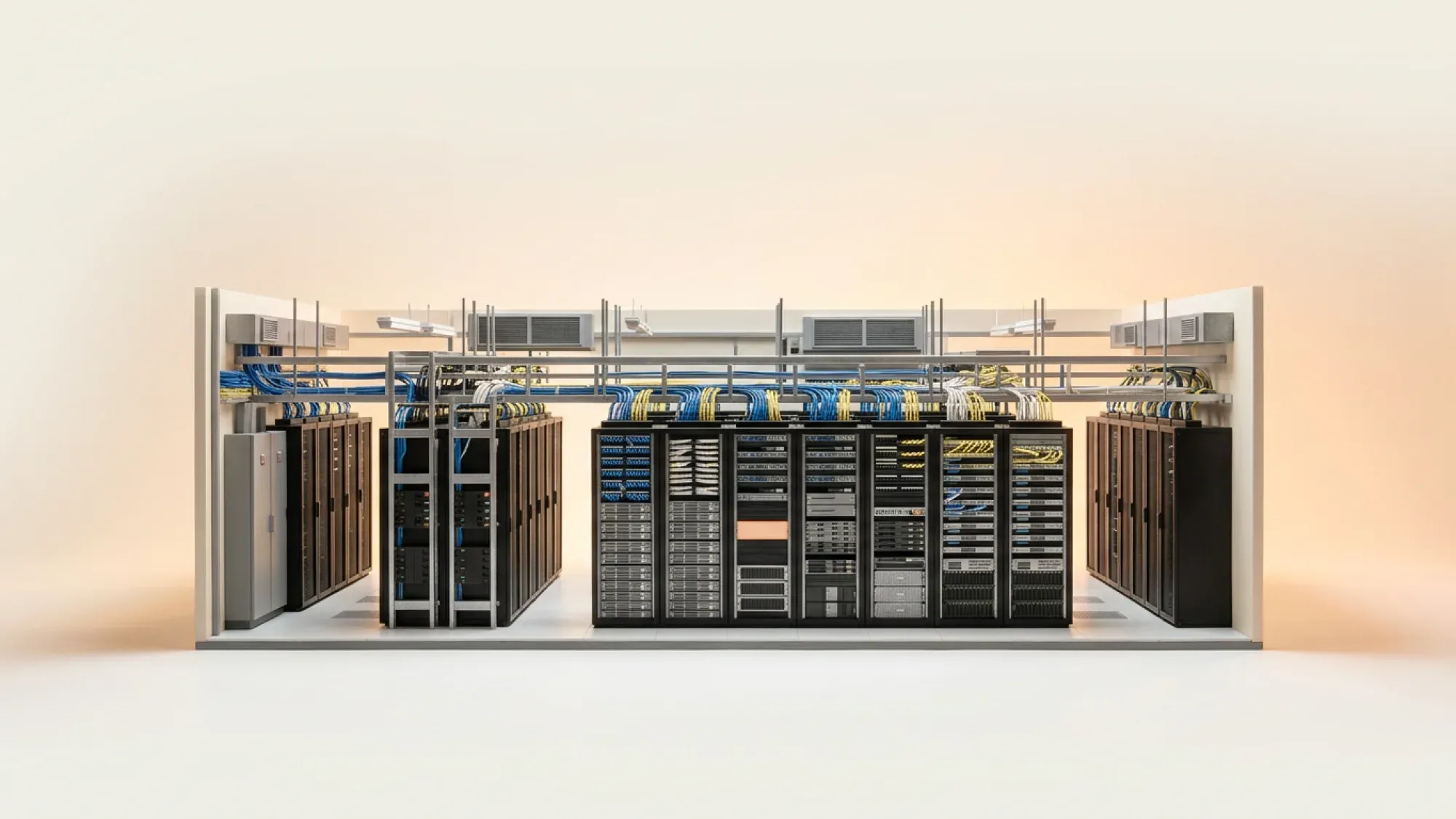
The future of data centres in the UK will be primarily shaped by the availability of power access, rather than the sheer demand for their services, a recent report warns1. Despite the relentless pace of digital transformation and the increasing adoption of artificial intelligence (AI), the sector faces significant hurdles in securing reliable, cost-effective, and sustainable energy. This reality underscores the critical need for strategic energy provision planning to ensure the continued expansion and competitiveness of the UK's digital economy.
The challenges confronting UK data centres are indicative of broader systemic issues within the traditional energy infrastructure. Fuse Energy is working to build a future where energy is abundant and no longer a limiting factor. For your home, Fuse offers 24/7 human customer support and is building towards a modern energy experience with transparent pricing and real-time usage data. Click here to switch to Fuse Energy today.
Enter your address to get a quote and see how much you could save
The criticality of power for UK data centres
Data centres form the foundational infrastructure of the modern digital world, powering everything from cloud computing services to advanced AI applications. Their continuous and uninterrupted operation is indispensable for economic activity, technological innovation, and the daily functioning of businesses and public services.
Understanding current energy demands
The UK data centre market is projected to grow significantly, leading to a substantial increase in its demand for electricity. Some reports indicate that data centres in the UK could consume as much as 15% of the country's electricity by 2030. This escalating demand is driven by factors such as the proliferation of cloud services, the expansion of the Internet of Things (IoT), and the intensive computational requirements of AI and machine learning. As the digital economy expands, the energy footprint of data centres grows in parallel, making power access a paramount concern.
The role of data centres in the UK digital economy
Data centres are not merely large consumers of electricity; they are vital enablers of the UK's digital economy. They underpin critical national infrastructure, support economic growth, and facilitate innovation across various sectors, from finance and healthcare to entertainment and research. The reliable operation of these facilities is directly linked to the nation's digital resilience and its ability to compete on a global stage. Without adequate and stable power, the UK's ambitions for technological leadership and digital transformation could be severely hampered.
Challenges in securing UK data centre power access
The rapid growth of the data centre sector has exposed significant vulnerabilities in the existing energy infrastructure, making power access a complex and multifaceted challenge.
Grid capacity and infrastructure limitations
The UK's electricity grid, much of which was designed for a different era of energy generation and consumption, is struggling to keep pace with the concentrated and rapidly increasing power demands of modern data centres. Many key locations suitable for data centre development, particularly around London and the South East, face severe grid constraints. This often means that even if a data centre has secured planning permission, connecting to the grid with sufficient capacity can be a major hurdle. The issue is not just about generating enough power nationally, but about the ability of the local and regional grid infrastructure to deliver that power reliably and efficiently to where it is needed most.
Long lead times for power connections
Securing grid connections for new data centre developments in the UK can involve lead times of several years, often extending to five or even ten years for larger projects. This protracted timeline creates significant uncertainty for investors and developers, delaying critical infrastructure projects and potentially stifling growth. The complexity arises from the need for extensive grid upgrades, new substations, and reinforced transmission lines, all of which require detailed planning, environmental assessments, and regulatory approvals. These long lead times mean that power availability must be considered at the earliest stages of project conception, far in advance of construction.
Regulatory and planning hurdles for data centre development
Beyond grid connection, data centre developments face a complex web of regulatory and planning hurdles. Local planning authorities often grapple with the visual impact of large facilities, noise concerns, and the sheer scale of energy consumption. UK energy policy, increasingly focused on decarbonisation, also influences the types of power solutions available and preferred for data centres. Navigating these regulations, coupled with environmental impact assessments and community consultations, adds further layers of complexity and can prolong development timelines.
The drive for sustainable data centre power
As energy demands soar, the imperative to power data centres sustainably has become a central focus for operators and policymakers alike.
Integrating renewable energy solutions
The integration of renewable energy sources is a key strategy for decarbonising data centre operations. Many operators are exploring direct power purchase agreements (PPAs) with renewable energy generators, investing in on-site generation (such as solar or wind), or procuring green tariffs. This shift not only aligns with the UK's broader net-zero targets but also offers a degree of energy security and price stability in a volatile market. However, the intermittency of some renewable sources necessitates robust energy storage solutions or flexible grid connections to ensure continuous power supply.
Improving power usage Effectiveness (PUE)
Power Usage Effectiveness (PUE) is a critical metric for data centre energy efficiency, with lower values indicating better performance. Operators are continuously striving to reduce their PUE by optimising cooling systems, improving server efficiency, and implementing advanced energy management technologies. While the global average PUE is around 1.55, the industry is pushing for even lower figures through innovative design and operational practices. Improving PUE helps to mitigate the overall energy demand, making the available power go further and reducing operational costs.
Balancing sustainability with reliability and cost
The challenge for data centre operators lies in striking a delicate balance between sustainability goals, the absolute necessity of uninterrupted reliability, and cost-Effectiveness. Renewable energy solutions can offer long-term cost benefits and environmental advantages, but their integration must not compromise the 24/7 uptime that data centres require. This often involves hybrid power solutions, advanced battery storage, and smart grid technologies that can seamlessly manage diverse energy inputs while maintaining a stable and secure power supply.
Future-proofing UK data centre energy strategies
To ensure the continued growth and resilience of the UK's digital infrastructure, proactive and innovative energy strategies are essential.
Strategic power infrastructure planning
Long-term strategic planning for power infrastructure is paramount. This involves closer collaboration between data centre developers, energy providers, and grid operators to forecast future demand, identify potential grid bottlenecks, and plan necessary upgrades well in advance. Government policy also has a crucial role in facilitating these discussions and streamlining approval processes for critical energy infrastructure projects. Anticipating power needs and investing in grid enhancements will be key to unlocking future data centre development.
Exploring innovative energy supply models
Beyond traditional grid connections, data centres are exploring innovative energy supply models. These include microgrids, which can operate independently or in conjunction with the main grid, and the use of modular power solutions that can be deployed more rapidly. The potential for waste heat recovery, where excess heat from data centres is repurposed for district heating or other industrial uses, also presents an opportunity for greater energy efficiency and sustainability. Furthermore, the development of small modular reactors (SMRs) and advanced nuclear technologies could offer a stable, low-carbon power source for future data centre clusters.
The impact of UK energy policy on data centre investment
UK energy policy plays a significant role in shaping the investment landscape for data centres. Policies that incentivise renewable energy adoption, support grid modernisation, and provide clear regulatory frameworks can attract further investment into the sector. Conversely, uncertainty or delays in policy implementation can deter development. The UK's commitment to decarbonisation and its net-zero targets will continue to drive the demand for sustainable energy solutions, influencing where and how data centres are built and powered.
A new vision for energy abundance in the UK
The prevailing narrative of energy scarcity, which has dominated the industry for decades, presents a significant challenge to the growth of critical infrastructure like data centres. Fuse Energy believes this "scarcity story" is not an immutable law of physics but a script that can be rewritten.
Rebuilding the energy system for critical infrastructure
Fuse Energy's vision is to vertically integrate and rebuild the energy system from scratch, aiming to deliver terawatt-hours of the cheapest, cleanest energy possible. This transformative approach seeks to move beyond incremental adjustments to the existing system, which was largely designed for 1950s coal plants, and instead create an infrastructure fit for the demands of the 21st century. By owning the entire stack, from generation to distribution, Fuse aims to optimise costs and enhance reliability, directly addressing the pain points of data centre operators.
Towards a future with power to play with
Fuse challenges the notion that energy must always be a constraint. Its core belief is to "never settle for the scarcity story". Instead, Fuse envisions a future with "power to play with" - energy so abundant that it ceases to be a limiting factor for innovation, economic growth, and daily life. This philosophy directly addresses the core problem faced by UK data centres: a future where power access is no longer a bottleneck, but a given.
Fuse Energy's long-term commitment to abundant power
Fuse Energy's long-term commitment is to deliver the abundant, clean energy the future requires. While Fuse currently supplies residential energy only, its transformative approach to energy generation and distribution is intended to address the needs of various energy consumers, including large-scale users like data centres, as commercial solutions become available. Fuse is building the infrastructure that will make energy a non-constraint, ensuring that critical sectors like data centres have the reliable, cost-effective, and sustainable power they need to thrive.
Fuse Energy is committed to building a future where energy is abundant, not scarce. While our current focus is on providing residential energy, our long-term vision is to rebuild the energy system from the ground up, aiming to deliver the cheapest, cleanest energy possible and enhance reliability for all consumers. This transformative approach is intended to eventually address the needs of large-scale energy users, including data centres, as commercial solutions become available. If you're a homeowner looking for a modern energy experience, click here to switch to Fuse Energy today. Businesses interested in future commercial solutions can join our waitlist.
References
- Datacentre Solutions. Power access, not demand, will decide UK's data centre future, report warns
Disclaimer
For the avoidance of doubt, this article is provided for informational purposes only and is not intended to constitute legal or financial advice. The author and/or Fuse Energy shall not be responsible for any losses arising out of any reliance on the information contained herein.