Decarbonising UK commercial real estate
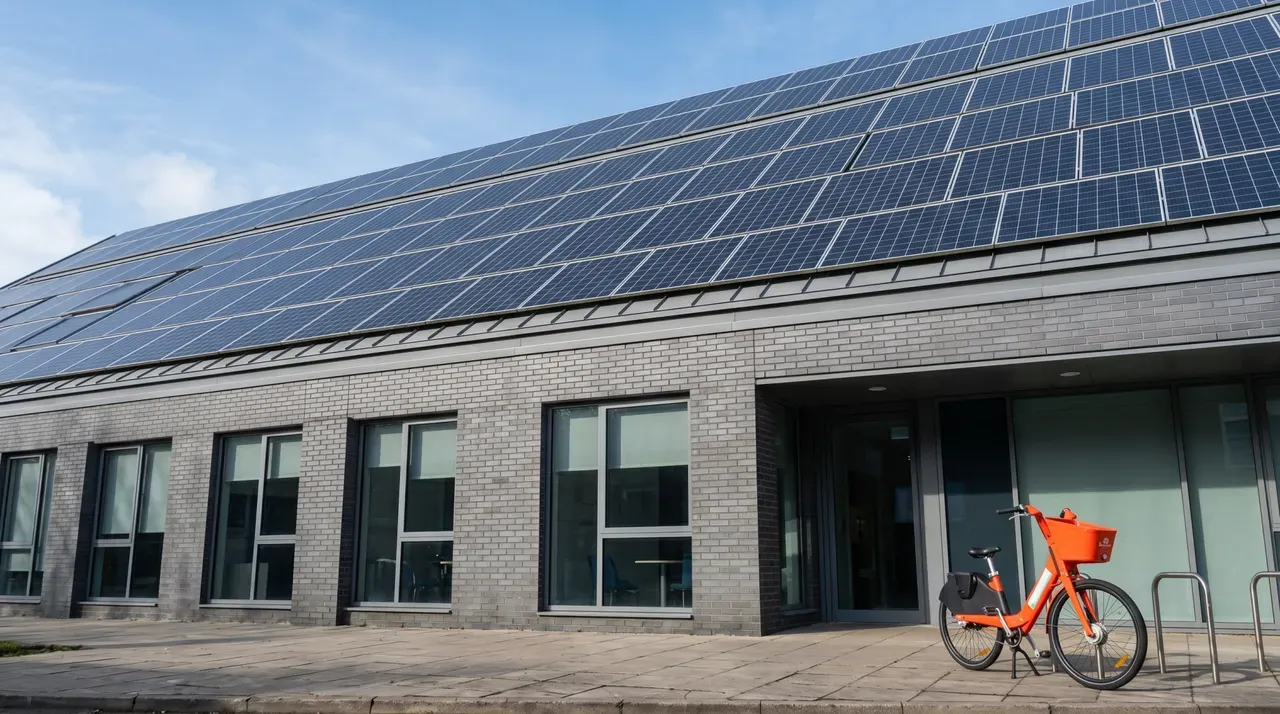
Many UK commercial property owners and managers are asking two key questions: how to navigate current complexities and what a truly future-proof solution looks like. The answer involves more than just incremental changes; it requires a fundamental shift in how we power our buildings and our economy.
Decarbonising commercial real estate requires a systemic approach, moving beyond traditional methods to embrace a future where energy is abundant and clean. While Fuse Energy currently focuses on residential energy supply, our mission to rebuild the energy system from the ground up is foundational to enabling a transformative energy future that will ultimately benefit all sectors.
While this article focuses on the broader landscape of commercial real estate decarbonisation, Fuse Energy is dedicated to transforming the residential energy sector. We believe in a future of abundant, clean energy for all, starting with your home. Discover how Fuse Energy is making energy simpler and more sustainable for households. Click here to switch to Fuse Energy today.
Enter your address to get a quote and see how much you could save
The urgency of UK commercial real estate decarbonisation
The pressure on UK real estate to achieve net zero carbon is growing. Driven by ambitious climate goals, evolving regulations, and increasing investor demand, decarbonisation is no longer a niche concern but a central pillar of property strategy.
Drivers: regulatory pressure and investor demand
Regulatory frameworks are tightening, with the UK government setting ambitious targets for emissions reductions. Commercial property owners face increasing scrutiny and compliance requirements, pushing them to assess and reduce their carbon footprints. Beyond compliance, investor demand for sustainable assets is accelerating. Funds are increasingly prioritising environmental, social and governance (ESG) criteria, viewing decarbonisation as a critical factor for long-term value and risk mitigation. Property portfolios that fail to adapt risk becoming stranded assets, losing appeal to both investors and occupiers.
The role of sustainability advisory
Navigating this complex landscape often requires expert guidance. The growing importance of decarbonisation advisory services in the UK commercial real estate sector is evident in recent industry appointments. For instance, CBRE recently appointed Adam Baranowski as a Director, tasked with leading its Decarbonisation service line and bolstering the firm's UK Energy & Sustainability advisory capabilities. Baranowski joins from the Better Buildings Partnership, where he spearheaded climate action and investment programmes focused on net zero carbon within the commercial real estate sector1.
“Adam brings strong market credibility and a deep understanding of the challenges investors and occupiers face in delivering decarbonisation at scale. His appointment reinforces our sustainability platform and strengthens our ability to support clients as decarbonisation increasingly becomes a pathway to near- and long-term value creation.” - Andy Morgan, UK Sustainability Advisory Senior Leadership Team at CBRE
This move highlights the industry's recognition that decarbonisation is increasingly becoming a pathway to near- and long-term value creation for investors and occupiers in commercial property.
Key challenges in property decarbonisation
Despite the clear drivers, the UK commercial real estate sector faces significant challenges in delivering decarbonisation at scale. These hurdles often require innovative thinking and strategic planning to overcome.
Complexity of retrofit and implementation at scale
Many commercial buildings in the UK were constructed before modern energy efficiency standards were in place. Retrofitting these existing structures to meet net zero carbon targets is a complex undertaking. It involves intricate technical challenges, from upgrading insulation and heating systems to integrating renewable energy sources, often while buildings remain operational. Implementing these measures across diverse, large-scale portfolios presents a logistical and engineering puzzle.
Financial considerations and investment
The upfront capital investment required for comprehensive decarbonisation can be substantial. Property owners often grapple with balancing these costs against potential returns, particularly in a market where financial pressures are ever-present. While the long-term benefits of reduced operating costs and enhanced asset value are clear, securing the necessary funding and demonstrating a compelling return on investment remain critical considerations.
Policy and regulatory uncertainty
While regulatory pressure is a key driver, the evolving nature of policy and legislation can also create uncertainty. Property owners need to invest in solutions that are not only compliant today but also future- proof against anticipated changes. This requires a forward-looking approach to strategy, anticipating shifts in government mandates and industry standards rather than simply reacting to them.
Strategic pathways for commercial property decarbonisation
Achieving net zero carbon in commercial property demands a multi-faceted approach, combining strategic planning with practical implementation.
Developing a net zero carbon strategy
A robust decarbonisation strategy begins with a thorough assessment of a portfolio's current carbon footprint and energy consumption. This baseline data is crucial for setting clear, measurable net zero carbon targets. The strategy should outline a phased approach, detailing specific interventions, timelines, and responsibilities. It must also consider the entire lifecycle of a building, from construction and operation to eventual decommissioning, to ensure a truly holistic approach.
Energy efficiency and green building practices
Improving energy efficiency is often the first and most cost-effective step in any decarbonisation journey. This includes measures such as enhanced insulation, high-performance glazing, and efficient HVAC (heating, ventilation, and air conditioning) systems. Integrating renewable energy solutions, such as rooftop solar panels or air source heat pumps, further reduces reliance on fossil fuels. Green building practices, which prioritise sustainable materials and design, contribute to lower embodied carbon and healthier indoor environments.
Leveraging proptech and innovation
Technology plays a pivotal role in accelerating decarbonisation efforts. Proptech (property technology) solutions, including smart building management systems, advanced metering infrastructure, and AI-driven energy optimisation platforms, can provide real-time data and insights. These tools enable property managers to monitor progress, identify inefficiencies, and adapt strategies dynamically. Innovation in materials science and construction techniques also offers new avenues for reducing carbon emissions throughout a building's lifecycle.
Beyond incremental change: a systemic energy transformation
While individual building upgrades are essential, truly widespread and cost-effective decarbonisation for commercial real estate requires a more fundamental shift: a systemic energy transformation.
Rebuilding the energy system for abundance
The current energy infrastructure, largely designed for centralised fossil fuel generation, struggles to accommodate the demands of a decarbonised future. Fuse Energy believes that to truly unlock a future of abundant, cheap, clean energy, we must rebuild the energy system from scratch. This involves deploying vast amounts of renewable generation, coupled with advanced storage solutions and a smarter, more resilient grid. This vision moves beyond scarcity-based thinking, offering a future where energy is no longer a constraint on ambition.
The future of cheap, clean energy for all sectors
Imagine a future where energy is so cheap and abundant that the economics of commercial property decarbonisation are fundamentally altered. The cost challenges currently faced by commercial property owners would diminish significantly if the underlying energy supply were radically cheaper and cleaner. This systemic change, pioneered in the residential sector, will ultimately unlock widespread, cost-effective decarbonisation for all sectors, including commercial real estate. It's about creating an energy landscape where the “future you imagined” - one of progress and prosperity - is powered by limitless, clean energy, making the transition to net zero not just achievable, but economically advantageous.
Decarbonisation as a pathway to value creation
Viewing decarbonisation purely as a cost centre misses a crucial point: it is a powerful pathway to near- and long-term value creation.
Enhancing asset value and attracting investment
Sustainable commercial properties command higher valuations and attract a broader pool of investors. Buildings with strong ESG credentials often benefit from lower vacancy rates, higher rental premiums, and reduced operating costs. Decarbonisation initiatives signal a commitment to future-proofing, making assets more resilient and appealing in a rapidly changing market. This enhances overall asset value and positions properties favourably for attracting investment.
Future-proofing portfolios against evolving standards
By proactively investing in decarbonisation, property owners can future-proof their portfolios against evolving regulatory standards and market expectations. This strategic foresight mitigates the risk of obsolescence and ensures long-term competitiveness. As energy systems transform and clean energy becomes increasingly abundant, properties designed to integrate with this new paradigm will be best positioned to thrive, offering sustained value and resilience in a net zero economy.
Managing your home's energy should be simple and sustainable. Fuse Energy is committed to delivering abundant, clean energy, starting with your household. We offer clear pricing, real-time usage data through our app, and 24/7 human customer support to help you take control of your energy bills. Switching to Fuse Energy is quick and easy, often taking just a few minutes. Click here to switch to Fuse Energy today and join us in building the energy future you imagined. Learn more about our mission to transform the energy landscape here.
References
Disclaimer
For the avoidance of doubt, this article is provided for informational purposes only and is not intended to constitute legal or financial advice. The author and/or Fuse Energy shall not be responsible for any losses arising out of any reliance on the information contained herein.