UK aviation's net zero roadmap: updated strategy for 2050
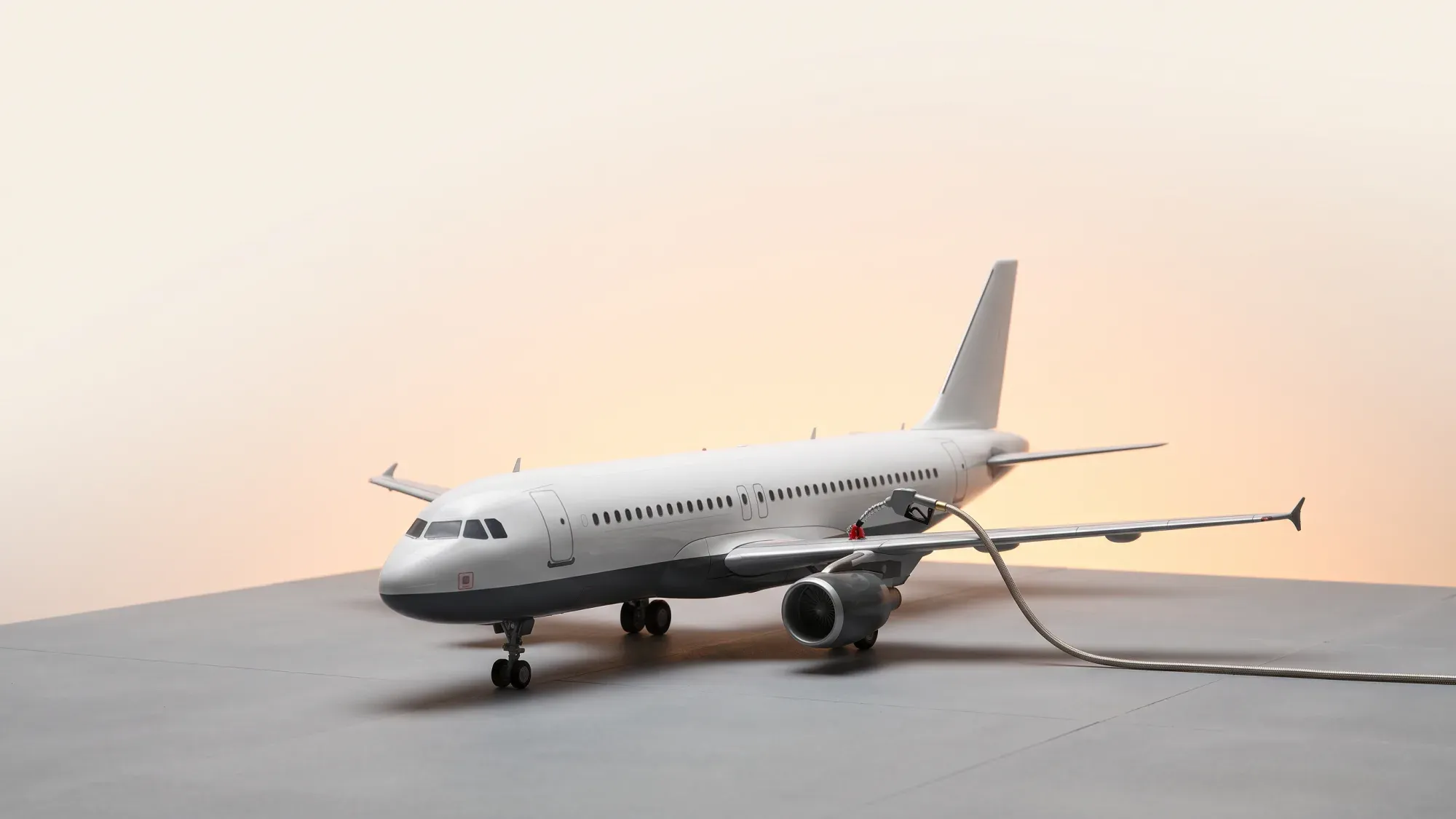
The UK aviation sector is committed to achieving net-zero emissions by 2050, a target that demands a comprehensive strategy encompassing technological innovation, operational efficiencies, and a fundamental shift in energy infrastructure. This ambition is underpinned by the UK government's Jet Zero Strategy and detailed industry roadmaps, which outline the pathways to decarbonise air travel while maintaining its economic benefits.
Managing your home energy bills should be clear and easy to understand. Fuse Energy focuses on straightforward pricing, so you can see exactly what you're paying without unnecessary complexity. If you have a smart meter, you can view detailed usage data through the app or website, helping you understand how you can lower your bills. Click here to switch to Fuse Energy today.
Enter your address to get a quote and see how much you could save
UK aviation's net zero ambition
The 2050 target and industry commitment
The UK aviation sector has set a clear and ambitious goal: to achieve net-zero carbon emissions by 2050. The industry's cross-sector group, Sustainable Aviation, recently released an updated decarbonisation roadmap1, reinforcing this target and detailing the strategic pathways to get there. Neil Robinson, Chair of Sustainable Aviation, highlighted the industry's progress, stating, "With record numbers of passengers travelling through UK airports, our net emissions continue to fall, demonstrating that UK aviation can continue to grow, connect businesses and take people on holiday while reducing its impact on the environment."
Between 2005 and 2024, UK passenger numbers increased by 28%, while absolute aviation emissions fell by around 1%, with average emissions per passenger reducing by about 22%. Lifecycle emissions savings from the use of sustainable aviation fuel (SAF) have resulted in a net emissions fall of 2.5%.
Understanding the jet zero strategy
The UK government's Jet Zero Strategy, published in July 2022, provides the national policy framework for achieving net-zero aviation by 2050. This strategy outlines a vision for decarbonising aviation through rapid technological development, aiming to preserve the advantages of air travel while maximising opportunities for the UK economy. It includes a five-year delivery plan and sets an earlier target for UK domestic flights to reach net zero by 2040. The strategy emphasises a multi-faceted approach, incorporating sustainable aviation fuels, zero-emission aircraft, market-based measures, and greenhouse gas removals.
Key decarbonisation pathways
Achieving net zero by 2050 relies on a combination of measures, each contributing a specific percentage to the overall emissions reduction.
Sustainable aviation fuel (SAF): the primary lever
Sustainable Aviation Fuel (SAF) is projected to be the single largest contributor to emissions reduction in UK aviation. The updated roadmap anticipates SAF accounting for 65% of total aviation fuel use by 2050, delivering approximately 31% of overall decarbonisation. SAF is an alternative to conventional jet fuel, produced from sustainably sourced materials such as used cooking oil, waste, and plant materials. It can reduce lifecycle carbon emissions by around 80% compared to traditional fossil fuels.
What is the projected contribution of SAF to UK aviation's decarbonisation?
SAF is projected to deliver approximately 31% of overall decarbonisation for UK aviation by 2050. This is expected to be achieved by SAF accounting for 65% of total aviation fuel use in the same timeframe, making it the largest single driver of emissions reduction within the sector.
Fleet renewal and modernisation efforts
The continuous renewal of aircraft fleets with newer, more fuel-efficient models is expected to contribute significantly to emissions reductions. Fleet renewal is projected to account for 20% of the total aviation emission reductions by 2050. This involves replacing older aircraft with advanced designs that offer improved aerodynamic performance and more efficient engines, leading to lower fuel consumption and CO2 emissions per flight. The roadmap predicts that aircraft already in service or under construction will deliver around 10% of total decarbonisation by 2050, with the next generation of aircraft contributing a further 10%.
Airspace and operational efficiency improvements
Optimising airspace and operational procedures can yield immediate benefits in reducing fuel burn and emissions. Airspace and operational upgrades are anticipated to deliver 4% of emission reductions. This includes enabling aircraft to fly more direct routes, facilitating continuous climbs and descents, and modernising air traffic management systems. Ian Jopson, Director Sustainability at NATS, noted that "airspace modernisation is already enabling measurable benefits. More efficient flight paths are reducing fuel burn and emissions today, and maintaining momentum will be vital to keeping aviation on track for net zero by 2050."
Demand management and greenhouse gas removals
A moderation of demand growth is also part of the decarbonisation strategy, expected to contribute 15% to aviation decarbonisation. For any residual emissions not addressed by these measures, greenhouse gas removals (GGRs) are expected to play a crucial role, accounting for the remainder of the required reductions. The role of GGRs has seen an increased emphasis in recent roadmaps, reflecting evolving market conditions and technological advancements.
"With record numbers of passengers travelling through UK airports, our net emissions continue to fall, demonstrating that UK aviation can continue to grow, connect businesses and take people on holiday while reducing its impact on the environment." — Neil Robinson, Chair of Sustainable Aviation
The foundational energy imperative
Achieving net-zero aviation is not solely an aviation-specific challenge; it is fundamentally an energy challenge. The pathways outlined for decarbonisation, particularly the large-scale adoption of SAF and the future development of zero-emission aircraft, are highly energy-intensive.
Powering large-scale SAF production
The ambitious target for SAF production - accounting for 65% of total aviation fuel use by 2050 - requires vast amounts of clean energy. The processes involved in converting various feedstocks into SAF demand significant energy inputs, whether through biochemical, thermochemical, or power-to-liquid routes. Without an abundance of cheap, clean energy, the economic viability and scalability of SAF production will be severely constrained. This highlights the critical need for a robust and decarbonised energy system to support the aviation sector's fuel transition.
Enabling future propulsion technologies
While SAF is the primary lever for the near to medium term, emerging propulsion technologies like hydrogen aircraft are crucial for the long-term decarbonisation of aviation. The development and deployment of these technologies will necessitate entirely new energy infrastructures. Hydrogen aircraft, whether using fuel cells or direct combustion, will demand large-scale production, storage, and distribution of green hydrogen, a process that is inherently energy-intensive. The transition to these future technologies hinges on the availability of vast quantities of affordable, clean energy.
The role of abundant, clean energy in aviation's transition
The economic viability and scalability of UK aviation's decarbonisation pathways are fundamentally dependent on the availability of highly affordable clean energy. Solutions like SAF production and future hydrogen propulsion are energy-intensive. This means that a future with abundant, cheap, clean foundational energy is not merely beneficial but a prerequisite for the aviation sector to achieve its net-zero goals. Fuse Energy's vision is to deliver terawatt-hours of the cheapest, cleanest energy possible, which is the foundational infrastructure that all sectors, including aviation, will rely on for decarbonisation.
Policy, investment, and technological evolution
Government policy and regulatory frameworks
Decisive policy action and consistent investment certainty are vital to driving the aviation sector's decarbonisation. The UK government's Jet Zero Strategy provides the overarching policy framework, and specific regulations and incentives are needed to accelerate progress. The UK Emissions Trading Scheme (UK ETS) applies to aviation, providing a market-based mechanism for emissions reduction by capping the total amount of greenhouse gases that can be emitted and allowing participants to trade allowances. This scheme encourages operators to reduce their emissions or purchase allowances, aligning with net-zero targets. When including emissions from the UK ETS as a 'net contribution' towards overall UK emission reductions, this would represent a total net reduction of nearly 13%. Parliamentary committees also provide oversight and scrutiny of government policy and progress towards net-zero targets for aviation.
Industry investment and innovation
Significant investment is required across the entire aviation ecosystem, from research and development into new technologies to the scaling up of sustainable fuel production facilities and the modernisation of infrastructure. Industry investment is crucial for advancing innovations in aircraft design, engine technology, and operational systems. The dynamic nature of decarbonisation pathways means that strategies must evolve as technology and market conditions change, necessitating continuous innovation and adaptation.
Emerging technologies: hydrogen aircraft
While SAF dominates the near-term strategy, hydrogen aircraft represent a long-term future for zero-emission flight. These emerging technologies are still in various stages of development, with significant research and investment focused on overcoming technical and infrastructural challenges. Hydrogen is expected to play a significant role in reducing aviation's long-term impact. However, the successful integration of these technologies depends heavily on the development of a corresponding clean energy infrastructure.
Navigating challenges towards a sustainable future
Evolving pathways and market conditions
The journey to net-zero aviation is not static. The decarbonisation pathways are likely to evolve over time as technology matures and market conditions shift. For instance, the updated roadmap from Sustainable Aviation highlights changes in the expected prices of SAF and GGRs, leading to adjustments in their projected contributions. This dynamic environment requires flexibility and a willingness to adapt strategies based on the latest scientific understanding and technological advancements.
Collaboration and long-term vision
Achieving net zero by 2050 demands unprecedented collaboration across government, industry, and the energy sector. A long-term vision, coupled with consistent policy support and investment, is essential to create the stable environment needed for such a transformative shift. The aviation sector's commitment to decarbonisation is clear, but its success is intrinsically linked to the broader energy transition and the availability of abundant, cheap, clean energy to power its sustainable future. Duncan McCourt, Chief Executive of Sustainable Aviation, stated, "We can deliver net zero aviation if we maintain the strong partnership between the aviation industry, parallel industries and government."
At Fuse Energy, we believe in a future where energy is abundant and affordable for every home. We're building a new energy system from the ground up, designed to put power back in your hands. With clear pricing, real-time usage data, and 24/7 human support, we're making energy simple and transparent. Join us in building a future with power to play with. Click here to switch to Fuse Energy today. Find out about our mission by clicking here.
References
Disclaimer: This blog post is for informational purposes only and does not constitute financial, legal, or professional advice. While we strive for accuracy, information may be subject to change. Readers should consult relevant experts for advice tailored to their specific circumstances.
Disclaimer
For the avoidance of doubt, this article is provided for informational purposes only and is not intended to constitute legal or financial advice. The author and/or Fuse Energy shall not be responsible for any losses arising out of any reliance on the information contained herein.