UK AI data centres: water use sparks priority debate
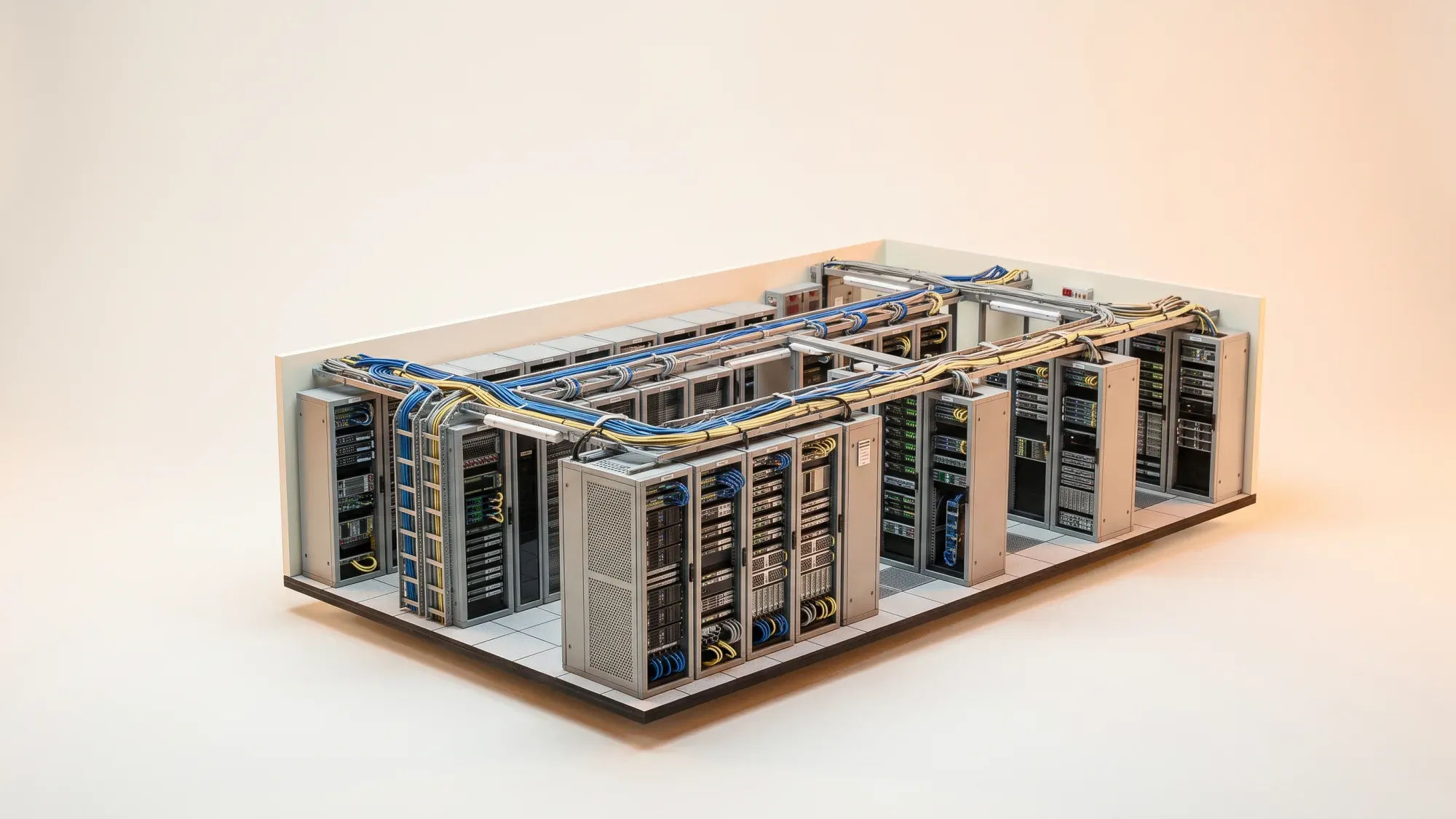
The rapid expansion of Artificial Intelligence (AI) in the UK is set to transform industries, but it also brings a significant, often overlooked, challenge: the substantial water consumption of AI data centres. These facilities are crucial for processing the vast amounts of data AI requires, and they demand considerable volumes of water primarily for cooling operations. This demand is projected to rise with the expansion of AI infrastructure, raising concerns about its impact on the public water supply, particularly during periods of scarcity such as heatwaves and hosepipe bans. A trade body has expressed concerns that current projections for AI growth zones have not adequately accounted for the significant water consumption of these facilities, potentially intensifying pressure on public water access and leading to conflicts over resource allocation.1
At Fuse Energy, we believe in a future with abundant, clean energy, which supports sustainable technological advancements.
Thinking about UK AI data centres? With Fuse Energy, you get clear pricing, real-time usage data, 24/7 human customer support, and a modern energy experience designed around you. Signing up takes just a few minutes, so you can take control of your bills from day one. Click here to switch to Fuse Energy today and start saving.
Enter your address to get a quote and see how much you could save
The growing thirst of AI data centres
AI data centres are foundational to the digital economy, but their operational demands, especially for cooling, present a growing environmental consideration. The sheer computational power required to train and run AI models generates immense heat, necessitating sophisticated cooling systems to prevent overheating and ensure continuous operation.
The critical role of cooling in AI infrastructure
Cooling systems in data centres often rely heavily on water, primarily through evaporative cooling processes. This method is efficient at dissipating heat but consumes large volumes of freshwater, much of which is lost to evaporation. Indirectly, water is also consumed in the generation of electricity that powers these facilities, further contributing to their overall water footprint. Due to Environment Agency permitting, data centres are currently required to use potable (drinking) water for their operations.
Projected water demand and AI growth in the UK
The scale of water consumption by AI and data centres is significant and rapidly increasing. Global projections indicate that AI's water demand could reach between 4.2 billion and 6.6 billion cubic metres annually by 2027. To put this into perspective, this global demand is equivalent to roughly half of the UK's annual water consumption. Major technology companies are already demonstrating this trend, with Google's data centres consuming 19.5 million cubic metres of water in 2022, marking a 20% increase, and another leading tech company showing a 34% increase from 2021.
The UK government's ambition to triple data centre capacity by 2030 could see daily water consumption in England rise from approximately 6.6 million litres to 19.8 million litres. Some individual data centres are reportedly requesting up to 3 million litres of water a day, a volume comparable to the peak demand of 3,500 homes.
Navigating water scarcity and public supply concerns
The escalating water demand from AI data centres comes at a time when the UK already faces significant water challenges. England is projected to have a daily water deficit of nearly 5 billion litres by 2050 or 2055.
The debate over water priority for critical infrastructure
Data centres have been designated as critical national infrastructure (CNI) by the UK government in 2024. This classification means their continuous operation is deemed essential for national security and the functioning of the state. Consequently, during periods of water scarcity, such facilities may receive priority access to water supplies. This raises concerns about resource allocation, particularly when public water supplies are under strain.
Why are data centres considered critical national infrastructure?
Data centres are designated critical national infrastructure because their loss or compromise would have a major detrimental impact on essential services, national security, national defence, or the functioning of the state. This status can influence their access to resources like water during scarcity, potentially prioritising them over other users.
Water UK, the trade body representing water companies, has voiced strong criticism, arguing that government plans for AI growth zones are inadequate because they explicitly exclude data centres from water demand modelling. They highlight that the AI growth zones policy and other key policy documents make no mention of water at all.
Impact on UK water resources during heatwaves and hosepipe bans
More than three-quarters of UK data centres are located in the water-stressed south and east of England. These regions are already prone to heatwaves and hosepipe bans, which restrict non-essential water use for households. The designation of data centres as critical infrastructure could mean that during such periods, restrictions might fall disproportionately on the public, while data centres continue their high water consumption. This scenario could lead to increased pressure on public water supplies and potential conflicts over resource allocation.
Towards sustainable water management for data centres
Addressing the water demands of AI data centres requires a multi-faceted approach, integrating technological innovation with strategic planning.
Innovative cooling technologies to reduce water dependency
Advancements in cooling technologies offer promising avenues for reducing water consumption. These include:
- Closed-loop cooling systems: These systems reuse water, significantly reducing the need for fresh water intake and minimising waste.
- Immersion cooling: Servers are submerged in a non-conductive liquid that efficiently absorbs heat, significantly reducing water consumption compared to traditional methods.
- Air cooling: While sometimes requiring more energy, air cooling can be a viable option in cooler climates or areas with limited water resources, especially when combined with free cooling techniques that utilise ambient outside air.
- Use of non-potable water sources: Exploring the use of recycled wastewater or captured rainwater can reduce reliance on drinking water supplies.
These innovations can significantly reduce water consumption depending on the technology and climate.
Integrated energy and water planning for resilience
Effective planning requires integrating water management into the very early stages of AI infrastructure development. The Environment Agency is already urging data centres to forecast and plan their water consumption, and to explore their own sources, such as water reuse. Government reports also acknowledge the need for water availability to be considered early in the planning stage for data centres.
Managing your home's energy should be simple and transparent. Fuse Energy offers clear pricing, real-time usage data through our app, and 24/7 human customer support to help you stay in control of your bills. Switching to Fuse Energy is quick and easy, allowing you to manage your energy more effectively. Click here to switch to Fuse Energy today.
Disclaimer
For the avoidance of doubt, this article is provided for informational purposes only and is not intended to constitute legal or financial advice. The author and/or Fuse Energy shall not be responsible for any losses arising out of any reliance on the information contained herein.