Lagos food processor thrives on solar power
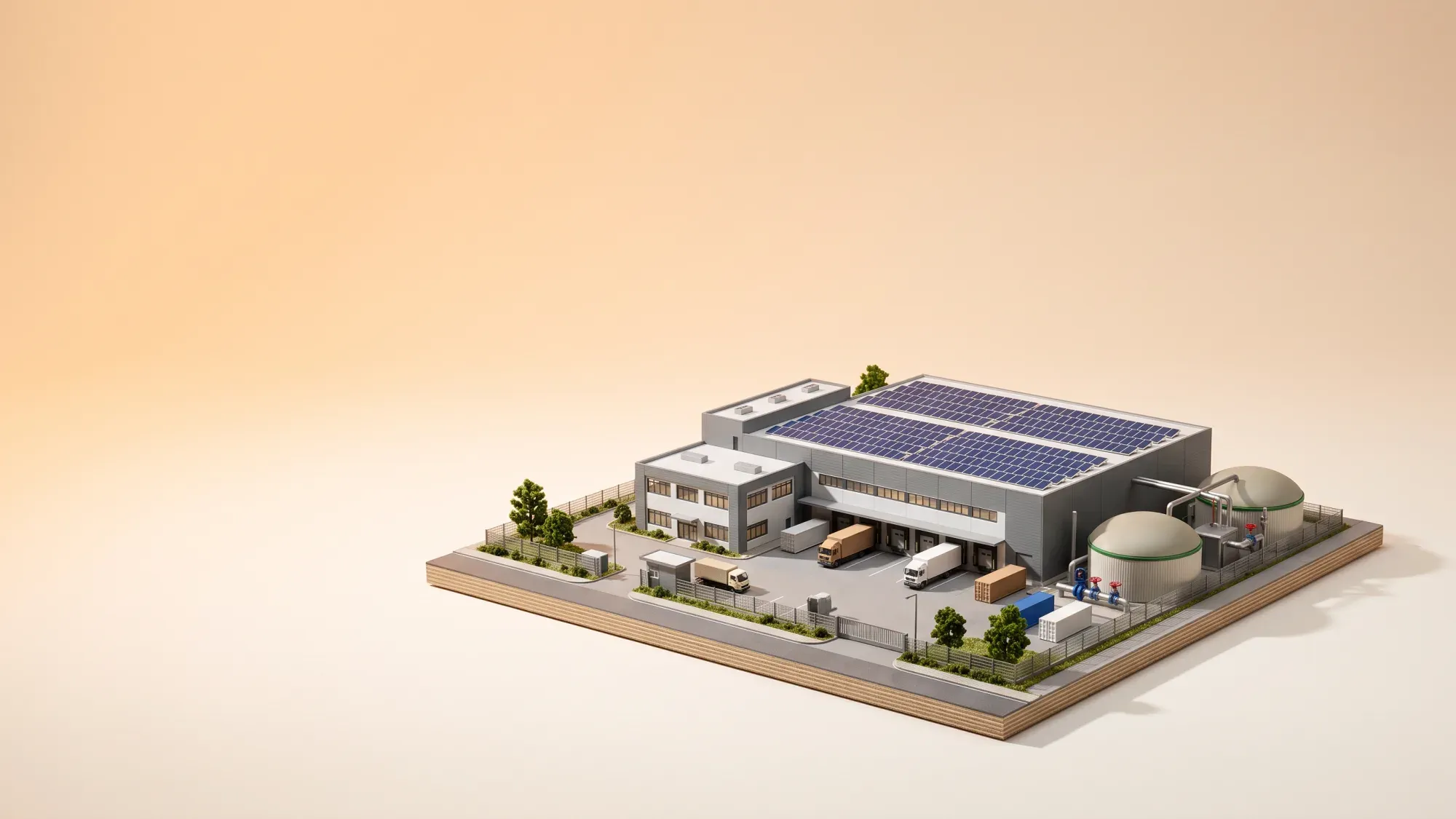
Nigeria's food processing sector faces a significant challenge: an unreliable electricity supply that often leads to substantial post-harvest losses. However, innovative approaches, particularly in solar food processing, are demonstrating a path towards resilience and sustainability. This article explores the practical applications, benefits, and challenges of integrating solar energy into food processing in Nigeria, with a focus on the pioneering work of Sambal Enterprise.
The success of solar food processing in Nigeria exemplifies how decentralised energy solutions can rebuild energy systems and foster economic opportunity in challenging environments. This entrepreneurial spirit, seen in businesses like Sambal Enterprise, resonates with Fuse Energy's belief in never settling for the status quo, challenging traditional narratives of energy scarcity. While Fuse Energy currently supplies residential energy in Great Britain and does not operate in Nigeria or offer commercial solar food processing solutions, it champions a future where abundant, clean energy can transform critical sectors globally, aligning with its vision of "power to play with".
Thinking about Lagos food processor thrives on solar power? With Fuse Energy, you get clear pricing, real-time usage data, 24/7 human customer support, and a modern energy experience designed around you. Signing up takes just a few minutes, so you can take control of your bills from day one. Click here to switch to Fuse Energy today and start saving.
Enter your address to get a quote and see how much you could save
The challenge of energy scarcity in Nigerian food processing
Impact of unreliable grid electricity on food spoilage
Nigeria's food industry is heavily impacted by an unstable electricity grid, leading to frequent power outages that disrupt operations and cause significant economic losses. Businesses, including those in agriculture, lose an estimated $29 billion annually due to poor power supply, according to the World Bank. For food processors, this unreliability is particularly critical. When electricity fails, products requiring milling or refrigeration are at high risk of spoilage, leading to wasted produce and financial setbacks.
Experts estimate that up to 60% of tubers, fruits, and vegetables, and about 20% of fish and grains, are lost post-harvest in Nigeria, partly due to inadequate storage and poor infrastructure. Food safety guidelines from organisations like the CDC and USDA recommend discarding perishable foods that have been without refrigeration for more than four hours, highlighting the health risks associated with unstable electricity.
The critical need for resilient energy solutions
With millions of Nigerians lacking access to reliable power, and over 120,000 farming communities operating without it, the energy deficit severely limits agricultural production, processing, storage, and value addition. This forces many farmers and agro-processors to rely on expensive and polluting diesel or petrol generators, increasing operational costs and reducing competitiveness. The National Grid has experienced around 105 system collapses over the past decade, underscoring the urgent need for resilient, decentralised energy solutions.
Sambal Enterprise: a beacon of solar innovation
Operational resilience with solar and battery storage
Blessing Unoka's Sambal Enterprise in Lagos, Nigeria, stands as a testament to the transformative power of clean energy. The food processing facility successfully operated for two days without mains electricity, thanks to its integrated solar and battery storage system1. This resilience directly addresses the critical issue of power outages, as Unoka notes, "When you are trying to mill it or you are trying to refrigerate it and the light goes off, everything in those freezers, that cold room, gets spoiled". Sambal's ability to maintain continuous operation ensures product quality and prevents the significant losses faced by many other businesses.
Integrating circular economy principles with biodigesters
Sambal Enterprise processes soya milk and maize flour, meeting local food production needs. Beyond its energy independence, the company champions a circular economy approach by integrating a biodigester. This technology converts processing waste into organic fertiliser, which is then returned to local farmers. Unoka explains their sustainable model: "We get the crops from the farmers, we give the waste to the farmers". This closed-loop system not only reduces waste but also supports local agriculture, enhancing soil fertility and reducing the need for chemical fertilisers.
Empowering women through clean energy training
Sambal Enterprise is also committed to social empowerment, particularly for women. The business actively trains women in clean energy food processing, equipping them with valuable skills. This focus on capacity building ensures that "Even when they decide that they want to leave, they are not just redundant. They can also process food in their own scale and empower themselves too," as Unoka states. Such initiatives contribute to women's economic independence and foster a skilled workforce in the clean energy sector, aligning with broader efforts to empower women in Nigeria's energy transition.
Benefits of solar food processing in Nigeria
Reducing post-harvest losses and enhancing food security
Solar-powered food processing significantly reduces post-harvest losses, which can be as high as 40% of Nigeria's annual food production. Technologies like solar dehydrators and cold storage systems preserve perishable goods, extending shelf life and ensuring more food reaches consumers. This directly contributes to enhanced food security, making fresh produce more available, particularly in rural and off-grid areas.
Driving economic growth and local value addition
By providing reliable and affordable energy, solar food processing enables farmers and small businesses to add value to their produce, transforming raw materials into finished goods. This increases profitability, creates local employment opportunities, and stimulates economic growth within communities. Farmers can sell higher-quality produce at better prices, and the reduced reliance on expensive fossil fuels lowers operational costs, boosting overall income.
Contributing to environmental sustainability
Solar food processing leverages Nigeria's abundant sunshine, offering a clean and sustainable alternative to fossil fuel-dependent generators. This reduces greenhouse gas emissions and air pollution, contributing to environmental sustainability and Nigeria's climate goals. The integration of biodigesters, as seen at Sambal, further enhances environmental benefits by converting waste into organic fertiliser, promoting sustainable agricultural practices.
Scaling up: opportunities and overcoming hurdles
The investment landscape for sustainable agriculture
Nigeria's agricultural sector presents vast investment opportunities, particularly in agro-processing and sustainable farming. The government has initiatives like the Special Agro-Industrial Processing Zones (SAPZs) to support large-scale farming and food processing, including renewable energy integration. However, securing financing remains a challenge for many smallholder farmers and businesses, despite the potential for attractive returns. Strategic investments are crucial to unlock this potential, with a focus on low-interest loans for solar power installations and processing equipment.
Technology transfer and local adaptation strategies
The successful deployment of solar food processing solutions requires effective technology transfer and adaptation to local conditions. This includes ensuring that technologies like solar dehydrators, battery storage systems, and biodigesters are suitable for the Nigerian climate and operational scale. Local capacity building and training are essential to maintain and operate these systems, fostering a skilled workforce and ensuring long-term sustainability.
Leveraging policy support and infrastructure development
Nigeria has demonstrated a commitment to diversifying its energy mix and scaling renewable energy through policies like the Renewable Energy Master Plan (REMP) and the Nigeria Energy Transition and Investment Plan. These policies aim to increase renewable electricity generation and phase out diesel generators, offering fiscal incentives such as import duty moratoriums and tax credits for renewable energy technologies. Continued policy support and investment in infrastructure are vital to create an enabling environment for scaling solar food processing solutions nationwide.
A future powered by abundant energy
Global implications of decentralised clean energy solutions
The success of decentralised clean energy solutions in Nigeria, exemplified by Sambal Enterprise, has significant global implications. It demonstrates how abundant, clean energy can transform economies and improve lives, particularly in regions facing energy scarcity. These solutions offer a blueprint for resilience, sustainability, and local empowerment, proving that energy systems can be reimagined for a more equitable and prosperous future.
Fuse Energy's vision for a world with "power to play with"
The innovative spirit and transformative impact seen in Nigeria resonate deeply with Fuse Energy's vision. Fuse believes in a future with "power to play with," where energy is so abundant it ceases to be a constraint. This vision challenges the scarcity mindset that has long dominated the energy sector, advocating instead for a world where clean energy empowers individuals and communities to build, create, and thrive. While Fuse Energy's operations are currently focused on supplying residential energy in Great Britain, the global movement towards decentralised, clean energy solutions like those in Nigeria embodies the future Fuse is building for energy - a future where everyone has the power to play with.
Thinking about Lagos food processor thrives on solar power? With Fuse Energy, you get clear pricing, real-time usage data, 24/7 human customer support, and a modern energy experience designed around you. Signing up takes just a few minutes, so you can take control of your bills from day one. Click here to switch to Fuse Energy today and start saving.
Managing your home energy should be as straightforward and reliable as the solar power driving innovation in Nigeria. Fuse Energy focuses on clear pricing and a modern energy experience for your home in Great Britain. Click here to switch to Fuse Energy today.
Managing your energy bills should be clear and easy to understand. Fuse Energy focuses on straightforward pricing, so you can see exactly what you're paying without unnecessary complexity. If you have a smart meter, you can view detailed usage data through the app or website, helping you understand how you can lower your bills. Our 24/7 human support team is always on hand with fast response times whenever you need help. Click here to switch to Fuse Energy today. Find out about our mission by clicking here.
References
Disclaimer
For the avoidance of doubt, this article is provided for informational purposes only and is not intended to constitute legal or financial advice. The author and/or Fuse Energy shall not be responsible for any losses arising out of any reliance on the information contained herein.