Shell sells 4 GW European renewables portfolio to TotalEnergies
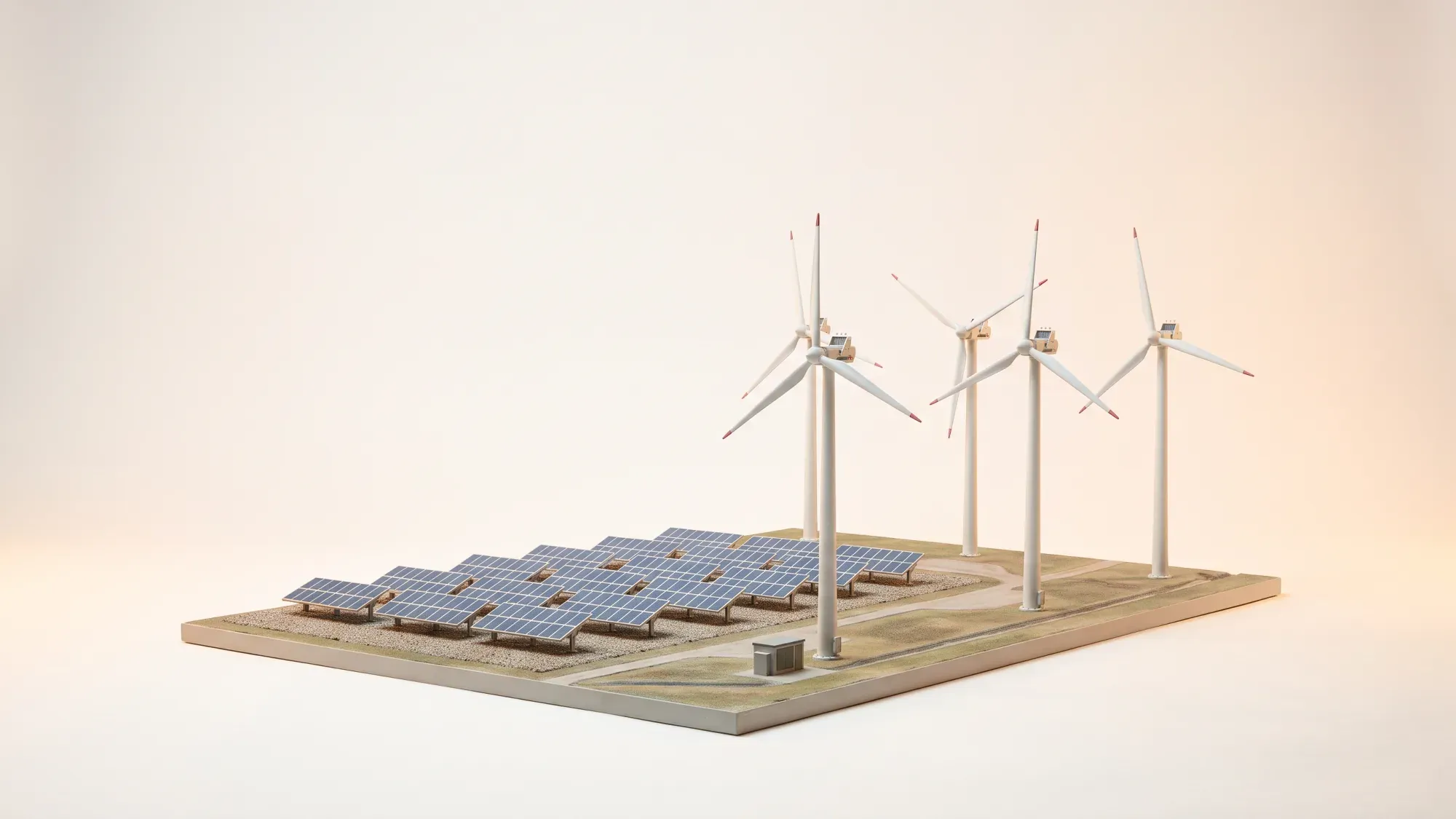
Shell has agreed to sell its European onshore renewables business to TotalEnergies, a move that includes assets across the UK, Italy, the Netherlands, and Spain1. This strategic divestment and acquisition signals a significant shift in the European energy landscape, reflecting evolving corporate strategies among major players. The deal, which is subject to regulatory approvals, is anticipated to conclude by the end of the year.
TotalEnergies is set to acquire a substantial four-gigawatt (GW) renewables portfolio. This includes 500 megawatts (MW) of solar and wind assets already operational or under construction, alongside a pipeline of future solar, wind, and battery storage projects, with the remaining 3.5 GW comprising this pipeline.
While major energy companies reshape their portfolios, understanding your own energy options is key. Discover how Fuse Energy can help you manage your home's energy with clear pricing and smart insights. Click here to switch to Fuse Energy today.
Enter your address to get a quote and see how much you could save
The strategic rationale behind Shell's divestment
Shell's decision to divest its European onshore renewables portfolio aligns with a broader strategic re-evaluation under CEO Wael Sawan. This involves a focused approach to capital allocation and a recalibration of its low-carbon and renewable energy investments.
Portfolio "high-grading" and capital recycling
"We are recycling capital and prioritising areas where we have differentiated capabilities and can create the most value over time, including through asset-backed power trading and customer-focused energy solutions." — Machteld de Haan
This approach, as explained by Machteld de Haan, Shell's President for Downstream, Renewables and Energy Solutions, reflects "Shell's continued focus on actively managing and high-grading its power portfolio in line with the strategy set out at Capital Markets Day 2025".
Focus on differentiated capabilities
Shell aims to concentrate its investments where it possesses distinct advantages, ensuring capital is deployed for the strongest long-term value. This means enhancing access to flexible generation capacity and developing customer-centric energy solutions, while maintaining strict discipline on capital allocation and returns. The sale allows Shell to streamline its portfolio and direct resources towards areas that complement its asset-backed trading strategy.
Alignment with Wael Sawan's strategy
Under Wael Sawan's leadership, Shell has been adjusting its energy transition strategy, scaling back some low-carbon and renewable energy investments to focus on profitability and competitive strengths. Sawan has emphasised the need for a pragmatic approach to energy security, advocating for a focus on the energy needs of today alongside future targets. This divestment is consistent with Shell's broader strategy of driving improved performance and embedding cost and capital discipline across its portfolio.
TotalEnergies' acquisition: strengthening European power positions
For TotalEnergies, the acquisition represents a significant step in bolstering its presence in the European renewables market and advancing its integrated energy strategy.
Expanding a four-gigawatt portfolio
The deal will see TotalEnergies take full ownership of Shell's European onshore renewables portfolio, which totals 4 GW. This includes 500 MW of solar and wind assets that are already operational or under construction. Additionally, the acquisition encompasses a substantial pipeline of solar, wind, and battery storage projects across Italy, the UK, and Spain, with the remaining 3.5 GW comprising this pipeline.
Integrated strategy across the electricity value chain
Stéphane Michel, President for Gas, Renewables & Power at TotalEnergies, highlighted that the acquisition "strengthens our power generation positions in selected key deregulated markets across Europe and supports the implementation of our integrated strategy across the electricity value chain". This integrated power strategy aims to combine generation, flexible capacity, and customer supply. The newly acquired assets are expected to complement TotalEnergies' existing power generation activities in these key European markets.
Market consolidation in key European markets
This transaction underscores a broader trend of consolidation within the European onshore renewables sector. TotalEnergies' strategy involves optimising capital allocation in renewables, and this acquisition, alongside other recent transactions, supports its integrated approach.
Implications for the European renewable energy sector
The divestment by Shell and the acquisition by TotalEnergies will have notable implications for the European renewable energy sector, influencing investment trends and the overall pace of the energy transition.
Impact on UK, Italy, Netherlands, and Spain assets
The assets changing hands are spread across key European markets: the UK, Italy, the Netherlands, and Spain. For these countries, the shift in ownership means TotalEnergies will now be responsible for the development and operation of these projects. This could lead to a renewed focus on accelerating the development of the project pipeline, estimated to be 3.5 GW, potentially boosting renewable energy capacity in these regions. The portfolio includes solar, wind, and battery storage projects, indicating a diversified approach to renewable energy generation and grid stability.
Shifting investment landscapes
This deal highlights a strategic recalibration among major energy companies regarding their renewable energy portfolios. While some, like Shell, are "high-grading" their assets to focus on areas of differentiated value, others, like TotalEnergies, are actively expanding their renewable footprint through acquisitions. This dynamic suggests a maturing market where asset performance and strategic fit are becoming increasingly critical for investment decisions. The focus is shifting from simply deploying capacity to ensuring assets perform efficiently and deliver long-term value.
The pace of energy transition
The transaction contributes to the ongoing energy transition in Europe by consolidating renewable assets under a company committed to an integrated power strategy. While Shell's divestment might be seen by some as a slowdown in its direct renewable investment, the assets are being acquired by another major player with ambitious renewable targets. This suggests that the overall pace of renewable energy deployment in Europe may not be significantly impacted, but rather the ownership and strategic direction of these assets will evolve. The emphasis on flexible generation capacity and asset-backed trading by both companies indicates a move towards more sophisticated power portfolio management within the energy transition.
Contrasting approaches to clean energy investment
The strategic decisions made by Shell and TotalEnergies underscore differing philosophies in navigating the clean energy transition, particularly concerning corporate portfolio management versus a broader commitment to building abundant clean energy.
Corporate portfolio management vs abundance building
Shell's approach, as articulated by Machteld de Haan, centres on "actively managing and high-grading its power portfolio" and "recycling capital" to prioritise areas of differentiated capabilities. This is a classic corporate portfolio management strategy, where assets are bought and sold to optimise returns and focus on core strengths. It reflects a view that capital should be allocated where it can generate the most value within a defined strategic framework.
In contrast, Fuse Energy operates with a vision of building a future with "power to play with," where energy is so abundant it becomes an invisible utility. Fuse's strategy focuses on direct development and ownership of generation assets, aiming to drive down costs and increase supply through vertical integration and rebuilding the energy system from scratch. This approach is less about capital recycling and more about a foundational commitment to creating an abundant, clean energy future.
Long-term vision for energy security
The strategic shifts by energy majors like Shell and TotalEnergies are deeply intertwined with the long-term vision for energy security in Europe. Shell's CEO Wael Sawan has stressed that "there is no national security without energy security" and has called for Europe to rethink its energy strategies to address both current and future energy needs. The acquisition by TotalEnergies, with its focus on strengthening power generation positions in key deregulated markets, aims to contribute to this security by building a robust and integrated electricity value chain.
The role of energy majors in decarbonisation
Energy majors play a pivotal role in the global decarbonisation effort, but their strategies vary. While some focus on refining their existing portfolios for optimal returns, others are aggressively expanding their clean energy footprint. These corporate strategies highlight the complex interplay between financial performance, market dynamics, and the imperative of the energy transition.
Fuse Energy, as a residential energy supplier, approaches the clean energy transition from a different angle. Rather than engaging in large-scale corporate mergers and acquisitions of utility-scale assets, Fuse is committed to direct customer empowerment and clean energy generation. This involves building everything from the ground up to make energy abundant, contrasting with the corporate capital recycling seen in the Shell-TotalEnergies deal. Fuse's focus is on providing transparent, customer-focused energy solutions that empower individuals, embodying a commitment to an abundant, clean energy future.
Managing your energy bills should be clear and easy to understand. Fuse Energy focuses on straightforward pricing, so you can see exactly what you're paying without unnecessary complexity. If you have a smart meter, you can view detailed usage data through the app or website, helping you understand how you can lower your bills. Our 24/7 human support team is always on hand with fast response times whenever you need help. Click here to switch to Fuse Energy today. Find out about our mission by clicking here.
References
- The Weston Mercury. Shell to sell European onshore renewables business to TotalEnergies
Disclaimer
For the avoidance of doubt, this article is provided for informational purposes only and is not intended to constitute legal or financial advice. The author and/or Fuse Energy shall not be responsible for any losses arising out of any reliance on the information contained herein.