Shared solar UK
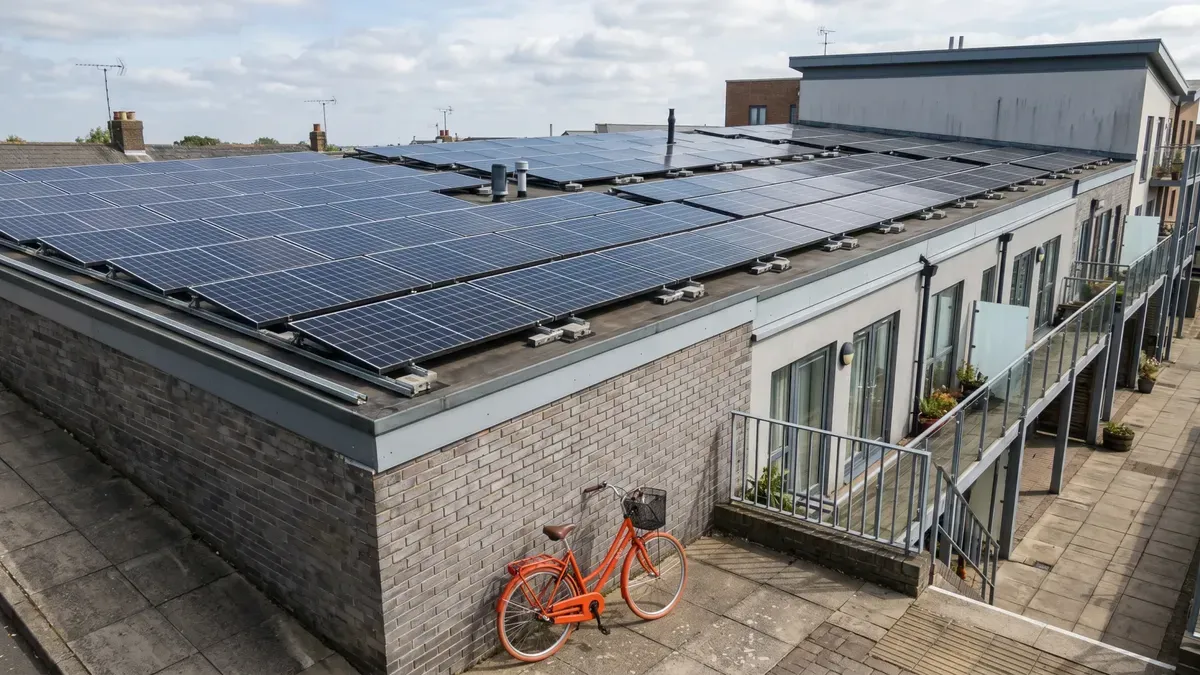
For many UK residents, especially those in flats, apartment blocks, or social housing, the idea of harnessing solar power often feels out of reach. Individual rooftop solar panels are frequently not an option due to ownership structures, technical limitations, or simply a lack of suitable roof space. But what if you could still tap into clean, affordable solar energy without owning your roof? Shared solar models are making this a reality, overcoming historical barriers and paving the way for a future where abundant, clean energy is accessible to everyone, regardless of their housing type.
Shared solar models are transforming how UK residents access clean energy, making it possible for those in flats and apartments to benefit from renewable power. Discover how you can be part of this energy revolution and take control of your home's energy future. Click here to switch to Fuse Energy.
Enter your address to get a quote and see how much you could save
What is shared solar and how does it work?
Beyond individual rooftops: the need for shared solar
Shared solar, often known as community solar, is a model that allows multiple households to benefit from a single, larger solar photovoltaic (PV) installation. Instead of each home needing its own panels, a shared system generates electricity that is then distributed among participating residents. This approach directly addresses a significant challenge in the UK: the vast number of multi-dwelling units (MDUs) where individual rooftop solar is impractical or impossible. Shared solar ensures that clean energy access isn't limited to homeowners with private roofs.
The mechanics of shared solar PV systems
At its core, a shared solar PV system involves installing solar panels on a communal roof space, such as an apartment block or social housing development. The electricity generated is then distributed to individual flats within the building. Advanced technologies, like Allume Energy's SolShare system, manage this distribution behind the meter, ensuring each connected dwelling receives a share of the clean energy. This means residents can use solar power directly, reducing their reliance on grid electricity.
Benefits for residents and property owners
The advantages of shared solar are clear. For residents, it means access to clean, renewable energy without the upfront cost or maintenance responsibilities of owning panels. This translates directly into lower energy bills and a reduced carbon footprint. For property owners and housing associations, installing shared solar enhances property value, improves energy efficiency ratings, and demonstrates a commitment to sustainability. It also offers a practical solution to energy demand reduction across their portfolio.
Overcoming barriers: innovations in UK shared solar
Addressing ownership and technical challenges
Historically, UK compliance and regulations have made it "all but impossible" to install integrated solar and battery energy storage systems (BESS) at flats1. However, new technological innovations are actively dismantling these barriers. The latest advancements focus on simplifying installation, increasing capacity, and ensuring seamless integration with existing building infrastructure.
What is SolShare 2?
SolShare 2 is an updated shared solar PV technology by Allume Energy, designed for multi-dwelling properties in the UK. It increases shared solar capacity to 30kW, supports up to 15 connections, and simplifies integration with communal battery energy storage systems via an Ethernet connection, overcoming previous regulatory hurdles.
Australia's Allume Energy has introduced SolShare 2 to the UK, an updated shared solar PV technology designed specifically for multi-dwelling properties like apartments and social housing. Available from August, SolShare 2 significantly increases shared solar capacity to 30kW, an upgrade from its previous 20kW, and can support up to 15 connections within a multi-dwelling unit. This system aims to overcome both ownership and technical hurdles to solar adoption in shared living spaces.
The role of battery storage (bess) integration
A key feature of SolShare 2 is its simplified integration with communal battery energy storage systems (BESS) via an Ethernet connection. This is crucial because BESS allows excess solar energy generated during the day to be stored and used later, for example, in the evening when demand is higher. This maximises the self-consumption of renewable energy, further reducing reliance on the grid and enhancing energy independence.
"Until now, compliance and regulations had made it 'all but impossible' to install integrated solar and battery systems in flats, but SolShare 2 changes that." - Cameron Knox, CEO and co-founder of Allume Energy
Real-world impact: the Cardiff case study
The real-world impact of integrated shared solar and BESS is already evident. A 2023 BESS installation at a Cardiff flat block, utilising SolShare technology, resulted in a remarkable 60-70% drop in grid energy demand. This success story demonstrates the tangible benefits for residents, including significantly lower energy bills and a substantial reduction in their carbon footprint. Such projects provide operational evidence that distributed generation models are not only viable but highly effective in the UK.
UK policy and the future of community energy
Government support and calls for evidence
The UK government is increasingly recognising the potential of shared energy models. This is evidenced by its recent call for evidence on scaling shared battery storage deployment. This initiative signals a move towards addressing the regulatory barriers that have historically hindered such projects. By actively seeking input, the government aims to create a more supportive policy environment for community energy and distributed generation.
The rise of distributed generation
Shared solar and BESS integration are key components of a broader shift towards distributed generation. This model moves away from large, centralised power stations towards smaller, localised energy sources. This makes the energy system more resilient, efficient, and responsive to local needs. It also aligns with the vision of rebuilding the energy system from the ground up, fostering energy independence and sustainable living for communities across the UK.
Energy independence and sustainable living
The widespread adoption of shared solar schemes contributes significantly to energy independence at a local level. By generating and storing their own clean energy, communities become less susceptible to fluctuations in wholesale energy prices and geopolitical events. This fosters sustainable living by reducing reliance on fossil fuels and promoting a cleaner, greener energy future. It gives people permission to want more clean energy, framing shared solar as a practical solution to energy access challenges.
How to participate in shared solar schemes
Options for residents in multi-dwelling units
If you live in a multi-dwelling unit and are interested in shared solar, several avenues exist. Start by understanding the fundamental concept and benefits of shared solar models. Residents can engage with their property managers, housing associations, or local community energy groups to explore the feasibility of an installation. These organisations often have insights into available schemes or can help initiate new projects.
Engaging with community projects and providers
The UK has a growing number of community energy groups dedicated to developing local renewable energy projects. These groups can provide guidance, support, and even funding opportunities for shared solar initiatives. Investigate the available participation options and potential financial benefits for residents, which often include reduced energy costs and a share in any generated income. Exploring the types of shared solar technologies and providers operating in the UK, such as those offering SolShare, can also inform your approach.
The broader energy landscape and your role
While Fuse Energy does not currently offer specific shared solar installation services for multi-dwelling units, we champion the principles behind it. Our mission is to deliver abundant, clean energy, and we believe that distributed generation and BESS integration are vital for rebuilding a resilient energy system. By supporting clean energy generation through our own operational solar and wind projects, we contribute to the wider grid that shared solar systems connect to. Your participation in shared solar schemes, or simply choosing a clean energy supplier like Fuse, helps realise a future where clean, affordable energy is seamless and accessible to all.
Managing your home's energy should be clear and easy. Fuse Energy focuses on straightforward pricing, so you can see exactly what you're paying without unnecessary complexity. If you have a smart meter, you can view detailed usage data through the app or website, helping you understand how you can lower your bills. Our 24/7 human support team is always on hand with fast response times whenever you need help. Click here to switch to Fuse Energy today. Find out about our mission by clicking here.
References
- Solar Power Portal. Australia's Allume Energy brings updated shared solar offer to UK.
Disclaimer
For the avoidance of doubt, this article is provided for informational purposes only and is not intended to constitute legal or financial advice. The author and/or Fuse Energy shall not be responsible for any losses arising out of any reliance on the information contained herein.