Scotland's largest battery: what Coalburn 1 means for homeowners
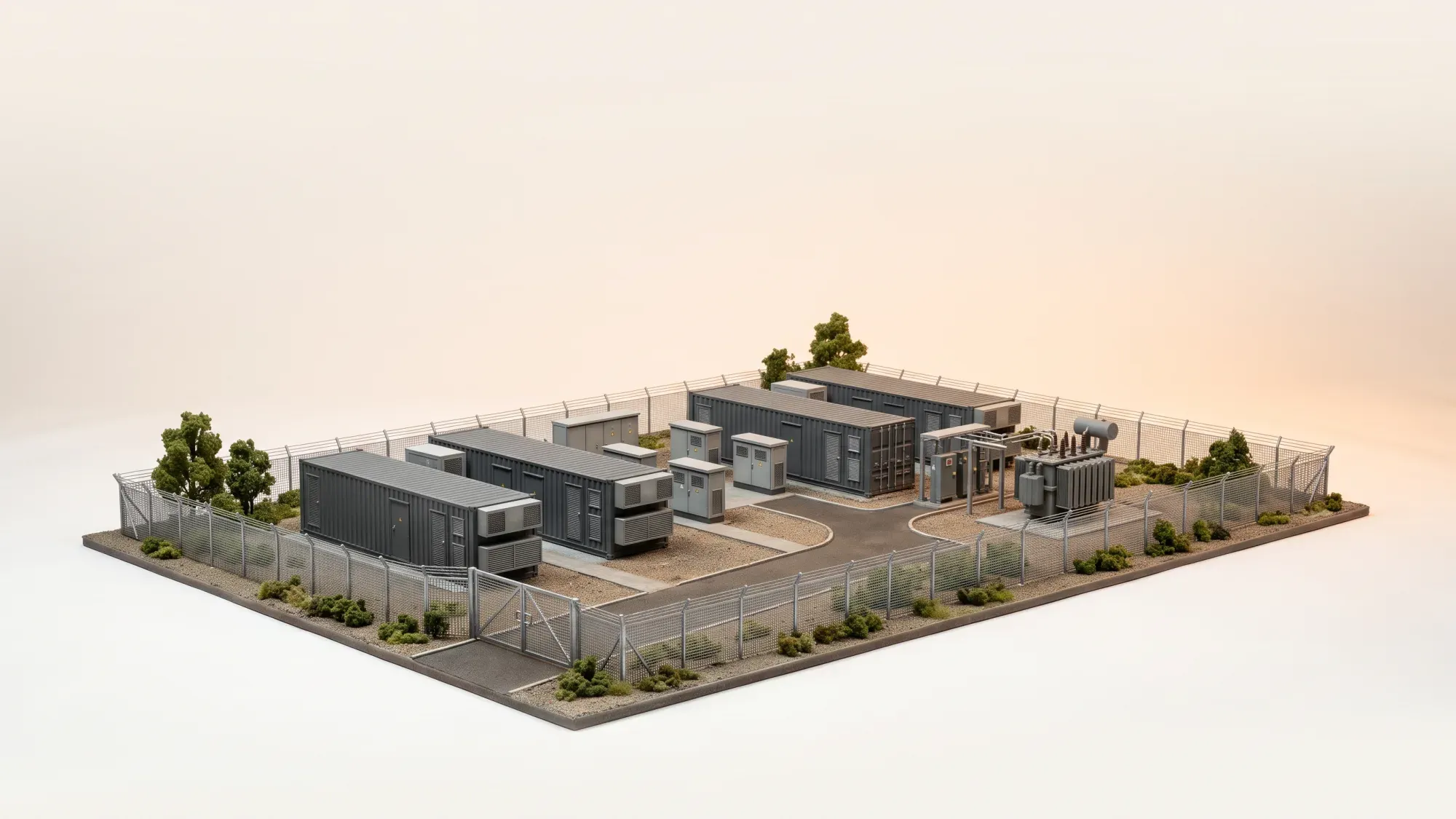
Scotland has inaugurated the Coalburn 1 battery energy storage system (BESS) in South Lanarkshire, marking it as the largest operational BESS in Europe.1 This significant national development highlights the crucial role of energy storage in the UK's transition to renewable energy. While projects like Coalburn 1 secure the National Grid, residential battery storage offers homeowners a tangible path to greater energy independence and significant cost savings. This guide connects these large-scale advancements with the practical benefits home batteries can bring to your property.
Scotland's energy storage revolution: the Coalburn 1 project
The energy landscape in Scotland is undergoing a rapid transformation, with large-scale battery energy storage systems (BESS) playing a pivotal role. These massive installations are essential for stabilising the grid and integrating the increasing amount of renewable energy generated across the country.
Europe's largest operational BESS: Coalburn 1
The Coalburn 1 project, located in South Lanarkshire, is a 500 MW, two-hour lithium-ion battery that has commenced commercial operations, making it the largest operational battery energy storage system in Europe. This facility is one of three transmission-connected BESS assets developed by Copenhagen Infrastructure Partners (CIP) in Scotland.
"The successful delivery of Coalburn 1 marks an important milestone for CIP and our growing European BESS portfolio," Nischal Agarwal, Partner at CIP, said, adding that it "will enhance the flexibility and resilience of the UK electricity system, support the integration of more renewable power, and contribute to lowering costs for consumers." — Nischal Agarwal, Partner at CIP
Enhancing grid resilience and renewable integration
Together, Coalburn 1, along with its sister projects Coalburn 2 and Devilla, will provide a substantial 1.5 GW of power capacity and 3 GWh of energy storage. These systems are designed to enhance the flexibility and resilience of the UK electricity system, support the integration of more renewable power, and ultimately contribute to lowering costs for consumers. Their operation is crucial for managing the intermittent nature of renewable sources like wind and solar, ensuring a stable and secure energy supply across the UK.
Bridging the gap: from grid-scale to home batteries
While national projects like Coalburn 1 secure the broader energy infrastructure, the principles of energy storage extend directly to individual homes. Understanding how these large-scale developments mirror the benefits of residential systems can help homeowners make informed decisions about their own energy future.
Why residential battery storage matters for Scottish homes
Just as large-scale batteries provide stability to the National Grid, residential battery storage offers similar benefits at a household level. By storing electricity, homeowners can reduce their reliance on grid power during peak demand, use more of their self-generated renewable energy, and protect themselves from power outages. This is particularly relevant in Scotland, where a strong commitment to renewable energy means a growing need for flexible energy solutions.
The 'power play' for homeowners
Residential battery storage allows you to shift the balance of power into your hands. It's a "power play" that gives you control over your energy consumption and costs, moving beyond the traditional model of simply consuming electricity from the grid as it's generated. This empowerment aligns with Scotland's broader energy transition, enabling individual households to contribute to a more sustainable and resilient energy system.
Benefits of residential battery storage in Scotland
Installing a home battery system in Scotland offers several tangible advantages, from financial savings to increased energy security.
Achieving energy independence and security
With a home battery, you can store excess electricity generated by your solar panels during the day or charge your battery from the grid during off-peak hours when electricity is cheaper. This stored energy can then power your home when your solar panels aren't generating, or during periods of high demand and higher prices. This reduces your dependence on the grid and provides a buffer against potential power cuts, offering greater energy security.
Reducing electricity bills with smart tariffs
One of the most significant financial benefits of residential battery storage is the ability to reduce electricity bills. By integrating your battery with smart tariffs, you can automatically charge your battery when electricity prices are low (typically overnight) and discharge it to power your home when prices are high. This strategy, known as 'arbitrage', can lead to substantial savings on your annual energy costs. The average UK home uses around 2,500 kWh of electricity per year, making efficient management of this consumption crucial for cost control.
Supporting Scotland's net-zero ambitions
Scotland has ambitious net-zero targets, and residential battery storage plays a part in achieving these goals. By maximising the use of renewable energy generated at home and reducing reliance on fossil-fuel-generated grid electricity, homeowners contribute directly to a lower carbon footprint. This distributed energy storage also helps to balance local grids, making it easier to integrate more renewable power sources across the country.
Choosing your home battery system
Selecting the right home battery system involves understanding the available technologies and matching them to your household's specific energy needs.
Types of residential batteries: Lithium-ion and beyond
Most residential battery systems available today use lithium-ion technology, similar to the large-scale Coalburn 1 project. Within lithium-ion, common chemistries include LiFePO4 (Lithium Iron Phosphate) and NMC (Nickel Manganese Cobalt). LiFePO4 batteries are often favoured for their longer cycle life and enhanced safety, while NMC offers higher energy density. While other battery technologies exist, lithium-ion remains the dominant choice for home energy storage due to its efficiency and performance.
Sizing your system: what to consider
The ideal size for your home battery system depends on several factors, including your household's daily electricity consumption, whether you have solar panels, and your energy independence goals. Typical residential batteries range from 5 kWh to 15 kWh in usable capacity. To determine the right size, consider:
- Your average daily electricity usage: This helps estimate how much storage you need to cover your consumption during periods when you're not generating or charging.
- Your solar panel output: If you have solar, you'll want a battery large enough to store your excess generation.
- Your budget: Larger systems generally cost more upfront.
- Your goals: Do you want to maximise self-consumption, reduce peak-time imports, or have backup power during outages?
Grants, loans, and regulatory notes for Scottish homeowners
Navigating the financial and regulatory landscape for home battery installation in Scotland can seem complex, but several support mechanisms and clear regulations are in place.
Home Energy Scotland Loan and other incentives
Scottish homeowners can access advice and support through the Home Energy Scotland Grant and Loan scheme, funded by the Scottish Government. However, it is important to note that as of June 2024, this scheme no longer provides funding for standalone solar panels or home battery storage. While the scheme continues to support clean heating systems and energy efficiency measures, battery storage is generally not funded unless it is part of a package that includes a heat pump or high heat retention electric storage heaters.
Understanding planning permissions and VAT
For most residential battery installations, planning permission is generally not required, especially if the battery is installed inside your home. However, external installations, depending on their size and location, might require local planning consent. It's always advisable to check with your local council.
A significant financial incentive for homeowners is the 0% VAT rate on the installation of energy-saving materials, including battery storage. This zero rate applies when battery storage is supplied and installed as a single job in a residential property, covering standalone batteries, retrofits to existing solar arrays, and batteries installed alongside new solar panels. This relief is currently in place until 31 March 2027, after which the rate is scheduled to revert to 5% VAT from 1 April 2027. This offers a substantial saving on the overall cost.
Installation and optimisation for your Scottish home
Once you've chosen your system and secured financing, the next steps involve professional installation and optimising your battery's performance for maximum savings.
The installation process: what to expect
The installation of a home battery system should always be carried out by qualified and certified professionals. The process typically involves a site assessment to determine the best location for the battery, followed by the physical installation and electrical connection to your home's consumer unit. Installers will ensure compliance with current UK electrical safety regulations and building standards. The duration of the installation can vary but usually takes one to two days.
Maximising savings: integrating with solar and smart tariffs
To get the most out of your home battery, integration with solar panels and smart energy tariffs is key. If you have solar PV, your battery can store excess generation, reducing the amount of electricity you import from the grid. With a smart tariff, you can program your battery to charge when electricity is cheapest and discharge when it's most expensive, effectively "time-shifting" your energy consumption. This strategic use of your battery can significantly enhance your financial savings and contribute to a more flexible and resilient home energy system.
References
- Energy Live News. Scotland welcomes largest battery storage system
Disclaimer
For the avoidance of doubt, this article is provided for informational purposes only and is not intended to constitute legal or financial advice. The author and/or Fuse Energy shall not be responsible for any losses arising out of any reliance on the information contained herein.