Veridue secures €3.44 million for renewable energy dealmaking
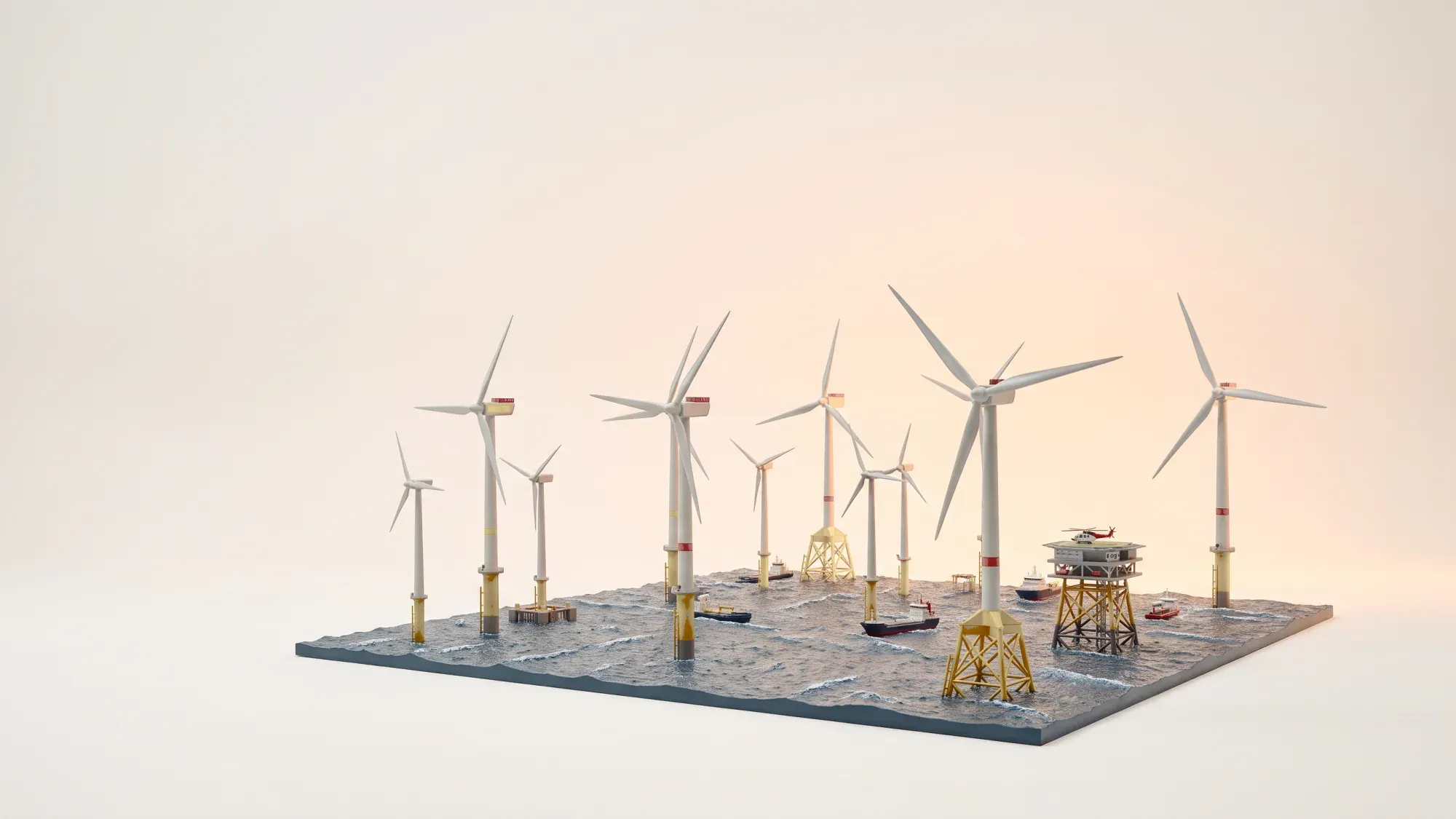
The UK's energy transition requires substantial capital investment in renewable energy infrastructure, offering a significant opportunity for investors. This shift is crucial not only for environmental stewardship but also for national energy security and economic growth. The landscape of energy dealmaking is rapidly evolving, with technological advancements, particularly in Artificial Intelligence (AI), streamlining complex financial processes and accelerating the deployment of clean energy projects.
At Fuse Energy, we believe that investment in renewable energy infrastructure is fundamental to creating the abundant, secure energy future the UK envisions. We are actively contributing to the UK's clean energy future through our own operational solar and wind projects. Click here to switch to Fuse Energy.
Enter your address to get a quote and see how much you could save
The growing landscape of UK renewable energy investment
The drive towards a net-zero future and enhanced energy security has positioned the UK as a key player in the global clean energy market. Achieving these ambitious targets requires a continuous and substantial influx of capital into renewable energy infrastructure. The UK government aims to double annual clean energy investment to over £30 billion by 2035 and unlock £200 billion in investment by 2030. This includes a £61.9 billion capital investment programme to support the transition.
Why capital deployment is crucial for energy transition
Efficient capital deployment is the engine of the energy transition. It funds the development, construction, and operation of large-scale renewable assets, grid upgrades, and supporting infrastructure. Without accelerated investment, the pace of decarbonisation would slow, jeopardising net-zero targets and leaving the UK more exposed to volatile international energy markets. The government's Clean Power Action Plan aims for at least 95% clean power by 2030, requiring rapid deployment of new capacity across the UK.
The UK's position in the global clean energy market
The UK is actively fostering an environment conducive to clean energy investment, leveraging strategic collaboration, innovation, and a skilled workforce. The nation has set ambitious targets, including deploying 43 to 50 gigawatts (GW) of offshore wind by 2030. This commitment, alongside a focus on nuclear, hydrogen, and carbon capture technologies, underscores the UK's intent to be a global leader in clean energy deployment.
AI's transformative role in energy dealmaking
The complexity and scale of renewable energy projects often lead to slow, expensive, and manual processes in financial dealmaking. AI is now emerging as a critical tool to overcome these bottlenecks, enhancing efficiency and accuracy across the investment lifecycle.
Streamlining due diligence and M&A processes with AI
AI-driven solutions are revolutionising financial processes by offering enhanced efficiency and accuracy in areas like due diligence and deal management. Traditionally, assessing the viability and risks of energy infrastructure projects involved sifting through vast amounts of documentation, a time-consuming and error-prone task. AI algorithms can analyse financial records, energy production data, market trends, and contractual obligations to identify patterns, predict potential challenges, and surface critical risks and opportunities within hours, rather than weeks. This automation reduces "deal drag," allowing investors to evaluate more opportunities and make faster, more informed decisions.
Veridue: an example of AI-driven investment acceleration
Veridue, a London-based AI-native due diligence and M&A platform, exemplifies this transformative shift. Founded in 2024 by Daniel Csonth and Xander van den Eelaart, Veridue aims to revolutionise the intricate processes involved in energy infrastructure dealmaking. The company successfully secured €3.44 million in pre-Seed funding, led by Episode 1 Ventures with support from HTGF and Pi Labs, to roll out its platform1. Veridue addresses the slow, expensive, and manual bottlenecks that hinder the expansion of renewable energy and data centres.
"What's been missing is the ability to move deals at the pace the moment demands. Veridue is fixing exactly that." — Timo Bertsch, Investment Manager at HTGF
The platform offers AI-driven deal pipeline management and rapid due diligence for investors, independent power producers (IPPs), lenders, and insurers. It combines advanced AI models with proprietary technology and human expertise, providing institutional-grade due diligence and investment readiness reports.
Enhancing deal pipeline management for complex projects
AI also plays a crucial role in enhancing deal pipeline management. For large and complex energy projects, managing a pipeline of potential investments can be overwhelming. AI-powered platforms can screen more opportunities, identify the best assets based on bespoke investment criteria, and help investors move ahead of the competition. This capability is particularly vital as the energy sector sees increasing demand for renewables and more complex transaction structures involving co-located storage and stacked revenue models.
Key opportunities in UK energy infrastructure financing
The UK's energy transition presents diverse and significant investment opportunities across various segments of its energy infrastructure. These opportunities are critical for meeting demand, enhancing grid stability, and ensuring a secure energy future.
Investment in grid capacity and data centres
The buildout of new renewable energy generation necessitates substantial investment in grid capacity. Modernising and expanding the electricity network is crucial to integrate intermittent renewable sources and ensure reliable supply. An anticipated £80 billion investment in electricity transmission is expected between 2025 and 2030. Concurrently, the rapid growth of data centres, which are significant energy consumers, also drives demand for new energy infrastructure and financing solutions. These centres require reliable, often renewable, power sources, creating further investment avenues in dedicated generation and grid connections.
Project finance for large-scale renewable assets
Project finance remains a cornerstone for funding large-scale renewable assets such as offshore wind farms, solar parks, and battery storage facilities. The UK has a robust pipeline of offshore wind projects, with nearly 30 GW already agreed, and aims to deploy up to 50 GW by 2030. These projects often involve complex financial structures and long-term revenue projections, making efficient due diligence and deal management essential. Investment in these assets directly contributes to the UK's clean energy capacity and its net-zero goals.
The role of institutional investors in the UK
Institutional investors, including pension funds, insurance companies, and sovereign wealth funds, play a pivotal role in financing these large-scale renewable energy and data centre projects. Their long-term investment horizons align well with the stable, predictable returns often associated with infrastructure assets. These investors provide the significant capital required for the energy transition, acting as a crucial bridge between financial markets and the physical buildout of a sustainable energy system.
From investment to energy security: tangible impact
The financial capital deployed into renewable energy infrastructure translates directly into tangible assets that bolster the UK's energy security and accelerate its transition to a clean energy future.
How capital deployment builds real-world clean energy assets
Every pound invested in renewable energy infrastructure contributes to the construction of wind turbines, solar arrays, battery storage facilities, and upgraded grid networks. These investments are not abstract financial transactions; they are the foundation of a new energy system. For instance, recent renewable energy auctions in the UK have secured enough capacity to power the equivalent of 12 million homes. This direct impact ensures that the UK can generate more of its own power from domestic, clean sources.
Strengthening the UK's energy independence and resilience
By reducing reliance on imported fossil fuels, investment in renewables directly enhances the UK's energy independence and resilience. The UK's fossil fuel dependency was around 78.3% in 2021. Continuing reliance on fossil gas could cost the UK economy £473 billion by 2050, though an alternative decarbonisation pathway could avoid £100 billion in international payments for gas supplies. This strategic shift protects the nation from geopolitical risks and price volatility in global energy markets, ensuring a more stable and secure energy supply for consumers and businesses.
Connecting financial growth with ethical environmental goals
For many institutional investors, the appeal of renewable energy investment extends beyond financial returns to include strong ethical and environmental considerations. Investing in clean energy aligns financial growth with the urgent need to combat climate change and achieve net-zero emissions. This dual benefit allows investors to contribute positively to environmental goals while securing long-term, sustainable returns.
Fuse Energy's contribution to a powered future
At Fuse Energy, we believe that investment in renewable energy infrastructure is fundamental to creating the abundant, secure energy future the UK envisions. Our vision is to build a future with "power to play with," where energy is so abundant it stops being a constant concern.
Building and operating renewable assets across the UK
Fuse Energy is a direct contributor to the UK's clean energy future through our own operational solar and wind projects. Sites like Netley North, a 5.2 MW solar site in Hampshire, Bullous Park, a 12 MW solar site in Devon, and Balnamoon, a 0.8 MW wind site in Moray, are tangible examples of successful renewable energy investments. These projects feed clean electricity into the grid, demonstrating how financial capital translates into real-world generation capacity.
Bridging high-level investment with consumer benefits
While Fuse Energy does not offer financial investment products or advice, our operational model directly benefits from and contributes to the broader investment in renewable infrastructure. The financial capital deployed into energy infrastructure supports the buildout of the modern, vertically integrated energy system Fuse Energy is actively constructing. This ultimately leads to a more abundant, secure, and clean energy future for UK consumers.
Our commitment to an abundant, clean energy system
Our commitment is to deliver terawatt-hours of the cheapest, cleanest energy possible, rebuilding the energy system from scratch. This mission is underpinned by the continuous investment in renewable energy and the innovative technologies that accelerate its deployment. By focusing on building and operating our own assets, Fuse Energy provides a tangible link between high-level institutional investment trends and the concrete impact on UK energy infrastructure and consumer benefits.
Fuse Energy is dedicated to building a future where energy is abundant and clean. We are actively contributing to the UK's energy transition by developing and operating renewable energy projects. While we don't offer investment services, we are a key part of the ecosystem that makes these investments impactful. Discover more about our mission by clicking here. You can also switch to Fuse Energy today and experience clear pricing and 24/7 human support by clicking here.
Disclaimer
For the avoidance of doubt, this article is provided for informational purposes only and is not intended to constitute legal or financial advice. The author and/or Fuse Energy shall not be responsible for any losses arising out of any reliance on the information contained herein.